


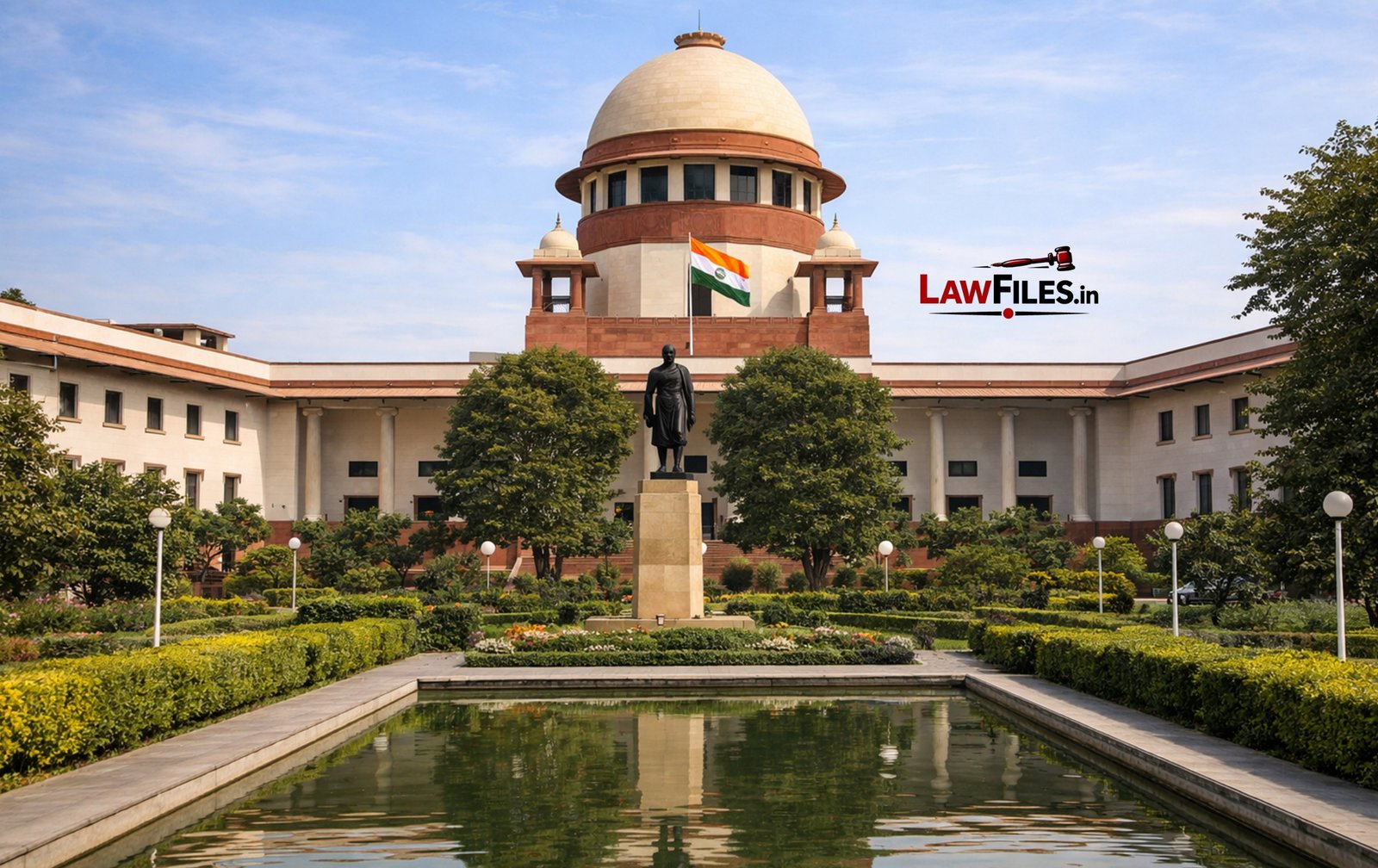
In a significant reaffirmation of constitutional morality in public discourse, the Supreme Court of India has underscored that public figures must exercise heightened responsibility in their speech, observing that “words have consequences” in a plural and diverse society like India. The Court’s remarks came in the context of proceedings concerning alleged hate speech, where it emphasised that positions of influence carry a corresponding duty of restraint.
The Court’s observation is not merely rhetorical but rooted in constitutional doctrine. India’s guarantee of free speech under Article 19(1)(a) has never been absolute; it is subject to reasonable restrictions under Article 19(2), including public order, decency, and morality. By stressing the societal impact of speech, the Court appears to be reinforcing a long-standing judicial position that the exercise of free expression must be balanced against the preservation of communal harmony and dignity.
At the centre of the Court’s reasoning is the recognition of India’s socio-cultural diversity. In a country marked by religious, linguistic, and ethnic plurality, statements made by influential individuals particularly politicians and public personalities carry disproportionate weight. The Court implicitly acknowledged that such speech can shape public sentiment, mobilise communities, and, in extreme cases, incite hostility. It is this potential for cascading consequences that justifies a higher threshold of accountability.
This judicial stance is consistent with earlier pronouncements where courts have cautioned against incendiary rhetoric in the public sphere. However, what distinguishes the present observation is its normative clarity: the Court is not merely reacting to specific instances of hate speech but articulating a broader principle of ethical speech governance. It signals a shift from case-specific adjudication toward a more value-driven framework emphasising responsibility alongside rights.
Importantly, the Court’s remarks also engage with the persistent difficulty of defining “hate speech” within Indian jurisprudence. Unlike some jurisdictions that have codified clear statutory definitions, India relies on a combination of penal provisions—such as Sections 153A and 295A of the IPC—and judicial interpretation. This fragmented framework often leads to inconsistent enforcement and interpretative ambiguity. The Court’s emphasis on consequences rather than rigid definitions may reflect an attempt to move beyond technical categorisation toward a more impact-oriented analysis.
From a critical perspective, the Court’s approach raises both opportunities and concerns. On one hand, it strengthens the normative expectation that public discourse must remain within constitutional bounds, particularly in a politically charged environment where polarising rhetoric can have real-world consequences. On the other hand, an overly broad or subjective interpretation of “consequences” could risk chilling legitimate speech, including political criticism and dissent. The challenge, therefore, lies in ensuring that the principle of responsibility does not become a tool for suppressing unpopular or inconvenient viewpoints.
Another dimension of the Court’s observation relates to the role of public office. By singling out “public figures,” the Court recognises that influence amplifies impact. This aligns with comparative constitutional jurisprudence, where elected representatives and public personalities are often held to higher standards of accountability due to their ability to shape public opinion. In the Indian context, this expectation gains further significance given the centrality of political rhetoric in electoral mobilisation.
The Court’s remarks also resonate with contemporary concerns around digital amplification. In an age of social media, statements made by public figures can achieve instantaneous and widespread circulation, magnifying their potential impact. While the present case may not directly address platform liability or digital regulation, the underlying principle speech as a catalyst for real-world consequences has clear implications for how such issues may be approached in future litigation.
Analytically, the judgment reflects a careful balancing act. The Court does not dilute the importance of free speech but situates it within a framework of constitutional responsibility. This dual emphasis is crucial: it preserves the democratic value of open expression while acknowledging the need to prevent harm in a deeply diverse society.
Ultimately, the Supreme Court’s articulation serves as both a legal and moral reminder. In a constitutional democracy, the freedom to speak is inseparable from the duty to speak responsibly. As public discourse continues to evolve shaped by political contestation and digital technologies the Court’s insistence that “words have consequences” may well become a guiding principle in the ongoing effort to reconcile liberty with social harmony.
