

Close Menu
LawFilesLawFiles

    Subscribe to Updates

    Get the latest creative news from FooBar about art, design and business.

    What's Hot

    “Shocking That Even Educated People Are Falling Prey”: Supreme Court Flags Deepening Crisis of ‘Digital Arrest’ Scams

    April 20, 2026

    Short Breaks Cannot Defeat Continuity: Supreme Court Reaffirms Protection of Ad-Hoc Employees Against Arbitrary Service Interruptions

    April 20, 2026

    Supreme Court Warns Against Repetitive ‘Publicity PILs’: Netaji Plea Dismissed as Non-Justiciable

    April 20, 2026
    Facebook X (Twitter) Instagram Threads
    Tuesday, April 21
    LawFilesLawFiles
    Facebook X (Twitter)
    • Home
      • Who We Are
      • Our Mission
      • Advisory board
      • Contact US
    • Supreme Court
    • High Courts
      • Gujarat High Court
      • Jharkhand High Court
      • Rajasthan High Court
      • Karnataka High Court
      • Andhra Pradesh High Court
      • Allahabad High Court
      • Himachal Pradesh High Court
      • Chhattisgarh High Court
      • Jammu & Kashmir and Ladakh High Court
      • Kerala High Court
      • Punjab and Haryana High Court
      • Patna High Court
      • Madhya Pradesh High Court
      • Madras High Court
      • Bombay High Court
      • Orissa High Court
      • Calcutta High Court
      • Meghalaya High Court
      • Delhi High Court
      • Manipur High Court
      • Gauhati High Court
    • Corporate
    • Taxation Laws
      • Income Tax
      • GST
      • Customs & Excise
    • Global Affairs
    • Articles
      • Former Judge’s’ Views
      • Senior Advocate
      • Policy Analysis
      • Tax Expert
    • PILS
      • Free/Affordable Legal Aid
      • PIL Cell
      • Law student Volunteer Cell (research & Drafting)
      • NGO & Legal services Authority Tie-ups
      • Online Legal Formats
      • Online Legal Help Form
    Subscribe Premium
    LawFilesLawFiles
    Home»Articles»Supreme Court Warns Against Vilification of Any Community; Flags Threat to Social Harmony Including Brahmins
    Articles

    Supreme Court Warns Against Vilification of Any Community; Flags Threat to Social Harmony Including Brahmins

    Anvita DwivediBy Anvita DwivediFebruary 25, 2026Updated:February 25, 2026No Comments5 Mins Read
    WhatsApp Facebook Twitter Copy Link
    Share
    Facebook Twitter Pinterest Copy Link WhatsApp

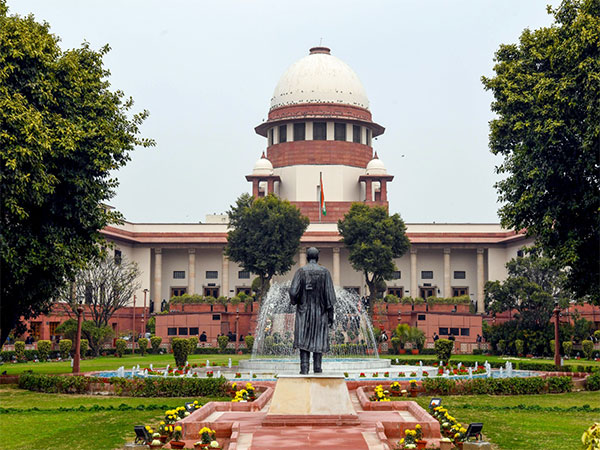
    New Delhi, 25 Feb 2026: The Supreme Court of India delivered a trenchant reminder that no religion, caste, region or community including Brahmins can be targeted, denigrated, or vilified through public expression, whether by art, speech, film, literature, or by public office-holders such as ministers. The observations came during hearing of petitions challenging the title and promotional content of a Netflix film alleged to offend sections of society.

    A Bench comprising of Justices B.V. Nagarathna and Ujjal Bhuyan heard the matter in Atul Mishra v. Union of India and stressed that the Constitution’s scheme requires a delicate balance between freedom of speech and expression and constitutional morality, especially the duty to uphold fraternity and equal respect for all communities. (livelaw.in)

    Although the immediate controversy regarding the film’s title “Ghooskhor Pandat” subsided after the producers voluntarily changed it, the Supreme Court took the occasion to articulate a broader constitutional thesis: that no group  majority or minority is immune from moral and legal scrutiny when disparaging expressions are unleashed against them.

    Justice Bhuyan, speaking for the Bench, highlighted that denigration on grounds of religion, caste or community  be it Brahmin, Dalit, Muslim, Sikh, Christian, or any other violates the twin pillars of the Constitution: the Right to Equality (Article 14) and the Fraternity guarantee implicit in the Preamble and Article 51A(e). He observed that if ministers or public functionaries engage in language or conduct that targets a specific community, it is inherently inimical to constitutional ethos.

    Why the Brahmin Community Feature in the Debate

    While the case did not directly involve collective claims by Brahmins, petitions and public discourse leading up to the hearing referenced broader concerns about representations of Brahmins in popular culture and social media that some groups alleged amounted to stereotyping or bias. These contentions resonated with a wider narrative emerging in various forums that certain artistic portrayals perpetuate negative tropes about Brahmins such as intellectual arrogance or caste supremacy and could inflame inter-community resentment if left unchecked. The Supreme Court’s remarks implicitly encompass such scenarios, cautioning that even alleged stereotyping against historically advantaged groups can be legally problematic when it crosses the threshold into vilification.

    Critically, the Bench clarified that context matters: parody, satire, social critique, artistic expression, and legitimate discourse do not automatically amount to unlawful denigration. However, when a portrayal fosters contempt, hatred, or dehumanization of a community irrespective of whether it is Brahmin or otherwise it can be subject to legal consequences under existing law.

    Legal Parameters Free Speech vs. Hate Speech

    The Court’s opinion engaged with foundational precedents that frame India’s free speech jurisprudence. Drawing from S. Rangarajan v. P. Jagjivan Ram (1989), Shreya Singhal v. Union of India (2015), Imran Pratapgadhi v. State of Gujarat (2024), and others, the bench underscored that:

    • Freedom of speech and expression (Article 19(1)(a)) is not absolute.
    • Restrictions in the interest of public order, morality and reputation are permissible under Article 19(2).
    • Expression that intentionally or recklessly promotes hatred against a community can fall within the scope of hate speech, attracting legal consequences.

    In Imran Pratapgadhi v. State of Gujarat, the Supreme Court had earlier clarified that speeches by political figures that incite hatred or carry communal overtones can be regulated and do not enjoy blanket protection. This precedent buttresses the present bench’s admonitions against targeted denigration, whether explicit or implicit.

    The Bench invoked Article 51A(e) the fundamental duty to promote harmony and the spirit of brotherhood among all citizens and placed it on equal footing with fundamental rights. It stressed that constitutional morality demands that even private speech should not undermine social cohesion.

    In the judgment, the Court observed:

    “Expression cannot be cloaked as cultural critique if it blossoms into contempt and scorn against any identifiable group… Such conduct, whether by artists or by ministers, erodes the constitutional commitment to fraternity.”

    On this basis, the Bench signaled that if evidence shows that any creative work or public communication disproportionately targets a community — be it Brahmin, Dalit, OBC, Muslim, Sikh, Christian, or any other  courts may intervene to restore the balance between freedom and social responsibility.

    Legal experts opine that this ruling will influence how courts scrutinize complaints alleging communal bias in expressive media. In recent years, there has been an upsurge in litigation involving claims of hurt religious feelings, caste-based offense, and hate speech arising from films, social media posts, and political speeches.

    For example, earlier petitions concerning speeches by state officials accused of fostering communal division were considered in the Supreme Court, which in some instances directed aggrieved parties to approach High Courts for appropriate remedies. Such judicial approaches reflect a broader trend of balancing robust expression with the imperative to prevent hate and social discord.

    In the recent past, anti-Brahmin rhetoric has increasingly been deployed as a rhetorical instrument in caste-centric political discourse. become intertwined with caste-based political mobilization. Despite the community’s documented contributions in fields such as education, jurisprudence, philosophy, public administration, and the freedom movement and notwithstanding the community’s historical role in scholarship, legal reform, administration, and the shaping of India’s constitutional and intellectual traditions, anti-national forces and some political parties for their selfish gains started community-wide vilification of Brahmin community in public discourse. Portraying criticism of Brahmins as an automatic marker of intellectual sophistication risks undermining the constitutional principle that dignity and equality extend to every community alike.

    The Supreme Court’s order in Atul Mishra v. Union of India serves as a clarion call that freedom of speech must operate within the framework of constitutional morality, and that no community including Brahmins should be subjected to vilification or systematic negative portrayal that infringes on equality, dignity and fraternity. While creative and political expression remain protected, they are not beyond the reach of law when they threaten the foundational values of India’s pluralistic democracy.


    representations of Brahmins in popular culture and social media that some groups alleged amounted to stereotyping or bias. Supreme Court Warns Against Vilification of Any Community
    Share. WhatsApp Facebook Twitter Pinterest Email
    Anvita Dwivedi

    Related Posts

    “Shocking That Even Educated People Are Falling Prey”: Supreme Court Flags Deepening Crisis of ‘Digital Arrest’ Scams

    April 20, 2026

    Short Breaks Cannot Defeat Continuity: Supreme Court Reaffirms Protection of Ad-Hoc Employees Against Arbitrary Service Interruptions

    April 20, 2026

    Supreme Court Warns Against Repetitive ‘Publicity PILs’: Netaji Plea Dismissed as Non-Justiciable

    April 20, 2026
    Add A Comment
    Leave A Reply Cancel Reply

    Demo
    Top Posts

    Wrongful Claim Rejection Amounts to Deficiency in Service: Delhi Consumer Commission Holds Star Health Liable

    March 16, 202655 Views

    Bombay High Court Quashes POCSO Case, Directs Accused to Fund MacBook for Victim’s Education

    February 28, 202648 Views

    Siyahat Meri Syahi Se: A Journey That Transforms Travel into Thought and Entrepreneurship

    March 18, 202637 Views

    Supreme Court Notice on Muslim Personal Law: Reopening the Constitutional Debate on Gender Equality and Faith

    April 16, 202624 Views
    Don't Miss

    “Shocking That Even Educated People Are Falling Prey”: Supreme Court Flags Deepening Crisis of ‘Digital Arrest’ Scams

    By Anvita DwivediApril 20, 2026

    In a telling observation that reflects the growing anxiety within the judicial system over cyber…

    Short Breaks Cannot Defeat Continuity: Supreme Court Reaffirms Protection of Ad-Hoc Employees Against Arbitrary Service Interruptions

    April 20, 2026

    Supreme Court Warns Against Repetitive ‘Publicity PILs’: Netaji Plea Dismissed as Non-Justiciable

    April 20, 2026

    Delimitation Row in Lok Sabha: Did the Opposition Block the Government or Deny Women Their Political Future?

    April 18, 2026
    Stay In Touch
    • Facebook
    • Twitter

    Subscribe to Updates

    Get the latest creative news from SmartMag about art & design.

    Top Posts

    Wrongful Claim Rejection Amounts to Deficiency in Service: Delhi Consumer Commission Holds Star Health Liable

    March 16, 202655 Views

    Bombay High Court Quashes POCSO Case, Directs Accused to Fund MacBook for Victim’s Education

    February 28, 202648 Views

    Siyahat Meri Syahi Se: A Journey That Transforms Travel into Thought and Entrepreneurship

    March 18, 202637 Views
    Don't Miss

    “Shocking That Even Educated People Are Falling Prey”: Supreme Court Flags Deepening Crisis of ‘Digital Arrest’ Scams

    By Anvita DwivediApril 20, 2026

    In a telling observation that reflects the growing anxiety within the judicial system over cyber…

    Short Breaks Cannot Defeat Continuity: Supreme Court Reaffirms Protection of Ad-Hoc Employees Against Arbitrary Service Interruptions

    April 20, 2026

    Supreme Court Warns Against Repetitive ‘Publicity PILs’: Netaji Plea Dismissed as Non-Justiciable

    April 20, 2026

    Delimitation Row in Lok Sabha: Did the Opposition Block the Government or Deny Women Their Political Future?

    April 18, 2026
    Stay In Touch
    • Facebook
    • YouTube
    • TikTok
    • Instagram
    Top Trending
    About Us
    About Us

    LawFiles.in is a comprehensive legal news platform delivering real-time updates from the Supreme Court, High Courts, Tribunals, Corporate and Tax law, Regulators, Politics, Crime, Consumer cases, and Global Affairs.

    Email Us: lawfilesoffical@gmail.com
    Contact: +91 8800026066

    Contact Us:
    India International Centre
    40, Max Mueller Marg
    Lodhi Estate, New Delhi-110003

    Facebook X (Twitter)
    Our Picks

    “Shocking That Even Educated People Are Falling Prey”: Supreme Court Flags Deepening Crisis of ‘Digital Arrest’ Scams

    April 20, 2026

    Short Breaks Cannot Defeat Continuity: Supreme Court Reaffirms Protection of Ad-Hoc Employees Against Arbitrary Service Interruptions

    April 20, 2026

    Supreme Court Warns Against Repetitive ‘Publicity PILs’: Netaji Plea Dismissed as Non-Justiciable

    April 20, 2026

    Delimitation Row in Lok Sabha: Did the Opposition Block the Government or Deny Women Their Political Future?

    April 18, 2026

    Bombay High Court Seeks Centre’s Response on SSPE Inclusion in Rare Diseases Policy: A Constitutional Moment for the Right to Health

    April 18, 2026
    Most Popular

    ED Can Arrest Even If FIRs Are Added to ECIR Later: Punjab & Haryana High Court

    January 30, 20260 Views

    Non-Disclosure Of QCBS Criteria In Tender Alone Not Enough To Allege Malafides: Gauhati High Court

    January 31, 20260 Views

    January 2026 Monthly Digest: Important Rulings of the Jammu & Kashmir and Ladakh High Court

    February 2, 20260 Views

    Custodial Death and State Liability : A Critical Analysis of the Allahabad High Court’s ₹10 Lakh Compensation Judgment

    February 22, 20260 Views

    SC Reopens Debate on 3-Year Practice Rule for Judicial Service

    February 22, 20260 Views
    © 2026 LawFiles. Owned by Varta24 Media.
    • Articles
    • Careers
    • Corporate
    • Global Affairs
    • Law Firms & Lawyers
    • PILS
    • Regulatory

    Type above and press Enter to search. Press Esc to cancel.