


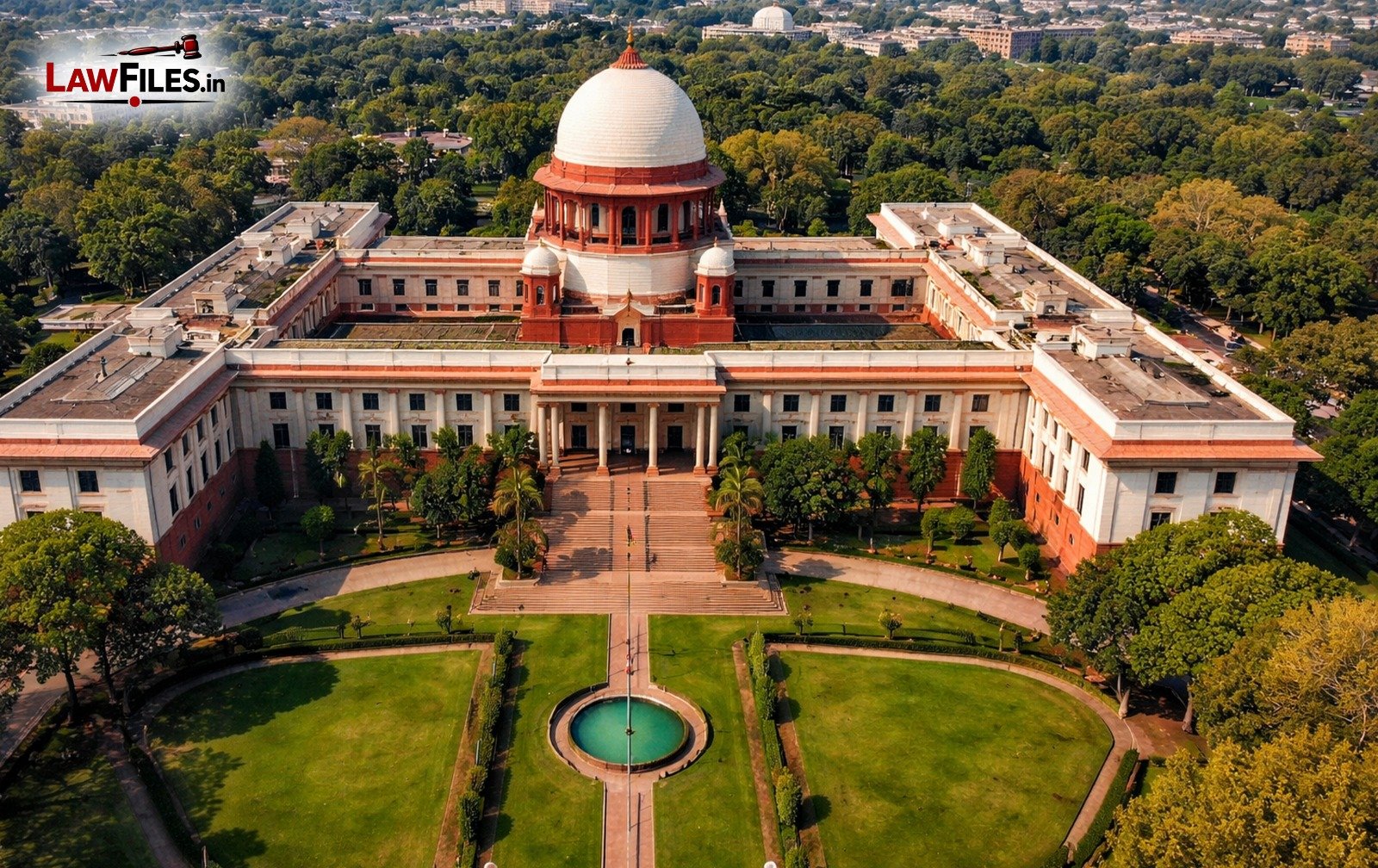
In a sharp assertion of judicial discipline, the Supreme Court of India has dismissed a public interest litigation (PIL) seeking a declaration that Netaji Subhas Chandra Bose and the Indian National Army (INA) were solely responsible for India’s independence. The Court not only rejected the plea but also issued a stern warning to the petitioner against repeatedly filing identical petitions, signalling growing judicial intolerance toward what it termed misuse of the PIL jurisdiction.
The matter was heard by a Bench led by Chief Justice of India Surya Kant, which expressed strong disapproval of the petitioner’s conduct. Notably, the same petitioner had earlier filed a similar PIL that had already been dismissed. The Court observed that the re-filing was not a bona fide attempt to seek justice but appeared to be motivated by a desire for publicity. It cautioned that repeated abuse of judicial processes would invite exemplary costs and even directed the Registry not to entertain similar petitions in the future.
At the core of the Court’s reasoning lies the doctrine of justiciability and separation of powers. The Bench categorically held that questions such as who secured India’s independence, or whether a particular historical figure should be accorded specific national recognition, fall outside the domain of judicial adjudication. These are matters of historical interpretation, political discourse, and executive policy—not legal disputes capable of judicial determination.
The Court further clarified that the reliefs sought—such as declaring specific national days or conferring honorary titles—are exclusively within the competence of the executive and legislature. Judicial intervention in such matters would amount to an impermissible overreach, disturbing the constitutional balance between the three organs of the State. This reflects a consistent judicial position that courts cannot rewrite national narratives or adjudicate competing historical claims.
The judgment also highlights a broader institutional concern: the misuse of PIL jurisdiction. Originally conceived as a progressive tool to enhance access to justice for marginalised groups, PILs have, over time, been increasingly invoked for issues lacking genuine public interest or legal substance. The Court’s remarks indicate a shift toward stricter scrutiny, particularly where petitions consume judicial time without raising enforceable legal rights.
This is not the first instance where the Supreme Court has taken a stern view of such petitions. In earlier cases involving Netaji Subhas Chandra Bose, including pleas seeking inquiries into his death or declarations regarding his legacy, the Court has consistently refused to intervene, describing such matters as beyond judicial competence and cautioning against “reckless” or “irresponsible” litigation.
From a constitutional perspective, the ruling reinforces two key principles. First, that judicial review is confined to legal rights and enforceable claims, not symbolic or historical assertions. Second, that the integrity of the judicial process must be preserved against frivolous or repetitive litigation, especially when it undermines access to justice for genuine litigants.
Analytically, the decision reflects a maturing jurisprudence on the limits of PIL. While courts continue to protect fundamental rights and intervene in matters of public importance, they are equally conscious of preventing the dilution of PIL as a constitutional tool. The warning issued in this case serves as both a deterrent and a doctrinal clarification reaffirming that the judiciary is not a forum for settling historical debates or seeking symbolic validation.
Parallel to such judicial developments, broader constitutional debates such as delimitation continue to shape India’s democratic framework. Delimitation remains an essential reform because it ensures that electoral representation reflects contemporary demographic realities. Without periodic adjustment of constituency boundaries, disparities emerge where some representatives speak for significantly larger populations than others, undermining the principle of equal representation.
From a constitutional standpoint, Articles 81 and 82 mandate that representation in the Lok Sabha be aligned with population. Delimitation operationalises this mandate, ensuring that the democratic value of each vote remains as equal as possible. In its absence, electoral distortions accumulate over time, weakening both the legitimacy and responsiveness of representative institutions.
Moreover, delimitation is not merely a technical exercise but a mechanism that strengthens governance. By realigning constituencies with actual population distribution, it enables better policy targeting, resource allocation, and political accountability. However, like all structural reforms, it must be implemented with sensitivity to federal balanceensuring that population-based adjustments do not disproportionately disadvantage certain regions.
Ultimately, both the Supreme Court’s stance on PIL misuse and the ongoing delimitation debate converge on a common constitutional theme: the need to preserve institutional integrity while advancing democratic fairness. Courts must guard their jurisdiction against misuse, just as legislatures must ensure that representation evolves in line with constitutional principles.
