

Close Menu
LawFilesLawFiles

    Subscribe to Updates

    Get the latest creative news from FooBar about art, design and business.

    What's Hot

    Dowry Law and Victim Protection: Supreme Court Clarifies Immunity for Wife and Her Family

    April 17, 2026

    Women’s Reservation Law Notified: Reform Realised or Deferred Constitutional Promise?

    April 17, 2026

    Supreme Court Notice on Muslim Personal Law: Reopening the Constitutional Debate on Gender Equality and Faith

    April 16, 2026
    Facebook X (Twitter) Instagram Threads
    Friday, April 17
    LawFilesLawFiles
    Facebook X (Twitter)
    • Home
      • Who We Are
      • Our Mission
      • Advisory board
      • Contact US
    • Supreme Court
    • High Courts
      • Gujarat High Court
      • Jharkhand High Court
      • Rajasthan High Court
      • Karnataka High Court
      • Andhra Pradesh High Court
      • Allahabad High Court
      • Himachal Pradesh High Court
      • Chhattisgarh High Court
      • Jammu & Kashmir and Ladakh High Court
      • Kerala High Court
      • Punjab and Haryana High Court
      • Patna High Court
      • Madhya Pradesh High Court
      • Madras High Court
      • Bombay High Court
      • Orissa High Court
      • Calcutta High Court
      • Meghalaya High Court
      • Delhi High Court
      • Manipur High Court
      • Gauhati High Court
    • Corporate
    • Taxation Laws
      • Income Tax
      • GST
      • Customs & Excise
    • Global Affairs
    • Articles
      • Former Judge’s’ Views
      • Senior Advocate
      • Policy Analysis
      • Tax Expert
    • PILS
      • Free/Affordable Legal Aid
      • PIL Cell
      • Law student Volunteer Cell (research & Drafting)
      • NGO & Legal services Authority Tie-ups
      • Online Legal Formats
      • Online Legal Help Form
    Subscribe Premium
    LawFilesLawFiles
    Home»Political News»Supreme Court Notice on Muslim Personal Law: Reopening the Constitutional Debate on Gender Equality and Faith
    Political News

    Supreme Court Notice on Muslim Personal Law: Reopening the Constitutional Debate on Gender Equality and Faith

    Anvita DwivediBy Anvita DwivediApril 16, 2026No Comments5 Mins Read
    WhatsApp Facebook Twitter Copy Link
    Share
    Facebook Twitter Pinterest Copy Link WhatsApp

    In a development that may have far-reaching implications for India’s personal law jurisprudence, the Supreme Court has issued notice to the Union Government on a Public Interest Litigation (PIL) challenging certain provisions of the Muslim Personal Law (Shariat) Application Act, 1937, on the ground that they are discriminatory against women.

    The case, though presently at a preliminary stage, signals a renewed judicial engagement with one of the most sensitive and unresolved questions in Indian constitutional law—the extent to which personal laws can be tested against fundamental rights, particularly the guarantee of equality under Article 14.

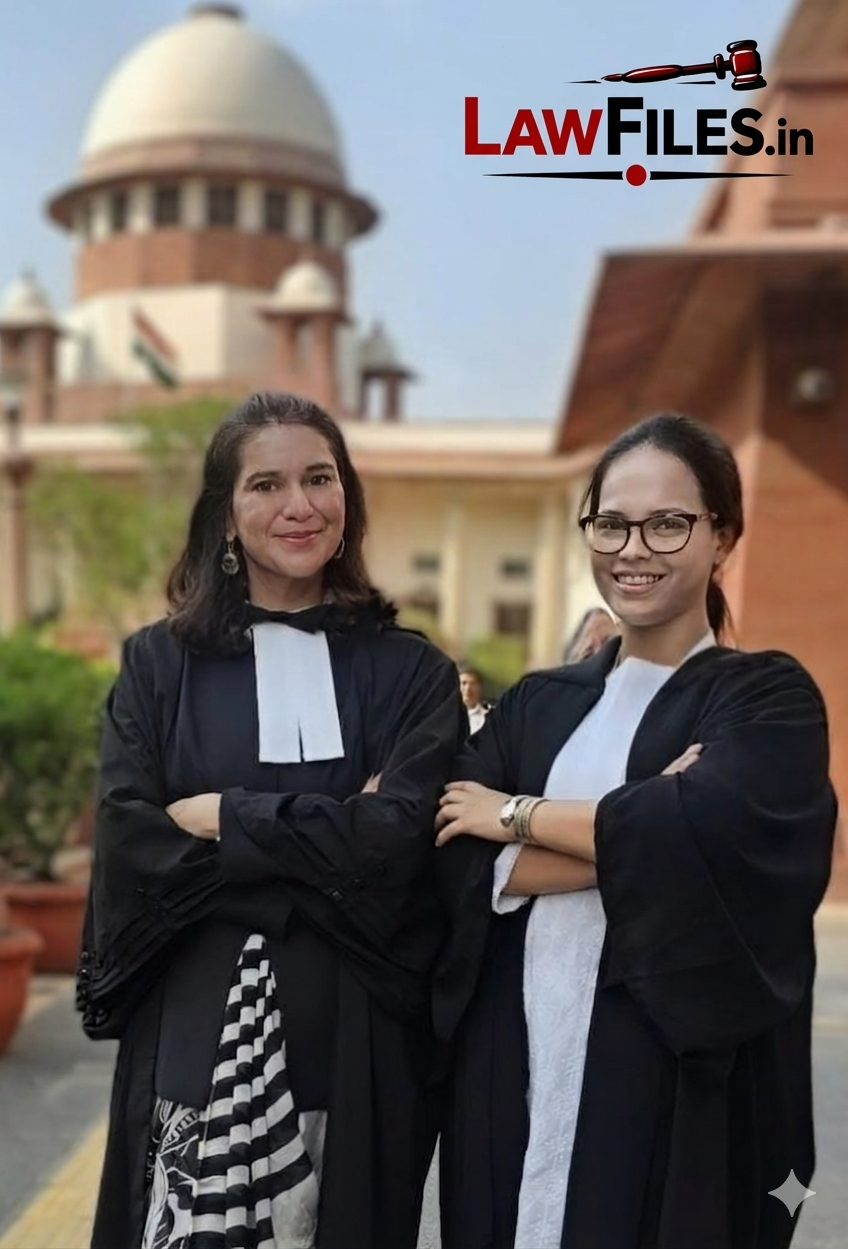
    The petition, filed by activist Poulomi Pavini Shukla along with the Nyaya Naari Foundation, challenges aspects of Muslim personal law relating primarily to inheritance and succession, arguing that they confer unequal rights on women. The plea contends that under existing Shariat-based rules, women are often entitled to only half or even less than the share granted to male counterparts, thereby resulting in structural gender inequality.

    Appearing for the petitioners, Senior Advocate Prashant Bhushan argued before the Court that such provisions are “manifestly discriminatory” and violate the constitutional guarantee of equality. Importantly, the petition also asserts that rules governing succession are civil in nature and do not qualify as “essential religious practices” protected under Article 25, thereby opening the door for constitutional scrutiny.

    The Bench, comprising Chief Justice Surya Kant and Justices Joymalya Bagchi and Vipul M. Panchol, issued notice to the Ministry of Minority Affairs, seeking the Centre’s response. The issuance of notice, while not indicative of any final view, reflects the Court’s willingness to examine the constitutional questions raised—particularly those concerning the intersection of religion, gender justice, and constitutional morality.

    This is not the first time that Muslim personal law has come under judicial scrutiny. In the landmark Shayara Bano judgment of 2017, the Supreme Court declared the practice of instant triple talaq unconstitutional, holding it to be arbitrary and violative of fundamental rights. That decision marked a significant moment in Indian constitutional law, as the Court asserted its authority to intervene in personal law practices where they conflict with constitutional guarantees.

    Subsequent litigation has also challenged practices such as polygamy and nikah halala, arguing that they violate Articles 14, 15, and 21. The present PIL builds upon this evolving jurisprudence, extending the challenge into the domain of inheritance and property rights, which remain deeply embedded in personal law frameworks.

    At the heart of the present controversy lies a fundamental constitutional tension. On one hand, Article 25 guarantees the freedom of religion, including the right to practice and propagate religious beliefs. On the other, Articles 14 and 15 mandate equality and non-discrimination, particularly on the ground of sex. The question before the Court, therefore, is not merely legal but philosophical: can religious personal laws be insulated from constitutional scrutiny when they appear to conflict with fundamental rights?

    The petition’s argument that succession laws are civil rather than religious is particularly significant. If accepted, it would allow the Court to bypass the “essential religious practices” doctrine—a test that has historically limited judicial intervention in religious matters. This approach finds support in earlier judicial observations suggesting that matters of marriage, divorce, and succession are not always integral to religion and may evolve with time.

    Such reasoning could potentially expand the scope of judicial review over personal laws, bringing them more firmly within the ambit of constitutional norms.

    At the same time, the case is likely to revive the long-standing debate around the Uniform Civil Code (UCC). The Supreme Court has, in recent hearings, observed that a uniform framework may be the only way to ensure equal rights across communities, particularly for women. However, the UCC remains a politically sensitive issue, often viewed through the lens of cultural autonomy and minority rights.

    The present PIL, though not directly seeking a UCC, raises similar concerns about legal pluralism versus constitutional uniformity. It highlights the challenge of reconciling India’s diverse personal law systems with the constitutional mandate of equality.

    From a critical standpoint, the case presents both opportunities and risks. On the one hand, judicial scrutiny of discriminatory practices could advance gender justice and constitutional rights, particularly in areas where legislative reform has been slow. On the other, excessive judicial intervention in personal laws may be perceived as encroaching upon religious autonomy, potentially leading to social and political backlash.

    The Court will also have to navigate the limits of its institutional role. While it has the authority to strike down unconstitutional provisions, the reform of personal laws often requires legislative engagement and societal consensus, particularly in matters deeply intertwined with religious identity.

    Another important dimension is the evolving role of Public Interest Litigation. PILs have historically served as instruments of social transformation, but their increasing use in matters of religion and personal law raises concerns about judicial overreach and selective targeting. The Court may need to carefully balance the need for constitutional adjudication with the principle of institutional restraint.

    In conclusion, the Supreme Court’s notice in the present case marks the beginning of what could become a defining constitutional debate. The issue is not confined to Muslim personal law alone—it touches upon the broader question of how India’s legal system reconciles pluralism with equality, and tradition with constitutional modernity.

    The outcome of this case, whenever it arrives, is likely to shape not only the future of personal law jurisprudence but also the contours of gender justice in a deeply diverse society.

    At its core, the case poses a question that has long remained unresolved:
    can a constitutional democracy permit unequal rights in the name of faith, or must equality ultimately prevail across all domains of law?

    Reopening the Constitutional Debate on Gender Equality and Faith Supreme Court Notice on Muslim Personal Law:
    Share. WhatsApp Facebook Twitter Pinterest Email
    Anvita Dwivedi

    Related Posts

    Dowry Law and Victim Protection: Supreme Court Clarifies Immunity for Wife and Her Family

    April 17, 2026

    Women’s Reservation Law Notified: Reform Realised or Deferred Constitutional Promise?

    April 17, 2026

    Free Speech or Incitement? Calcutta High Court Plea Against Suvendu Adhikari Rekindles Debate on Political Speech Limits

    April 16, 2026
    Add A Comment
    Leave A Reply Cancel Reply

    Demo
    Top Posts

    Wrongful Claim Rejection Amounts to Deficiency in Service: Delhi Consumer Commission Holds Star Health Liable

    March 16, 202655 Views

    Bombay High Court Quashes POCSO Case, Directs Accused to Fund MacBook for Victim’s Education

    February 28, 202648 Views

    Siyahat Meri Syahi Se: A Journey That Transforms Travel into Thought and Entrepreneurship

    March 18, 202636 Views

    Welfare or Electoral Strategy? Supreme Court’s Sharp Take on Pre-Poll Cash Schemes

    February 20, 202624 Views
    Don't Miss

    Dowry Law and Victim Protection: Supreme Court Clarifies Immunity for Wife and Her Family

    By Anvita DwivediApril 17, 2026

    In a significant clarification of dowry law jurisprudence, the Supreme Court has held that a…

    Women’s Reservation Law Notified: Reform Realised or Deferred Constitutional Promise?

    April 17, 2026

    Supreme Court Notice on Muslim Personal Law: Reopening the Constitutional Debate on Gender Equality and Faith

    April 16, 2026

    Free Speech or Incitement? Calcutta High Court Plea Against Suvendu Adhikari Rekindles Debate on Political Speech Limits

    April 16, 2026
    Stay In Touch
    • Facebook
    • Twitter

    Subscribe to Updates

    Get the latest creative news from SmartMag about art & design.

    Top Posts

    Wrongful Claim Rejection Amounts to Deficiency in Service: Delhi Consumer Commission Holds Star Health Liable

    March 16, 202655 Views

    Bombay High Court Quashes POCSO Case, Directs Accused to Fund MacBook for Victim’s Education

    February 28, 202648 Views

    Siyahat Meri Syahi Se: A Journey That Transforms Travel into Thought and Entrepreneurship

    March 18, 202636 Views
    Don't Miss

    Dowry Law and Victim Protection: Supreme Court Clarifies Immunity for Wife and Her Family

    By Anvita DwivediApril 17, 2026

    In a significant clarification of dowry law jurisprudence, the Supreme Court has held that a…

    Women’s Reservation Law Notified: Reform Realised or Deferred Constitutional Promise?

    April 17, 2026

    Supreme Court Notice on Muslim Personal Law: Reopening the Constitutional Debate on Gender Equality and Faith

    April 16, 2026

    Free Speech or Incitement? Calcutta High Court Plea Against Suvendu Adhikari Rekindles Debate on Political Speech Limits

    April 16, 2026
    Stay In Touch
    • Facebook
    • YouTube
    • TikTok
    • Instagram
    Top Trending
    About Us
    About Us

    LawFiles.in is a comprehensive legal news platform delivering real-time updates from the Supreme Court, High Courts, Tribunals, Corporate and Tax law, Regulators, Politics, Crime, Consumer cases, and Global Affairs.

    Email Us: lawfilesoffical@gmail.com
    Contact: +91 8800026066

    Contact Us:
    India International Centre
    40, Max Mueller Marg
    Lodhi Estate, New Delhi-110003

    Facebook X (Twitter)
    Our Picks

    Dowry Law and Victim Protection: Supreme Court Clarifies Immunity for Wife and Her Family

    April 17, 2026

    Women’s Reservation Law Notified: Reform Realised or Deferred Constitutional Promise?

    April 17, 2026

    Supreme Court Notice on Muslim Personal Law: Reopening the Constitutional Debate on Gender Equality and Faith

    April 16, 2026

    Free Speech or Incitement? Calcutta High Court Plea Against Suvendu Adhikari Rekindles Debate on Political Speech Limits

    April 16, 2026

    Seat vs Venue in Arbitration: Supreme Court Reaffirms Jurisdictional Clarity in a Fragmented Jurisprudence

    April 16, 2026
    Most Popular

    ED Can Arrest Even If FIRs Are Added to ECIR Later: Punjab & Haryana High Court

    January 30, 20260 Views

    Non-Disclosure Of QCBS Criteria In Tender Alone Not Enough To Allege Malafides: Gauhati High Court

    January 31, 20260 Views

    Anticipatory Bail For Proclaimed Offenders: Evolution Of Law

    January 31, 20260 Views

    January 2026 Monthly Digest: Important Rulings of the Jammu & Kashmir and Ladakh High Court

    February 2, 20260 Views

    Custodial Death and State Liability : A Critical Analysis of the Allahabad High Court’s ₹10 Lakh Compensation Judgment

    February 22, 20260 Views
    © 2026 LawFiles. Owned by Varta24 Media.
    • Articles
    • Careers
    • Corporate
    • Global Affairs
    • Law Firms & Lawyers
    • PILS
    • Regulatory

    Type above and press Enter to search. Press Esc to cancel.