


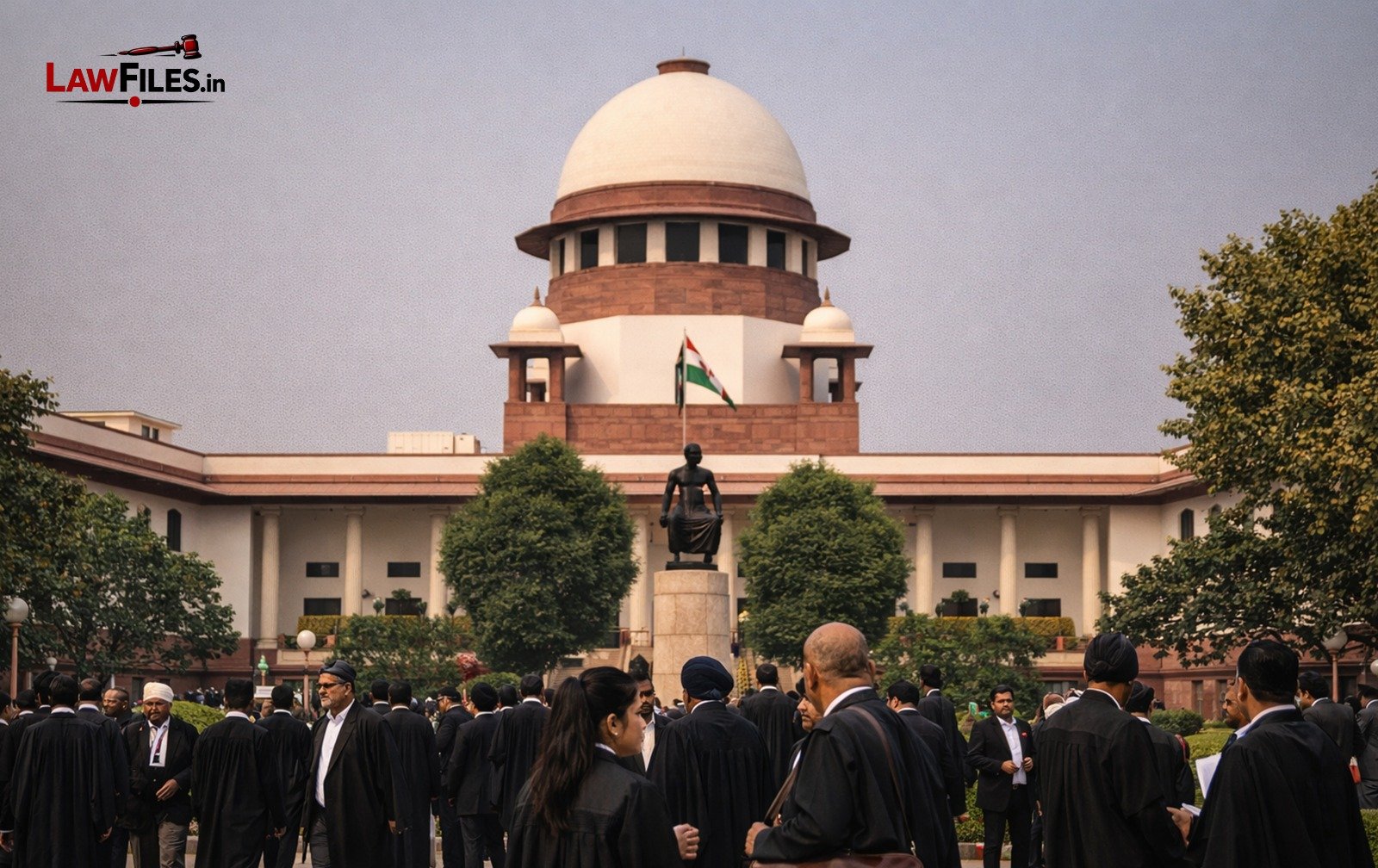
The Supreme Court has ruled that an insurer cannot be held liable for a loss occurring after the insured turnover has already exceeded the sum insured under a Marine Cargo Annual Turnover Policy, where the additional premium necessary to extend the risk had not been paid in advance. In a significant judgment concerning the relationship between insurance coverage, premium payment and the authority of an insurer’s agents, a Bench comprising Justice Sanjay Karol and Justice Nongmeikapam Kotiswar Singh allowed appeals filed by The New India Assurance Company Limited and set aside the National Consumer Disputes Redressal Commission’s direction requiring the insurer to pay a fire-loss claim. The Court’s decision in The New India Assurance Company Limited & Ors. v. M/s Louis Dreyfus Commodities India Pvt. Ltd. is principally founded upon Section 64VB of the Insurance Act, 1938, but its reasoning also engages important principles of agency, estoppel, ratification and the limits of an employee’s authority to enlarge contractual liability.
The dispute arose from a Marine Cargo Annual Turnover Policy obtained by Louis Dreyfus Commodities India from New India Assurance. The policy contemplated an annual turnover of ₹1,200 crore and the premium was structured to be paid in two equal instalments. During the currency of the policy, however, the insured’s actual turnover increased substantially. By the date on which a fire broke out at a Container Freight Station where 41,481 cotton bales belonging to the insured were stored, the turnover had reached approximately ₹1,724.12 crore, considerably exceeding the ₹1,200 crore limit contemplated under the policy. Crucially, no additional premium corresponding to the enhanced turnover had been paid before the fire occurred. The insurer’s surveyor subsequently assessed the loss at ₹22,01,29,271, but the insurer ultimately repudiated the claim on the ground that the relevant risk was beyond the insured limit at the time of the loss and that the additional premium necessary for enhanced coverage had not been paid.
The factual complication arose because, after the fire, the insured did make an additional premium payment of ₹86,86,125. That payment was made more than a month after the incident and followed an email from a relationship manager requesting another instalment based on the current turnover so that the turnover position could be “regularised”. The insured relied heavily upon communications from the insurer’s officials suggesting that payment of the second instalment would result in the transits being covered until expiry of the policy even if the turnover crossed ₹1,200 crore. The National Consumer Commission found this communication significant and concluded that the insurer could not subsequently deny coverage after its own officials had represented that the policy would continue notwithstanding the increased turnover.
The Supreme Court, however, approached the issue from the statutory starting point rather than from the subsequent correspondence between the parties. Justice Sanjay Karol, in his concurring judgment, treated Section 64VB of the Insurance Act as imposing a statutory restriction upon the assumption of insurance risk without payment of the corresponding premium. The provision states, in substance, that an insurer cannot assume a risk unless the premium is received in advance in accordance with the statutory framework. Section 64VB(2) further makes clear that the insurer cannot assume the risk earlier than the date on which the premium is paid. The Bench therefore considered the question not merely as one of contractual interpretation but as one involving a statutory condition governing when insurance risk can lawfully attach.
This distinction is fundamental to understanding the judgment. Insurance operates on the basic contractual principle that the insurer undertakes a specified risk in return for a specified premium. The sum insured represents the financial boundary of the insurer’s contractual exposure, while the premium represents the consideration for assuming that exposure. Where the risk itself expands because the insured’s turnover exceeds the agreed limit, the corresponding extension of liability cannot ordinarily be divorced from the additional premium required to support that increased risk. Section 64VB gives this commercial principle statutory force by preventing insurers from assuming risk without the requisite premium being received or otherwise secured in the manner permitted by law.
The Court found that the turnover-based limit of ₹1,200 crore had already been exhausted before the fire. Once that threshold had been crossed, the insured could not simply assume that the policy automatically expanded with the business’s increased turnover. According to the Court’s reasoning, the insured had the responsibility either to obtain the necessary extension of coverage by paying the additional premium or, where permitted, to ensure that the premium was guaranteed to be paid within the legally permissible period. The fact that the business continued to generate turnover beyond the insured figure did not itself enlarge the insurer’s contractual exposure. Insurance coverage follows the terms upon which risk has been assumed; it does not automatically expand merely because the underlying commercial activity expands.
This aspect of the judgment carries particular significance for annual turnover policies. Such policies are designed around the changing volume of commercial activity rather than a single fixed consignment. The insured may estimate its annual turnover and obtain coverage accordingly, with premium arrangements structured around that estimate. But the flexibility inherent in such policies does not mean that coverage can expand indefinitely without corresponding adjustment of premium. The Supreme Court’s decision therefore reinforces a basic actuarial and contractual principle: where the quantum of risk changes materially, the premium mechanism must correspondingly change if the insurer is to be legally exposed to the enhanced risk.
The respondent sought to overcome this statutory difficulty by relying upon the communications issued by the insurer’s officers. The National Consumer Commission had attached considerable importance to an email from the insurer’s Divisional Manager stating that, after payment of the second instalment, “all the transits are covered till the expiry of policy even if it crosses ₹1200 crores.” From the consumer forum’s perspective, such a representation created an assurance upon which the insured was entitled to rely. The Supreme Court, however, held that an employee or agent cannot enlarge the insurer’s liability where the agent lacks authority to undertake such an obligation, particularly where the purported assurance would operate contrary to a statutory requirement.
Justice Karol examined the insurer’s internal guidelines issued in 2006, which specifically stated that premium adjustment under the relevant policy was to be made only downwards in view of Section 64VB. The existence of this internal framework became important because the Court was considering whether the Divisional Manager possessed authority to make a representation extending the insurer’s risk beyond the premium actually paid. The Court observed that although a principal can ordinarily be bound by acts performed by its agent within the scope of the agent’s authority, that principle does not extend to acts which fall outside the authority conferred by the principal or which contradict binding regulatory requirements. The Court consequently found no basis for treating the Divisional Manager’s communication as sufficient to create liability against the insurer.
The judgment’s treatment of agency law is particularly valuable because it draws a careful distinction between an employee’s ability to communicate with a customer and the employee’s legal authority to alter the substance of the insurance contract. A divisional or relationship manager may ordinarily correspond with policyholders, explain policy provisions, collect premiums and perform other functions associated with insurance administration. But such operational authority does not automatically include the power to create a new risk, increase the sum insured, enlarge the insurer’s liability or waive a statutory precondition governing the attachment of risk. Justice Nongmeikapam Kotiswar Singh, in his separate concurring judgment, examined the issue through the provisions of the Indian Contract Act, 1872 and emphasised that an agent’s authority extends to acts that are necessary, usual and lawful in conducting the authorised business, but does not extend merely because an act generally concerns the principal’s business.
The Court’s analysis of apparent authority is equally important. In commercial relationships, a third party may sometimes rely upon the outward representation of an agent where the principal has created the appearance that the agent possesses a particular authority. But the Supreme Court distinguished between a principal’s manifestation of authority and an agent simply asserting authority on his own behalf. Apparent authority must arise from the principal’s conduct; it cannot be manufactured by an agent’s unilateral statement that he possesses a power which the principal never conferred. In the present case, the insurer’s internal guidelines were inconsistent with the proposition that the Divisional Manager had authority to extend coverage without corresponding premium payment. The Court consequently declined to bind the insurer on the basis of the communication.
The principle has wider implications for policyholders who routinely deal with branch managers, relationship managers and other insurance representatives. Customers often reasonably assume that a senior officer communicating from an insurer’s office possesses authority to clarify or modify policy arrangements. The Supreme Court’s ruling demonstrates, however, that there is a legal distinction between administrative representations and contractual variations that materially enlarge risk. Where a proposed alteration affects the fundamental extent of insurance liability, the policyholder cannot necessarily rely upon an informal assurance if the officer lacks the necessary authority and the proposed alteration conflicts with a statutory requirement.
The respondent also invoked the doctrine of estoppel, arguing that the insurer should not be permitted to accept premium and subsequently deny the coverage which its own officials had represented would exist. Estoppel is an important principle in commercial law because it can prevent a party from departing from a representation upon which another has reasonably relied. The Supreme Court, however, emphasised the statutory limitation upon that doctrine. A representation cannot operate through estoppel to compel a party to act contrary to a mandatory statutory provision. The Court therefore rejected the argument that the insurer’s conduct could create liability which Section 64VB itself prohibited.
The distinction between contractual estoppel and statutory prohibition is particularly significant. Parties are generally free to structure their commercial relationships within the boundaries of law, and courts may in appropriate cases prevent a party from unfairly resiling from a representation. But private conduct cannot override an express statutory command. If the law prohibits an insurer from assuming a particular risk before receiving the corresponding premium, neither an employee’s representation nor the parties’ subsequent conduct can retrospectively transform an otherwise prohibited assumption of risk into a lawful one. This is a familiar principle of public law and statutory interpretation: equitable doctrines may regulate private conduct, but they cannot be invoked to defeat mandatory legislation.
The Supreme Court reinforced this point by referring to the principle that estoppel cannot operate against a statute. The Court also considered the respondent’s reliance upon Shyam Telelink Ltd. v. Union of India, but found that the doctrine could not be applied in a manner inconsistent with Section 64VB. This part of the judgment demonstrates that the Court was not merely favouring the insurer on a technical contractual interpretation. It was giving priority to a statutory condition governing the very assumption of risk. Once the relevant statutory embargo applied, the parties’ subsequent representations could not retrospectively remove it.
Justice Nongmeikapam Kotiswar Singh’s judgment further examined the possibility of ratification under Section 196 of the Contract Act. Ratification ordinarily permits a principal to adopt an act performed by an agent without authority, thereby treating the act as if it had originally been authorised. The respondent’s case could therefore be understood as suggesting that the insurer’s subsequent conduct, including the acceptance of additional premium and endorsement relating to the increased sum insured, amounted to ratification of the earlier assurance. The Court rejected that approach, holding that ratification cannot be used to circumvent a mandatory statutory requirement governing when insurance risk attaches.
This distinction between contractual ratification and statutory compliance is one of the most intellectually important aspects of the decision. Ordinarily, the law of agency allows commercial principals considerable flexibility in adopting acts performed on their behalf. But ratification presupposes that the underlying act is legally capable of being adopted. A principal cannot retrospectively validate an act which the law prohibits the principal itself from performing. Consequently, even if the insurer later endorsed an increased sum insured, that subsequent act could not retrospectively make the insurer liable for a risk that had materialised before the statutory precondition for the enhanced coverage had been satisfied.
The Court’s formulation that an agent cannot impose upon a principal a liability which the agent was neither authorised nor legally competent to assume captures the central principle of the judgment. Agency law exists to facilitate commercial transactions, not to enable employees to override the statutory boundaries within which their principals operate. The doctrine qui facit per alium facit per se—he who acts through another acts himself—therefore applies only within the limits of the agent’s lawful authority. It cannot be used to manufacture liability where the agent lacked authority and the purported act itself was contrary to statute.
The decision also deserves attention from the perspective of consumer law. The NCDRC had intervened in favour of the insured, relying substantially upon the insurer’s own communication and the surveyor’s assessment of the loss. Ordinarily, an insurer’s repudiation may invite scrutiny where the insurer’s own conduct appears inconsistent with the position subsequently taken. Consumer fora are specifically empowered to address unfair or deficient conduct by service providers. But the Supreme Court has now drawn a boundary around that remedial power: consumer jurisdiction cannot be used to impose a liability which the substantive insurance law itself does not permit. The existence of a consumer remedy does not alter the underlying contractual and statutory limits of insurance coverage.
This principle is particularly relevant because surveyor assessment and insurer liability are legally distinct questions. The surveyor had quantified the loss at more than ₹22 crore, but the fact that the insurer’s surveyor assessed a particular quantum of damage did not establish that the insurer was contractually liable to pay that amount. Assessment determines the extent of loss if liability exists; it does not independently create coverage. The Supreme Court’s decision therefore reinforces the sequence of analysis in insurance disputes: first determine whether the risk was covered and whether the insurer’s liability had attached; only thereafter does the question of quantum arise. A technically accurate survey cannot enlarge the scope of a policy.
The ruling also illustrates why the timing of premium payment can be decisive in insurance litigation. The additional premium in this case was eventually paid, but the payment occurred after the fire. That chronological fact was fatal to the claim for enhanced coverage because the risk had already materialised. Insurance cannot ordinarily be purchased retrospectively after the occurrence of the insured event. The very concept of insurance assumes uncertainty at the time the risk is undertaken. Once the loss has occurred, subsequent payment of premium cannot transform the insurer into a party that had assumed the risk before the event. Section 64VB reinforces this principle by tying assumption of risk to receipt of premium.
At the same time, the judgment should not be misunderstood as establishing that an insurer can never be liable merely because a premium was paid in instalments. The Court’s reasoning turns upon the statutory conditions governing assumption of the particular risk and the fact that the insured limit had already been exceeded before the loss. Where a policy expressly permits instalment payments and the insurer has lawfully assumed the risk under the applicable arrangement, the mere existence of instalments does not necessarily defeat coverage. The critical question is what risk had attached, for what amount, and whether the corresponding premium had been paid or validly secured in accordance with Section 64VB when that risk arose.
For commercial policyholders, the judgment carries a practical lesson of considerable importance. Businesses operating under turnover-based, declaration-based or floating insurance arrangements cannot safely rely upon informal assurances that increased turnover will automatically be covered. Where the insured’s exposure is approaching the policy limit, the prudent course is to obtain a formal endorsement or extension of coverage and ensure that the corresponding premium is paid in advance or otherwise dealt with in strict compliance with the statutory and contractual framework. Internal emails or verbal assurances from relationship managers may become difficult to enforce if they purport to create coverage that the officer was not legally authorised to provide.
For insurers, the judgment equally highlights the importance of internal controls and employee authority. If an insurer’s officers routinely communicate with customers regarding coverage, the company must ensure that their authority is clearly defined and that customers receive accurate information concerning the limits within which coverage can be extended. Conflicting communications from employees can create avoidable disputes and undermine commercial certainty. Although the Supreme Court ultimately protected the insurer in this case because the employee lacked authority to create the additional risk, the judgment should not be read as encouraging insurers to tolerate careless representations. Clear delegation frameworks and documented endorsements remain essential to reducing litigation.
The case also carries a broader lesson about the relationship between equity and statutory regulation in commercial law. The respondent’s reliance upon the insurer’s conduct had intuitive force: if an insurer’s own officer appeared to assure the customer that coverage would continue, it may seem unfair for the insurer later to rely upon a statutory provision to deny the claim. Yet commercial fairness cannot be separated from the legal architecture governing the transaction. The Court’s response was essentially that fairness cannot be used to impose a liability which the statute itself prohibits. If the statutory framework is considered too rigid for modern insurance practices, the solution lies in regulatory or legislative reform rather than judicial creation of an exception through estoppel.
The judgment therefore establishes a clear hierarchy between the policy document, the premium obligation, statutory regulation and the acts of individual agents. An employee’s representation cannot override the policy’s agreed limits; the policy itself cannot override a mandatory statutory requirement; and equitable doctrines such as estoppel and ratification cannot be used to defeat that statutory command. This hierarchy provides useful clarity to courts and consumer fora dealing with disputes where policyholders rely upon informal communications from insurance personnel.
Ultimately, the Supreme Court’s decision in The New India Assurance Company Limited v. M/s Louis Dreyfus Commodities India Pvt. Ltd. is not merely a ruling about a ₹22-crore fire claim. It clarifies a fundamental proposition in insurance law: risk must be matched by lawful assumption of liability and corresponding premium consideration before the insured event occurs. The Court has protected the statutory boundary created by Section 64VB and refused to allow post-event payment, informal assurances or principles of agency and estoppel to retrospectively enlarge the insurer’s exposure. At the same time, the decision sends an important message to the insurance industry that contractual authority must be clearly communicated and exercised within the law. For policyholders, the message is equally direct: when the value of the risk increases, coverage must be formally enhanced before the risk materialises. The judgment thus reinforces commercial certainty while reaffirming a broader principle of insurance jurisprudence that an insurer’s liability is founded not merely upon the existence of a policy, but upon the precise risk that was lawfully assumed for the premium actually paid at the relevant time.
