


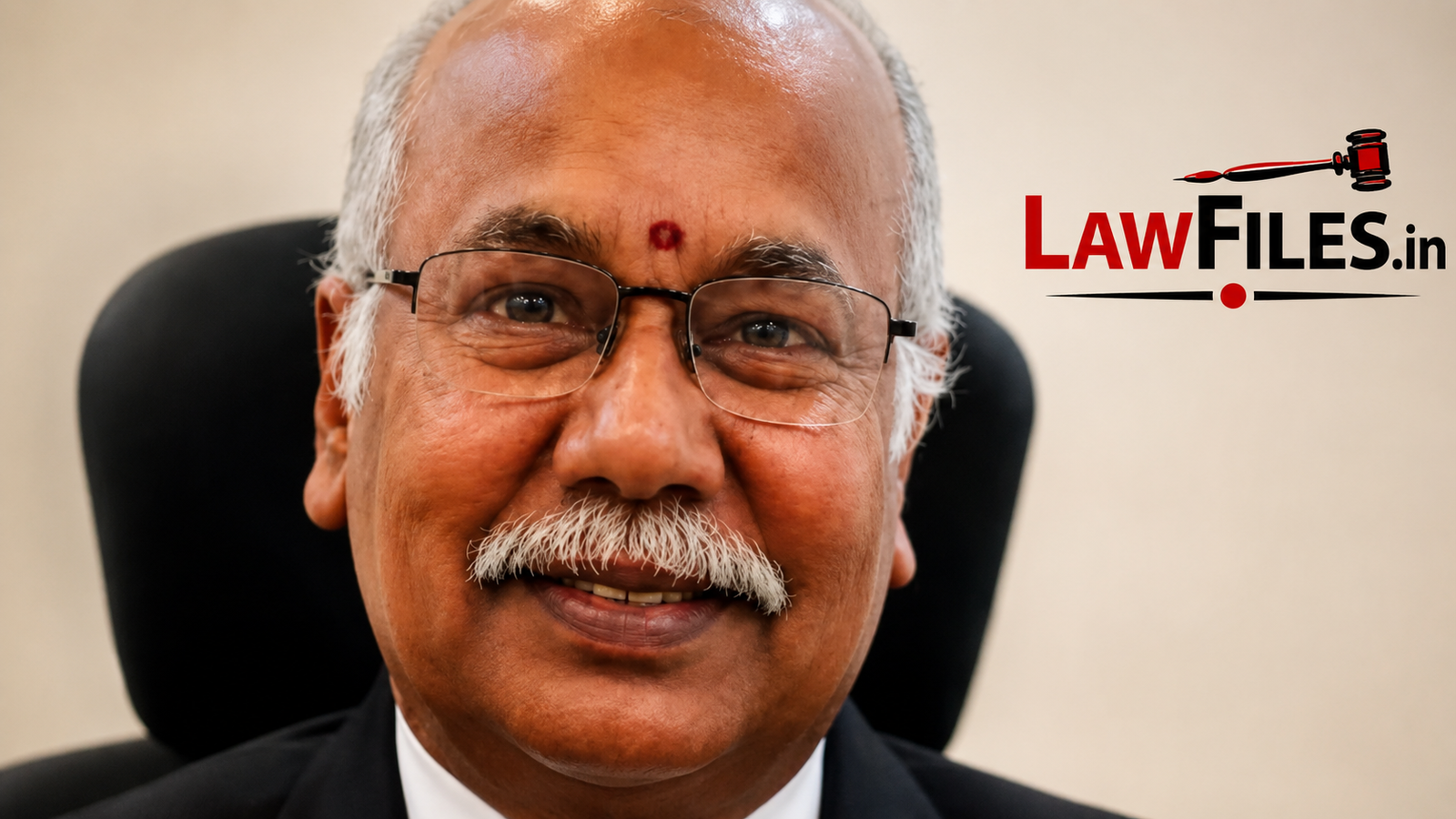
The legal fraternity is deeply concerned over the reported disappearance of former Madras High Court Judge and Senior Advocate V. Sivagnanam, who has remained untraceable in Nepal since August 26 after catastrophic floods and landslides struck parts of the country. Justice Sivagnanam was travelling with a group of Tamil pilgrims when communication with him was lost following a WhatsApp call with his wife in the early hours of August 26. The Delhi Tamil Advocates Association has approached the Chief Justice of India, the Union Government and other authorities seeking immediate intervention to locate him, ascertain his safety and facilitate his return to India. The Madras Bar Association has also reportedly written to the Chief Justice of India and the Prime Minister seeking intensified efforts.
The circumstances surrounding Justice Sivagnanam’s disappearance have become particularly alarming because information received from fellow pilgrims reportedly places the bus in which he was travelling in the vicinity of the Armed Police Force Nepal Border Outpost at Timure. Persons travelling in another bus were rescued near the border post and subsequently informed the family that Justice Sivagnanam’s bus was approximately 100 to 200 metres away from theirs. The information has not established what happened to the former judge thereafter, but it has provided authorities with a potentially significant geographical indication for search and rescue efforts.
The last known communication from Justice Sivagnanam reportedly took place through a WhatsApp call with his wife in the early hours of August 26. Since then, there has been no confirmed communication from him. A photograph taken inside the pilgrims’ bus has also reportedly been relied upon by the Bar association as evidence that he was travelling with the group when the disaster occurred. These details have heightened concern because the disappearance occurred during a rapidly developing natural disaster in an area where roads, communication networks and transport links were severely disrupted.
The Nepal disaster has created an exceptionally difficult rescue environment. Flash floods and landslides in the Himalayan region have caused extensive destruction, with large numbers of people reported dead or missing and rescue teams facing serious logistical difficulties. Roads have been damaged or blocked, bodies have been swept considerable distances by floodwaters and authorities have been compelled to undertake large-scale recovery and identification operations. The scale of the disaster makes the tracing of individual missing persons particularly challenging, especially where communication systems have been interrupted and affected areas remain difficult to access.
Against this background, the appeal by the legal community should not be viewed merely as a request arising from Justice Sivagnanam’s former judicial position. At its core, it concerns the responsibility of public authorities to assist an Indian citizen who is reportedly missing in a foreign country during a major natural disaster. The fact that the missing person is a former constitutional court judge has understandably drawn considerable attention within the legal fraternity, but the underlying humanitarian obligation extends to every Indian citizen caught in such circumstances.
The Delhi Tamil Advocates Association has specifically requested the intervention of Chief Justice of India Surya Kant so that the representation can be forwarded to the Union Government and the authorities concerned. The association has urged that all possible steps be taken to locate Justice Sivagnanam, establish whether he is safe and secure his return to India. The Madras Bar Association has similarly approached the CJI and the Prime Minister’s Office, demonstrating that concern over his whereabouts has spread across different sections of the legal community.
The involvement of the Chief Justice of India in such a matter is institutionally understandable, although it is important to recognise the limits of the judiciary’s direct operational role in an international disaster response. The Supreme Court does not itself possess a search-and-rescue apparatus in Nepal. The actual rescue effort necessarily depends upon coordination between the Ministry of External Affairs, Indian diplomatic authorities, Nepalese government agencies, disaster-response teams, local police and security forces. The CJI’s intervention can nevertheless serve an important coordinating and signalling function by ensuring that the concern reaches the appropriate executive authorities with urgency.
The reported location of the bus near Timure makes coordination with Nepalese authorities particularly important. Timure lies in the Rasuwa region close to the Nepal-China border and has been severely affected by the disaster. The Armed Police Force Nepal border post has reportedly become one of the locations where stranded persons sought refuge. Information from rescued pilgrims may therefore provide investigators with a crucial last-known-location lead, although it cannot by itself establish whether Justice Sivagnanam remained with the bus, was separated from the group or was moved to another location during the emergency.
This distinction is important because the word “missing” should not prematurely be equated with death. In disaster situations involving floods, landslides and disrupted communications, people can become separated from their groups, stranded in inaccessible areas, transported to relief camps or rescued without immediately being registered with their families. The authorities must therefore treat the matter as an active search-and-rescue operation until reliable information establishes otherwise.
The legal framework surrounding missing persons during an international disaster is necessarily different from an ordinary missing-person investigation within India. Nepal is a sovereign foreign jurisdiction, and Indian authorities cannot independently conduct policing operations on Nepalese territory. Any search involving Nepalese territory must necessarily be undertaken through cooperation with the Government of Nepal and its competent agencies. India’s diplomatic and consular machinery therefore assumes particular importance in such circumstances.
The Ministry of External Affairs has an established institutional role in assisting Indian nationals abroad, particularly during emergencies. Diplomatic missions can coordinate with local authorities, obtain information about hospitals and shelters, facilitate communication with families and assist in repatriation once individuals are located. In a disaster of this scale, however, those mechanisms must operate alongside Nepal’s own rescue infrastructure. The urgency of the situation therefore makes inter-governmental coordination more important than any single institutional intervention.
The legal fraternity’s appeal also illustrates an important principle concerning the relationship between constitutional offices and public administration. The Chief Justice of India is the head of the Indian judiciary, but a request to intervene in a humanitarian emergency does not necessarily require the exercise of judicial power. The CJI can receive representations from members of the legal community and, where appropriate, ensure that the concern is brought to the attention of the executive authorities. Such an institutional response should not be confused with judicial adjudication.
Justice Sivagnanam’s own professional history has added emotional significance to the incident within the legal community. He served in the judiciary for approximately 34 years. He was appointed as a Judicial Magistrate on July 1, 1991 and was elevated to the Madras High Court on December 3, 2020. Following his retirement from the High Court, he was designated a Senior Advocate by the Supreme Court with effect from July 23, 2025. (livelaw.in)
His career therefore spans several stages of the justice system, beginning with the subordinate judiciary and eventually reaching the High Court. That trajectory is institutionally significant because judges who have served across different levels of the judicial hierarchy often remain closely connected to the Bar and Bench even after retirement. The collective response of the Tamil legal community demonstrates precisely this continuing professional relationship.
The appeal by the Bar also reflects the traditional institutional bond between lawyers and judges. Courts function through an ecosystem in which the Bar and Bench are distinct but interconnected. When a former judge faces a personal emergency, professional associations may naturally act as intermediaries in bringing the matter to the attention of senior constitutional and executive authorities. Such solidarity is particularly visible when the crisis occurs outside India and requires coordination beyond the ordinary reach of family members.
The humanitarian dimension, however, remains paramount. Families of missing persons in a disaster are often placed in an agonising position because the absence of information produces uncertainty rather than closure. They may not know whether the person has been rescued, hospitalised, stranded or swept away. The first responsibility of the authorities is therefore to establish an accurate information chain so that rumours and incomplete accounts do not replace verified information.
This becomes particularly difficult when disaster zones contain large numbers of unidentified persons. Nepal has reportedly been recovering bodies from downstream areas and undertaking identification through photographs, records and DNA sampling because conventional identification infrastructure has been overwhelmed. The authorities have also faced the difficult task of managing unidentified remains while continuing searches for survivors and missing persons.
The scale of the disaster therefore makes systematic identification as important as physical rescue. If survivors are moved from one location to another, their details must be recorded and communicated to the appropriate authorities. Similarly, unidentified bodies must be documented through photographs, biometric information and DNA samples so that families can eventually receive reliable information. These procedures may appear administrative, but they are essential to protecting the rights and dignity of missing persons and their families.
The present situation also demonstrates why disaster-response systems increasingly require cross-border information sharing. Pilgrimage and tourism routinely involve large numbers of Indian citizens travelling through neighbouring countries. A disaster affecting a popular pilgrimage route can therefore quickly become an international consular emergency. Mechanisms for registering travellers, communicating emergency advisories and maintaining contact with tour operators and local authorities can significantly improve the ability to trace individuals during crises.
The reports concerning Justice Sivagnanam’s group also underline the value of basic travel records. The photograph taken inside the bus, the identity of fellow passengers and the last known communication with his family may all become important pieces of evidence for reconstructing his movements. In disaster investigations, seemingly ordinary information can become critical when conventional communication systems fail.
The circumstances also raise a broader question concerning the protection of elderly and vulnerable travellers during international pilgrimages. Group travel offers advantages in normal circumstances, but natural disasters can rapidly separate groups. Tour operators, pilgrimage organisers and local authorities therefore have a responsibility to maintain accurate passenger lists and establish emergency communication procedures. These measures can significantly reduce the time required to determine who has been rescued and who remains missing.
From a legal perspective, the situation also brings into focus the importance of the right to life and personal security under Article 21 of the Indian Constitution, although the constitutional obligation must be understood in its proper territorial and institutional context. Article 21 directly binds the Indian State and protects individuals against unlawful deprivation of life or personal liberty. Where an Indian citizen is abroad during an emergency, the State’s ability to directly guarantee physical safety is necessarily constrained by foreign sovereignty. Nevertheless, the Government has a legitimate responsibility to use diplomatic and consular mechanisms to assist citizens facing grave danger overseas.
This responsibility should not be confused with an absolute constitutional guarantee that the Government can rescue every citizen in every circumstance. Natural disasters involve factors beyond governmental control. The legal and administrative obligation is one of reasonable and effective assistance within the powers available to the State. In an international disaster, that necessarily means using diplomatic channels, coordinating with the host government and deploying available resources as rapidly as possible.
The case therefore illustrates a broader principle of modern governance: citizenship does not end at the border, even though governmental jurisdiction does. Indian authorities cannot exercise coercive power in Nepal as they could within India, but they can act through diplomacy, consular assistance and bilateral cooperation. The distinction between territorial jurisdiction and protective responsibility becomes particularly important in emergency situations.
The Nepal disaster also demonstrates why international disaster response requires institutional preparedness rather than ad hoc intervention. When large numbers of Indians are missing in a foreign country, the Government must be able to establish a centralised database of missing persons, coordinate information received from families and travel groups, liaise with foreign authorities and communicate verified updates. Such systems can reduce duplication and ensure that individual cases do not disappear within the scale of a larger humanitarian emergency.
In Justice Sivagnanam’s case, the fact that other pilgrims from a nearby bus were rescued provides a potentially valuable lead. Their accounts can help authorities reconstruct the route, approximate location and circumstances at the time the flood struck. But such information must be independently verified. Disaster conditions can distort distance and chronology, and statements made by survivors may be based upon incomplete visibility during an emergency. The responsible course is therefore to treat these accounts as search leads rather than conclusive evidence.
The legal community’s response also demonstrates the importance of maintaining communication between families and institutions during emergencies. The appeal to the CJI and government authorities ensures that the family does not have to navigate the complexities of international disaster response alone. At the same time, authorities must ensure that information reaching the family is verified and not speculative, because inaccurate reports can cause additional trauma.
The situation further illustrates the distinction between public concern and responsible reporting. The disappearance of a former High Court judge is understandably newsworthy, but reporting should not prematurely declare his fate or convert unverified accounts into established facts. Until the authorities locate him or obtain reliable evidence establishing what happened, the legally and factually accurate description remains that he is untraceable or reported missing.
This restraint is especially important in disaster situations where information changes rapidly. Search operations may uncover survivors days after an initial disappearance, while people presumed missing may be found in shelters or hospitals. Responsible dissemination of information therefore requires constant distinction between confirmed facts, statements made by associations and unverified possibilities.
The case also presents an important reminder of the continuing human dimension behind the legal profession. Judges and advocates are often discussed primarily through judgments, constitutional doctrines and professional achievements. Yet behind those institutional roles are individuals and families who can be affected by the same natural disasters and emergencies as everyone else. The concern expressed by the Bar therefore reflects not only professional solidarity but also a recognition of the human vulnerability shared by members of the justice system.
The immediate priority remains clear: establish Justice Sivagnanam’s whereabouts and safety. The available information provides authorities with several potential leads—the last known communication, the pilgrimage group, the bus location, statements from rescued pilgrims and the Timure border-post area. These should be integrated into a coordinated search involving Nepalese rescue agencies and Indian diplomatic authorities.
At the same time, the case should be seen within the much larger humanitarian tragedy unfolding in Nepal. The flood disaster has produced extensive casualties and large numbers of missing persons, overwhelming rescue and identification systems. The search for any individual must therefore occur within a broader operation involving hundreds or thousands of affected families. This makes coordination and accurate record-keeping all the more essential.
The legal fraternity’s intervention should consequently be understood as an appeal for institutional urgency rather than judicial privilege. Justice Sivagnanam’s former judicial office understandably gives the matter visibility, but the underlying principle is universal: every missing citizen in a disaster deserves an organised effort to establish what happened to them. The State’s response should therefore strengthen, rather than diminish, mechanisms that are equally available to other affected Indian nationals.
The episode also underscores the importance of disaster diplomacy between neighbouring countries. India and Nepal share close geographical, cultural and people-to-people ties, with substantial cross-border movement for pilgrimage, tourism, employment and family purposes. Natural disasters affecting one country can therefore have immediate consequences for citizens of the other. Effective cooperation in rescue, identification and repatriation is consequently not merely humanitarian but an important component of regional governance.
Ultimately, the disappearance of former Madras High Court Judge V. Sivagnanam in the Nepal floods remains an unfolding humanitarian emergency rather than a concluded legal event. The available information establishes that he travelled with a group of Tamil pilgrims, last communicated with his family on August 26, and has not been heard from since; it also provides a reported lead placing his bus near the Timure area at the time of the disaster. What happens next depends principally upon the continuing search and rescue efforts of Nepalese authorities, supported by India’s diplomatic and governmental machinery.
The broader significance of the episode lies in the responsibility of institutions to respond swiftly when citizens become vulnerable beyond India’s borders. The judiciary may not possess the operational machinery to conduct an international rescue, but the legal fraternity can use its institutional voice to ensure that a missing citizen’s case receives the attention it deserves. The appropriate response now is coordinated search, verified information, diplomatic engagement and sustained assistance to the family not speculation about the outcome. Justice Sivagnanam’s distinguished judicial career has understandably brought the matter into sharp public focus, but the larger humanitarian lesson is universal: in a disaster of this magnitude, every missing person represents a family waiting for an answer, and the first obligation of public institutions is to do everything lawfully and practically possible to ensure that the search for that answer does not stop prematurely.
