


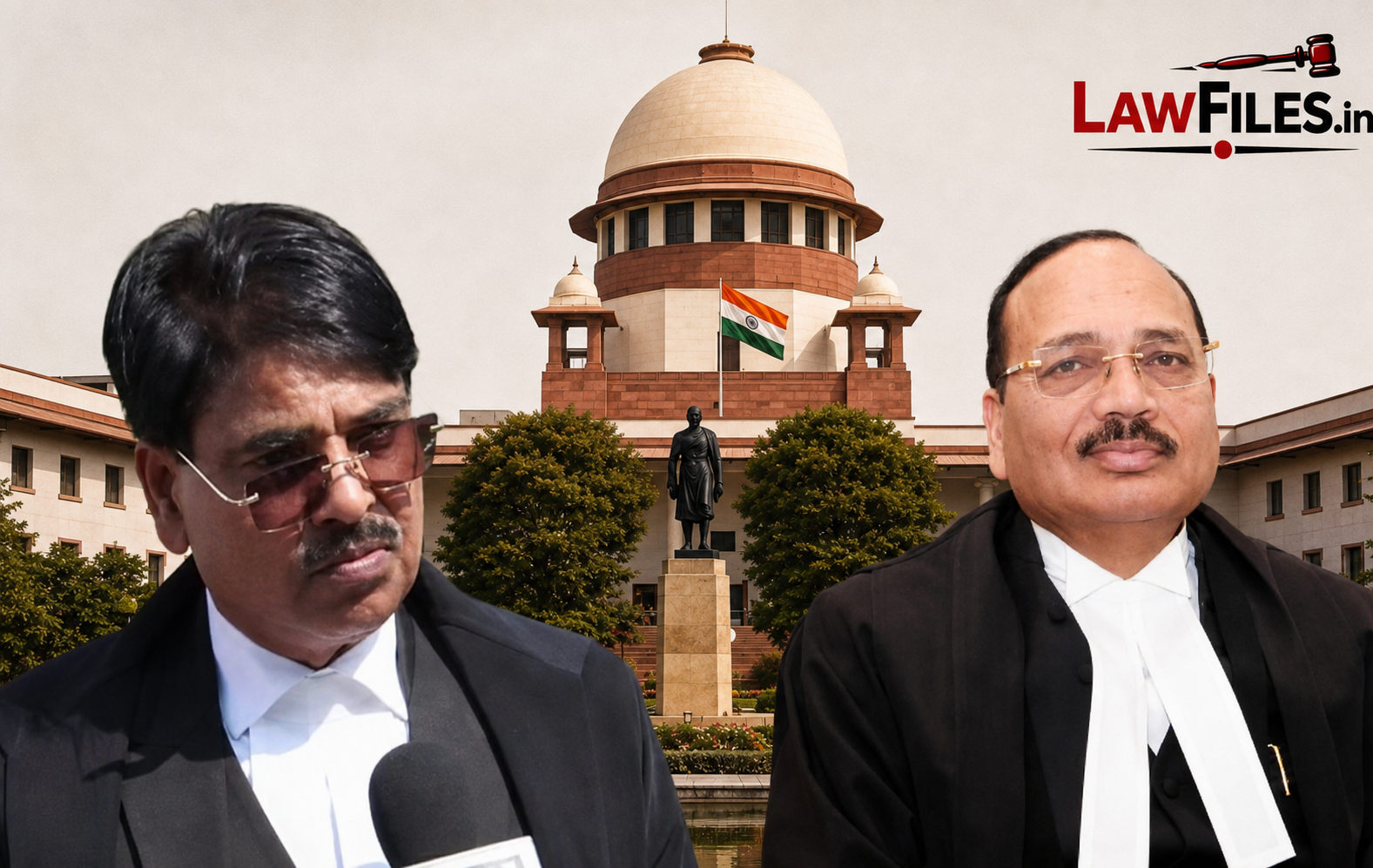
The Supreme Court on Friday strongly disapproved of the Bar Council of India’s intervention against students of the National Academy of Legal Studies and Research (NALSAR), Hyderabad, after a section of the university’s graduating batch expressed opposition to the invitation extended to Chief Justice of India Surya Kant to attend the institution’s convocation. What began as a disagreement within a law university over the presence of a particular dignitary at a graduation ceremony rapidly escalated into a question concerning freedom of expression, student dissent, professional regulation and the limits of institutional authority. The Court’s response has now brought the controversy squarely within the constitutional framework of the right to peaceful protest and the importance of protecting dissent, particularly in institutions established to teach the law and constitutional values.
The controversy arose after students of NALSAR raised objections to the proposed participation of the Chief Justice of India as chief guest at the university’s convocation. Reports indicate that several hundred students had communicated their concerns to the university authorities and sought reconsideration of the invitation. Their objections were reportedly connected with observations attributed to the Chief Justice during proceedings concerning allegations of excessive police force against students protesting over examination-related issues. The students considered those observations inconsistent with the values they believed the university should uphold.
The controversy took an unexpected turn when the Bar Council of India intervened. The BCI initially directed State Bar Councils not to enrol graduates belonging to the 2026 batch of NALSAR as advocates until further directions. It also sought information concerning the students and individuals allegedly involved in organising or mobilising the campaign against the CJI’s participation in the convocation. The action was extraordinary because enrolment as an advocate has direct consequences for a law graduate’s professional career, and the immediate effect of a blanket restriction was to place the entire graduating batch under a cloud because of a dispute concerning a university event.
The BCI subsequently withdrew or substantially modified its initial position following widespread criticism. The controversy, however, did not end with that reversal. The matter reached the Supreme Court, where the Chief Justice himself was part of the Bench hearing the proceedings. It was in this setting that CJI Surya Kant made particularly significant observations concerning the students’ right to protest and questioned the basis upon which the BCI had sought to intervene. The Court also restrained coercive action against NALSAR students and faculty while seeking a response from the BCI.
The Chief Justice’s central observation was that students have a right to raise their voice peacefully and lawfully. He questioned why the BCI should become involved in what he described, in substance, as a matter between himself and the students. The observation carries importance beyond the immediate dispute because it recognises a basic constitutional proposition: disagreement with a public authority, even a constitutional office-holder, does not by itself become professional misconduct or an offence.
That proposition is particularly significant in a law university. Legal education is premised upon the ability to question authority through reasoned argument. Students are trained to examine judgments, challenge propositions of law, identify constitutional infirmities and disagree with established legal positions. A system in which law students can face professional consequences merely for expressing disagreement with a sitting judge would sit uneasily with the intellectual foundations of legal education itself.
The constitutional basis of the students’ position is principally found in Article 19(1)(a), which guarantees freedom of speech and expression, and Article 19(1)(b), which protects the right to assemble peacefully and without arms. Neither right is absolute. Reasonable restrictions can be imposed under Article 19(2) and Article 19(3), respectively, for constitutionally recognised purposes. But the existence of permissible restrictions does not mean that every expression of disagreement can be characterised as unlawful merely because it is directed against a person holding high public office.
The Supreme Court has repeatedly recognised that democracy does not protect only agreeable speech. Its protection is most meaningful when citizens are permitted to express criticism, disagreement and dissent without fear of disproportionate retaliation. In Shreya Singhal v. Union of India, the Court drew an important distinction between discussion, advocacy and incitement, holding that constitutional protection extends broadly to discussion and advocacy and that stronger State action is justified only when expression crosses the constitutionally permissible threshold.
The same principle becomes relevant to student activism. A student campaign questioning whether a particular dignitary should attend a university event is qualitatively different from violence, threats, destruction of property or physical obstruction. If the protest remains peaceful and lawful, the State or a professional regulator cannot simply assume that dissent constitutes misconduct.
The Chief Justice’s remarks assume even greater significance because he expressly acknowledged that even if a student’s statement is wrong, that does not by itself justify punitive action. This is a powerful constitutional proposition. The right to free expression would have little meaning if only correct opinions were protected. Democratic discourse necessarily includes erroneous, unpopular and even strongly worded views, subject to the limitations imposed by law.
The Court’s approach therefore places the emphasis on conduct rather than viewpoint. If students had engaged in violence, intimidation or unlawful obstruction, the legal position could be entirely different. Institutions would then be entitled to invoke disciplinary mechanisms in accordance with law. But criticism, disagreement or peaceful protest cannot automatically be transformed into misconduct simply because the target of that criticism is a constitutional authority.
The controversy also raises a fundamental question concerning the statutory jurisdiction of the Bar Council of India. The BCI is a statutory regulatory body constituted under the Advocates Act, 1961. Its functions include regulating the legal profession and legal education and laying down standards of professional conduct. Its regulatory authority, however, must remain connected to the statutory purposes for which Parliament created the institution.
The initial direction concerning enrolment therefore raises an important legal question: what statutory basis permits a professional regulator to prevent an entire graduating batch from entering the legal profession because of their participation, or alleged participation, in a student protest?
The fact that the BCI regulates entry into the profession does not mean that it possesses an unlimited disciplinary jurisdiction over law students. Enrolment requirements must be connected to the statutory framework governing admission to the legal profession. If an individual graduate has committed a specific act amounting to professional or other legally recognised misconduct, the regulator may have a legitimate basis to examine that conduct where the law confers jurisdiction. But a blanket restriction affecting an entire batch requires substantially stronger legal justification.
This is where the BCI’s initial action appeared particularly vulnerable from a constitutional perspective. The proposed consequence was not merely an academic warning or internal disciplinary measure. It potentially affected the students’ ability to obtain professional enrolment and begin practice as advocates. Such a consequence directly affects livelihood and professional identity, thereby attracting the principles of natural justice and proportionality.
The principle against collective punishment is also relevant. A professional sanction ordinarily requires some nexus between the person subjected to the consequence and the alleged wrongdoing. If only a section of students organised or participated in a campaign, preventing the entire batch from enrolment would raise obvious questions concerning individual responsibility. The legal system generally does not permit a person’s professional rights to be impaired merely because he or she belongs to the same institution or graduating class as another person accused of misconduct.
The BCI’s subsequent clarification that the majority of students were reportedly not involved in the campaign appears to have recognised precisely this difficulty. Reports indicate that the regulator moved away from the blanket position and acknowledged that students should not suffer for conduct in which they had not participated.
Yet the Supreme Court’s intervention goes beyond the question of collective punishment. It asks a deeper question: should peaceful student dissent concerning a public constitutional functionary attract the attention of the professional regulator at all?
The answer, on the constitutional principles reiterated by the Court, appears to be no unless the conduct independently crosses a legally recognised threshold.
The distinction between protest and misconduct is crucial. A student may write to university authorities, organise a petition, request reconsideration of a decision, publicly express disagreement or choose not to participate in a ceremony. None of these actions is inherently unlawful. Their legality depends upon the circumstances and manner in which they are carried out. The mere fact that the protest concerns the Chief Justice of India cannot alter the constitutional standard.
This principle is especially important in the legal profession because lawyers are expected to act as officers of the court while retaining their right as citizens to hold opinions on legal and constitutional questions. Legal education should not produce unquestioning professional conformity. It should produce lawyers capable of identifying institutional mistakes, questioning governmental action and defending constitutional liberties.
The irony of the controversy is therefore difficult to overlook. The students facing potential professional consequences are students of a premier law university, and the dispute concerns their exercise of a right that future advocates may routinely be expected to defend on behalf of clients. If peaceful dissent is treated as professionally disqualifying during legal education, the legal system risks sending precisely the wrong message about constitutional democracy.
The Court’s intervention must also be viewed against the backdrop of recent proceedings concerning police action against student protesters. In those proceedings, the same Chief Justice had emphasised that peaceful and lawful protest is constitutionally protected and that mere agitation cannot justify excessive police force. The Supreme Court had stressed the need for a balanced approach and recognised the legitimacy of peaceful political expression.
The NALSAR controversy consequently presents an interesting constitutional continuity. The Court has now applied the same basic principle within the institutional environment of legal education: peaceful dissent cannot be suppressed merely because the subject of that dissent occupies a position of authority.
There is also a significant question of academic freedom. Universities are not merely degree-granting institutions. They are spaces in which competing ideas are tested, debated and challenged. Law universities, in particular, have a special relationship with constitutional discourse. Their students routinely study judicial decisions and constitutional doctrines, including doctrines that question governmental or institutional power.
Academic freedom does not provide immunity from all disciplinary rules. Universities can regulate conduct to maintain safety, order and academic functioning. But restrictions must be proportionate and viewpoint-neutral. A university may legitimately prohibit violence or disruption of a convocation. It would be considerably more difficult to justify punishment merely because students objected to the choice of chief guest.
The issue of professional gatekeeping makes the matter still more sensitive. Admission to the legal profession is controlled through statutory regulation because advocates perform a public function within the justice system. The BCI is therefore justified in insisting upon professional standards. But professional regulation cannot become a mechanism for controlling political or intellectual viewpoints. The legitimacy of the Bar Council’s authority depends upon its ability to distinguish professional misconduct from ordinary democratic disagreement.
The Supreme Court’s questioning of the BCI’s authority is therefore significant. If a regulator could penalise law graduates merely because they criticised a judge, political leader, government department or other public authority, the boundary between professional regulation and ideological control would become dangerously blurred.
That does not mean advocates or law students are free to make any statement without consequence. Statements amounting to threats, intimidation, defamation, incitement to violence or deliberate obstruction may attract legal consequences under the applicable law. Similarly, conduct that genuinely interferes with the administration of justice can raise questions under contempt law. But those restrictions must be grounded in established legal standards. The mere expression of disagreement cannot be converted into misconduct through institutional fiat.
The Court’s approach is therefore best understood through the principle of proportionality. Even assuming that some aspect of the student campaign was objectionable, the regulator would still have to demonstrate why preventing an entire graduating batch from professional enrolment was a necessary and proportionate response. A measure that threatens a student’s career must have a clear statutory foundation and a rational relationship with the alleged misconduct.
The initial BCI action also raises concerns regarding procedural fairness. Reports indicate that the regulator sought information from the university concerning those allegedly involved in initiating, organising or mobilising the campaign and contemplated action on the basis of that information. Before imposing a consequence as serious as professional exclusion, affected individuals would ordinarily be entitled to know the allegations against them and have a meaningful opportunity to respond.
Natural justice becomes particularly important where the consequences affect livelihood. The principle of audi alteram partem—the right to be heard—is not a technical ritual. It exists to prevent decisions being taken on incomplete or mistaken facts. A student may have signed a general petition without organising a protest, may have expressed a personal opinion without obstructing any event, or may not have participated at all. Individual hearing allows these distinctions to be made.
The Court’s decision to stay coercive action against the students and faculty therefore serves an immediate protective purpose while the legal issues are examined. It prevents the professional future of students from being placed at risk while the authority of the BCI to take such action is itself under scrutiny.
The episode also demonstrates why institutional humility is essential in a constitutional democracy. Every institution, including the judiciary, possesses immense authority. But constitutional authority is strengthened, rather than weakened, when institutions tolerate criticism. A judge’s legitimacy does not depend upon students, lawyers or citizens agreeing with every observation made from the Bench. Judicial decisions are ordinarily subject to criticism precisely because public debate is part of the constitutional ecosystem.
The Chief Justice’s response is noteworthy for this reason. Rather than treating disagreement with him as a personal affront requiring institutional retaliation, he acknowledged the students’ right to express their position and questioned why the Bar Council had entered what he regarded as a matter of dialogue between the students and himself. That response carries an important message for institutional culture: authority should be capable of absorbing criticism without converting disagreement into disobedience.
For law students, this is perhaps the most significant lesson emerging from the controversy. Legal education should cultivate the courage to question. A student who learns only to agree with authority may become technically competent but constitutionally timid. The profession requires advocates who can stand before courts and respectfully argue that a settled proposition should be reconsidered, that a government action is unlawful or that a judicial interpretation produces an unjust consequence.
The same principle applies to the judiciary itself. Judicial independence requires protection from improper pressure, but it does not require insulation from legitimate criticism. A constitutional court functions within a democratic society and must necessarily coexist with public discussion about its decisions and conduct.
The BCI, on the other hand, must retain its important regulatory role. The controversy should not be read as an argument against professional regulation. The legal profession requires standards, and the BCI has legitimate responsibilities concerning legal education, enrolment and professional conduct. The lesson is narrower but important: regulation must remain within jurisdiction and cannot become punishment for dissent merely because the dissent is directed at an institution of authority.
The incident also raises questions about the relationship between the BCI and national law universities. NALSAR, like other national law universities, operates under its own statutory and institutional framework. Questions concerning campus administration, student expression and academic activities ordinarily fall within the university’s governance structure unless a specific legal issue brings another statutory authority into play. The mere existence of BCI’s regulatory authority over legal education does not necessarily give it jurisdiction over every aspect of campus life.
That institutional distinction should be maintained carefully. Otherwise, the regulatory role of professional bodies could expand into areas traditionally governed by university autonomy.
The Supreme Court’s intervention therefore has implications extending beyond NALSAR. If professional regulators begin responding to student protests by threatening enrolment, law students across the country may reasonably fear that political or constitutional expression could affect their future careers. Such a chilling effect would be particularly damaging in legal education, where students must be encouraged to understand and exercise constitutional rights.
The Court’s message appears to be that peaceful protest is not a privilege granted by institutions; it is a constitutional right subject to constitutionally permitted restrictions. A regulator may disagree with the content or target of a protest, but disagreement cannot itself supply jurisdiction for punishment.
Ultimately, the NALSAR episode is not simply a dispute about a convocation ceremony. It has become a constitutional conversation about how institutions respond when young citizens challenge authority. The initial BCI action demonstrated the danger of responding to dissent through professional sanctions before establishing a clear legal basis and individual responsibility. The subsequent withdrawal and the Supreme Court’s intervention have now shifted the focus back to constitutional principles.
The Court’s position also carries an element of institutional self-restraint. By recognising that students may disagree with the Chief Justice, the Court reinforces the proposition that constitutional offices do not place their occupants beyond criticism. The authority of the judiciary rests upon law and constitutional legitimacy, not upon personal immunity from disagreement.
The deeper lesson is therefore particularly relevant to the legal profession: a lawyer who is never willing to question authority is unlikely to be an effective constitutional advocate. The right to dissent, when exercised peacefully and lawfully, is part of the democratic culture that the legal profession is supposed to defend.
The NALSAR controversy ultimately places the Bar Council of India itself before an important institutional question. Its responsibility is to protect the standards and integrity of the legal profession. That responsibility is best discharged not by policing the opinions of future lawyers but by ensuring that those lawyers understand the boundaries between lawful dissent and genuinely sanctionable misconduct. The Supreme Court’s intervention reinforces that distinction and, in doing so, protects something larger than the immediate professional interests of one graduating batch.
It protects the idea that constitutional values must be lived within legal institutions, not merely taught in their classrooms. A law university should be a place where students can respectfully disagree with judges, governments, regulators and even the institutions in which they study. If that disagreement remains peaceful and lawful, the response of the legal system should ordinarily be dialogue, not professional exclusion. The Supreme Court’s intervention in the NALSAR controversy has therefore reaffirmed a fundamental democratic proposition: authority may command obedience where the law requires it, but it cannot demand silence merely because it has been questioned.
