


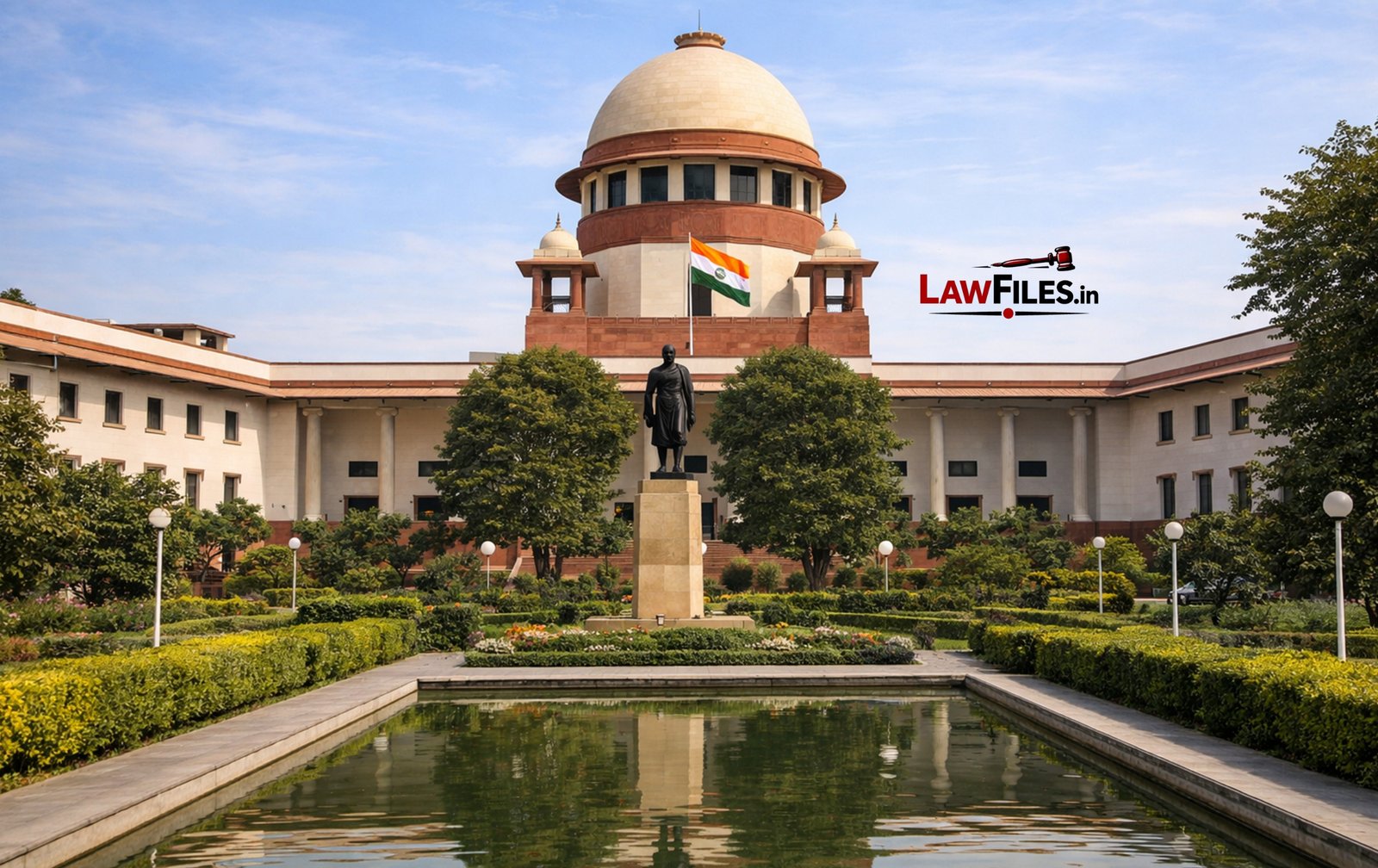
In a significant constitutional hearing arising out of the continuing litigation over the Shiv Sena split, the Supreme Court of India made a far-reaching observation that extends well beyond the immediate dispute between the rival factions led by Eknath Shinde and Uddhav Thackeray. While examining the evolution of the party’s constitution and organisational structure, the Bench questioned whether political parties themselves ought to adhere to democratic principles, observing that the constitution of the undivided Shiv Sena appeared to have gradually shifted away from its earlier democratic framework and had eventually assumed the characteristics of a “one-person structure.” Although the Court has not yet rendered its final verdict on the issues pending before it, the observation has reopened one of the most fundamental constitutional debates in Indian democracy whether institutions that are indispensable to democratic governance can themselves remain internally undemocratic.
The proceedings arise from the long-running legal battle following the split in the Shiv Sena, one of Maharashtra’s most influential political parties. The dispute traces its origins to the political developments of 2022, when a large group of legislators led by Eknath Shinde rebelled against the leadership of Uddhav Thackeray, ultimately leading to the fall of the Maha Vikas Aghadi government. The split generated parallel proceedings before the Election Commission of India, the Speaker of the Maharashtra Legislative Assembly and the constitutional courts, involving questions relating to disqualification under the Tenth Schedule, recognition of the “real” political party, entitlement to the party symbol and interpretation of the party constitution.
While hearing the present matter, the Supreme Court turned its attention to the internal constitutional framework of the undivided Shiv Sena. The Bench reportedly observed that the party’s organisational constitution had undergone substantial changes over the years, resulting in a concentration of authority in a manner that appeared inconsistent with ordinary democratic principles. Referring to the evolution of the party structure, the Court remarked that what had originally been conceived as a democratic organisation appeared to have transformed into what was virtually a one-person organisational structure. The Bench then posed a broader constitutional question—if the Constitution expects democratic governance of the country, should political parties not themselves reflect democratic values in their internal functioning?
The Court’s observations are legally significant because they shift the focus from the immediate factional dispute to the larger constitutional architecture governing political parties. Unlike constitutional institutions such as Parliament or State Legislatures, political parties are not constitutional bodies. They are voluntary associations ordinarily governed by the Representation of the People Act, 1951, the Election Commission’s regulatory framework and their own constitutions. Yet, despite their private organisational character, political parties perform an unmistakably public constitutional function. They nominate candidates, determine governmental leadership, formulate public policy and ultimately shape the democratic choices available to the electorate. The proceedings therefore raise the important jurisprudential question of whether organisations exercising such profound constitutional influence should themselves be required to maintain democratic decision-making structures.
A particularly noteworthy aspect of the hearing concerns the party constitution itself. The rival factions have relied upon different interpretations of amendments introduced into the organisational framework over time. During the hearing, the Bench examined how successive amendments appeared to centralise authority, reducing the role of elected organisational bodies and concentrating significant powers in the office of the party chief. While no final conclusions have yet been drawn regarding the legal consequences of these amendments, the Court’s observations indicate that the organisational evolution of political parties may become relevant when determining questions concerning leadership, authority and legitimacy within the party structure.
The proceedings also revive an issue that constitutional scholars have debated for decades—the doctrine of internal party democracy. Indian constitutional law has traditionally focused upon democratic governance of public institutions while leaving internal political party organisation largely to the parties themselves. However, comparative constitutional systems increasingly recognise that democracy cannot be sustained if political parties function through opaque, hereditary or highly centralised decision-making processes. Countries such as Germany, Spain and South Africa have introduced statutory or constitutional requirements mandating democratic internal governance of political parties. India, however, has thus far relied primarily upon organisational constitutions framed by the parties themselves rather than comprehensive legislative regulation.
The Supreme Court’s observations therefore carry significance beyond the Shiv Sena litigation. They suggest an emerging judicial recognition that internal democracy within political parties may possess constitutional relevance, particularly where disputes concerning party identity, organisational legitimacy and leadership succession reach constitutional courts. If political parties become the principal vehicles through which democratic governance is exercised, questions naturally arise regarding whether their own internal structures should reflect the democratic ideals embedded within the Constitution.
The hearing also intersects with the jurisprudence surrounding the Tenth Schedule, popularly known as the anti-defection law. Earlier proceedings concerning the Shiv Sena split required the Supreme Court to interpret the relationship between legislative parties and political parties, particularly after the deletion of the “split” exception by the Ninety-First Constitutional Amendment. The Court had emphasised that legislative majorities alone cannot determine the identity of the original political party. The present proceedings continue that constitutional inquiry by examining the organisational framework through which political authority within the party is exercised.
Another important legal dimension concerns the role of the Election Commission of India. Under the Election Symbols (Reservation and Allotment) Order, 1968, the Commission possesses authority to determine which faction constitutes the recognised political party when organisational disputes arise. Such determinations often require examination of the party constitution, organisational elections, membership records and support within legislative and organisational wings. The Supreme Court’s observations regarding democratic functioning may therefore have broader implications for how party constitutions are interpreted in future recognition disputes, although the Court has not yet pronounced any final principle on this issue.
From a constitutional perspective, the proceedings also engage the doctrine of constitutional morality, a principle repeatedly invoked by the Supreme Court in cases involving democratic governance. Constitutional morality requires public institutions to function consistently with constitutional values rather than merely following historical conventions or organisational practices. Although political parties remain voluntary associations, the Court’s remarks implicitly recognise that organisations seeking to govern democratic institutions cannot remain entirely insulated from constitutional expectations concerning transparency, accountability and representative decision-making.
The hearing further raises an important distinction between party leadership and party ownership. Political parties frequently develop charismatic leadership structures centred upon influential individuals. Constitutional law does not prohibit such leadership. However, the Court’s observations suggest concern where organisational constitutions gradually eliminate institutional checks and transform collective decision-making into concentrated personal authority. Such concentration, the Bench appeared to indicate, may become relevant when constitutional disputes concerning organisational legitimacy reach judicial scrutiny.
From a comparative constitutional perspective, the issue is far from unique to India. Democracies across the world continue to grapple with balancing freedom of association against demands for greater internal democracy within political parties. Excessive judicial regulation risks interfering with political autonomy, while complete non-intervention may permit undemocratic practices within institutions essential to democratic governance. The Supreme Court’s present observations therefore contribute to a broader international constitutional discourse concerning the nature of political parties in representative democracies.
The proceedings are equally significant because they reflect judicial awareness that political parties occupy a unique constitutional position. They are private associations in legal form but public institutions in practical effect. Unlike ordinary voluntary organisations, political parties influence legislative majorities, executive governments, constitutional appointments and public policy affecting millions of citizens. This hybrid character has increasingly prompted constitutional courts worldwide to subject political parties to greater scrutiny than ordinary private associations.
Importantly, the Supreme Court’s remarks should not be interpreted as a final judicial determination either regarding the Shiv Sena dispute or the constitutional validity of any particular organisational provision. The observations were made during the course of oral hearing while examining rival submissions concerning the party constitution. Final adjudication on the issues remains pending, and the Court has not yet laid down any binding legal principle mandating internal democracy for political parties. The observations nevertheless provide a significant indication of the constitutional concerns engaging the Bench during the hearing.
The case also has potential implications extending beyond Maharashtra. Numerous Indian political parties continue to function through highly centralised leadership structures, often characterised by hereditary succession, nominated office-bearers or limited internal electoral processes. Should the Supreme Court ultimately articulate broader principles concerning democratic functioning within political parties, such observations may influence future organisational reforms across the political spectrum.
Another noteworthy aspect concerns the relationship between constitutional democracy and electoral democracy. Elections alone cannot fully sustain democratic governance if the institutions producing electoral choices remain internally opaque or unrepresentative. The Court’s remarks therefore implicitly recognise that democracy is not merely a mechanism for choosing governments but also a system requiring accountable institutional structures throughout the political process.
Ultimately, the Supreme Court’s observations in the Shiv Sena split case transcend the immediate contest between rival political factions. By questioning whether political parties themselves should adhere to democratic principles, the Court has initiated a larger constitutional conversation regarding the nature of representative democracy in India. Whether these observations ultimately crystallise into binding constitutional doctrine remains to be seen. Nevertheless, the proceedings underscore an increasingly significant constitutional reality—that political parties are no longer viewed merely as private associations contesting elections but as indispensable democratic institutions whose internal functioning may itself become relevant to the preservation of constitutional governance. If democracy is the Constitution’s foundational value, the Court appears to suggest, its spirit cannot remain confined to electoral outcomes alone; it must also inform the institutions through which democratic power is organised and exercised.
