


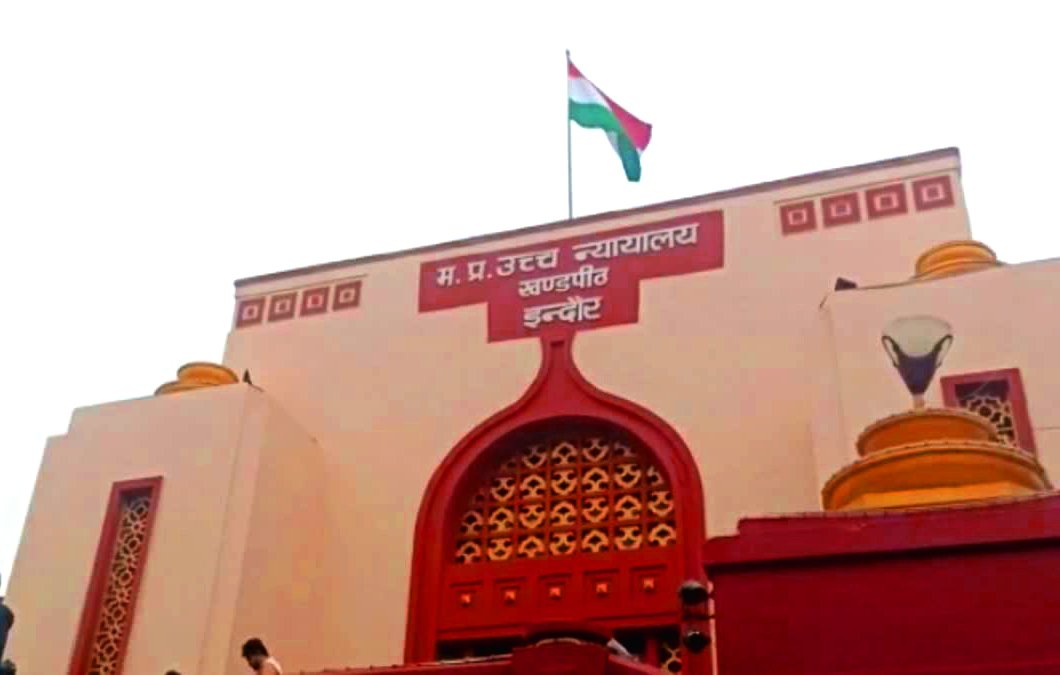
Bhopal/Indore, 26 February 2026: The Madhya Pradesh High Court is hearing a significant challenge to the state’s medical admission framework relating to the treatment of Non-Resident Indian (NRI) quota seats in postgraduate medical counselling for NEET PG 2025. A postgraduate medical aspirant has approached the Court seeking a judicial review of Rule 14(2) of the Madhya Pradesh Medical Education Admission Rules, 2018 and an extension of NRI quota protection into the stray vacancy round of counselling.
The petition, filed before a Division Bench of Justice Vijay Kumar Shukla and Justice Alok Awasthi, targets the provision in Rule 14(2) that permits the conversion of unfilled NRI quota seats into unreserved seats after the third round of counselling. The petitioner contends that this mechanism is arbitrary and discriminatory because it fails to allow eligible NRI candidates an opportunity to participate in the stray vacancy round — the final phase of centralised NEET PG counselling meant to fill vacant seats across categories.
Under the current regime, NRI quota seats are defined as a sub-category within Schedule 2 of the medical admission rules but are treated differently from other sub-categories when they remain vacant. In such cases, the impugned rule provides that vacant NRI seats are converted to general seats without first exhausting eligible NRI applicants, a departure from practices in other counselling systems where seat conversion follows prescribed algorithms ensuring category exhaustion before conversion.
During the hearing, the High Court admitted the writ petition and issued an interim direction requiring the State Government to adhere to Rule 14(2) in the ongoing counselling process unless there is a “legal impediment,” while the matter is listed for further hearing.
The petitioner argues that the current rule structure effectively penalises NRI candidates by prematurely converting their reserved seats into general category seats before the most extensive allocation phase (stray vacancy round). This, the petition asserts, amounts to a violation of the right to equality under Article 14 of the Constitution of India, as the rule treats similar categories differently without rational basis.
In a related development from the Indore bench, the High Court has also directed the Directorate of Medical Education (DME) that if eligible NRI candidates are available for vacant NRI quota seats even during the mop-up or stray vacancy rounds, those seats should not be converted to general category seats ahead of time and should instead be offered to the eligible candidates before the next hearing. The Court has also sought a response from the State within two weeks on this issue.
Senior advocates appearing for the petitioners highlighted that under the MP Medical Education Admission Rules, eligible NRI candidates remain eligible up to and including the mop-up and stray vacancy rounds. Any deviation from this principle, especially when seats are vacant and there are qualifying applicants, may violate natural justice and established admission norms.
The petition comes amid the ongoing NEET PG 2025 counselling process, where the Medical Counselling Committee (MCC) has already issued the stray vacancy round seat allotment results and revised seat counts for postgraduate MD/MS admissions. In the stray vacancy phase, the MCC allocated 2,798 seats, with some seats removed due to reporting irregularities, and this round does not permit seat upgradation for candidates already allocated seats.
Although the issue before the Madhya Pradesh High Court focuses specifically on state-level rules and their conformity with constitutional norms, it taps into broader debates on how reserved categories (like NRI quota) are protected or diluted during multi-stage counselling processes that include initial rounds, mop-up rounds and stray vacancy rounds. Proper allocation and fair opportunity for all categories have been recurring themes in judicial review of medical admissions in other High Courts and the Supreme Court.
The High Court is scheduled to continue hearing the matter after seeking responses from the State authorities. Its ultimate decision could have a direct impact on how NRI quota seats are treated in postgraduate medical admissions, especially in the final counselling stages, and may offer clarity on the application of state admission rules vis-à-vis constitutional equality guarantees.
