


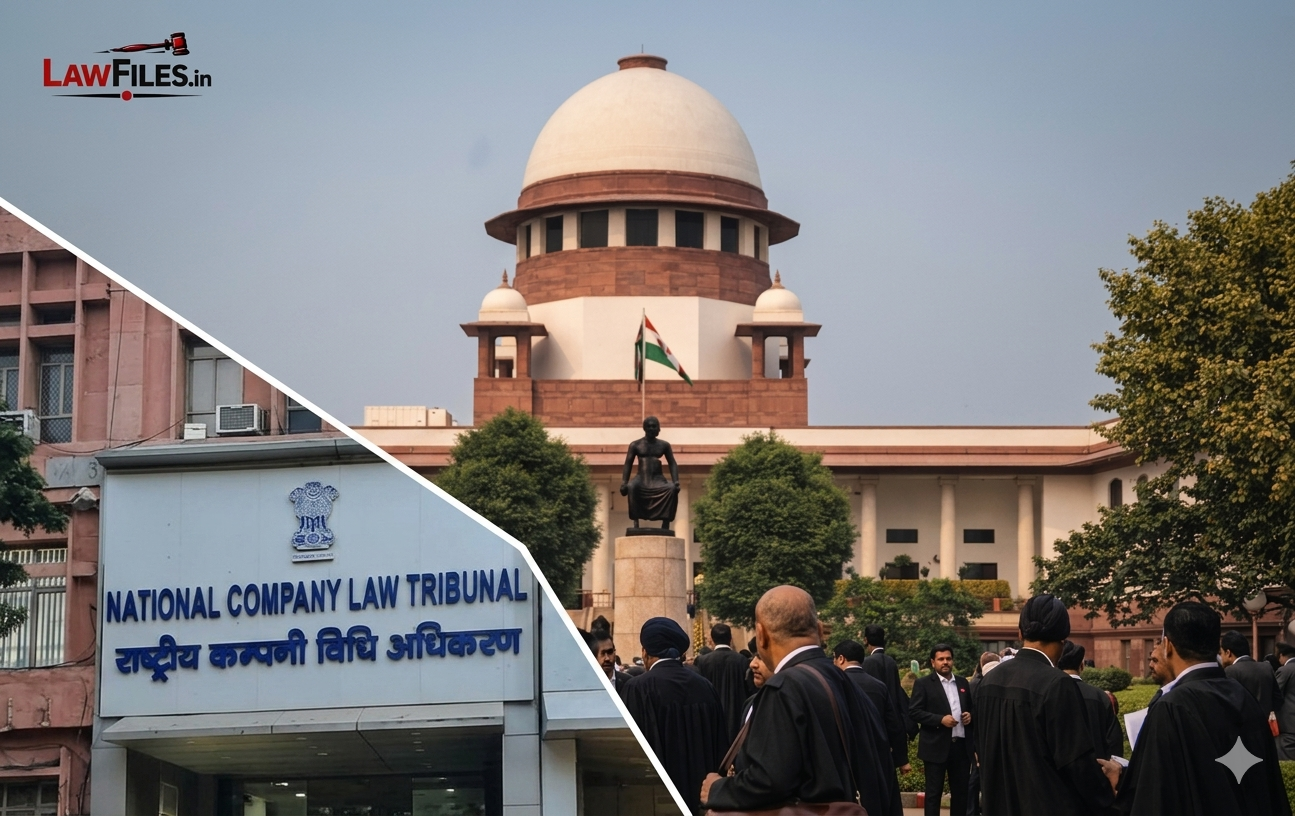
In a significant intervention with far-reaching implications for India’s insolvency regime, the Supreme Court of India has expressed serious concern over delays in the approval of resolution plans by the National Company Law Tribunal (NCLT), describing the situation as “very unfortunate.” The Court has now called for a comprehensive nationwide report on pending cases, signalling a deeper judicial scrutiny of institutional inefficiencies within the insolvency framework.
The issue arose in proceedings where the Court noted that despite the structured timelines envisaged under the Insolvency and Bankruptcy Code (IBC), resolution plans once approved by creditors continue to remain pending before NCLT benches for prolonged periods. This delay, the Court observed, defeats the very objective of the IBC, which was enacted to ensure time-bound resolution of stressed assets and revival of businesses.
Taking a systemic view of the problem, the Court directed the Insolvency and Bankruptcy Board of India (IBBI) and relevant authorities to furnish detailed data on pending resolution plan approvals across all NCLT benches. The data is expected to include the number of cases pending, the duration of delays, and the reasons contributing to such backlog. This move indicates that the Court is not treating the issue as an isolated administrative lapse but as a structural concern affecting the integrity of the insolvency ecosystem.
At the heart of the Court’s concern lies the fundamental design of the IBC, which is premised on strict timelines. The Code mandates completion of the corporate insolvency resolution process within a prescribed period, typically 180 to 330 days. However, delays at the stage of judicial approval by NCLT effectively extend this timeline, undermining creditor confidence and diluting the effectiveness of the resolution process.
The Court’s observations also highlight the cascading impact of such delays. When resolution plans remain unapproved, assets continue to depreciate, businesses lose value, and stakeholders including creditors, employees, and homebuyers are left in prolonged uncertainty. In high-value insolvency cases, these delays can have ripple effects on the broader economy, affecting investor sentiment and financial stability.
From a legal standpoint, the issue raises concerns under the principle of timely justice, which is integral to Article 21 of the Constitution. While insolvency proceedings are commercial in nature, their delay can have significant consequences for rights and livelihoods, particularly in cases involving homebuyers or employees. The Court’s intervention thus reflects an attempt to align procedural efficiency with constitutional fairness.
Analytically, the situation reveals a tension between judicial oversight and administrative capacity. While NCLT plays a crucial adjudicatory role in ensuring legality and fairness of resolution plans, systemic constraints such as shortage of members, increasing caseload, and procedural complexities have contributed to delays. The Supreme Court’s call for data suggests a move toward evidence-based reform, potentially paving the way for structural changes in tribunal functioning.
The development also ties into ongoing legislative and policy discussions around strengthening the insolvency framework. Recent amendments to the IBC have attempted to streamline processes and address delays, but the Court’s observations indicate that implementation gaps persist. The effectiveness of the insolvency regime ultimately depends not just on statutory design but on institutional efficiency.
Importantly, the Court’s intervention signals a shift from case-specific adjudication to systemic accountability. By seeking nationwide data, the judiciary is positioning itself to assess the functioning of NCLT at a macro level, potentially leading to broader reforms in tribunal administration, resource allocation, and procedural timelines.
In conclusion, the Supreme Court’s remarks underscore a critical reality: the success of the IBC hinges not merely on legislative intent but on timely execution. Delays in approving resolution plans strike at the core of the insolvency framework, eroding its credibility and effectiveness. The Court’s call for a nationwide report may well mark the beginning of a deeper institutional introspection one that seeks to restore the time-bound character of insolvency resolution and reinforce confidence in India’s legal and economic systems.
