

Close Menu
LawFilesLawFiles

    Subscribe to Updates

    Get the latest creative news from FooBar about art, design and business.

    What's Hot

    Delhi High Court Upholds Rajpal Yadav’s Conviction in Cheque Bounce Cases; Ruling Reaffirms Sanctity of Commercial Transactions and the Deterrent Purpose of the Negotiable Instruments Act

    July 11, 2026

    Delayed Payment by Auction Purchaser Under the SARFAESI Act: Supreme Court Reinforces Mandatory Compliance With Auction Timelines; A Landmark Shift in India’s Banking Recovery Jurisprudence

    July 11, 2026

    Anil Ambani Withdraws Bombay High Court Plea Against Bank of Baroda’s Fraud Classification; Case Highlights Evolving Judicial Standards Governing RBI Fraud Tagging Framework

    July 11, 2026
    Facebook X (Twitter) Instagram Threads
    Saturday, July 11
    LawFilesLawFiles
    Facebook X (Twitter)
    • Home
      • Who We Are
      • Our Mission
      • Advisory board
      • Contact US
    • Supreme Court
    • High Courts
      • Gujarat High Court
      • Jharkhand High Court
      • Rajasthan High Court
      • Karnataka High Court
      • Andhra Pradesh High Court
      • Allahabad High Court
      • Himachal Pradesh High Court
      • Chhattisgarh High Court
      • Jammu & Kashmir and Ladakh High Court
      • Kerala High Court
      • Punjab and Haryana High Court
      • Patna High Court
      • Madhya Pradesh High Court
      • Madras High Court
      • Bombay High Court
      • Orissa High Court
      • Calcutta High Court
      • Meghalaya High Court
      • Delhi High Court
      • Manipur High Court
      • Gauhati High Court
    • Corporate
    • Taxation Laws
      • Income Tax
      • GST
      • Customs & Excise
    • Global Affairs
    • Articles
      • Sitting Judge’s’ Views
      • Senior Advocate
      • Policy Analysis
      • Tax Expert
    • PILS
      • Free/Affordable Legal Aid
      • PIL Cell
      • Law student Volunteer Cell (research & Drafting)
      • NGO & Legal services Authority Tie-ups
      • Online Legal Formats
      • Online Legal Help Form
    Subscribe Premium
    LawFilesLawFiles
    Home»High Courts»Supreme Court to Examine Pleas Seeking CBI Probe into Alleged Ayodhya Ram Mandir Donation Misappropriation; Case Raises Larger Questions on Accountability of Religious Trusts and Judicial Oversight
    High Courts

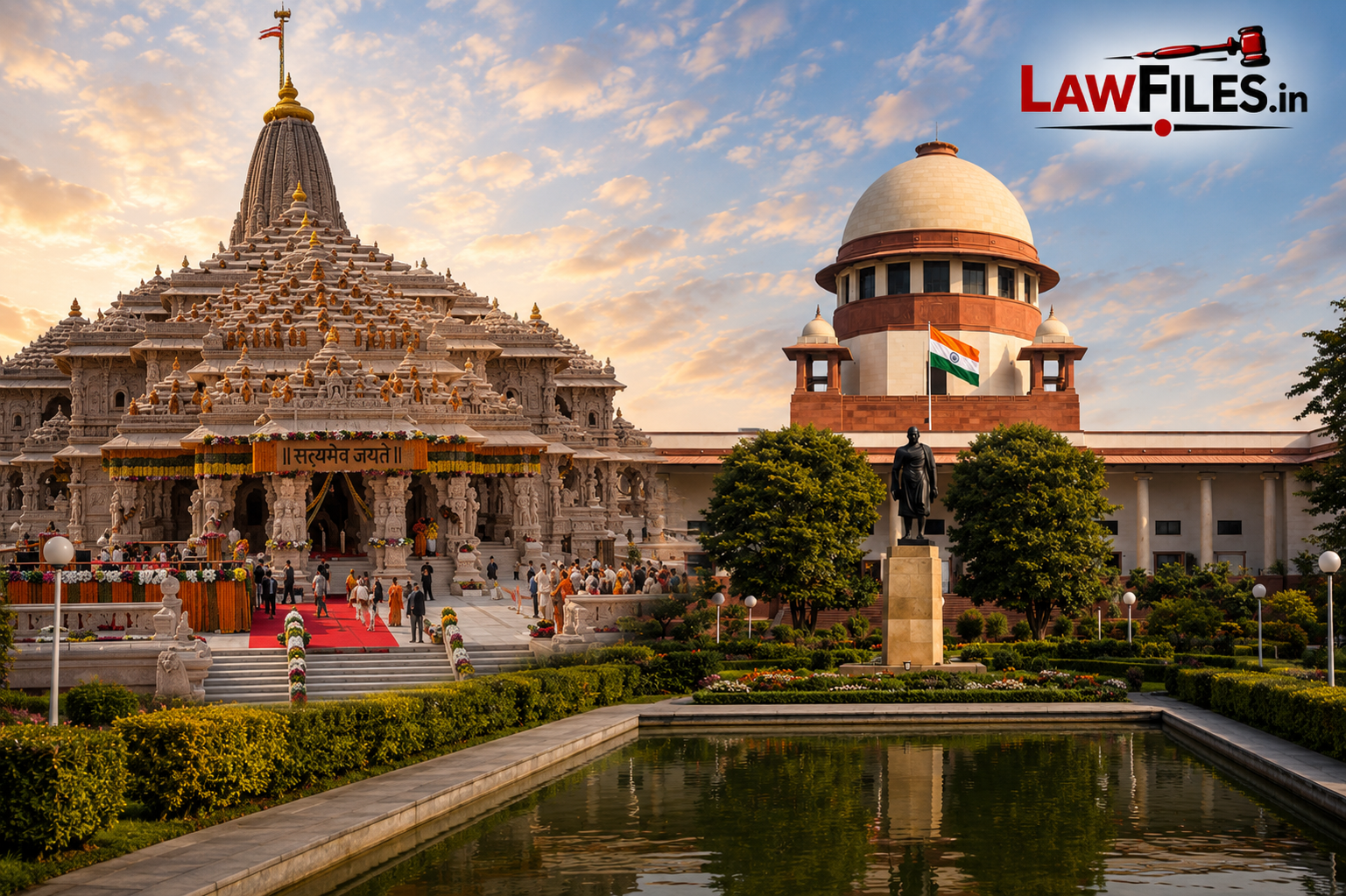
    Supreme Court to Examine Pleas Seeking CBI Probe into Alleged Ayodhya Ram Mandir Donation Misappropriation; Case Raises Larger Questions on Accountability of Religious Trusts and Judicial Oversight

    Anvita DwivediBy Anvita DwivediJuly 10, 2026No Comments7 Mins Read
    WhatsApp Facebook Twitter Copy Link
    Share
    Facebook Twitter Pinterest Copy Link WhatsApp

    The Supreme Court is set to hear a batch of petitions seeking an independent investigation by the Central Bureau of Investigation (CBI) into the alleged misappropriation of donations received by the Shri Ram Janmabhoomi Temple at Ayodhya. The matter, which was earlier declined urgent listing during the Court’s vacation, has now been directed to be listed for hearing on July 13 before the regular Bench. The petitions seek transfer of the investigation from the State police to an independent central agency, contending that the magnitude of the alleged financial irregularities, the public character of the donations and the national importance of the Ram Mandir project warrant judicial intervention to ensure transparency and institutional credibility. The proceedings are likely to examine not merely the facts of the alleged financial misconduct but also the constitutional parameters governing court-monitored investigations involving public religious trusts.

    The controversy emerged following allegations that donations made by devotees towards the Shri Ram Janmabhoomi Temple were systematically siphoned off by individuals entrusted with handling cash offerings. According to reports forming the basis of the petitions, the Uttar Pradesh Police have already registered criminal cases, arrested several accused persons and initiated a Special Investigation Team (SIT) inquiry into the alleged embezzlement. Searches conducted during the investigation reportedly resulted in recovery of cash, jewellery and other assets, while multiple bank accounts connected with the accused or their associates have also been frozen pending investigation. Investigators are stated to be examining financial transactions, bank records and investment trails to determine the full extent of the alleged diversion of temple funds. At this stage, however, the investigation remains ongoing and no judicial finding has yet been returned regarding the culpability of any individual or the ultimate quantum of loss, if any.

    The petitioners before the Supreme Court contend that the matter transcends an ordinary case of theft or criminal breach of trust. It is argued that donations made by millions of devotees across India carry an unmistakable public character, creating a heightened obligation of financial transparency and institutional accountability. According to the petitions, allegations concerning diversion of religious donations may undermine public confidence in charitable institutions unless investigated through an agency perceived to be institutionally independent. The petitioners have therefore sought transfer of the investigation to the CBI or, alternatively, a court-monitored investigation by an independent Special Investigation Team.

    When the matter was first mentioned during the Court’s vacation, the petitioners urged urgent listing, expressing apprehension that electronic evidence, CCTV recordings and digital financial records could potentially be tampered with if immediate judicial intervention was not granted. The Supreme Court, however, declined to accord urgent listing at that stage, observing that the matter could appropriately be heard after the Court resumed regular functioning. The Bench indicated that no irreversible prejudice would result merely because the petitions were taken up after reopening of the Court. The present listing, therefore, represents the first substantive opportunity for the Court to consider whether the investigation should continue under the existing State machinery or be entrusted to an independent central agency.

    Parallel proceedings were also initiated before the Allahabad High Court through a Public Interest Litigation seeking substantially similar relief. However, the High Court declined to entertain the PIL after noting that an identical issue concerning investigation into the alleged financial irregularities was already pending consideration before the Supreme Court. The High Court observed that simultaneous adjudication by different constitutional courts on substantially identical issues could lead to conflicting judicial directions and therefore considered it appropriate to defer to the apex court’s consideration of the controversy.

    Although the litigation presently concerns the transfer of investigation, the case raises broader constitutional questions regarding the circumstances in which constitutional courts may direct a CBI investigation. The Supreme Court has consistently held that transfer of investigation from the State police to the CBI constitutes an extraordinary remedy rather than the ordinary rule. In landmark decisions such as State of West Bengal v. Committee for Protection of Democratic Rights, the Court recognised that High Courts and the Supreme Court possess constitutional authority under Articles 226 and 32 respectively to direct a CBI investigation without State consent in exceptional cases where such intervention becomes necessary to protect fundamental rights or preserve public confidence in the administration of justice. However, the Court has repeatedly cautioned that such powers must be exercised sparingly and only where ordinary investigative mechanisms appear inadequate or compromised.

    Consequently, the legal burden upon the petitioners is not merely to demonstrate the seriousness of the allegations but also to establish that the existing investigation suffers from deficiencies warranting extraordinary judicial intervention. Mere public importance of an issue or widespread media attention does not automatically justify transfer of investigation to the CBI. Constitutional courts ordinarily examine whether the existing investigation appears biased, ineffective, incomplete or otherwise incapable of inspiring public confidence before directing a central investigation.

    The proceedings also reopen discussion regarding the legal character of public religious trusts. Although religious institutions enjoy autonomy in managing their internal religious affairs under Articles 25 and 26 of the Constitution, financial administration of charitable donations remains subject to statutory regulation and judicial oversight where allegations of criminal misconduct arise. Indian courts have consistently recognised that office-bearers entrusted with administration of public religious institutions occupy fiduciary positions carrying corresponding duties of honesty, transparency and accountability. Where allegations of criminal breach of trust, cheating or misappropriation emerge, the ordinary criminal law applies irrespective of the religious character of the institution involved.

    Another important dimension concerns financial governance within religious and charitable institutions. Across jurisdictions, courts have increasingly emphasised the need for robust accounting systems, digital audit trails and institutional checks to ensure that public donations are utilised exclusively for their intended purposes. The present controversy is therefore likely to stimulate broader discussion regarding governance standards applicable to trusts managing contributions received from millions of devotees. Whether through statutory audits, independent oversight mechanisms or enhanced financial disclosure requirements, the litigation may eventually influence governance practices extending beyond the immediate dispute.

    The case also carries wider implications for public confidence in institutions administering religious endowments. Donations made to temples, mosques, churches and other charitable bodies are ordinarily motivated by faith and public trust. Allegations concerning diversion of such contributions, even before their truthfulness is judicially determined, inevitably raise questions regarding internal financial controls. Judicial scrutiny in such matters therefore serves not merely a punitive purpose but also an institutional one ensuring that confidence in charitable administration remains protected through lawful and transparent investigation.

    Importantly, the Supreme Court is presently concerned only with the question of investigation. It is not adjudicating the truth of the allegations or determining criminal liability. The presumption of innocence continues to operate in favour of all accused persons until guilt is established through due process of law. Likewise, the Court’s consideration of a request for CBI investigation should not be understood as reflecting any opinion regarding the merits of the allegations themselves.

    Ultimately, the forthcoming hearing is likely to have significance extending beyond the immediate controversy surrounding the Ayodhya Ram Mandir donations. The case presents the Supreme Court with an opportunity to further develop the jurisprudence governing court-monitored investigations, institutional accountability of public religious trusts and the constitutional standards applicable while transferring criminal investigations from State agencies to central investigative bodies. Whatever course the Court ultimately adopts, the proceedings underscore an enduring constitutional principle that public faith in religious institutions and public confidence in criminal investigations are both strengthened when allegations of financial misconduct are examined through processes that are transparent, fair and firmly anchored in the rule of law.

    Supreme Court to Examine Pleas Seeking CBI Probe into Alleged Ayodhya Ram Mandir Donation Misappropriation; Case Raises Larger Questions on Accountability of Religious Trusts and Judicial Oversight
    Share. WhatsApp Facebook Twitter Pinterest Email
    Anvita Dwivedi

    Related Posts

    Delhi High Court Upholds Rajpal Yadav’s Conviction in Cheque Bounce Cases; Ruling Reaffirms Sanctity of Commercial Transactions and the Deterrent Purpose of the Negotiable Instruments Act

    July 11, 2026

    Delayed Payment by Auction Purchaser Under the SARFAESI Act: Supreme Court Reinforces Mandatory Compliance With Auction Timelines; A Landmark Shift in India’s Banking Recovery Jurisprudence

    July 11, 2026

    Anil Ambani Withdraws Bombay High Court Plea Against Bank of Baroda’s Fraud Classification; Case Highlights Evolving Judicial Standards Governing RBI Fraud Tagging Framework

    July 11, 2026
    Add A Comment
    Leave A Reply Cancel Reply

    Demo
    Top Posts

    Digital Forensics Fail to convince Supreme Court: Bail Denied to Gagan Khanna in BNS Assault Case

    June 15, 2026241 Views

    Wrongful Claim Rejection Amounts to Deficiency in Service: Delhi Consumer Commission Holds Star Health Liable

    March 16, 202672 Views

    Bombay High Court Quashes POCSO Case, Directs Accused to Fund MacBook for Victim’s Education

    February 28, 202658 Views

    Supreme Court Quashes FIR Over ‘Improved’ Second Complaint: A Reminder That Criminal Law Cannot Be Built on Shifting Narratives

    June 4, 202654 Views
    Don't Miss

    Delhi High Court Upholds Rajpal Yadav’s Conviction in Cheque Bounce Cases; Ruling Reaffirms Sanctity of Commercial Transactions and the Deterrent Purpose of the Negotiable Instruments Act

    By Anvita DwivediJuly 11, 2026

    In a significant reaffirmation of India’s cheque dishonour jurisprudence, the Delhi High Court has upheld…

    Delayed Payment by Auction Purchaser Under the SARFAESI Act: Supreme Court Reinforces Mandatory Compliance With Auction Timelines; A Landmark Shift in India’s Banking Recovery Jurisprudence

    July 11, 2026

    Anil Ambani Withdraws Bombay High Court Plea Against Bank of Baroda’s Fraud Classification; Case Highlights Evolving Judicial Standards Governing RBI Fraud Tagging Framework

    July 11, 2026

    Supreme Court Examines Challenge to Navy Recruitment Rules for Group ‘B’ Non-Gazetted Officers; Notice to Centre Puts Promotional Equality and Service Jurisprudence Under Judicial Scrutiny

    July 11, 2026
    Stay In Touch
    • Facebook
    • Twitter

    Subscribe to Updates

    Get the latest creative news from SmartMag about art & design.

    Top Posts

    Digital Forensics Fail to convince Supreme Court: Bail Denied to Gagan Khanna in BNS Assault Case

    June 15, 2026241 Views

    Wrongful Claim Rejection Amounts to Deficiency in Service: Delhi Consumer Commission Holds Star Health Liable

    March 16, 202672 Views

    Bombay High Court Quashes POCSO Case, Directs Accused to Fund MacBook for Victim’s Education

    February 28, 202658 Views
    Don't Miss

    Delhi High Court Upholds Rajpal Yadav’s Conviction in Cheque Bounce Cases; Ruling Reaffirms Sanctity of Commercial Transactions and the Deterrent Purpose of the Negotiable Instruments Act

    By Anvita DwivediJuly 11, 2026

    In a significant reaffirmation of India’s cheque dishonour jurisprudence, the Delhi High Court has upheld…

    Delayed Payment by Auction Purchaser Under the SARFAESI Act: Supreme Court Reinforces Mandatory Compliance With Auction Timelines; A Landmark Shift in India’s Banking Recovery Jurisprudence

    July 11, 2026

    Anil Ambani Withdraws Bombay High Court Plea Against Bank of Baroda’s Fraud Classification; Case Highlights Evolving Judicial Standards Governing RBI Fraud Tagging Framework

    July 11, 2026

    Supreme Court Examines Challenge to Navy Recruitment Rules for Group ‘B’ Non-Gazetted Officers; Notice to Centre Puts Promotional Equality and Service Jurisprudence Under Judicial Scrutiny

    July 11, 2026
    Stay In Touch
    • Facebook
    • YouTube
    • TikTok
    • Instagram
    Top Trending
    About Us
    About Us

    LawFiles.in is a comprehensive legal news platform delivering real-time updates from the Supreme Court, High Courts, Tribunals, Corporate and Tax law, Regulators, Politics, Crime, Consumer cases, and Global Affairs.

    Email Us: lawfilesoffical@gmail.com
    Contact: +91 8800026066

    Contact Us:
    India International Centre
    40, Max Mueller Marg
    Lodhi Estate, New Delhi-110003

    Facebook X (Twitter)
    Our Picks

    Delhi High Court Upholds Rajpal Yadav’s Conviction in Cheque Bounce Cases; Ruling Reaffirms Sanctity of Commercial Transactions and the Deterrent Purpose of the Negotiable Instruments Act

    July 11, 2026

    Delayed Payment by Auction Purchaser Under the SARFAESI Act: Supreme Court Reinforces Mandatory Compliance With Auction Timelines; A Landmark Shift in India’s Banking Recovery Jurisprudence

    July 11, 2026

    Anil Ambani Withdraws Bombay High Court Plea Against Bank of Baroda’s Fraud Classification; Case Highlights Evolving Judicial Standards Governing RBI Fraud Tagging Framework

    July 11, 2026

    Supreme Court Examines Challenge to Navy Recruitment Rules for Group ‘B’ Non-Gazetted Officers; Notice to Centre Puts Promotional Equality and Service Jurisprudence Under Judicial Scrutiny

    July 11, 2026

    SCBA Condemns Abusive Conduct by Litigant in Supreme Court; Seeks Regulatory Framework for Circulation of Courtroom Videos Amid Growing Debate on Open Justice and Digital Accountability

    July 11, 2026
    Most Popular

    Madhya Pradesh High Court Examines Plea to Extend NRI Quota to Stray Vacancy Round in Medical Admissions

    February 26, 20260 Views

    Supreme Court Rules Limitation Period Under CrPC Starts When Offender’s Identity Is Known, Not From First Complaint

    February 27, 20260 Views

    Maharashtra State Consumer Commission Slams HP Employees’ Co-operative Credit Society for Enforcing Undisclosed Restriction, Orders Refund with Interest and Compensation

    March 2, 20260 Views

    NCDRC Dismisses Consumer Complaint Filed Nearly a Decade After Possession, Holds Claim Barred by Limitation

    March 2, 20260 Views

    Supreme Court CJI Uses T20 Cricket Analogy to Stress Importance of Specialization in Legal Practice

    March 2, 20260 Views
    © 2026 LawFiles. Owned by Varta24 Media.
    • Articles
    • Careers
    • Corporate
    • Global Affairs
    • Law Firms & Lawyers
    • PILS
    • Regulatory

    Type above and press Enter to search. Press Esc to cancel.