

Close Menu
LawFilesLawFiles

    Subscribe to Updates

    Get the latest creative news from FooBar about art, design and business.

    What's Hot

    Delhi High Court Upholds Rajpal Yadav’s Conviction in Cheque Bounce Cases; Ruling Reaffirms Sanctity of Commercial Transactions and the Deterrent Purpose of the Negotiable Instruments Act

    July 11, 2026

    Delayed Payment by Auction Purchaser Under the SARFAESI Act: Supreme Court Reinforces Mandatory Compliance With Auction Timelines; A Landmark Shift in India’s Banking Recovery Jurisprudence

    July 11, 2026

    Anil Ambani Withdraws Bombay High Court Plea Against Bank of Baroda’s Fraud Classification; Case Highlights Evolving Judicial Standards Governing RBI Fraud Tagging Framework

    July 11, 2026
    Facebook X (Twitter) Instagram Threads
    Saturday, July 11
    LawFilesLawFiles
    Facebook X (Twitter)
    • Home
      • Who We Are
      • Our Mission
      • Advisory board
      • Contact US
    • Supreme Court
    • High Courts
      • Gujarat High Court
      • Jharkhand High Court
      • Rajasthan High Court
      • Karnataka High Court
      • Andhra Pradesh High Court
      • Allahabad High Court
      • Himachal Pradesh High Court
      • Chhattisgarh High Court
      • Jammu & Kashmir and Ladakh High Court
      • Kerala High Court
      • Punjab and Haryana High Court
      • Patna High Court
      • Madhya Pradesh High Court
      • Madras High Court
      • Bombay High Court
      • Orissa High Court
      • Calcutta High Court
      • Meghalaya High Court
      • Delhi High Court
      • Manipur High Court
      • Gauhati High Court
    • Corporate
    • Taxation Laws
      • Income Tax
      • GST
      • Customs & Excise
    • Global Affairs
    • Articles
      • Sitting Judge’s’ Views
      • Senior Advocate
      • Policy Analysis
      • Tax Expert
    • PILS
      • Free/Affordable Legal Aid
      • PIL Cell
      • Law student Volunteer Cell (research & Drafting)
      • NGO & Legal services Authority Tie-ups
      • Online Legal Formats
      • Online Legal Help Form
    Subscribe Premium
    LawFilesLawFiles
    Home»Corporate»Anil Ambani Withdraws Bombay High Court Plea Against Bank of Baroda’s Fraud Classification; Case Highlights Evolving Judicial Standards Governing RBI Fraud Tagging Framework
    Corporate

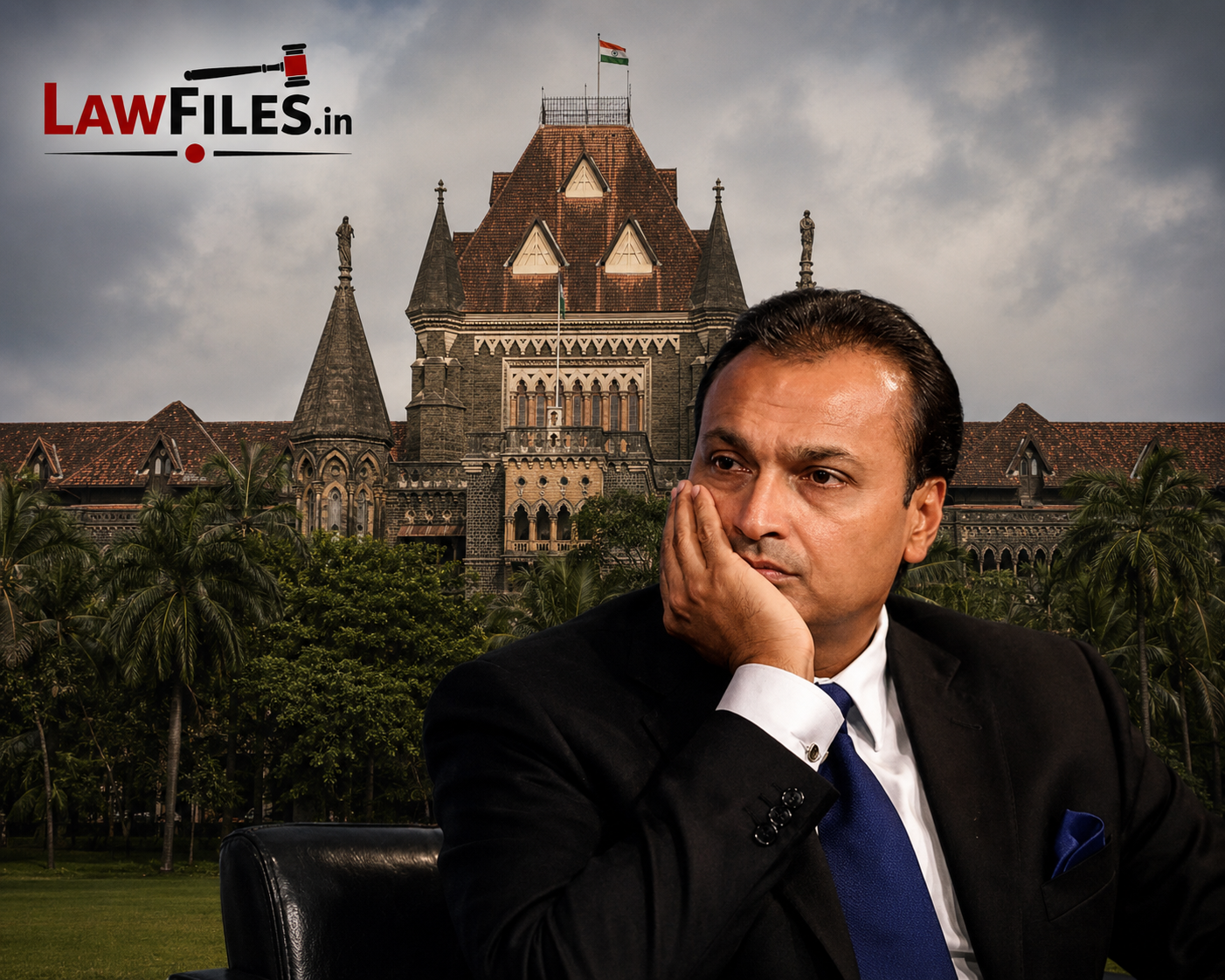
    Anil Ambani Withdraws Bombay High Court Plea Against Bank of Baroda’s Fraud Classification; Case Highlights Evolving Judicial Standards Governing RBI Fraud Tagging Framework

    Anvita DwivediBy Anvita DwivediJuly 11, 2026No Comments6 Mins Read
    WhatsApp Facebook Twitter Copy Link
    Share
    Facebook Twitter Pinterest Copy Link WhatsApp

    In a significant development in the ongoing litigation concerning the classification of loan accounts as “fraud” by public sector banks, industrialist Anil Ambani has withdrawn his writ petition before the Bombay High Court challenging the action initiated by the Bank of Baroda under the Reserve Bank of India’s fraud classification framework. The withdrawal comes against the backdrop of parallel proceedings before the Supreme Court and earlier judicial developments concerning similar fraud-classification actions initiated by multiple lending banks. While the High Court has not adjudicated upon the merits of the challenge, the development represents another important chapter in the evolving jurisprudence concerning the scope of judicial review over banking decisions, compliance with principles of natural justice and the regulatory powers exercised by banks under the RBI’s Master Directions on Fraud Risk Management.

    The petition before the Bombay High Court arose from Bank of Baroda’s decision to initiate proceedings for classifying certain loan accounts connected with Reliance Communications and Anil Ambani as “fraudulent” in terms of the Reserve Bank of India’s regulatory framework. Ambani had questioned the legality of the bank’s action, contending that the statutory safeguards governing fraud classification had not been fully complied with. However, during the course of the proceedings, counsel appearing on behalf of Ambani sought permission to withdraw the petition. The High Court accordingly permitted the withdrawal without entering into the merits of the controversy, leaving the substantive legal issues open for determination in appropriate proceedings.

    The withdrawal assumes significance because the dispute forms part of a larger series of legal proceedings involving fraud classification initiated by multiple public sector banks. Earlier, different benches of the Bombay High Court had granted interim protection in certain proceedings after prima facie examining compliance with the Reserve Bank of India’s procedural requirements. Those interim orders were subsequently set aside by a Division Bench, permitting the banks to continue fraud-classification proceedings. Thereafter, the Supreme Court declined to interfere with the Division Bench’s judgment while clarifying that the observations made by the High Court would not prejudice the merits of the pending civil proceedings and that Ambani would remain free to pursue any remedy otherwise available under law.

    The controversy revolves around one of the most consequential regulatory mechanisms available to Indian banks. Under the Reserve Bank of India’s Master Directions on Fraud Risk Management, banks are empowered to classify borrower accounts as fraudulent where evidence indicates diversion of funds, siphoning of loan proceeds, falsification of records or other forms of financial misconduct. Such classification carries severe legal and commercial consequences. Apart from exposing borrowers to criminal investigation by agencies such as the Central Bureau of Investigation and the Enforcement Directorate wherever warranted, a fraud declaration substantially affects access to institutional finance, damages commercial reputation and often triggers additional regulatory consequences across the banking system.

    Precisely because of these serious civil consequences, Indian constitutional courts have increasingly insisted that banks strictly comply with the principles of natural justice before classifying any account as fraud. The Supreme Court’s landmark judgment in State Bank of India v. Rajesh Agarwal (2023) fundamentally transformed the legal framework by holding that borrowers must ordinarily be supplied with relevant material, granted a meaningful opportunity of hearing and permitted to submit an effective representation before a final fraud-classification decision is taken. The Court recognised that although banks possess statutory authority to identify fraudulent transactions, procedural fairness cannot be sacrificed merely because the decision arises within a regulatory context.

    The litigation involving Anil Ambani has therefore never been confined merely to one borrower’s challenge. It reflects the continuing judicial effort to balance two equally important public interests. On one side lies the imperative of protecting public money and preserving the integrity of the banking system through prompt identification of fraudulent transactions. On the other lies the constitutional requirement that decisions carrying grave civil consequences must be preceded by fair procedure consistent with Articles 14 and 21 of the Constitution.

    Another noteworthy aspect concerns the distinction between judicial review and judicial substitution. Courts ordinarily do not examine whether a borrower is factually guilty of fraud while entertaining challenges to fraud-classification proceedings. Rather, judicial review primarily focuses upon whether the bank acted within the bounds of statutory authority, complied with mandatory RBI directions, observed procedural fairness and based its conclusions upon legally sustainable material. If procedural safeguards are violated, courts may set aside the decision without necessarily expressing any opinion on the underlying allegations.

    The present withdrawal therefore should not be understood as a judicial endorsement or rejection of the Bank of Baroda’s allegations. Since the petition was withdrawn, the Bombay High Court did not pronounce upon the legality of the bank’s action or determine whether the procedural requirements prescribed by law had been satisfied. Consequently, no precedent has emerged on the merits from the present proceedings.

    From the perspective of banking regulation, the litigation nevertheless illustrates the increasingly sophisticated nature of financial regulatory disputes. Modern banking supervision extends beyond conventional loan recovery into areas involving forensic audits, fraud detection, governance failures, related-party transactions and regulatory reporting. As these processes become more technically complex, judicial scrutiny has increasingly focused upon ensuring that regulatory objectives are pursued without compromising procedural fairness.

    The dispute also highlights the growing role of forensic audits in commercial banking litigation. Fraud classification is frequently preceded by forensic examination of financial transactions conducted by specialised audit firms. Such reports often become the foundation for regulatory action by lending institutions. However, courts have repeatedly observed that forensic reports themselves do not automatically establish fraud and cannot substitute compliance with procedural safeguards. Borrowers must ordinarily receive an opportunity to contest adverse findings before a final regulatory decision is reached.

    Equally significant are the implications for corporate governance. Fraud classification of promoter-linked accounts affects not merely individual borrowers but also financial institutions, investors, creditors and capital markets. Regulatory actions of this nature frequently influence insolvency proceedings, debt restructuring negotiations and corporate financing. Consequently, legal certainty regarding the procedural framework governing fraud declarations is essential for maintaining confidence within India’s financial system.

    The withdrawal of the petition also demonstrates the strategic complexity often associated with high-value commercial litigation. Where multiple proceedings involving overlapping questions of law remain pending before different judicial forums, litigants frequently reassess procedural strategy to avoid conflicting adjudications or duplication of remedies. Such procedural decisions should not ordinarily be construed as reflecting the substantive strength or weakness of either party’s legal position.

    Ultimately, the proceedings underscore the continuing evolution of Indian banking jurisprudence in the post-Rajesh Agarwal era. Courts increasingly recognise that fraud detection and procedural fairness are complementary rather than competing objectives. Banks must retain effective regulatory powers to protect the integrity of the financial system, yet those powers must be exercised within a framework that respects constitutional guarantees of fairness, transparency and accountability. Although Anil Ambani’s withdrawal of the Bombay High Court petition brings one stage of the litigation to a close, the larger legal questions concerning the implementation of RBI’s fraud-classification regime continue to shape India’s developing jurisprudence on banking regulation, financial governance and judicial oversight of administrative decision-making.

    Anil Ambani Withdraws Bombay High Court Plea Against Bank of Baroda's Fraud Classification; Case Highlights Evolving Judicial Standards Governing RBI Fraud Tagging Framework
    Share. WhatsApp Facebook Twitter Pinterest Email
    Anvita Dwivedi

    Related Posts

    Delhi High Court Upholds Rajpal Yadav’s Conviction in Cheque Bounce Cases; Ruling Reaffirms Sanctity of Commercial Transactions and the Deterrent Purpose of the Negotiable Instruments Act

    July 11, 2026

    Delayed Payment by Auction Purchaser Under the SARFAESI Act: Supreme Court Reinforces Mandatory Compliance With Auction Timelines; A Landmark Shift in India’s Banking Recovery Jurisprudence

    July 11, 2026

    Supreme Court Examines Challenge to Navy Recruitment Rules for Group ‘B’ Non-Gazetted Officers; Notice to Centre Puts Promotional Equality and Service Jurisprudence Under Judicial Scrutiny

    July 11, 2026
    Add A Comment
    Leave A Reply Cancel Reply

    Demo
    Top Posts

    Digital Forensics Fail to convince Supreme Court: Bail Denied to Gagan Khanna in BNS Assault Case

    June 15, 2026241 Views

    Wrongful Claim Rejection Amounts to Deficiency in Service: Delhi Consumer Commission Holds Star Health Liable

    March 16, 202672 Views

    Bombay High Court Quashes POCSO Case, Directs Accused to Fund MacBook for Victim’s Education

    February 28, 202658 Views

    Supreme Court Quashes FIR Over ‘Improved’ Second Complaint: A Reminder That Criminal Law Cannot Be Built on Shifting Narratives

    June 4, 202654 Views
    Don't Miss

    Delhi High Court Upholds Rajpal Yadav’s Conviction in Cheque Bounce Cases; Ruling Reaffirms Sanctity of Commercial Transactions and the Deterrent Purpose of the Negotiable Instruments Act

    By Anvita DwivediJuly 11, 2026

    In a significant reaffirmation of India’s cheque dishonour jurisprudence, the Delhi High Court has upheld…

    Delayed Payment by Auction Purchaser Under the SARFAESI Act: Supreme Court Reinforces Mandatory Compliance With Auction Timelines; A Landmark Shift in India’s Banking Recovery Jurisprudence

    July 11, 2026

    Anil Ambani Withdraws Bombay High Court Plea Against Bank of Baroda’s Fraud Classification; Case Highlights Evolving Judicial Standards Governing RBI Fraud Tagging Framework

    July 11, 2026

    Supreme Court Examines Challenge to Navy Recruitment Rules for Group ‘B’ Non-Gazetted Officers; Notice to Centre Puts Promotional Equality and Service Jurisprudence Under Judicial Scrutiny

    July 11, 2026
    Stay In Touch
    • Facebook
    • Twitter

    Subscribe to Updates

    Get the latest creative news from SmartMag about art & design.

    Top Posts

    Digital Forensics Fail to convince Supreme Court: Bail Denied to Gagan Khanna in BNS Assault Case

    June 15, 2026241 Views

    Wrongful Claim Rejection Amounts to Deficiency in Service: Delhi Consumer Commission Holds Star Health Liable

    March 16, 202672 Views

    Bombay High Court Quashes POCSO Case, Directs Accused to Fund MacBook for Victim’s Education

    February 28, 202658 Views
    Don't Miss

    Delhi High Court Upholds Rajpal Yadav’s Conviction in Cheque Bounce Cases; Ruling Reaffirms Sanctity of Commercial Transactions and the Deterrent Purpose of the Negotiable Instruments Act

    By Anvita DwivediJuly 11, 2026

    In a significant reaffirmation of India’s cheque dishonour jurisprudence, the Delhi High Court has upheld…

    Delayed Payment by Auction Purchaser Under the SARFAESI Act: Supreme Court Reinforces Mandatory Compliance With Auction Timelines; A Landmark Shift in India’s Banking Recovery Jurisprudence

    July 11, 2026

    Anil Ambani Withdraws Bombay High Court Plea Against Bank of Baroda’s Fraud Classification; Case Highlights Evolving Judicial Standards Governing RBI Fraud Tagging Framework

    July 11, 2026

    Supreme Court Examines Challenge to Navy Recruitment Rules for Group ‘B’ Non-Gazetted Officers; Notice to Centre Puts Promotional Equality and Service Jurisprudence Under Judicial Scrutiny

    July 11, 2026
    Stay In Touch
    • Facebook
    • YouTube
    • TikTok
    • Instagram
    Top Trending
    About Us
    About Us

    LawFiles.in is a comprehensive legal news platform delivering real-time updates from the Supreme Court, High Courts, Tribunals, Corporate and Tax law, Regulators, Politics, Crime, Consumer cases, and Global Affairs.

    Email Us: lawfilesoffical@gmail.com
    Contact: +91 8800026066

    Contact Us:
    India International Centre
    40, Max Mueller Marg
    Lodhi Estate, New Delhi-110003

    Facebook X (Twitter)
    Our Picks

    Delhi High Court Upholds Rajpal Yadav’s Conviction in Cheque Bounce Cases; Ruling Reaffirms Sanctity of Commercial Transactions and the Deterrent Purpose of the Negotiable Instruments Act

    July 11, 2026

    Delayed Payment by Auction Purchaser Under the SARFAESI Act: Supreme Court Reinforces Mandatory Compliance With Auction Timelines; A Landmark Shift in India’s Banking Recovery Jurisprudence

    July 11, 2026

    Anil Ambani Withdraws Bombay High Court Plea Against Bank of Baroda’s Fraud Classification; Case Highlights Evolving Judicial Standards Governing RBI Fraud Tagging Framework

    July 11, 2026

    Supreme Court Examines Challenge to Navy Recruitment Rules for Group ‘B’ Non-Gazetted Officers; Notice to Centre Puts Promotional Equality and Service Jurisprudence Under Judicial Scrutiny

    July 11, 2026

    SCBA Condemns Abusive Conduct by Litigant in Supreme Court; Seeks Regulatory Framework for Circulation of Courtroom Videos Amid Growing Debate on Open Justice and Digital Accountability

    July 11, 2026
    Most Popular

    Madhya Pradesh High Court Examines Plea to Extend NRI Quota to Stray Vacancy Round in Medical Admissions

    February 26, 20260 Views

    Supreme Court Rules Limitation Period Under CrPC Starts When Offender’s Identity Is Known, Not From First Complaint

    February 27, 20260 Views

    Maharashtra State Consumer Commission Slams HP Employees’ Co-operative Credit Society for Enforcing Undisclosed Restriction, Orders Refund with Interest and Compensation

    March 2, 20260 Views

    NCDRC Dismisses Consumer Complaint Filed Nearly a Decade After Possession, Holds Claim Barred by Limitation

    March 2, 20260 Views

    Supreme Court CJI Uses T20 Cricket Analogy to Stress Importance of Specialization in Legal Practice

    March 2, 20260 Views
    © 2026 LawFiles. Owned by Varta24 Media.
    • Articles
    • Careers
    • Corporate
    • Global Affairs
    • Law Firms & Lawyers
    • PILS
    • Regulatory

    Type above and press Enter to search. Press Esc to cancel.