

Close Menu
LawFilesLawFiles

    Subscribe to Updates

    Get the latest creative news from FooBar about art, design and business.

    What's Hot

    Delhi High Court Upholds Rajpal Yadav’s Conviction in Cheque Bounce Cases; Ruling Reaffirms Sanctity of Commercial Transactions and the Deterrent Purpose of the Negotiable Instruments Act

    July 11, 2026

    Delayed Payment by Auction Purchaser Under the SARFAESI Act: Supreme Court Reinforces Mandatory Compliance With Auction Timelines; A Landmark Shift in India’s Banking Recovery Jurisprudence

    July 11, 2026

    Anil Ambani Withdraws Bombay High Court Plea Against Bank of Baroda’s Fraud Classification; Case Highlights Evolving Judicial Standards Governing RBI Fraud Tagging Framework

    July 11, 2026
    Facebook X (Twitter) Instagram Threads
    Saturday, July 11
    LawFilesLawFiles
    Facebook X (Twitter)
    • Home
      • Who We Are
      • Our Mission
      • Advisory board
      • Contact US
    • Supreme Court
    • High Courts
      • Gujarat High Court
      • Jharkhand High Court
      • Rajasthan High Court
      • Karnataka High Court
      • Andhra Pradesh High Court
      • Allahabad High Court
      • Himachal Pradesh High Court
      • Chhattisgarh High Court
      • Jammu & Kashmir and Ladakh High Court
      • Kerala High Court
      • Punjab and Haryana High Court
      • Patna High Court
      • Madhya Pradesh High Court
      • Madras High Court
      • Bombay High Court
      • Orissa High Court
      • Calcutta High Court
      • Meghalaya High Court
      • Delhi High Court
      • Manipur High Court
      • Gauhati High Court
    • Corporate
    • Taxation Laws
      • Income Tax
      • GST
      • Customs & Excise
    • Global Affairs
    • Articles
      • Sitting Judge’s’ Views
      • Senior Advocate
      • Policy Analysis
      • Tax Expert
    • PILS
      • Free/Affordable Legal Aid
      • PIL Cell
      • Law student Volunteer Cell (research & Drafting)
      • NGO & Legal services Authority Tie-ups
      • Online Legal Formats
      • Online Legal Help Form
    Subscribe Premium
    LawFilesLawFiles
    Home»Political News»Supreme Court Stays Premature Release of 1993 Bowbazar Blast Convict: Reopening the Debate Between Reformation and Public Justice
    Political News

    Supreme Court Stays Premature Release of 1993 Bowbazar Blast Convict: Reopening the Debate Between Reformation and Public Justice

    Anvita DwivediBy Anvita DwivediJune 23, 2026No Comments7 Mins Read
    WhatsApp Facebook Twitter Copy Link
    Share
    Facebook Twitter Pinterest Copy Link WhatsApp

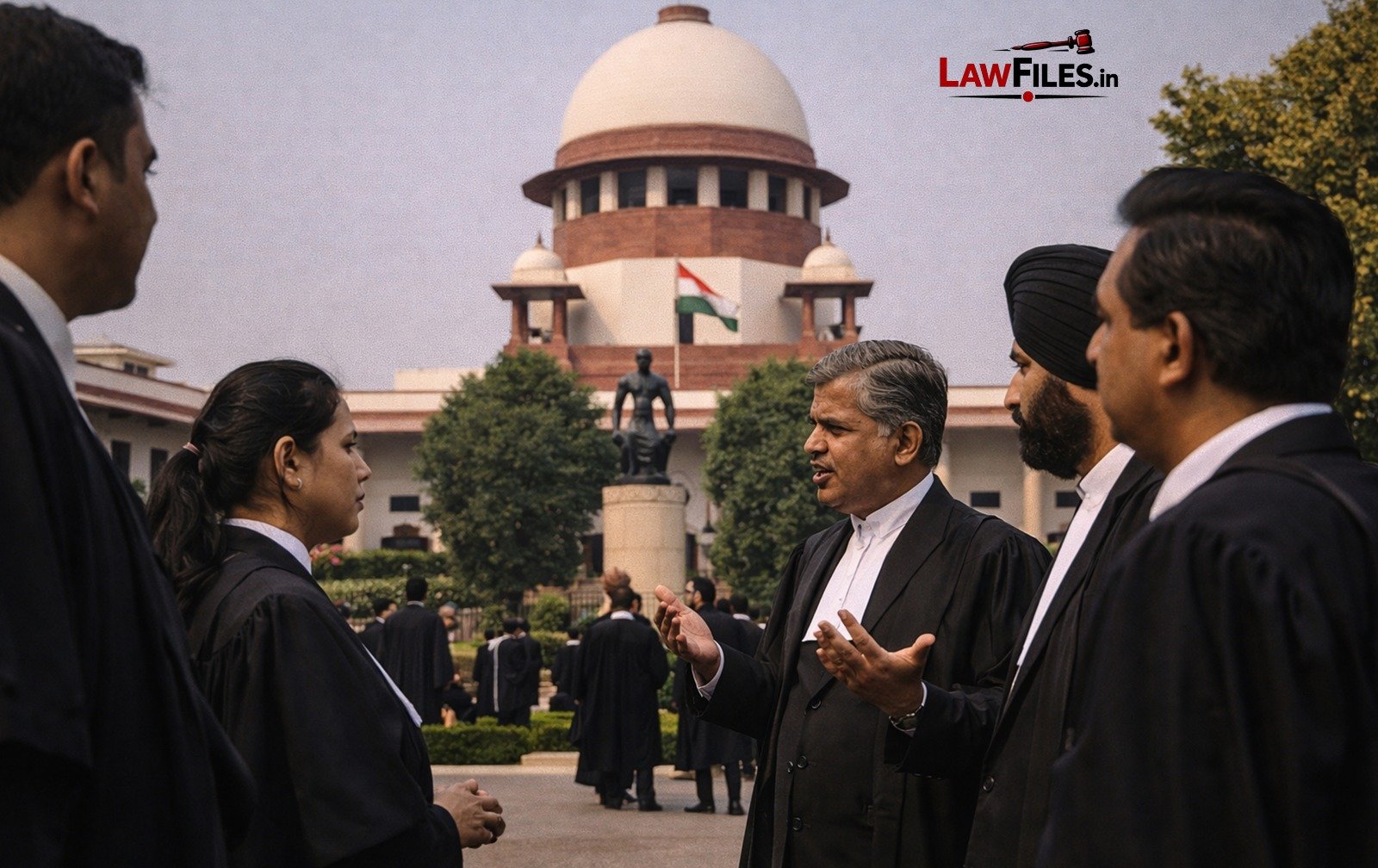
    The Supreme Court has stayed the premature release of a life convict in the 1993 Bowbazar blast case, reopening an important debate on the competing principles of reformation, public justice, and the limits of executive clemency in cases involving acts of terrorism. The order came while the Court was hearing a challenge filed by the State of West Bengal against a Delhi High Court judgment directing the release of Md. Rashid Khan, one of the convicts in the blast that remains one of the deadliest terror incidents in Kolkata’s history.

    The case traces its origins to the devastating explosion that occurred on March 16, 1993, in the crowded Bowbazar locality of Kolkata. The blast claimed nearly seventy lives and left several others injured, causing widespread destruction and public panic. Following an extensive investigation, several individuals were prosecuted under provisions of the Indian Penal Code, the Explosives Act, and the Terrorist and Disruptive Activities (Prevention) Act, commonly known as TADA. Md. Rashid Khan was ultimately convicted and sentenced to life imprisonment in connection with the conspiracy and execution of the blast.

    Having spent more than three decades behind bars, Khan approached the courts seeking premature release. His plea was founded on several grounds, including advanced age, deteriorating health, satisfactory conduct in prison, and the fact that he had undergone over thirty-three years of incarceration. It was also argued that another convict connected with the same case had already been granted remission and released, making continued incarceration discriminatory and unjustified.

    The Delhi High Court accepted these submissions and adopted a reformative approach towards punishment. In directing Khan’s release, the Court observed that modern criminal jurisprudence increasingly recognizes rehabilitation and reintegration as significant objectives of sentencing. The High Court reasoned that prolonged incarceration extending beyond three decades had substantially fulfilled the goals of punishment and deterrence. It further took note of the convict’s age, medical condition, prison record, and the absence of any allegation suggesting that he remained a threat to society.

    The High Court’s reasoning reflected a broader shift within criminal jurisprudence that seeks to move away from purely retributive punishment. The judgment appeared to emphasize that a prisoner does not cease to be a rights-bearing individual merely because of the gravity of the offence committed. The Court found that continued imprisonment, despite evidence of reformation and advancing age, would not necessarily advance the objectives of criminal justice.

    However, the State of West Bengal strongly opposed the decision and immediately approached the Supreme Court. The State argued that the High Court had failed to adequately appreciate the exceptional gravity of the offence and the devastating impact the blast had on society. According to the State, terrorism-related offences cannot be viewed through the same lens as ordinary crimes because they are directed not merely against individual victims but against public order and national security itself. It was further submitted that Khan was regarded as one of the principal figures involved in the incident and that his release would undermine public confidence in the administration of justice.

    An important aspect highlighted by the State was the recommendation of the State Sentence Review Board. The Board had reportedly considered the case and declined to recommend premature release. The State contended that the High Court had effectively substituted its own assessment for that of the executive authorities entrusted with evaluating remission claims. This argument raises a significant constitutional issue concerning the extent to which courts can interfere with executive decisions relating to remission and premature release.

    The Supreme Court, while considering the challenge, found sufficient grounds to stay the operation of the High Court’s order. Though the Court has not yet finally adjudicated upon the merits of the dispute, the stay indicates judicial caution in a case involving serious offences under anti-terror legislation. The matter is expected to receive detailed consideration in the coming hearings.

    From a legal perspective, the controversy revives the longstanding debate over the nature of remission and premature release in Indian law. The Supreme Court has repeatedly held that a life convict does not possess an absolute right to be released before completing the remainder of the sentence. What a prisoner can legitimately claim is a fair, transparent, and non-arbitrary consideration of the request for remission under the applicable legal framework. This distinction lies at the heart of remission jurisprudence and seeks to balance the rights of prisoners with the discretion vested in the executive.

    The case is particularly significant because it involves a conviction under TADA, one of India’s most stringent anti-terror laws. Courts have historically treated terrorism-related offences differently due to their wider societal impact. Unlike conventional crimes, acts of terrorism are intended to create fear among the public, destabilize institutions, and challenge the authority of the State. Consequently, decisions concerning remission in such cases often attract heightened scrutiny and public attention.

    At the same time, Indian constitutional jurisprudence increasingly recognizes the reformative dimension of punishment. The Supreme Court has, in several decisions, emphasized that incarceration is not intended solely to inflict suffering but also to facilitate the possibility of rehabilitation. The recognition of human dignity, even for convicted prisoners, forms an integral component of Article 21 of the Constitution. This constitutional philosophy has often guided courts while considering cases involving long-term imprisonment.

    The Bowbazar blast case therefore presents a classic conflict between two legitimate legal philosophies. On one side stands the principle of reformation, which assumes that individuals can change over time and should not be permanently denied an opportunity to reintegrate into society. On the other side stands the principle of societal accountability, which demands that punishment remain proportionate to the enormity of the offence and responsive to the expectations of victims and the broader community.

    The issue also highlights the evolving role of victims’ rights within the criminal justice system. Modern criminal law no longer treats crimes merely as disputes between the offender and the State. Increasing emphasis is being placed on the voices and interests of victims and their families. In cases involving mass casualties, courts are often required to balance considerations of mercy towards the convict against the enduring trauma suffered by victims and the collective memory of the crime itself.

    Equally important is the constitutional question regarding judicial review of executive decisions. While remission traditionally falls within the executive domain, courts possess the authority to intervene where decisions are arbitrary, irrational, or contrary to law. However, determining the precise limits of such intervention remains a complex exercise. The Supreme Court’s eventual ruling may therefore provide important guidance on the relationship between judicial oversight and executive discretion in remission matters.

    The outcome of this litigation is likely to have implications extending far beyond the individual case. It may shape future jurisprudence concerning the premature release of convicts sentenced for terrorism-related offences and other crimes involving large-scale loss of life. The Court’s decision could also influence how sentence review boards assess similar applications and the extent to which courts may re-evaluate those assessments.

    Ultimately, the proceedings raise a difficult but unavoidable question at the heart of criminal justice: when, if ever, does the possibility of reformation outweigh the continuing societal impact of a grave crime? By staying the premature release of the Bowbazar blast convict, the Supreme Court has signalled that this question requires careful judicial consideration. The final verdict will not merely determine the fate of one prisoner; it is likely to become a significant precedent in the continuing evolution of India’s remission and criminal justice jurisprudence.

    Reopening the Debate Between Reformation and Public Justice Supreme Court Stays Premature Release of 1993 Bowbazar Blast Convict:
    Share. WhatsApp Facebook Twitter Pinterest Email
    Anvita Dwivedi

    Related Posts

    Delhi High Court Upholds Rajpal Yadav’s Conviction in Cheque Bounce Cases; Ruling Reaffirms Sanctity of Commercial Transactions and the Deterrent Purpose of the Negotiable Instruments Act

    July 11, 2026

    Delayed Payment by Auction Purchaser Under the SARFAESI Act: Supreme Court Reinforces Mandatory Compliance With Auction Timelines; A Landmark Shift in India’s Banking Recovery Jurisprudence

    July 11, 2026

    Anil Ambani Withdraws Bombay High Court Plea Against Bank of Baroda’s Fraud Classification; Case Highlights Evolving Judicial Standards Governing RBI Fraud Tagging Framework

    July 11, 2026
    Add A Comment
    Leave A Reply Cancel Reply

    Demo
    Top Posts

    Digital Forensics Fail to convince Supreme Court: Bail Denied to Gagan Khanna in BNS Assault Case

    June 15, 2026241 Views

    Wrongful Claim Rejection Amounts to Deficiency in Service: Delhi Consumer Commission Holds Star Health Liable

    March 16, 202672 Views

    Bombay High Court Quashes POCSO Case, Directs Accused to Fund MacBook for Victim’s Education

    February 28, 202658 Views

    Supreme Court Quashes FIR Over ‘Improved’ Second Complaint: A Reminder That Criminal Law Cannot Be Built on Shifting Narratives

    June 4, 202654 Views
    Don't Miss

    Delhi High Court Upholds Rajpal Yadav’s Conviction in Cheque Bounce Cases; Ruling Reaffirms Sanctity of Commercial Transactions and the Deterrent Purpose of the Negotiable Instruments Act

    By Anvita DwivediJuly 11, 2026

    In a significant reaffirmation of India’s cheque dishonour jurisprudence, the Delhi High Court has upheld…

    Delayed Payment by Auction Purchaser Under the SARFAESI Act: Supreme Court Reinforces Mandatory Compliance With Auction Timelines; A Landmark Shift in India’s Banking Recovery Jurisprudence

    July 11, 2026

    Anil Ambani Withdraws Bombay High Court Plea Against Bank of Baroda’s Fraud Classification; Case Highlights Evolving Judicial Standards Governing RBI Fraud Tagging Framework

    July 11, 2026

    Supreme Court Examines Challenge to Navy Recruitment Rules for Group ‘B’ Non-Gazetted Officers; Notice to Centre Puts Promotional Equality and Service Jurisprudence Under Judicial Scrutiny

    July 11, 2026
    Stay In Touch
    • Facebook
    • Twitter

    Subscribe to Updates

    Get the latest creative news from SmartMag about art & design.

    Top Posts

    Digital Forensics Fail to convince Supreme Court: Bail Denied to Gagan Khanna in BNS Assault Case

    June 15, 2026241 Views

    Wrongful Claim Rejection Amounts to Deficiency in Service: Delhi Consumer Commission Holds Star Health Liable

    March 16, 202672 Views

    Bombay High Court Quashes POCSO Case, Directs Accused to Fund MacBook for Victim’s Education

    February 28, 202658 Views
    Don't Miss

    Delhi High Court Upholds Rajpal Yadav’s Conviction in Cheque Bounce Cases; Ruling Reaffirms Sanctity of Commercial Transactions and the Deterrent Purpose of the Negotiable Instruments Act

    By Anvita DwivediJuly 11, 2026

    In a significant reaffirmation of India’s cheque dishonour jurisprudence, the Delhi High Court has upheld…

    Delayed Payment by Auction Purchaser Under the SARFAESI Act: Supreme Court Reinforces Mandatory Compliance With Auction Timelines; A Landmark Shift in India’s Banking Recovery Jurisprudence

    July 11, 2026

    Anil Ambani Withdraws Bombay High Court Plea Against Bank of Baroda’s Fraud Classification; Case Highlights Evolving Judicial Standards Governing RBI Fraud Tagging Framework

    July 11, 2026

    Supreme Court Examines Challenge to Navy Recruitment Rules for Group ‘B’ Non-Gazetted Officers; Notice to Centre Puts Promotional Equality and Service Jurisprudence Under Judicial Scrutiny

    July 11, 2026
    Stay In Touch
    • Facebook
    • YouTube
    • TikTok
    • Instagram
    Top Trending
    About Us
    About Us

    LawFiles.in is a comprehensive legal news platform delivering real-time updates from the Supreme Court, High Courts, Tribunals, Corporate and Tax law, Regulators, Politics, Crime, Consumer cases, and Global Affairs.

    Email Us: lawfilesoffical@gmail.com
    Contact: +91 8800026066

    Contact Us:
    India International Centre
    40, Max Mueller Marg
    Lodhi Estate, New Delhi-110003

    Facebook X (Twitter)
    Our Picks

    Delhi High Court Upholds Rajpal Yadav’s Conviction in Cheque Bounce Cases; Ruling Reaffirms Sanctity of Commercial Transactions and the Deterrent Purpose of the Negotiable Instruments Act

    July 11, 2026

    Delayed Payment by Auction Purchaser Under the SARFAESI Act: Supreme Court Reinforces Mandatory Compliance With Auction Timelines; A Landmark Shift in India’s Banking Recovery Jurisprudence

    July 11, 2026

    Anil Ambani Withdraws Bombay High Court Plea Against Bank of Baroda’s Fraud Classification; Case Highlights Evolving Judicial Standards Governing RBI Fraud Tagging Framework

    July 11, 2026

    Supreme Court Examines Challenge to Navy Recruitment Rules for Group ‘B’ Non-Gazetted Officers; Notice to Centre Puts Promotional Equality and Service Jurisprudence Under Judicial Scrutiny

    July 11, 2026

    SCBA Condemns Abusive Conduct by Litigant in Supreme Court; Seeks Regulatory Framework for Circulation of Courtroom Videos Amid Growing Debate on Open Justice and Digital Accountability

    July 11, 2026
    Most Popular

    Madhya Pradesh High Court Examines Plea to Extend NRI Quota to Stray Vacancy Round in Medical Admissions

    February 26, 20260 Views

    Supreme Court Rules Limitation Period Under CrPC Starts When Offender’s Identity Is Known, Not From First Complaint

    February 27, 20260 Views

    Maharashtra State Consumer Commission Slams HP Employees’ Co-operative Credit Society for Enforcing Undisclosed Restriction, Orders Refund with Interest and Compensation

    March 2, 20260 Views

    NCDRC Dismisses Consumer Complaint Filed Nearly a Decade After Possession, Holds Claim Barred by Limitation

    March 2, 20260 Views

    Supreme Court CJI Uses T20 Cricket Analogy to Stress Importance of Specialization in Legal Practice

    March 2, 20260 Views
    © 2026 LawFiles. Owned by Varta24 Media.
    • Articles
    • Careers
    • Corporate
    • Global Affairs
    • Law Firms & Lawyers
    • PILS
    • Regulatory

    Type above and press Enter to search. Press Esc to cancel.