


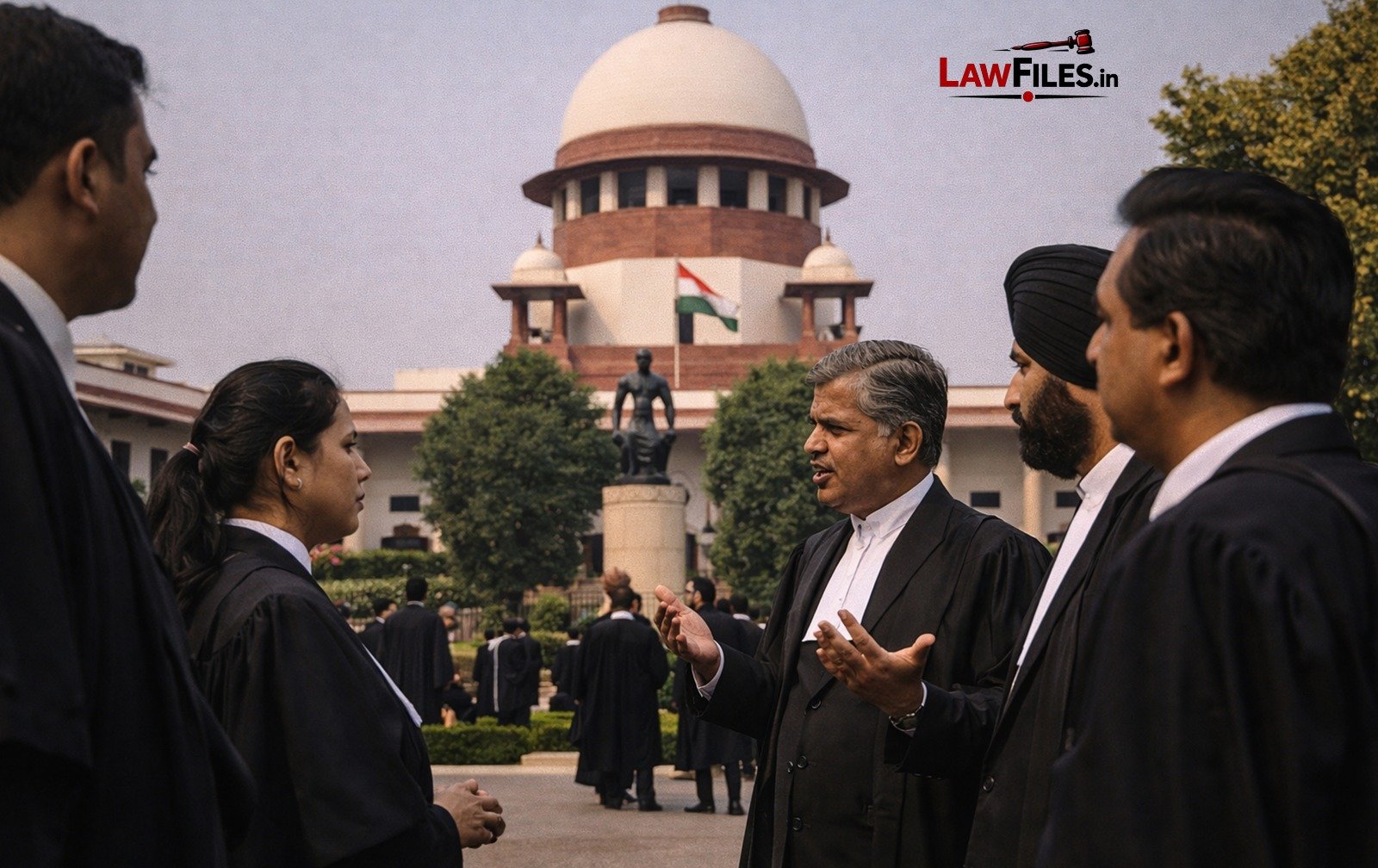
In a landmark ruling reinforcing the mandatory reporting framework under the Protection of Children from Sexual Offences Act, 2012 (POCSO Act), the Supreme Court has held that school authorities cannot escape criminal liability by conducting their own internal inquiry after a child directly discloses sexual abuse. Setting aside the discharge of a school headmistress accused of suppressing a child’s complaint of rape, the Court observed that the statutory obligation under Section 19 of the POCSO Act arises immediately upon receiving credible information from the child and does not permit school officials to independently verify the allegations before informing law enforcement authorities. The judgment significantly strengthens India’s child protection jurisprudence by making it clear that institutional discretion cannot override the legislative mandate of immediate reporting in cases involving allegations of child sexual abuse.
The case arose from an incident involving an eight-year-old schoolgirl who allegedly informed the headmistress that she had been sexually assaulted by a senior student. Instead of immediately notifying the police as required under Section 19 of the POCSO Act, the headmistress allegedly conducted her own informal inquiry. According to the prosecution, she examined the child, questioned the alleged perpetrator, observed the children over the following days and ultimately concluded that “nothing had happened.” It was further alleged that the matter was suppressed and students were instructed not to discuss the incident. Criminal proceedings were thereafter initiated against the headmistress for failing to comply with the mandatory reporting obligation prescribed under the POCSO Act.
Both the Trial Court and the High Court had discharged the headmistress, primarily on the reasoning that she lacked the requisite “knowledge” contemplated under Section 19 because her own verification exercise did not establish that an offence had actually occurred. The courts below also took note of the subsequent medical examination, which reportedly did not reveal physical signs conclusively supporting the allegation of sexual assault. Proceeding on this basis, they concluded that criminal prosecution for failure to report was unwarranted.
The victim’s mother challenged the discharge before the Supreme Court. It was argued that the interpretation adopted by the courts below fundamentally diluted the statutory purpose of the POCSO Act by allowing school authorities to substitute their personal assessment for the mandatory legal obligation imposed by Parliament. According to the appellant, the Act deliberately requires immediate reporting precisely because educational institutions and private individuals are neither equipped nor legally authorised to investigate allegations of child sexual abuse.
Accepting these submissions, a Bench comprising Justice Manoj Misra and Justice K.V. Viswanathan reversed the discharge order and revived the criminal proceedings against the headmistress. The Court held that the expression “has knowledge that such an offence has been committed” occurring in Section 19(1) of the POCSO Act must receive a purposive interpretation consistent with the protective object of the legislation. Where a child personally informs a responsible adult that he or she has been subjected to sexual abuse, the recipient of that information acquires sufficient “knowledge” to trigger the statutory obligation to report the matter to the Special Juvenile Police Unit or the local police. The law does not contemplate an intermediate stage where institutional authorities may conduct their own inquiry to determine whether the complaint deserves to be reported.
The Court emphatically rejected the defence that an internal verification could substitute compliance with the statutory mandate. It observed that permitting school authorities to independently determine the truthfulness of allegations before informing the police would defeat the very purpose of the POCSO Act. Questions relating to credibility, medical evidence, witness examination and factual determination fall exclusively within the domain of trained investigators and criminal courts. Educational institutions are expected to facilitate access to the criminal justice system, not function as parallel investigative bodies.
A particularly significant aspect of the judgment is its interpretation of Sections 19 and 21 of the POCSO Act. Section 19 casts a mandatory obligation upon every person who has knowledge that a child has been subjected to a sexual offence to report the matter to the authorities. Section 21 prescribes criminal consequences for failure to discharge that obligation, including imprisonment extending up to six months, fine or both. The Supreme Court clarified that these provisions create an affirmative statutory duty designed to ensure immediate institutional response to allegations involving children. Delayed reporting or private verification may compromise evidence, expose the child to continued abuse and undermine effective investigation.
From a jurisprudential perspective, the ruling substantially strengthens the doctrine of mandatory reporting under Indian child protection law. Unlike ordinary criminal statutes where reporting often remains discretionary, the POCSO Act deliberately imposes legal responsibility upon teachers, school administrators, doctors, counsellors and every other person receiving credible information regarding child sexual abuse. Parliament consciously departed from traditional criminal procedure by recognising that children frequently disclose abuse first to trusted adults rather than police authorities. The statutory obligation therefore seeks to eliminate institutional hesitation that may otherwise delay intervention.
The judgment also carries profound implications for educational institutions across the country. Schools frequently attempt to resolve sensitive complaints internally to protect institutional reputation, avoid public controversy or reassure parents. The Supreme Court’s decision unequivocally declares that such institutional considerations cannot override statutory obligations imposed under the POCSO Act. Internal disciplinary mechanisms may certainly proceed where appropriate, but they cannot replace or postpone the legally mandated obligation of immediate reporting to law enforcement authorities.
The ruling further aligns with the broader constitutional philosophy underlying Articles 21, 21A and 39(f) of the Constitution, which collectively impose a positive obligation upon the State to ensure a safe environment for children. The POCSO Act represents a legislative manifestation of these constitutional commitments by creating child-friendly procedures for reporting, investigation and trial. The Supreme Court’s purposive interpretation ensures that these statutory protections are not diluted through narrow or technical construction of the reporting obligation.
Another noteworthy aspect concerns the Court’s rejection of medical evidence as the sole determinant for initiating criminal process. The Bench implicitly recognised that absence of immediate physical injuries or inconclusive medical findings does not necessarily negate allegations of sexual abuse. Indian criminal jurisprudence has consistently held that sexual offences, particularly those involving children, may often be established through credible testimony even in the absence of corroborative medical evidence. Consequently, the statutory duty to report cannot depend upon an institution’s assessment of medical findings or evidentiary sufficiency.
The judgment also contributes to the evolving jurisprudence concerning institutional accountability. Recent years have witnessed growing judicial emphasis on the responsibilities of schools, hospitals, childcare institutions and other organisations entrusted with the welfare of children. Rather than treating child protection solely as a matter of criminal investigation, courts increasingly recognise it as an institutional obligation requiring proactive compliance by every authority interacting with children. The present decision strengthens that approach by affirming that institutional silence or administrative discretion cannot become barriers to legal accountability.
From a policy perspective, the ruling is likely to influence compliance protocols across educational institutions nationwide. Schools may now be required to strengthen child protection policies, mandatory reporting procedures, staff training programmes and internal awareness mechanisms to ensure immediate compliance whenever allegations of abuse are disclosed. Failure to do so could expose responsible officials not merely to disciplinary consequences but also to criminal prosecution under Section 21 of the POCSO Act.
Ultimately, the Supreme Court’s decision represents a significant milestone in India’s child protection jurisprudence. By holding that a school official cannot avoid criminal liability through private verification after receiving a direct complaint from a child, the Court has reaffirmed that the POCSO Act places the welfare and safety of children above institutional discretion or administrative convenience. The judgment sends a clear message that allegations of child sexual abuse must be promptly reported to the competent authorities, leaving investigation to those legally empowered to conduct it. In doing so, the Court has reinforced one of the central objectives of the POCSO framework—that every child who discloses sexual abuse should immediately receive the protection of law rather than the uncertainty of unofficial institutional inquiries.
