


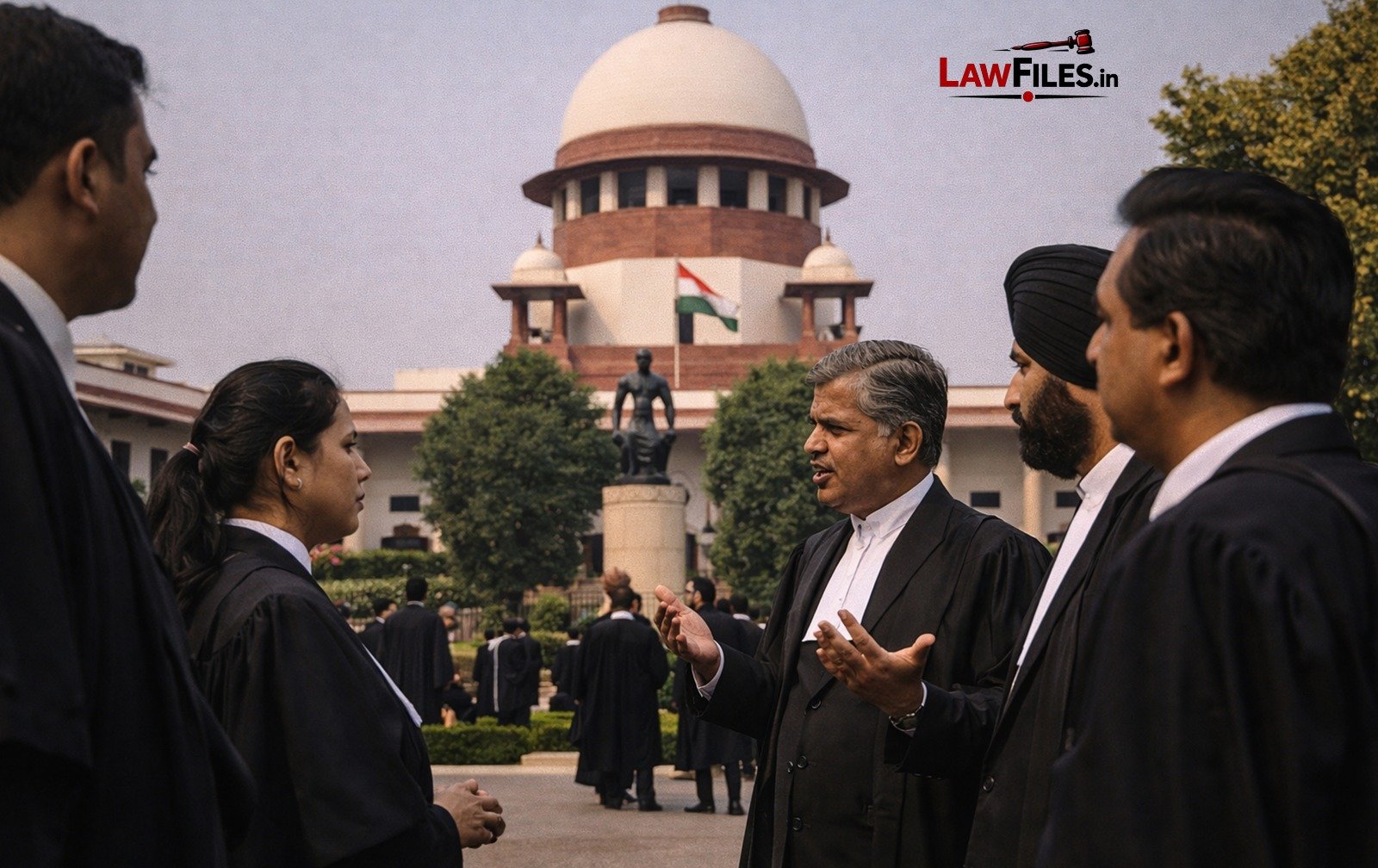
In a significant judgment reinforcing the dignity of the judiciary and the constitutional imperative of ensuring a safe working environment for women judicial officers, the Supreme Court has refused to interfere with the sentence imposed upon an advocate convicted of using abusive, threatening and sexually offensive language against a woman Metropolitan Magistrate during court proceedings. Declining the plea seeking reduction of the sentence to the period already undergone, a Bench comprising Justice P.K. Mishra and Justice Manmohan observed that any misplaced leniency in such cases would send a dangerous message to the judicial system, particularly when a large number of judicial officers serving across trial courts today are women. The Court emphatically remarked that women judicial officers cannot be expected to discharge their constitutional duties fearlessly if advocates are permitted to escape serious consequences after humiliating or intimidating judges inside courtrooms.
The proceedings arose from a Special Leave Petition challenging a judgment of the Delhi High Court which had upheld the conviction of Advocate Sanjay Rathore for offences committed inside a trial court in Delhi in 2015. According to the prosecution case, the advocate entered the courtroom after learning that his challan matter had been adjourned and proceeded to shout at the presiding Metropolitan Magistrate. The incident escalated when he allegedly used vulgar, sexually coloured and abusive language directed at the judicial officer, refused repeated directions to maintain decorum, and created an atmosphere that disrupted the administration of justice. Following trial, he was convicted under Sections 509, 189 and 353 of the Indian Penal Code for outraging the modesty of a woman, threatening a public servant and using criminal force or assault to deter a public servant from discharging official duties. The trial court imposed separate sentences which were initially directed to run consecutively, resulting in an aggregate imprisonment of two years.
While affirming the conviction, the Delhi High Court had already shown a measure of judicial leniency by directing that all sentences should run concurrently instead of consecutively, thereby reducing the effective sentence from two years to eighteen months. The High Court nevertheless found that the conduct of the advocate represented not merely an insult to an individual judge but an assault upon the dignity of the judicial institution itself. It observed that a judicial officer presiding over court proceedings represents the authority of law, and any attempt to humiliate or intimidate such an officer while performing judicial functions strikes at the very foundation of the administration of justice.
Before the Supreme Court, counsel appearing for the petitioner sought further reduction of the sentence to approximately six months already undergone. It was submitted that the incident had occurred nearly a decade earlier, that the advocate had aged parents, a wife and young children dependent upon him, and that disciplinary proceedings had already been initiated against him by the Bar Council. Emphasis was placed upon humanitarian considerations and the plea that continued incarceration would cause disproportionate hardship to his family.
The Supreme Court, however, declined to accept these submissions. During the hearing, Justice Manmohan observed that the language used by the advocate against the judicial officer was so offensive that it could not even be reproduced in open court. The Bench stressed that if constitutional courts failed to adopt a firm approach in cases involving intimidation or humiliation of judicial officers, particularly women judges, it would seriously undermine confidence in the justice delivery system. Justice Mishra further observed that today a substantial proportion of judicial officers serving in Delhi’s subordinate judiciary are women and that courts must ensure they are able to discharge their duties without fear, intimidation or harassment. The Bench remarked that permitting such behaviour to go inadequately punished would have a chilling effect upon judicial independence at the trial court level.
The judgment is significant because it reiterates an important constitutional principle that the dignity of courts is inseparable from the independence of the judiciary. Judicial independence is often discussed in the context of protection from executive or legislative interference. However, the Court’s observations highlight that independence must equally extend to protection against intimidation, abuse and misconduct within court premises. Trial judges, particularly those presiding over criminal matters, routinely decide disputes involving liberty, property and public order. If they are exposed to threats or humiliation from litigants or members of the Bar without adequate legal consequences, the administration of justice itself stands imperilled.
From a criminal law perspective, the case also illustrates the scope of Section 509 of the Indian Penal Code, which criminalises words, gestures or acts intended to insult the modesty of a woman. Although this provision has now been replaced by corresponding provisions under the Bharatiya Nyaya Sanhita, the underlying principle remains unchanged. Courts have consistently recognised that sexually offensive remarks directed at women in professional settings constitute serious criminal misconduct, particularly where such conduct interferes with discharge of official functions. The conviction under Section 353 IPC further reflected the finding that the advocate’s conduct was intended to obstruct a public servant while lawfully performing official duties.
Equally noteworthy is the Court’s emphasis upon courtroom discipline as an indispensable component of the rule of law. Advocates undoubtedly enjoy a privileged position within the justice delivery system as officers of the court and indispensable participants in the administration of justice. That privilege, however, carries corresponding ethical obligations. The Advocates Act, 1961 and the Bar Council of India Rules impose duties requiring advocates to maintain respectful conduct towards courts, preserve judicial dignity and refrain from behaviour that obstructs the administration of justice. Misconduct occurring inside a courtroom therefore possesses a dual character it may constitute professional misconduct inviting disciplinary proceedings as well as criminal conduct attracting penal liability.
The ruling also aligns with the Supreme Court’s broader jurisprudence on gender-sensitive workplaces. Following the landmark decision in Vishaka v. State of Rajasthan and the enactment of the Sexual Harassment of Women at Workplace (Prevention, Prohibition and Redressal) Act, 2013, Indian constitutional law has consistently recognised the right of women to work in an environment free from intimidation, humiliation and gender-based abuse. Judicial institutions are no exception. Women judicial officers, despite occupying positions of constitutional responsibility, remain entitled to the same protections against harassment that apply across all workplaces. The Court’s observations reinforce that constitutional guarantees of dignity and equality under Articles 14, 15 and 21 extend fully to the judiciary itself.
Another important aspect of the judgment concerns proportionality in sentencing. The petitioner argued that nearly ten years had elapsed since the incident and that prolonged litigation itself justified a reduced sentence. The Supreme Court rejected this approach, indicating that passage of time cannot become a substitute for accountability where the offence directly attacks institutional integrity. The Court considered that the Delhi High Court had already extended significant relief by directing concurrent running of sentences. Any further reduction, in the circumstances of the case, would dilute the deterrent purpose underlying punishment for offences committed against judicial officers during discharge of official functions.
From an institutional perspective, the judgment sends a strong message concerning the standards expected within Indian courtrooms. Constitutional courts have repeatedly emphasised that robust advocacy and fearless representation are hallmarks of an independent Bar. However, vigorous advocacy cannot be confused with personal abuse, threats or vulgarity directed against judges. The distinction between professional disagreement and criminal misconduct remains fundamental to the orderly functioning of the justice delivery system.
Ultimately, the Supreme Court’s refusal to reduce the sentence reflects a broader constitutional commitment to preserving the authority, dignity and independence of the judiciary. The decision makes it abundantly clear that misconduct targeting judicial officers particularly women judges performing their constitutional functions cannot be treated as an ordinary disciplinary lapse deserving routine leniency. By affirming the sentence, the Court has reinforced the principle that every judicial officer is entitled to discharge official duties in an atmosphere of dignity, security and institutional respect. The judgment therefore stands not merely as a decision in an individual criminal appeal but as an important reaffirmation that the credibility of the justice delivery system depends upon ensuring that courtrooms remain spaces governed by law, civility and unwavering respect for judicial authority.
