


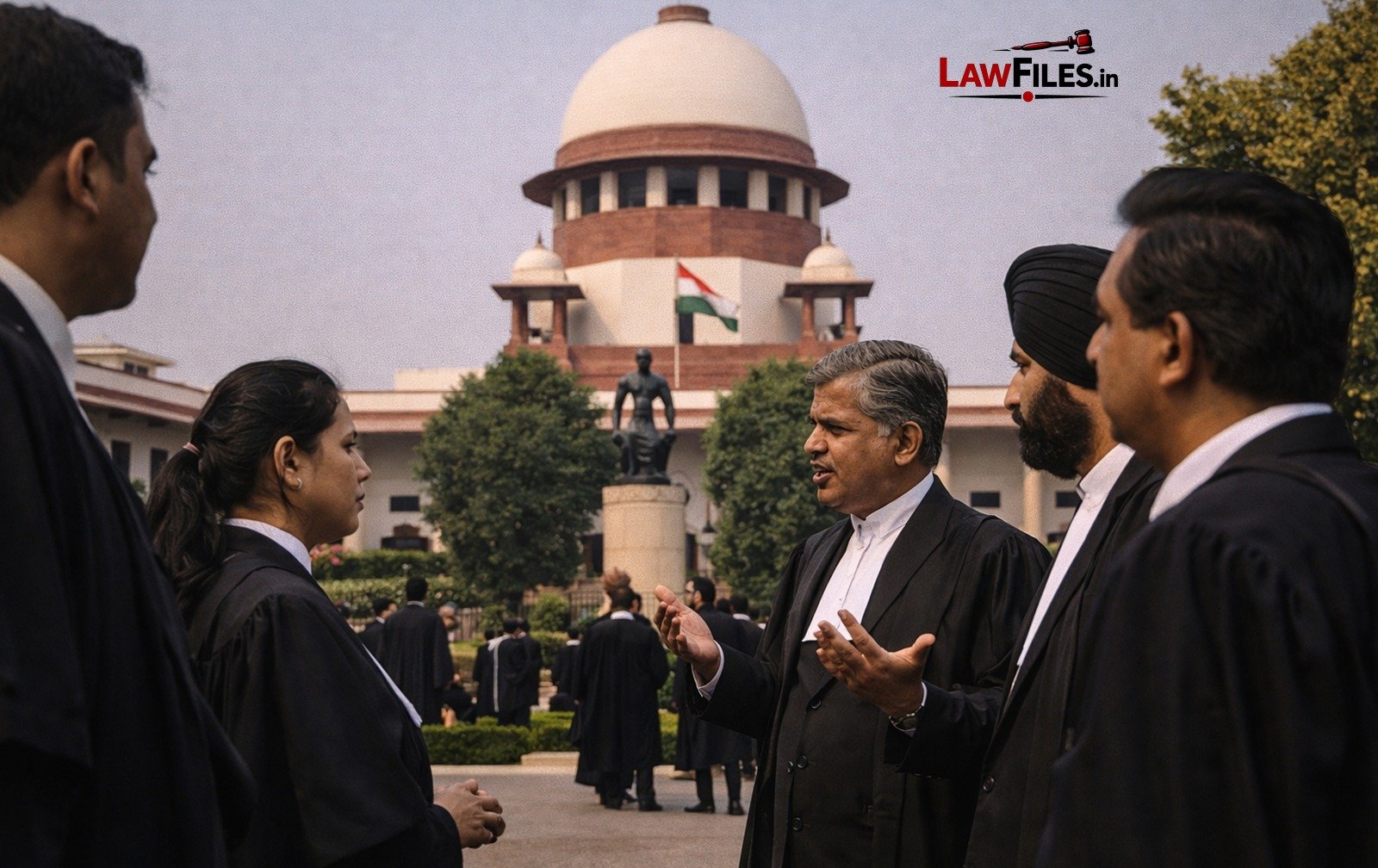
In a judgment carrying far-reaching implications for the regulation of the legal profession, the Supreme Court has directed the Bar Council of India (BCI) to undertake a comprehensive performance audit of the disciplinary mechanisms administered by it and the State Bar Councils under the Advocates Act, 1961. While reiterating that the legal profession occupies a constitutionally distinct position as an indispensable pillar of the justice delivery system, the Court emphasised that the privilege of self-regulation cannot exist in isolation from transparency, accountability and institutional effectiveness. Observing that public confidence in the legal profession depends not merely upon judicial integrity but equally upon professional standards maintained by advocates, the Court directed the BCI to constitute an expert committee to objectively assess the functioning of disciplinary proceedings across the country and submit an action-taken report before the Court. The judgment is likely to become a landmark in the evolving jurisprudence on legal ethics, professional accountability and institutional governance within the Bar.
The directions were issued by a Bench comprising Justice Pamidighantam Sri Narasimha and Justice Alok Aradhe while allowing an appeal filed by Advocate Ajay Vijh, whose name had earlier been included in the Indian Banks’ Association (IBA) Caution List on the allegation that he had rendered a negligent legal opinion. The Supreme Court ultimately held that external agencies such as banks or industry associations cannot unilaterally blacklist advocates or record findings on their professional misconduct, since disciplinary control over advocates has been statutorily entrusted to the Bar Councils under the Advocates Act, 1961. While granting relief to the appellant, the Court utilised the occasion to undertake a broader examination of the regulatory responsibilities discharged by the Bar Council of India and State Bar Councils in maintaining professional discipline within the legal fraternity.
During the course of the judgment, the Bench observed that although the Advocates Act establishes a comprehensive statutory framework governing professional conduct, serious concerns continue to exist regarding delays in disciplinary proceedings, absence of uniform practices among State Bar Councils, inadequate transparency concerning the progress of complaints and the lack of publicly available institutional performance data. The Court remarked that while the legislative architecture appears well designed on paper, there is insufficient empirical material demonstrating whether the disciplinary mechanisms are actually fulfilling their intended purpose of maintaining professional standards and protecting public confidence in the administration of justice. Recognising these concerns, the Bench directed the Bar Council of India to undertake a nationwide performance audit of disciplinary proceedings administered under the Advocates Act.
Significantly, the Supreme Court went beyond issuing a general direction and identified specific parameters that should form part of the audit exercise. These include the annual number of complaints instituted before each State Bar Council, the number of complaints disposed of every year, average and median disposal periods, age-wise pendency of disciplinary matters, the effectiveness of existing procedures and the overall functioning of disciplinary committees constituted under the Advocates Act. The Court emphasised that objective institutional assessment, supported by measurable data, is essential for evaluating whether the self-regulatory framework governing advocates is functioning efficiently. The BCI has been directed to constitute an appropriate committee, examine the findings and thereafter file an affidavit indicating the corrective measures proposed or already undertaken.
The judgment also places considerable emphasis on the constitutional character of the legal profession. Justice Narasimha observed that advocates do not merely provide professional services comparable to other occupations; rather, they perform an indispensable constitutional function in facilitating access to justice and preserving the rule of law. Courts, litigants and society repose exceptional trust in advocates because they function as officers of the court while simultaneously representing the interests of clients. This dual responsibility, the Bench observed, demands standards of integrity, competence and ethical conduct significantly higher than those applicable in ordinary commercial professions. Self-regulation, therefore, is not a privilege conferred for the benefit of advocates alone but a constitutional responsibility intended to protect the administration of justice itself.
An equally important aspect of the judgment concerns Continuing Legal Education (CLE). The Supreme Court observed that rapid developments in constitutional law, commercial legislation, technology, artificial intelligence, digital evidence and specialised regulatory regimes require advocates to continuously update their professional knowledge throughout their careers. The Bench encouraged the Bar Council of India to institutionalise continuing legal education programmes and strengthen mechanisms for professional skill development, recognising that competence is an essential component of legal ethics. The Court’s observations reflect a growing international trend that regards continuing legal education not merely as academic enrichment but as an integral aspect of professional responsibility.
From a statutory perspective, the judgment reinforces the regulatory architecture created by the Advocates Act, 1961. Section 7 of the Act entrusts the Bar Council of India with laying down standards of professional conduct and etiquette, supervising legal education and exercising appellate disciplinary jurisdiction. Correspondingly, State Bar Councils established under Sections 3 and 35 of the Act possess primary authority to inquire into allegations of professional misconduct against enrolled advocates through specially constituted disciplinary committees. By directing an audit of these mechanisms, the Supreme Court has not altered the statutory framework; rather, it has sought to ensure that the regulatory institutions discharge their legislative responsibilities effectively and transparently.
The judgment also revisits a recurring concern regarding pendency of disciplinary complaints. Allegations of professional misconduct frequently remain pending before disciplinary committees for several years, undermining both public confidence and fairness to advocates themselves. Delayed disciplinary proceedings may prejudice complainants awaiting accountability while simultaneously leaving accused advocates under prolonged uncertainty without final adjudication. The Court’s emphasis on measuring disposal rates, pendency and procedural efficiency reflects an institutional recognition that delayed regulation can be as detrimental to professional credibility as inadequate regulation.
From a constitutional standpoint, the decision carefully balances two equally important values. On one hand lies the independence of the legal profession, which remains indispensable for preserving judicial independence and ensuring fearless representation of clients. On the other lies public accountability, without which professional autonomy risks degenerating into institutional opacity. The Court’s observations reaffirm that self-regulation under the Advocates Act cannot mean absence of oversight. Rather, the legitimacy of professional autonomy depends upon demonstrable institutional effectiveness, transparent disciplinary mechanisms and consistent enforcement of ethical standards.
The ruling is also significant because it distinguishes between external evaluation of legal advice and statutory disciplinary jurisdiction. The Court categorically held that organisations such as banks, financial institutions or industry associations cannot independently declare an advocate professionally negligent or blacklist legal practitioners by maintaining caution lists affecting their ability to practise. Such determinations fall exclusively within the jurisdiction of the disciplinary bodies established under the Advocates Act. This distinction preserves the institutional independence of the legal profession while ensuring that questions of professional misconduct continue to be adjudicated by specialised statutory bodies rather than private entities.
Viewed in a broader context, the judgment arrives at a time when the legal profession is undergoing rapid transformation. Artificial intelligence-assisted legal research, digital court systems, virtual hearings, cross-border commercial disputes and increasingly specialised legal practice have significantly altered the professional landscape. Simultaneously, public expectations concerning transparency, ethical conduct and professional competence have grown substantially. The Supreme Court’s directions therefore represent not merely an administrative exercise but a wider call for institutional modernisation of legal regulation in India.
Ultimately, the judgment reinforces a foundational constitutional principle that the credibility of the justice delivery system depends as much upon the integrity of the Bar as upon the independence of the Bench. Courts can effectively administer justice only when advocates adhere to the highest standards of competence, ethics and professional responsibility. By directing the Bar Council of India to undertake a comprehensive audit of its disciplinary framework, the Supreme Court has sought to strengthen the institutional foundations of self-regulation rather than weaken them. The decision signals that the future of the legal profession lies not merely in preserving its autonomy, but in demonstrating through measurable institutional accountability that such autonomy continues to serve the larger constitutional objective of securing public confidence in the rule of law.
