


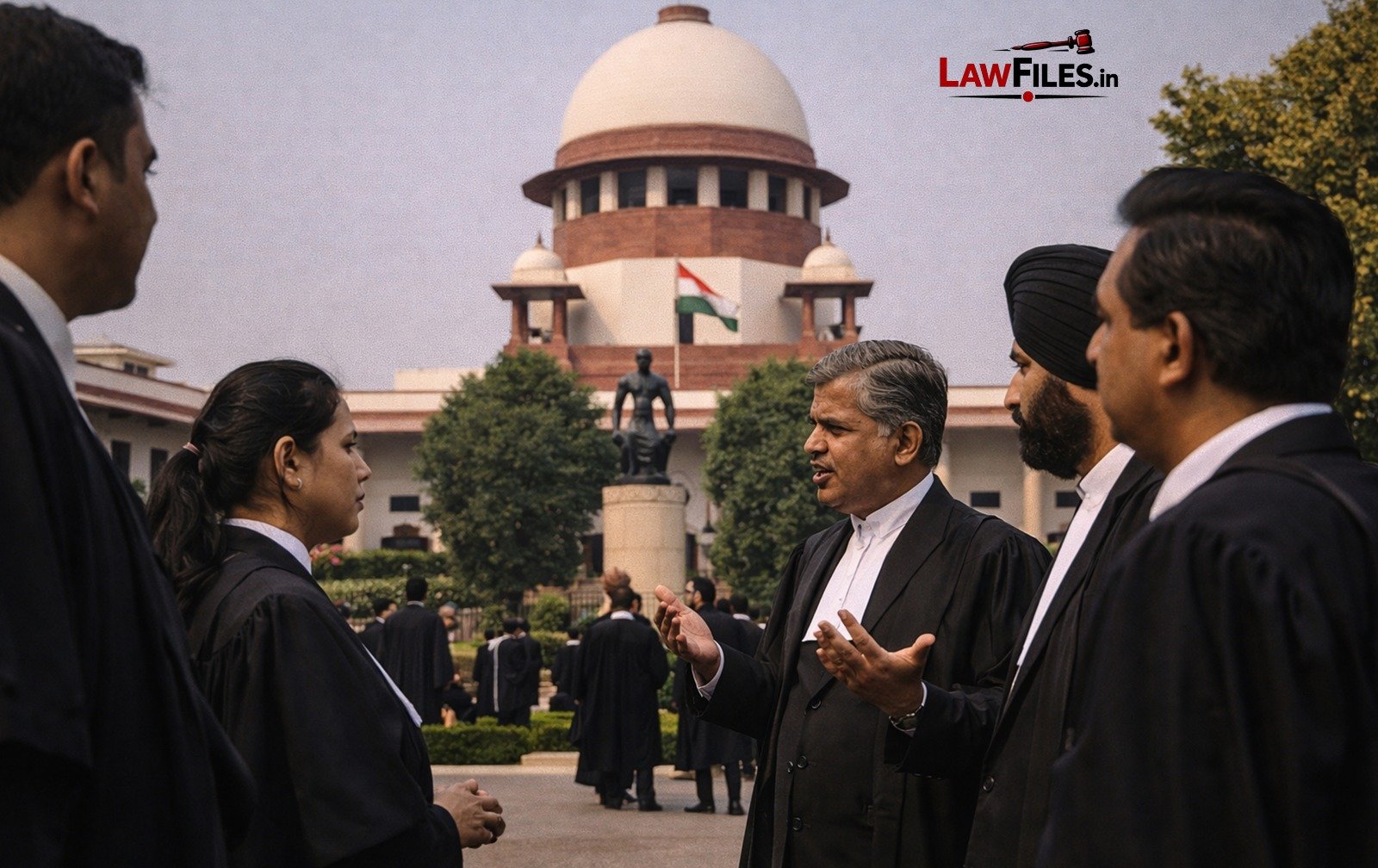
The Supreme Court of India took a serious view of the massive, long-standing vacancies plaguing the administrative and support staff of the Income Tax Appellate Tribunal (ITAT) across the country.
On Tuesday, May 26, 2026, the Supreme Court of India expressed profound concern over the systemic staffing crisis that has quietly disabled the operational machinery of the Income Tax Appellate Tribunal (ITAT). Faced with the reality of vital support positions lying vacant for up to a decade, a bench comprising Chief Justice of India Surya Kant and Justice Joymalya Bagchi intervened forcefully, demanding immediate action from the country’s top law officer the Attorney General for India.
The history of the Supreme Court’s relationship with tribunals over the last few years. The ITAT, often referred to as the “Mother Tribunal” due to its historical reputation for speed and impartiality, consists of dozens of benches across nearly thirty cities.
Between 2022 and 2024, the Supreme Court found itself in a constant, high-stakes standoff with the Central Government regarding tribunal appointments. However, past litigations primarily fought over the appointment of Judicial and Technical Members.
This isn’t the first time the Apex Court has had to pull up the center; early 2022 saw a similarly explosive confrontation when the Court ran out of patience with the government’s lethargic recruitment pace. During a series of intense hearings led by then-Chief Justice N.V. Ramana, the Apex Court tore into the bureaucracy for treating quasi-judicial vacancies with a sense of casual indifference. The Court observed that despite constant warnings and soaring case backlogs, the executive only seemed to act under immediate threat of judicial action.
The bench characterized the government’s irregular appointments as mere “knee-jerk” tokenism doing just enough to defuse immediate court pressure before slipping back into institutional inertia. Pointing out that multiple benches of the National Company Law Tribunal (NCLT) and the ITAT were being pushed to the brink of collapse due to retiring members, the Court noted that the bureaucracy was taking the entire system far too lightly. This lethargic, reactive approach did not just delay justice it threatened to freeze corporate and tax dispute resolutions nationwide, causing severe downstream damage to the country’s economic stability.
Later that same year, the battleground shifted from the speed of appointments to the sanctity of the selection process itself. In May 2022, a bench comprising Justices D.Y. Chandrachud and P.S. Narasimha was forced to intervene when it was revealed that the Appointments Committee of the Cabinet (ACC) and the Prime Minister’s Office were quietly bypassing or selectively ignoring recommendations made by the Search-cum-Selection Committee (SCSC) a high powered, independent body headed by a sitting Supreme Court judge.
The executive branch had begun unilaterally dropping recommended candidates from the final selection lists, often citing vague, undisclosed intelligence or background reports. Recognizing this as a backdoor executive veto that undermined judicial independence, the Supreme Court drew a hard line. The Court ruled that if the executive possessed adverse inputs or security reports regarding a candidate, it could not simply reject the name on its own whims. Instead, the government was mandated to place those specific intelligence reports back before the SCSC.
By forcing the executive to defer to the judge-led committee, the Court ensured that the final word on a candidate’s suitability remained a collaborative, transparent exercise, shielding the tribunal appointment framework from arbitrary political interference.
While those battles ensured that benches could still physically sit and hear matters.
The current 2026 litigation highlights a different, equally lethal form of institutional rot. The matter came to the forefront via a writ petition filed by Praveen Kumar Bansal, which brought to light the systemic negligence undermining the ITAT’s day-to-day operations. Representing the petitioner, Senior Advocate Mukul Rohatgi laid out a grim picture of the administrative deficit across the country’s tax tribunals.
“All posts of officers are lying vacant for a number of years. Assistant Registrars are vacant, PSCs [Private Secretaries] are vacant, everything is vacant,” Rohatgi told the bench. Leaving the Court to wonder how daily orders are processed, files maintained, or appeals listed.
When the bench investigated deeper to understand if this crisis was localized to the principal benches in major metropolitan hubs, Rohatgi clarified that the paralysis is systemic and cross-country. “Everywhere. For 10 years the posts are lying vacant. I don’t know how it functions,” he submitted.
The sheer scale of this decade-long administrative vacuum caught the Apex Court entirely off guard. A visibly taken-back Chief Justice Surya Kant remarked:
“We will do something because we are also surprised that why these posts are long vacant.”
Recognizing that ordinary bureaucratic channels had failed to resolve the issue for a generation of litigants, the CJI announced that the Court would take matters into its own hands on the administrative side. “We will request the Attorney General to look into it,” the CJI added.
The Court formally directed that a copy of the writ petition be supplied directly to the office of the Attorney General to ensure that these long-standing vacancies within the ITAT are filled at the earliest possible date.
The Supreme Court’s decision to bypass standard departmental reminders and directly enlist the Attorney General signifies that the time for patience has run out. The AG’s office is now expected to liaise directly with the Ministry of Law and Justice to devise an emergency recruitment and filling mechanism.
For an institution like the ITAT, operational efficiency is not just an administrative goal; it is a statutory promise. The tribunal was built upon the bedrock of its foundational motto, ‘Nishpaksh Sulabh Satvar Nyay’ a commitment to delivering justice that is entirely impartial, easily accessible, and delivered without paralyzing delays. Yet, accessibility and speed are completely contingent on the machinery running behind the courtroom doors. A litigant cannot experience “speeded justice” if their appeal memo lies buried under a mountain of uncatalogued paperwork, nor can they access “easy justice” if there is no Assistant Registrar available to certify an urgent order. By allowing the administrative framework to hollow out over the last ten years, the system has inadvertently broken its promise to the taxpayer, proving that even the most brilliant judicial minds on the bench are neutralized if the infrastructure beneath them is left to rot.
The Supreme Court’s decisive intervention sends a profound signal that alters how we view institutional health. Historically, public and judicial outrage has been reserved for empty judge chairs, while the quiet retirement of support staff went largely unnoticed. With this order, the Apex Court has shattered that double standard, drawing a direct line between administrative neglect and the denial of justice. An empty administrative desk where files are lost, orders are delayed, and communication breaks down is just as destructive to the rule of law as an empty judicial seat.
When the executive fails to fill these support roles for a decade, it quietly sabotages the judiciary’s ability to function from within. Moving forward, the government must recognize that judicial independence and efficacy cannot be achieved in a vacuum; staffing the desks that type, track, and execute the law is just as sacred a duty as appointing the judges who interpret it.
