


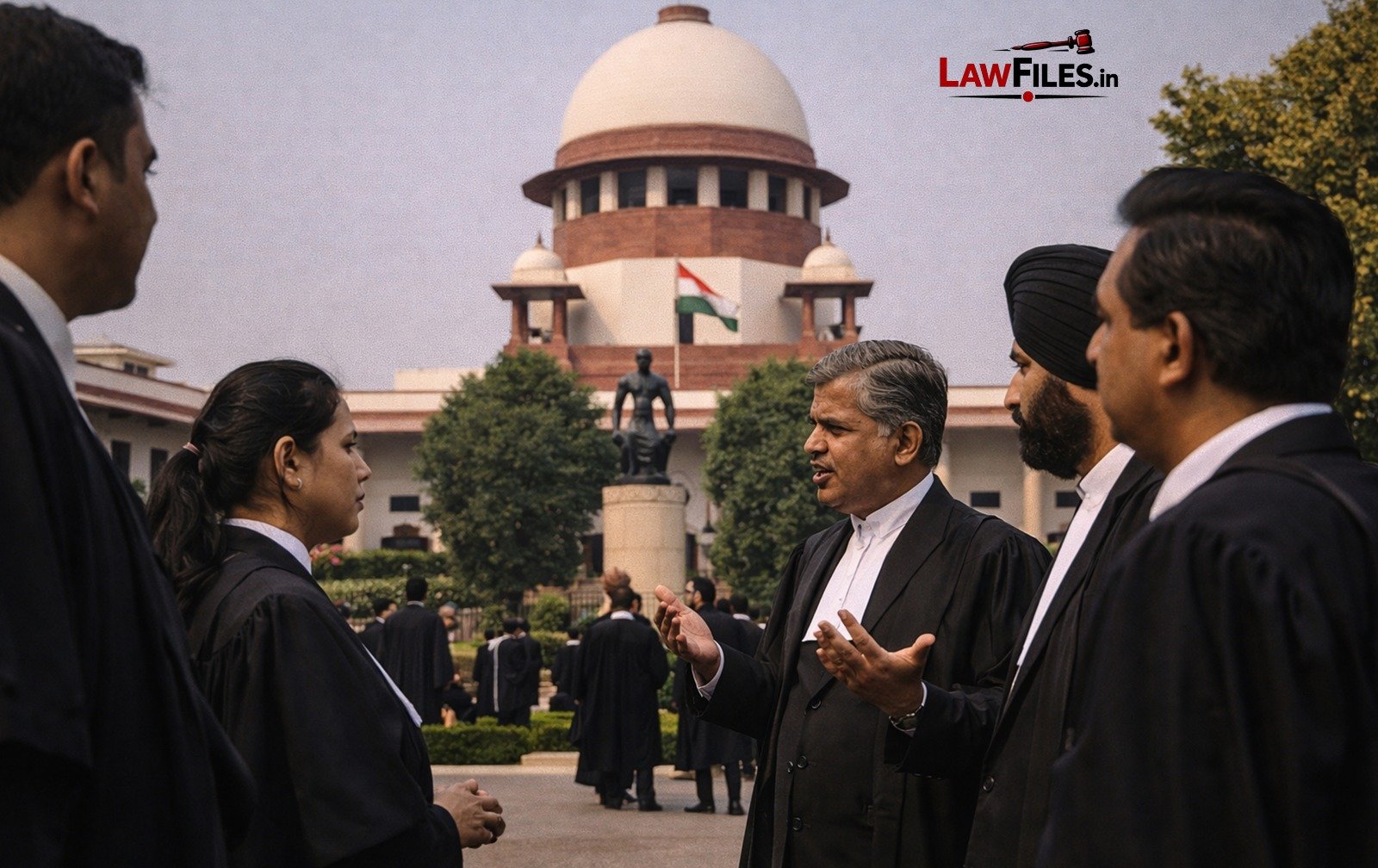
The Supreme Court on Monday refused to grant urgent hearing to a plea seeking a probe into the activities associated with the viral online movement known as the “Cockroach Janta Party,” with Chief Justice of India Surya Kant remarking that the petitioner should not take the issue “so sentimentally.” The seemingly light courtroom exchange, however, masks a far deeper constitutional controversy involving free speech, judicial accountability, satire, digital political mobilisation and the growing disconnect between institutions and India’s youth.
The matter arose from a petition filed before the Supreme Court seeking a CBI investigation into alleged fake advocates, forged law degrees and the purported misuse of oral judicial observations through online campaigns linked to the “Cockroach Janta Party” or “CJP.” The petitioner alleged that certain courtroom remarks made during earlier proceedings were selectively clipped, circulated and commercially exploited through social media platforms, memes and digital merchandise in a manner allegedly undermining the dignity of the judiciary.
The controversy traces its origins to oral observations reportedly made by Chief Justice Surya Kant during a hearing concerning fake law degrees and procedural abuse within the legal profession. During the proceedings, the Chief Justice had remarked that there were “youngsters like cockroaches” who failed to find employment or place within professional systems and subsequently attacked institutions through activism or media engagement. The remarks triggered immediate backlash online, particularly among young social media users already frustrated by unemployment, economic anxiety and institutional alienation.
Although the Chief Justice later clarified that the observations were directed at individuals allegedly entering professions through forged qualifications and unethical means rather than unemployed youth generally, the damage had already travelled across digital platforms. The phrase rapidly transformed into a symbol of protest and satire, culminating in the creation of the “Cockroach Janta Party,” a parody political movement founded by Abhijeet Dipke, an Indian-origin graduate based in the United States.
What began as an internet joke unexpectedly evolved into a large-scale digital mobilisation. Within days, the movement reportedly amassed millions of followers across social media platforms and attracted substantial engagement from India’s Gen Z demographic. The movement adopted satire as a political language, describing itself as the “voice of the lazy and unemployed” while using absurdist humour to highlight concerns relating to unemployment, inflation, media concentration and democratic accountability.
The petition filed before the Supreme Court argued that the movement had crossed the boundaries of satire and entered the realm of organised misuse of judicial proceedings. It alleged that oral observations from court hearings were being commercially exploited without constitutional context and monetised through algorithm-driven digital amplification. Importantly, however, the plea itself clarified that it was not directed against criticism of the judiciary or constitutionally protected free speech under Article 19(1)(a), but against alleged manipulation and commercialisation of courtroom proceedings.
When the matter was orally mentioned before the Bench for urgent listing, Advocate N.K. Goswami argued that despite earlier clarification by the Chief Justice, a “distorted and malicious narrative” continued to circulate online. In response, the Chief Justice remarked that the petitioner should not take the matter “so sentimentally.” The Court declined urgent listing of the matter.
Legally, the case presents an unusual constitutional intersection between judicial dignity and democratic satire. Indian constitutional jurisprudence has historically recognised that courts, despite their elevated institutional role, remain open to criticism and public scrutiny. At the same time, the judiciary possesses contempt powers intended to preserve institutional authority and public confidence in administration of justice. The central tension in the present controversy lies in determining where legitimate satire and political expression end and where institutional destabilisation or misuse of judicial proceedings begins.
The “Cockroach Janta Party” phenomenon also reflects the growing role of internet satire as a form of political resistance. Historically, political parody has often emerged in societies experiencing institutional distrust or generational frustration. In India, where youth unemployment and competitive examination pressures have become politically sensitive issues, the viral success of the movement appears less connected to the literal courtroom remark and more reflective of deeper anxieties among young citizens.
Several international media organisations interpreted the controversy as evidence of widening disillusionment among India’s younger population. Reports noted that the movement resonated because it converted perceived insult into collective symbolism. The cockroach, traditionally associated with survival and resilience, was reappropriated online into a metaphor for youth navigating economic uncertainty and institutional exclusion.
The episode further demonstrates how oral judicial observations though technically not binding law increasingly shape public discourse in the era of digital media. Courtroom comments once confined to legal reporting now instantly circulate through short video clips, memes and algorithmic amplification. This transformation raises important questions regarding how constitutional institutions engage with rapidly evolving media ecosystems.
Traditionally, Indian courts have distinguished between reasoned judicial orders and oral observations made during hearings. However, in the social media era, that distinction is collapsing in public perception. Even casual courtroom remarks now possess the potential to trigger political mobilisation, online outrage or ideological campaigns. The “Cockroach Janta Party” controversy is perhaps one of the clearest examples of how judicial language can escape institutional confines and acquire independent political life.
The Court’s restrained response in refusing urgent intervention may itself be strategically significant. By declining to escalate the matter through coercive proceedings, the judiciary appears conscious of the risks associated with overreaction in politically charged digital controversies. Direct suppression of satirical movements often risks strengthening them further by creating perceptions of institutional intolerance toward criticism.
At the same time, the petition raises legitimate concerns regarding monetisation and selective editing of judicial proceedings. The increasing circulation of clipped courtroom videos divorced from legal context may contribute to misinformation, distortion and sensationalism. Courts worldwide are now confronting similar challenges as fragments of proceedings become viral political content detached from substantive legal reasoning.
The controversy ultimately reveals more than a dispute over a satirical internet movement. It reflects a broader transformation in the relationship between constitutional institutions, technology and public dissent. The emergence of the “Cockroach Janta Party” demonstrates how humour, satire and meme culture are increasingly functioning as political languages for digitally connected generations who often feel excluded from traditional democratic structures.
The Supreme Court’s brief but telling response “Don’t take it so sentimentally” therefore carries layered significance. On one level, it was a judicial attempt to de-escalate an emotionally charged issue. On another, it implicitly acknowledged that constitutional institutions today operate within an environment where authority is constantly negotiated through public discourse, digital participation and political symbolism.
Whether the movement eventually fades as internet spectacle or evolves into a more enduring form of youth political expression remains uncertain. What is clear, however, is that the controversy has exposed a profound generational conversation unfolding beneath the surface of legal proceedings one involving dignity, dissent, satire and the increasingly fragile relationship between institutions and the citizens they seek to govern.
