


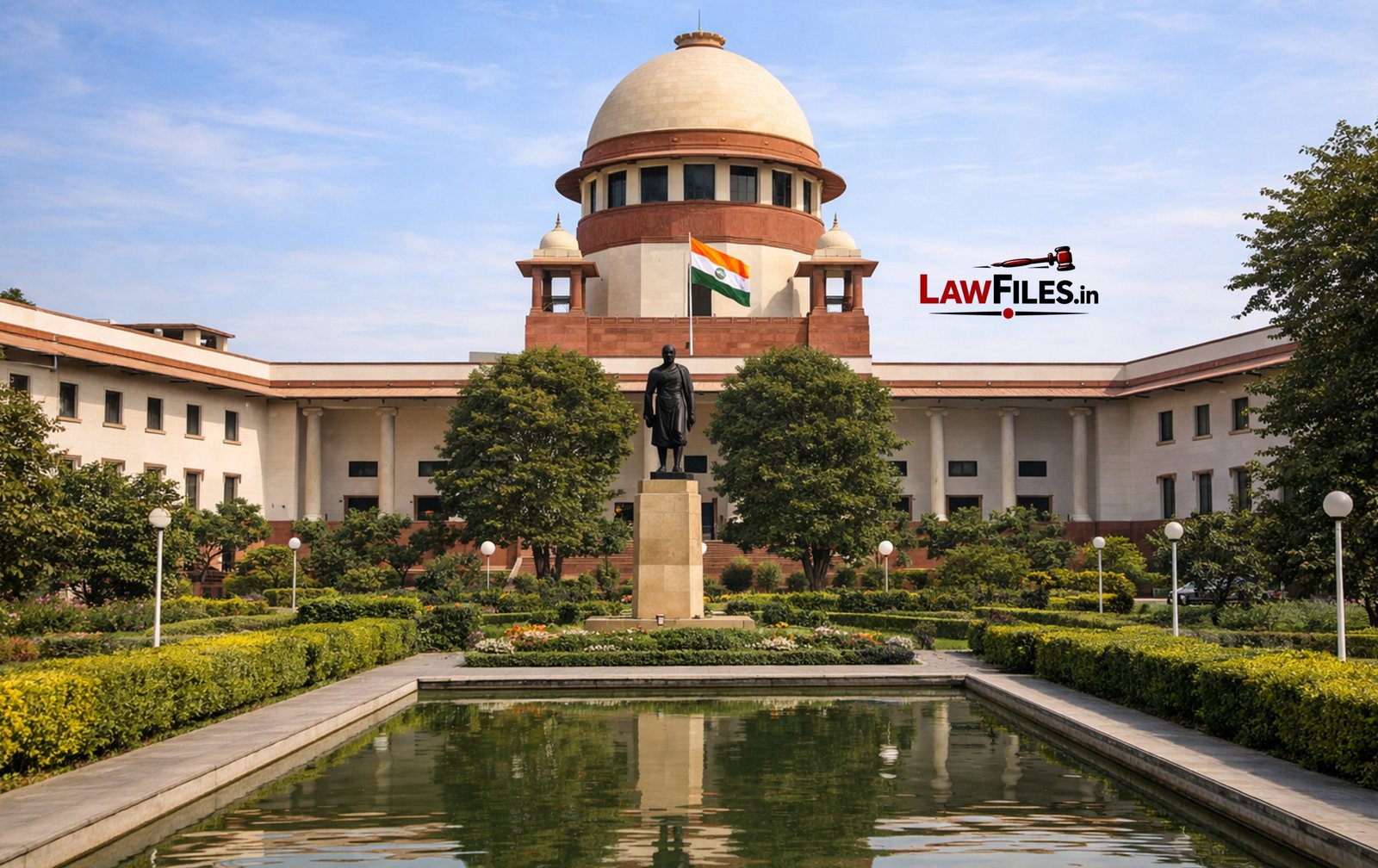
The Supreme Court’s refusal to entertain a clarification plea concerning its recent observations on euthanasia of stray dogs has intensified an already polarised national debate over the relationship between public safety, animal welfare and the limits of judicial intervention in urban governance. What initially began as proceedings concerning rising dog bite incidents has now evolved into a wider constitutional and ethical conflict involving competing claims of human rights, statutory animal protections and administrative accountability.
The controversy arose after the Supreme Court recently observed that rabid, incurably ill and demonstrably dangerous stray dogs could be euthanised in accordance with the Animal Birth Control (ABC) Rules, 2023 and applicable veterinary procedures. The Court had been hearing matters concerning the alarming rise in stray dog attacks across several states, particularly incidents involving children and elderly persons suffering serious injuries or rabies infections. During earlier hearings, the Court expressed strong dissatisfaction with municipal authorities and state governments for their inability to effectively implement sterilisation, vaccination and rehabilitation measures despite the existence of a detailed statutory framework governing stray animal management.
The issue gained nationwide prominence after several reports highlighted increasing dog bite cases in urban centres and residential colonies. Resident welfare associations and victims’ groups repeatedly approached courts alleging that civic bodies had failed to ensure public safety. In multiple hearings, the Supreme Court observed that the right to life under Article 21 of the Constitution includes the right of citizens to move freely and safely in public spaces without fear of violent attacks by stray animals. The Court further remarked that governments cannot remain passive while preventable injuries and deaths continue to occur due to administrative inaction.
Against this background, the Court’s recent observations permitting euthanasia in limited circumstances triggered concern among animal welfare organisations. NGO “Animals Are People Too” approached the Supreme Court seeking clarification that the earlier order should not be interpreted as permitting indiscriminate killing or mass culling of stray dogs. The organisation argued that certain political statements and public narratives were misrepresenting the Court’s order as a broad authorisation to eliminate stray dogs from public areas altogether.
The NGO specifically contended that the Animal Birth Control Rules, 2023 only permit euthanasia under exceptional conditions such as rabies, incurable illness or mortal injury, and even then only after proper certification by qualified veterinary authorities. According to the plea, any interpretation allowing large-scale extermination would violate both the Prevention of Cruelty to Animals Act, 1960 and established principles of animal welfare jurisprudence developed through earlier judicial decisions. The organisation also expressed apprehension that local authorities and vigilante groups could misuse the Court’s observations to justify unlawful poisoning, violent removal or unregulated killing of animals.
The plea reportedly referred to public remarks made by political figures regarding elimination of stray dogs from public places, arguing that such statements had created confusion regarding the legal scope of the Court’s order. However, the Supreme Court declined to interfere. The Bench observed that judicial orders cannot be modified merely because public figures or political leaders make statements interpreting them in a particular manner. The Court further stated that implementation-related grievances or instances of misuse could be raised before the jurisdictional High Courts if actual illegality occurred on the ground.
The Court’s refusal is legally significant because it reflects a conscious exercise of judicial restraint. Rather than entering into continuous administrative supervision over every possible consequence of its observations, the Court chose to preserve the original order while leaving implementation disputes to appropriate forums. At the same time, the refusal has left unresolved a larger concern regarding how local authorities may interpret judicial language emphasising public safety.
The legal controversy fundamentally turns on the scope of the Animal Birth Control Rules, 2023. These Rules were framed to regulate humane management of stray dogs through sterilisation and anti-rabies vaccination while prohibiting indiscriminate culling. Under the Rules, sterilised dogs are ordinarily to be released back into their original territories after treatment. Euthanasia is permitted only in narrowly defined circumstances involving rabid, mortally wounded or incurably ill animals and must be carried out through humane veterinary procedures.
Historically, Indian courts have largely adopted an animal welfare-oriented approach in stray dog cases. Earlier judgments repeatedly emphasised coexistence, humane treatment and strict adherence to sterilisation-based population control mechanisms. However, recent proceedings indicate a perceptible judicial shift toward balancing animal welfare against the constitutional obligation of the State to protect human life and safety. In recent hearings, the Supreme Court observed that while compassion toward animals is important, preservation of human life remains paramount when direct conflict arises between the two.
This evolving judicial discourse reflects a broader constitutional tension. On one side are animal welfare advocates who argue that the present crisis is itself the consequence of decades of civic failure to implement sterilisation and vaccination programmes effectively. On the other side are citizens and victims’ groups asserting that public safety cannot indefinitely be sacrificed in the name of administrative incapacity or abstract welfare principles. The judiciary is increasingly being compelled to navigate this difficult intersection between compassion and governance.
The case also exposes the persistent inability of urban administrations to develop coherent and scientific stray animal management policies. Municipal corporations across several states continue to face severe shortages of veterinary infrastructure, shelter facilities, sterilisation capacity and waste management systems. Consequently, courts are repeatedly drawn into what are essentially public health and governance failures rather than purely legal disputes.
Equally important is the growing politicisation of the issue. Public statements by political leaders promising aggressive removal or elimination of stray dogs have amplified fears among activists that judicial observations may be used to legitimise coercive or unlawful measures. The Supreme Court’s refusal to directly address these political interpretations suggests that the judiciary expects executive authorities to independently comply with statutory safeguards rather than rely on broad or sensational readings of court orders.
The controversy therefore extends far beyond the immediate question of euthanasia. It has become a constitutional debate concerning the nature of urban citizenship, the scope of state responsibility and the limits of compassion in densely populated societies facing infrastructural breakdown. The Court’s approach indicates an attempt to balance competing constitutional concerns preserving humane treatment of animals while simultaneously recognising that the State cannot abdicate its duty to protect citizens from escalating public safety threats.
Ultimately, the Supreme Court’s refusal to entertain the clarification plea does not settle the larger conflict. Instead, it reinforces the emerging judicial position that while animal welfare remains an important constitutional value, it cannot operate in isolation from questions of public safety and administrative responsibility. The real test will now lie in implementation. Whether authorities adhere strictly to statutory safeguards or convert judicial observations into justification for indiscriminate action may determine the future direction of animal welfare jurisprudence in India.
