


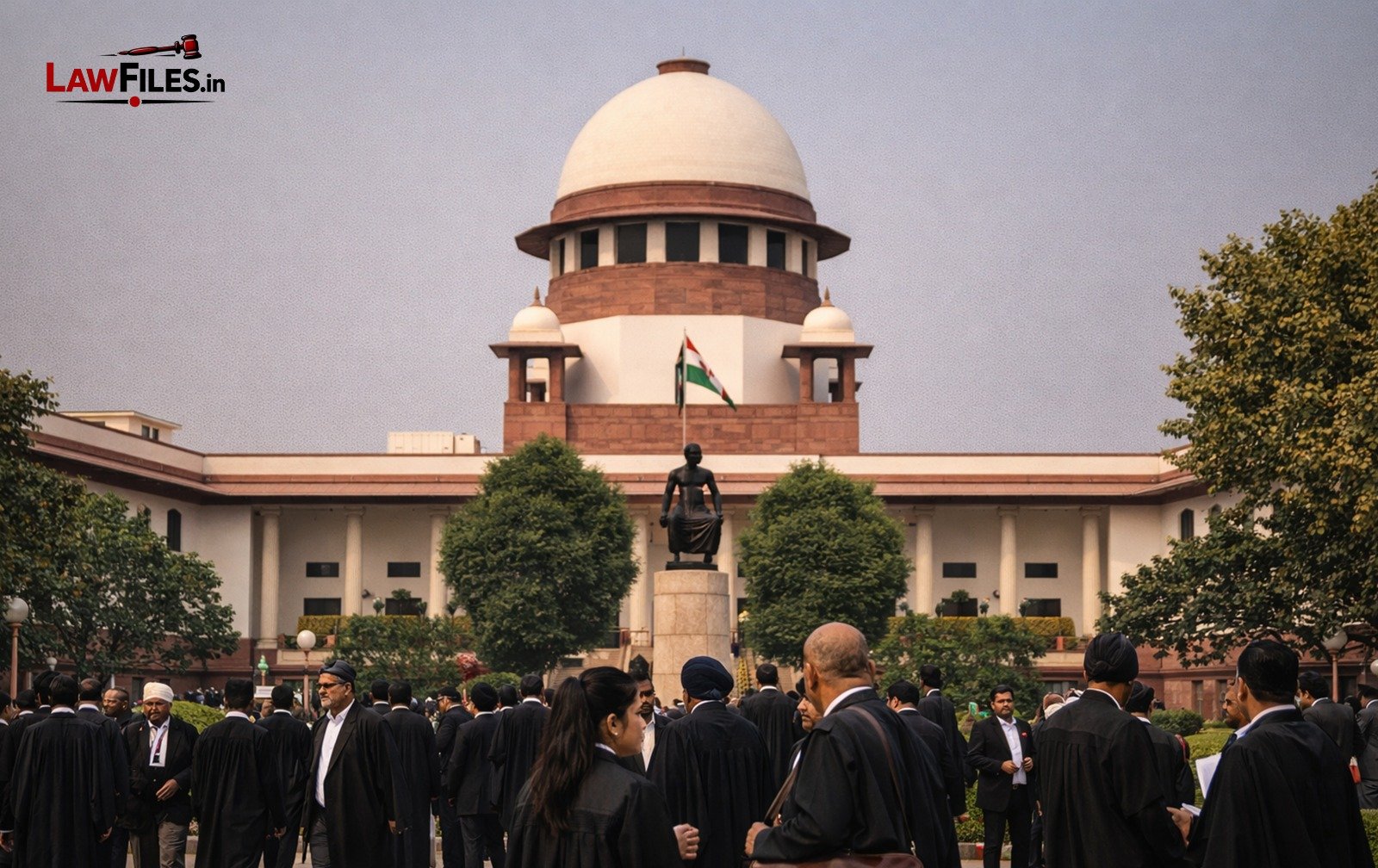
In a judicial intervention that could fundamentally reshape India’s emergency healthcare landscape, the Supreme Court has ruled that the right to immediate trauma care is an inseparable facet of the Right to Life guaranteed under Article 21 of the Constitution.
Observing that a fragmented emergency system costs thousands of preventable deaths every year, a vacation bench of Justices J.K. Maheshwari and Atul S. Chandurkar issued a comprehensive, time-bound directive to the Union Government, States, and Union Territories to overhaul the nation’s trauma response infrastructure.
“When a person suffers an accident or any such similar incident which requires urgent trauma care, they usually feel shock and disorientation, a sense of helplessness, where they have to hope that those around them would somehow help them get the care that they need,” the bench observed. “In such a situation, every minute spent without medical intervention or urgent care significantly narrows the scope for survival. Swiftness is, quite literally, like medicine.” The landmark order came during the hearing of a public interest litigation (PIL) filed by the Save LIFE Foundation, a Delhi-based road safety organization.
The petition highlighted deep gaps in how India handles medical emergencies pointing out that despite the highest number of road fatalities globally (reaching 1.77 lakh deaths in 2024), victims are routinely left stranded due to broken ambulance links, institutional red tape, and public fear.
The Court spoke extensively about the psychological barriers that prevent ordinary citizens from intervening at accident sites. The judges noted that even when people want to help, they often freeze under institutional pressure.
“Usually, however, no matter how strong the urge to be a Good Samaritan is, the bystander hesitates: suffers a reactive paralysis, sometimes due to fear of legal proceedings, of getting summoned to the police station as a witness; and sometimes due to the psychological weight of the situation itself, the sight of blood or a person crying out in pain,” the judgment stated.
To break this paralysis, the apex court ruled that structural, top-down changes are no longer optional policy goals but strict constitutional mandates.
The road to establishing a constitutional right to trauma care began as a battle against institutional red tape. For decades, victims of severe accidents in India were routinely denied immediate care because hospitals prioritized procedural formalities such as filing an initial First Information Report (FIR) or completing police paperwork in “medico-legal cases” over saving a human life.
This systemic apathy was shattered by the Supreme Court’s landmark 1989 ruling in Pt. Parmanand Katara v. Union of India. In that historic judgment, the Court unequivocally declared that the preservation of human life is of paramount importance.
The bench ruled that every medical professional, whether employed at a premier government institute or a private clinic, owes a total professional and legal obligation to extend immediate medical aid to any injured citizen. By explicitly stating that these life-saving interventions must bypass initial legal or police procedures, the Court attempted to lift the paralyzing fear of legal entanglement from the medical fraternity.
Despite these powerful precedents, the legal framework in India remained largely “passive.” The law told doctors they must not refuse a patient, and it told hospitals they cannot turn away someone in critical condition. However, it did not compel the state to build the actual, synchronized infrastructure required to get a dying patient to those doctors within the “Golden Hour” the critical first hour after injury when prompt medical treatment has the highest likelihood of preventing death.
The breakthrough of the recent 2026 SaveLIFE Foundation judgment lies in how it seamlessly bridges this gap. The Supreme Court has fundamentally shifted the legal discourse from a passive “duty to treat” to an active, institutionalized “right to structured trauma systems.”
The Court recognized that a right to life means very little if a citizen dies on a highway because an ambulance didn’t have GPS, an emergency number didn’t connect, or a bystander was too terrified of police harassment to help.
By elevating trauma care to a concrete, apex court translate these words into tangible action, the Supreme Court has set strict deadlines for critical, structural upgrades across India’s emergency infrastructure. Within three months, all state and local emergency lines such as 100, 101, and 108 must be fully merged into the single, universal ‘112’ helpline. Alongside this, states have three months to launch physical and digital Good Samaritan Grievance Portals to protect helpful bystanders from harassment, and must upgrade all public and private ambulances to strictly comply with Automotive Industry Standard-125 (AIS-125), including real-time GPS tracking linked directly to the 112 system.
Furthermore, the Court gave a three-month ultimatum for states to operationalize the PM RAHAT cashless treatment scheme for road accident victims, warning that any delay will be treated as a direct violation of the Motor Vehicles Act.
Finally, to ensure long-term, data-driven planning, the Ministry of Health and Family Welfare has been given eight weeks to design a unified data format, giving states a total of four months to establish centralized trauma registries aimed at mapping out high-fatality corridors and optimizing resource distribution.
The bench made it clear that trauma care cannot be restricted merely to premier national highways. The judgment directed that the grading, designation, and infrastructure-upgradation of medical facilities must be systematically pushed into state highways, major district roads, as well as urban and semi-urban corridors.
“A robust mechanism for trauma care, therefore, must take a bottom-up approach, which accounts for various stakeholders,” the Court added, pushing states to also adopt the standardized Emergency Medical Technician (EMT) curriculum recently frameworked by the National Commission for Allied and Healthcare Professions (NCAHP).
Refusing to let the matter drop, the Supreme Court has kept the case active under its continuing mandamus jurisdiction. Chief Secretaries of all States and Union Territories are now legally required to hold mandatory monthly meetings to review compliance, upload the minutes onto designated state portals, and submit concrete progress reports.
The apex court has listed the matter for further hearing in September 2026 to personally inspect the compliance status of both the Union and the state governments.
