

Close Menu
LawFilesLawFiles

    Subscribe to Updates

    Get the latest creative news from FooBar about art, design and business.

    What's Hot

    Delhi High Court Upholds Rajpal Yadav’s Conviction in Cheque Bounce Cases; Ruling Reaffirms Sanctity of Commercial Transactions and the Deterrent Purpose of the Negotiable Instruments Act

    July 11, 2026

    Delayed Payment by Auction Purchaser Under the SARFAESI Act: Supreme Court Reinforces Mandatory Compliance With Auction Timelines; A Landmark Shift in India’s Banking Recovery Jurisprudence

    July 11, 2026

    Anil Ambani Withdraws Bombay High Court Plea Against Bank of Baroda’s Fraud Classification; Case Highlights Evolving Judicial Standards Governing RBI Fraud Tagging Framework

    July 11, 2026
    Facebook X (Twitter) Instagram Threads
    Saturday, July 11
    LawFilesLawFiles
    Facebook X (Twitter)
    • Home
      • Who We Are
      • Our Mission
      • Advisory board
      • Contact US
    • Supreme Court
    • High Courts
      • Gujarat High Court
      • Jharkhand High Court
      • Rajasthan High Court
      • Karnataka High Court
      • Andhra Pradesh High Court
      • Allahabad High Court
      • Himachal Pradesh High Court
      • Chhattisgarh High Court
      • Jammu & Kashmir and Ladakh High Court
      • Kerala High Court
      • Punjab and Haryana High Court
      • Patna High Court
      • Madhya Pradesh High Court
      • Madras High Court
      • Bombay High Court
      • Orissa High Court
      • Calcutta High Court
      • Meghalaya High Court
      • Delhi High Court
      • Manipur High Court
      • Gauhati High Court
    • Corporate
    • Taxation Laws
      • Income Tax
      • GST
      • Customs & Excise
    • Global Affairs
    • Articles
      • Sitting Judge’s’ Views
      • Senior Advocate
      • Policy Analysis
      • Tax Expert
    • PILS
      • Free/Affordable Legal Aid
      • PIL Cell
      • Law student Volunteer Cell (research & Drafting)
      • NGO & Legal services Authority Tie-ups
      • Online Legal Formats
      • Online Legal Help Form
    Subscribe Premium
    LawFilesLawFiles
    Home»High Courts»Punjab Minister Sanjeev Arora Moves High Court Against ED Arrest, Calls It ‘Political Vendetta’: A New Flashpoint in India’s Battle Over Investigative Federalism
    High Courts

    Punjab Minister Sanjeev Arora Moves High Court Against ED Arrest, Calls It ‘Political Vendetta’: A New Flashpoint in India’s Battle Over Investigative Federalism

    Anvita DwivediBy Anvita DwivediMay 12, 2026No Comments6 Mins Read
    WhatsApp Facebook Twitter Copy Link
    Share
    Facebook Twitter Pinterest Copy Link WhatsApp

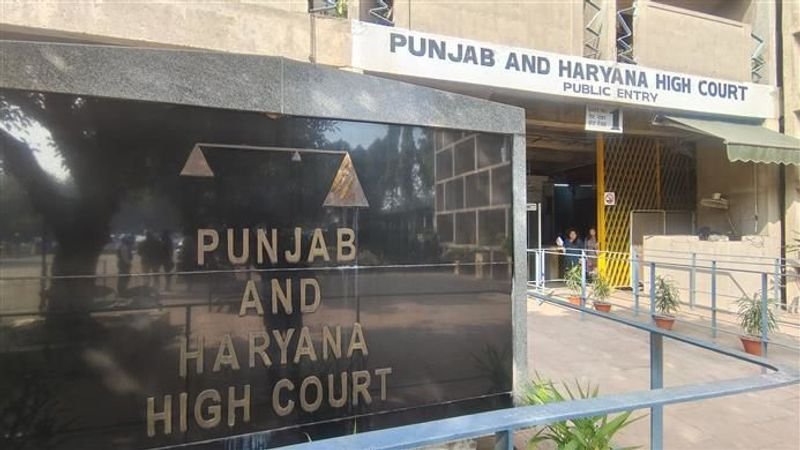
    The arrest of Punjab Cabinet Minister Sanjeev Arora by the Enforcement Directorate has triggered yet another high-profile confrontation between opposition parties and central investigative agencies, with the matter now reaching the Punjab and Haryana High Court. In a strongly worded petition challenging his arrest under the Prevention of Money Laundering Act (PMLA), the Aam Aadmi Party leader has alleged that the action against him is not a neutral exercise of criminal investigation but part of a larger pattern of “political victimisation” directed against opposition governments.

    The petition was mentioned before a Division Bench headed by Chief Justice Sheel Nagu and Justice Sanjiv Berry, where Arora’s counsel argued that the ED’s action must be viewed in the context of the ongoing political contest between the BJP-led Union government and opposition-ruled states, particularly Punjab. According to the plea, the arrest reflects selective targeting and misuse of investigative powers rather than a bona fide anti-money laundering exercise.

    Arora was arrested on May 9 by the ED in connection with an alleged ₹157 crore money laundering case linked to fake GST billing and purportedly fraudulent export transactions involving mobile phones. The agency alleges that shell entities generated bogus invoices and manipulated export documentation to unlawfully obtain GST refunds and launder proceeds of crime through banking channels. The investigation reportedly concerns transactions carried out between May and October 2023 through business entities allegedly associated with Arora and his associates.

    Following his arrest, a special court in Gurugram remanded the Punjab minister to seven days of ED custody, observing that the allegations were “serious” and that custodial interrogation was necessary to trace the money trail and ascertain the roles of the accused persons. The ED had reportedly sought a longer remand period, arguing that the alleged laundering network involved complex financial layering and international fund movement.

    However, Arora’s challenge before the High Court shifts the controversy beyond the immediate allegations of financial wrongdoing into the larger constitutional terrain of investigative federalism and political neutrality of enforcement agencies. The petition reportedly invokes earlier judicial observations where courts have cautioned against arbitrary exercise of arrest powers under the PMLA and have emphasised the constitutional importance of personal liberty under Article 21.

    The case has immediately generated intense political reaction within Punjab. Chief Minister Bhagwant Mann accused the Union government of using central agencies such as the ED, CBI, and Income Tax Department as instruments of coercive politics against opposition leaders. Senior AAP leaders described the arrest as part of a broader pattern where investigative pressure is selectively deployed against non-BJP political actors.

    Opposition parties within Punjab, however, have adopted a contrasting position. Congress leader Partap Singh Bajwa argued that repeated allegations against AAP leaders cannot be dismissed merely through claims of political vendetta and demanded that the Punjab government remove Arora from the Cabinet. This divergence reflects a recurring paradox in Indian politics: while opposition parties frequently unite in criticising central investigative agencies, allegations of corruption simultaneously become instruments of political contestation among regional rivals.

    Legally, the case revives an increasingly contentious debate surrounding the Prevention of Money Laundering Act and the extraordinary powers vested in the ED. Over the past decade, the ED’s expanding role has become one of the most controversial features of India’s criminal justice architecture. Critics have repeatedly argued that the agency’s powers of arrest, attachment, and custodial interrogation combined with stringent bail provisions under Section 45 PMLA create a disproportionately coercive framework capable of undermining procedural fairness.

    The Supreme Court itself has, in recent years, engaged extensively with the constitutional validity of various PMLA provisions. While the Court largely upheld the statute in Vijay Madanlal Choudhary v. Union of India, subsequent judgments have nevertheless stressed the need for procedural safeguards and accountability in exercise of arrest powers. The present case therefore emerges against a backdrop of continuing constitutional unease regarding the balance between anti-money laundering enforcement and protection of civil liberties.

    The political dimension of the controversy becomes even more pronounced because Arora’s arrest is not occurring in isolation. AAP leaders have repeatedly alleged that ED action intensifies around politically sensitive periods or against leaders occupying strategic political positions. Arora himself had emerged as a prominent political figure in Punjab after transitioning from the Rajya Sabha to active state politics and joining the Bhagwant Mann Cabinet.

    Interestingly, despite the arrest, the Punjab government has not removed Arora from the ministry. Instead, his portfolios have reportedly been redistributed temporarily among other ministers while he continues formally within the Cabinet structure. This mirrors a broader trend in Indian politics where criminal investigations no longer automatically translate into political resignation, particularly when accused leaders claim political targeting.

    From a constitutional perspective, the dispute also illustrates the deepening friction between India’s federal political structure and centrally controlled investigative agencies. Opposition-ruled states have increasingly argued that institutions such as the ED and CBI are being deployed in ways that disturb federal balance and weaken elected state governments through investigative pressure. The Union government, on the other hand, consistently maintains that anti-corruption and anti-money laundering investigations cannot be immunised merely because the accused occupy political office.

    The High Court’s eventual determination may therefore carry significance extending beyond Arora’s personal liberty. The Court may be required to examine broader questions relating to legality of arrest, procedural compliance under the PMLA, adequacy of material justifying custodial interrogation, and the permissible limits of judicial scrutiny at the stage of ongoing investigation.

    Critically analysed, the case encapsulates a recurring institutional dilemma in contemporary India: when anti-corruption enforcement intersects with intensely polarised politics, public trust in investigative neutrality becomes deeply contested. Allegations of corruption and allegations of political misuse begin to coexist simultaneously, making judicial oversight increasingly central to preserving institutional credibility.

    Ultimately, the Sanjeev Arora litigation is not merely about one minister’s arrest. It sits at the crossroads of criminal law, constitutional liberty, federal politics, and institutional accountability. As the Punjab and Haryana High Court hears the challenge, the case may become yet another important chapter in India’s evolving jurisprudence on investigative power and democratic opposition.

    A New Flashpoint in India’s Battle Over Investigative Federalism Calls It ‘Political Vendetta’: Punjab Minister Sanjeev Arora Moves High Court Against ED Arrest
    Share. WhatsApp Facebook Twitter Pinterest Email
    Anvita Dwivedi

    Related Posts

    Delhi High Court Upholds Rajpal Yadav’s Conviction in Cheque Bounce Cases; Ruling Reaffirms Sanctity of Commercial Transactions and the Deterrent Purpose of the Negotiable Instruments Act

    July 11, 2026

    Delayed Payment by Auction Purchaser Under the SARFAESI Act: Supreme Court Reinforces Mandatory Compliance With Auction Timelines; A Landmark Shift in India’s Banking Recovery Jurisprudence

    July 11, 2026

    Anil Ambani Withdraws Bombay High Court Plea Against Bank of Baroda’s Fraud Classification; Case Highlights Evolving Judicial Standards Governing RBI Fraud Tagging Framework

    July 11, 2026
    Add A Comment
    Leave A Reply Cancel Reply

    Demo
    Top Posts

    Digital Forensics Fail to convince Supreme Court: Bail Denied to Gagan Khanna in BNS Assault Case

    June 15, 2026241 Views

    Wrongful Claim Rejection Amounts to Deficiency in Service: Delhi Consumer Commission Holds Star Health Liable

    March 16, 202672 Views

    Bombay High Court Quashes POCSO Case, Directs Accused to Fund MacBook for Victim’s Education

    February 28, 202658 Views

    Supreme Court Quashes FIR Over ‘Improved’ Second Complaint: A Reminder That Criminal Law Cannot Be Built on Shifting Narratives

    June 4, 202654 Views
    Don't Miss

    Delhi High Court Upholds Rajpal Yadav’s Conviction in Cheque Bounce Cases; Ruling Reaffirms Sanctity of Commercial Transactions and the Deterrent Purpose of the Negotiable Instruments Act

    By Anvita DwivediJuly 11, 2026

    In a significant reaffirmation of India’s cheque dishonour jurisprudence, the Delhi High Court has upheld…

    Delayed Payment by Auction Purchaser Under the SARFAESI Act: Supreme Court Reinforces Mandatory Compliance With Auction Timelines; A Landmark Shift in India’s Banking Recovery Jurisprudence

    July 11, 2026

    Anil Ambani Withdraws Bombay High Court Plea Against Bank of Baroda’s Fraud Classification; Case Highlights Evolving Judicial Standards Governing RBI Fraud Tagging Framework

    July 11, 2026

    Supreme Court Examines Challenge to Navy Recruitment Rules for Group ‘B’ Non-Gazetted Officers; Notice to Centre Puts Promotional Equality and Service Jurisprudence Under Judicial Scrutiny

    July 11, 2026
    Stay In Touch
    • Facebook
    • Twitter

    Subscribe to Updates

    Get the latest creative news from SmartMag about art & design.

    Top Posts

    Digital Forensics Fail to convince Supreme Court: Bail Denied to Gagan Khanna in BNS Assault Case

    June 15, 2026241 Views

    Wrongful Claim Rejection Amounts to Deficiency in Service: Delhi Consumer Commission Holds Star Health Liable

    March 16, 202672 Views

    Bombay High Court Quashes POCSO Case, Directs Accused to Fund MacBook for Victim’s Education

    February 28, 202658 Views
    Don't Miss

    Delhi High Court Upholds Rajpal Yadav’s Conviction in Cheque Bounce Cases; Ruling Reaffirms Sanctity of Commercial Transactions and the Deterrent Purpose of the Negotiable Instruments Act

    By Anvita DwivediJuly 11, 2026

    In a significant reaffirmation of India’s cheque dishonour jurisprudence, the Delhi High Court has upheld…

    Delayed Payment by Auction Purchaser Under the SARFAESI Act: Supreme Court Reinforces Mandatory Compliance With Auction Timelines; A Landmark Shift in India’s Banking Recovery Jurisprudence

    July 11, 2026

    Anil Ambani Withdraws Bombay High Court Plea Against Bank of Baroda’s Fraud Classification; Case Highlights Evolving Judicial Standards Governing RBI Fraud Tagging Framework

    July 11, 2026

    Supreme Court Examines Challenge to Navy Recruitment Rules for Group ‘B’ Non-Gazetted Officers; Notice to Centre Puts Promotional Equality and Service Jurisprudence Under Judicial Scrutiny

    July 11, 2026
    Stay In Touch
    • Facebook
    • YouTube
    • TikTok
    • Instagram
    Top Trending
    About Us
    About Us

    LawFiles.in is a comprehensive legal news platform delivering real-time updates from the Supreme Court, High Courts, Tribunals, Corporate and Tax law, Regulators, Politics, Crime, Consumer cases, and Global Affairs.

    Email Us: lawfilesoffical@gmail.com
    Contact: +91 8800026066

    Contact Us:
    India International Centre
    40, Max Mueller Marg
    Lodhi Estate, New Delhi-110003

    Facebook X (Twitter)
    Our Picks

    Delhi High Court Upholds Rajpal Yadav’s Conviction in Cheque Bounce Cases; Ruling Reaffirms Sanctity of Commercial Transactions and the Deterrent Purpose of the Negotiable Instruments Act

    July 11, 2026

    Delayed Payment by Auction Purchaser Under the SARFAESI Act: Supreme Court Reinforces Mandatory Compliance With Auction Timelines; A Landmark Shift in India’s Banking Recovery Jurisprudence

    July 11, 2026

    Anil Ambani Withdraws Bombay High Court Plea Against Bank of Baroda’s Fraud Classification; Case Highlights Evolving Judicial Standards Governing RBI Fraud Tagging Framework

    July 11, 2026

    Supreme Court Examines Challenge to Navy Recruitment Rules for Group ‘B’ Non-Gazetted Officers; Notice to Centre Puts Promotional Equality and Service Jurisprudence Under Judicial Scrutiny

    July 11, 2026

    SCBA Condemns Abusive Conduct by Litigant in Supreme Court; Seeks Regulatory Framework for Circulation of Courtroom Videos Amid Growing Debate on Open Justice and Digital Accountability

    July 11, 2026
    Most Popular

    Madhya Pradesh High Court Examines Plea to Extend NRI Quota to Stray Vacancy Round in Medical Admissions

    February 26, 20260 Views

    Supreme Court Rules Limitation Period Under CrPC Starts When Offender’s Identity Is Known, Not From First Complaint

    February 27, 20260 Views

    Maharashtra State Consumer Commission Slams HP Employees’ Co-operative Credit Society for Enforcing Undisclosed Restriction, Orders Refund with Interest and Compensation

    March 2, 20260 Views

    NCDRC Dismisses Consumer Complaint Filed Nearly a Decade After Possession, Holds Claim Barred by Limitation

    March 2, 20260 Views

    Supreme Court CJI Uses T20 Cricket Analogy to Stress Importance of Specialization in Legal Practice

    March 2, 20260 Views
    © 2026 LawFiles. Owned by Varta24 Media.
    • Articles
    • Careers
    • Corporate
    • Global Affairs
    • Law Firms & Lawyers
    • PILS
    • Regulatory

    Type above and press Enter to search. Press Esc to cancel.