


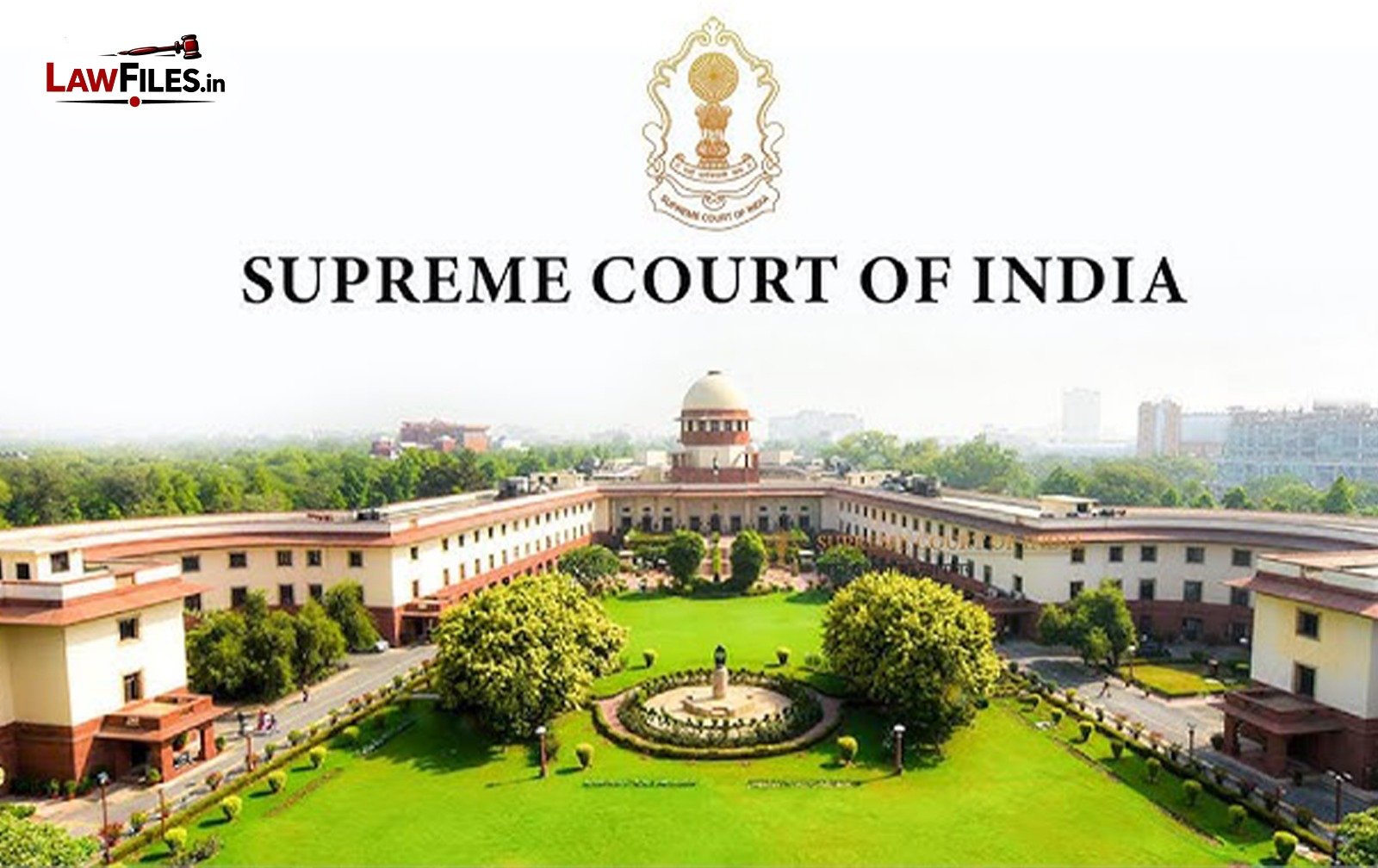
In a major institutional development aimed at addressing mounting judicial backlog and increasing constitutional workload, President Droupadi Murmu has promulgated the Supreme Court (Number of Judges) Amendment Ordinance, 2026, increasing the sanctioned strength of the Supreme Court from 33 judges to 37 judges, excluding the Chief Justice of India. With the Chief Justice included, the effective strength of the Court now rises to 38 judges. The ordinance marks the latest chapter in the gradual expansion of India’s apex judiciary since the Constitution came into force in 1950.
The Union Government justified the move by citing the alarming rise in pendency of cases, increasing constitutional litigation, and the growing complexity of disputes reaching the Supreme Court. The Cabinet had earlier approved the proposal for introducing an amendment to the Supreme Court (Number of Judges) Act, 1956, following which the President exercised ordinance-making powers to immediately operationalise the increase.
The expansion of judicial strength reflects a recurring institutional pattern in Indian constitutional history: whenever pendency and caseload reach unsustainable levels, Parliament intervenes by increasing the number of judges in the Supreme Court. Yet, despite repeated expansions over seven decades, judicial backlog continues to remain one of the gravest structural challenges confronting India’s justice delivery system.
When the Constitution originally came into force on January 26, 1950, Article 124 envisioned a Supreme Court consisting of the Chief Justice of India and seven puisne judges, bringing the total sanctioned strength to eight. However, the framers deliberately left power with Parliament to increase this number in accordance with future institutional needs. At the time, India’s judicial system was significantly smaller, constitutional litigation was limited, and the Supreme Court primarily functioned as a final appellate and constitutional court rather than the sprawling institution it has become today.
The first major increase came through the Supreme Court (Number of Judges) Act, 1956, which raised the strength from eight to eleven judges. Merely four years later, the number was increased again in 1960 from eleven to fourteen, reflecting the rapidly growing burden upon the Court in the early decades of the Republic.
In 1977, another amendment enhanced the sanctioned strength from fourteen to eighteen judges. Interestingly, despite the formal increase, the working strength remained restricted to fifteen judges for a period because of executive limitations, until the restriction was eventually withdrawn following intervention from the judiciary itself.
The next substantial expansion occurred in 1986, when Parliament increased the strength from eighteen to twenty-six judges. This phase coincided with a dramatic transformation in the Supreme Court’s constitutional role. During the 1980s, the Court increasingly expanded public interest litigation jurisprudence, broadened interpretation of fundamental rights, and emerged as a powerful institution influencing governance, environment, human rights, labour protections, and administrative accountability. Naturally, this judicial expansion also generated an unprecedented rise in litigation.
By 2008–2009, mounting arrears once again forced legislative intervention. Parliament amended the law to raise the sanctioned strength from twenty-six to thirty-one judges. A decade later, in 2019, the Supreme Court’s strength was further increased from thirty-one to thirty-four, including the Chief Justice. The present ordinance therefore represents yet another institutional attempt to respond to growing pendency and judicial overload.
Yet the recurring need to expand the Court raises a larger constitutional question: can judicial pendency truly be solved merely by appointing more judges?
Critically examined, the ordinance reveals both the strengths and limitations of India’s judicial reform strategy. Increasing the sanctioned strength undoubtedly improves adjudicatory capacity in numerical terms. More judges theoretically permit greater constitution bench sittings, quicker listing of matters, and increased disposal rates. However, empirical studies and judicial reform debates consistently suggest that pendency is not solely a function of insufficient judicial numbers.
India’s judicial backlog stems from multiple structural causes including procedural inefficiencies, prolonged adjournments, inadequate infrastructure, shortage of court staff, fragmented digitisation, delayed appointments in subordinate courts and High Courts, and excessive governmental litigation. In fact, the Union and State Governments collectively remain the largest litigants in the Indian judicial system. Consequently, merely expanding the Supreme Court without deeper procedural reforms may offer only temporary institutional relief.
The expansion also revives the long-standing debate concerning the very nature of the Supreme Court’s jurisdiction. Unlike constitutional courts in several other democracies, the Indian Supreme Court functions simultaneously as a constitutional court, appellate court, service tribunal, commercial court, criminal court, election court, and public interest court. Its extraordinarily broad jurisdiction under Articles 32, 136, 141, and 142 has transformed it into one of the busiest apex courts in the world.
Several legal scholars and former judges have repeatedly argued that the Supreme Court cannot continue functioning as an all-purpose national court if meaningful reduction in pendency is to be achieved. Proposals have therefore emerged over the years for creation of a separate Constitutional Court or regional Courts of Appeal to reduce the burden upon the apex court. However, such reforms remain politically and institutionally unresolved.
Another important dimension concerns judicial appointments themselves. Increasing sanctioned strength is meaningful only if vacancies are filled promptly. Historically, delays in judicial appointments have repeatedly undermined the effectiveness of sanctioned expansions. The collegium system and executive approval process often witness prolonged delays, resulting in courts functioning below their sanctioned capacity for significant periods.
The ordinance also carries implications for constitutional adjudication. Over the last decade, the Supreme Court has faced criticism for delays in hearing constitutionally significant matters involving electoral bonds, federalism, citizenship, religious freedoms, civil liberties, and governance issues. Increasing judicial strength may potentially allow the Court to constitute more Constitution Benches simultaneously rather than concentrating most judicial time upon routine admission and appellate work.
However, critics also caution that simply enlarging the Court indefinitely may generate institutional fragmentation. A larger bench strength often produces greater inconsistency in judicial interpretation because multiple smaller benches simultaneously decide complex questions of law. This concern has repeatedly surfaced in relation to conflicting Supreme Court judgments requiring frequent references to larger benches.
Historically, the Supreme Court’s moral and constitutional authority derived not merely from numerical strength but from coherence and consistency of constitutional reasoning. Therefore, expansion without corresponding institutional restructuring could potentially create challenges relating to doctrinal uniformity and judicial coordination.
Another noteworthy aspect of the ordinance lies in its timing. The increase comes amid rising public scrutiny of judicial efficiency and mounting concerns regarding delays affecting access to justice. Millions of cases remain pending across Indian courts, while litigants often spend years or decades navigating procedural complexity. Against this background, increasing the Supreme Court’s strength also carries symbolic significance, signalling governmental recognition that judicial capacity requires urgent strengthening.
At a broader level, the ordinance reflects the transformation of the Indian Supreme Court from a relatively modest constitutional body in 1950 into one of the most powerful and heavily burdened judicial institutions globally. The framers of the Constitution likely could not have anticipated the scale of constitutional litigation, governance disputes, and public expectations that would eventually converge upon the Court.
Today, the Supreme Court not only resolves legal disputes but also routinely adjudicates questions concerning elections, environmental crises, executive accountability, economic policy, minority rights, digital governance, and constitutional morality. This dramatic institutional expansion has inevitably increased pressure upon judicial infrastructure and adjudicatory capacity.
Importantly, the present increase to thirty-eight judges may not represent the final stage in the Court’s expansion. If pendency trends continue at current rates, future governments and Parliaments may once again be compelled to revisit the Court’s sanctioned strength. The deeper challenge therefore remains not merely quantitative expansion but comprehensive judicial reform addressing structural inefficiencies across all levels of the judiciary.
Ultimately, the President’s ordinance increasing the Supreme Court’s strength by four judges represents both an administrative necessity and a constitutional moment. It reflects the Indian State’s continuing attempt to preserve judicial functionality amid exploding litigation and expanding constitutional governance. Yet it also serves as a reminder that the crisis of pendency cannot be resolved solely through arithmetic increases in judicial numbers. The future effectiveness of the Supreme Court will depend not only upon how many judges sit on the Bench, but upon whether India undertakes broader structural reforms capable of making justice more timely, coherent, and institutionally accessible.
