


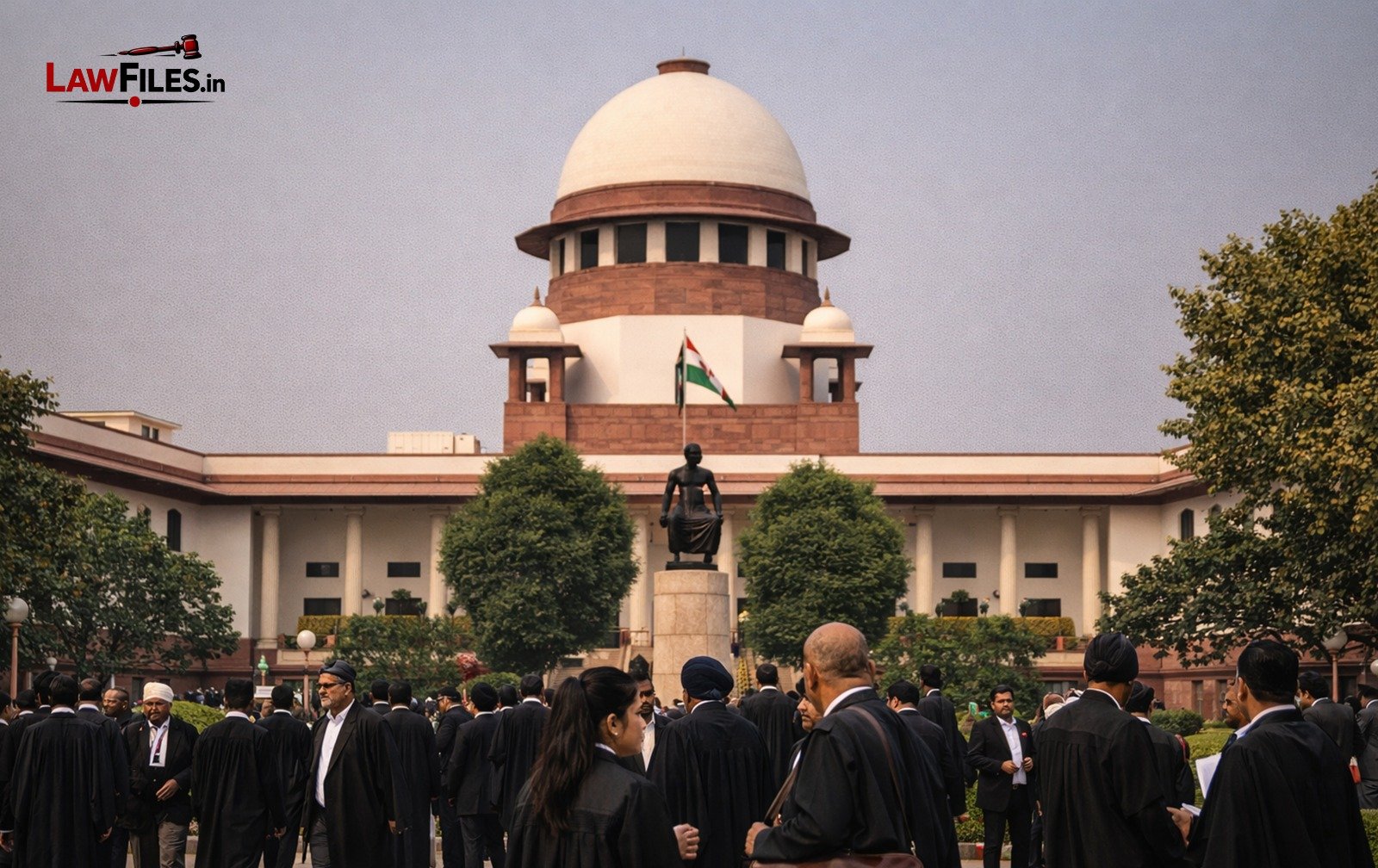
In a significant ruling strengthening procedural fairness in landlord-tenant disputes, the Supreme Court has held that a tenant’s defence cannot be mechanically struck off under Order XV Rule 5 of the Code of Civil Procedure without first examining whether the failure to deposit rent was deliberate or wilful. The judgment is important because it limits automatic penal consequences in eviction proceedings and reaffirms that procedural rules cannot be interpreted in a manner that defeats substantive justice.
The case arose from eviction proceedings where the tenant’s defence had been struck off on the ground that rent was not deposited within the prescribed timeline under Order XV Rule 5 CPC. The provision, applicable in several rent and tenancy disputes, empowers courts to strike off a tenant’s defence if rent or admitted dues are not deposited during the pendency of litigation. Traditionally, landlords have frequently invoked this provision as a procedural weapon to secure eviction by arguing technical non-compliance with rent deposit requirements.
However, the Supreme Court clarified that courts cannot apply the provision mechanically or treat every delay in deposit as sufficient to extinguish a tenant’s right to contest proceedings. The Bench observed that striking off a defence is a serious consequence because it effectively deprives a litigant of an opportunity to contest the suit on merits. Therefore, courts must first determine whether the default was intentional, contumacious, or wilful before imposing such a drastic procedural penalty.
The ruling reflects a broader constitutional principle that access to justice cannot be defeated merely through rigid procedural formalism. The Court noted that procedural law is intended to facilitate adjudication and not to become an instrument for denying fair hearing. According to the judgment, even where rent deposits are delayed, courts must consider surrounding circumstances, explanations offered by the tenant, and whether the conduct demonstrates deliberate disregard for judicial directions.
Critically analysed, the decision represents an important corrective to increasingly technical litigation strategies in rent disputes. Over the years, tenancy litigation in India has become heavily procedural, with landlords and tenants frequently relying upon technical defaults, limitation arguments, and procedural lapses rather than substantive adjudication of rights. In several cases, eviction proceedings effectively turn into contests over compliance with procedural timelines rather than genuine examination of landlord-tenant relationships.
The Supreme Court’s judgment seeks to restore proportionality within this framework. By insisting upon judicial examination of wilfulness, the Court has introduced an important safeguard against arbitrary deprivation of procedural rights. The ruling recognises that litigants may default in depositing rent for multiple reasons including financial hardship, legal confusion, bona fide disputes regarding quantum, or administrative delays. Treating every default identically would undermine fairness and potentially produce unjust eviction outcomes.
The Court’s reasoning also aligns with long-standing principles governing procedural sanctions in civil law. Indian jurisprudence has repeatedly recognised that severe procedural consequences—such as dismissal of suits, striking off pleadings, or denial of hearing—should ordinarily be reserved for cases involving deliberate abuse of process or intentional non-compliance. The present ruling extends this logic to tenancy proceedings under Order XV Rule 5 CPC.
Historically, rent control legislation in India emerged in the post-independence period to address acute housing shortages and protect tenants from arbitrary eviction and exploitative rent practices. Over time, however, critics argued that excessive procedural protection created imbalance by making eviction proceedings excessively prolonged and economically burdensome for landlords. Courts therefore gradually attempted to strike a balance between protecting tenants from unfair eviction and safeguarding landlords’ legitimate property interests.
Order XV Rule 5 became one such balancing mechanism. The provision was designed to ensure that tenants contesting eviction proceedings continued paying admitted rent during litigation rather than indefinitely occupying premises without payment. Yet the Supreme Court’s latest judgment suggests that this safeguard cannot be transformed into an automatic mechanism for defeating tenant defences irrespective of surrounding circumstances.
The ruling is also significant because it reflects judicial discomfort with hyper-technical interpretations of procedural provisions. Indian courts have increasingly recognised that procedural rigidity often contributes to injustice, particularly in civil litigation involving economically vulnerable parties. By emphasising wilfulness as a necessary factor, the Court has reinforced the idea that civil procedure must remain subordinate to fairness and substantive adjudication.
Another noteworthy aspect of the judgment lies in its reaffirmation of natural justice principles. Striking off a defence effectively weakens the adversarial structure of adjudication because one party loses the ability to fully contest allegations. The Court therefore appears to have recognised that such drastic consequences should not follow automatically from technical or accidental lapses without careful judicial scrutiny.
The decision may also influence broader civil procedural jurisprudence beyond tenancy disputes. Courts dealing with procedural defaults in commercial, property, and contractual litigation may increasingly rely upon the principle that sanctions affecting substantive rights require examination of intent, conduct, and proportionality rather than blind adherence to procedural timelines.
Importantly, the judgment does not dilute landlords’ rights or encourage deliberate default by tenants. The Court did not hold that rent deposits can be ignored casually or indefinitely delayed without consequence. Instead, it clarified that courts retain power to strike off defences where non-payment is intentional, persistent, or mala fide. The ruling merely prevents automatic penal consequences in cases where default may not have been deliberate.
The case also reflects the continuing evolution of Indian landlord-tenant jurisprudence in response to changing urban realities. Rapid urbanisation, rising property values, and increasing commercialisation of tenancy relationships have intensified litigation over possession, arrears, and eviction. Consequently, procedural provisions governing tenancy disputes now carry significant economic and social implications for both landlords and tenants.
At a constitutional level, the judgment subtly reinforces Article 14 values against arbitrariness in judicial procedure. Mechanical application of procedural rules without examining surrounding circumstances risks producing unequal and disproportionate outcomes. By insisting upon judicial assessment of wilfulness, the Supreme Court has strengthened procedural fairness within civil adjudication.
The ruling additionally highlights the growing burden upon Indian courts in resolving tenancy disputes. Landlord-tenant litigation continues to occupy substantial judicial time across trial courts, High Courts, and the Supreme Court. Interestingly, this comes at a time when the Supreme Court itself is undergoing institutional expansion. Recently, the sanctioned strength of the Court was increased from 34 to 38 judges through a presidential ordinance aimed at addressing mounting pendency and constitutional workload.
The historical evolution of the Supreme Court mirrors the broader expansion of India’s legal system. When the Constitution came into force in 1950, the Supreme Court consisted of only eight judges, including the Chief Justice of India. As litigation expanded alongside economic development, urbanisation, and constitutional governance, Parliament repeatedly increased judicial strength through legislative amendments in 1956, 1960, 1977, 1986, 2009, 2019, and now 2026. Yet despite numerical expansion, courts continue to grapple with enormous civil and tenancy litigation backlogs.
This institutional context is relevant because procedural rules like Order XV Rule 5 were partly intended to expedite tenancy disputes and prevent abuse of delay tactics. However, the Supreme Court’s judgment demonstrates that efficiency cannot come at the cost of fairness. The challenge for Indian civil justice therefore remains balancing procedural discipline with equitable adjudication.
Another important implication of the ruling concerns judicial discretion. The Court has effectively reaffirmed that procedural provisions must be applied contextually rather than mechanically. This places greater responsibility upon trial courts to carefully evaluate explanations for default and assess whether litigants acted in good faith or deliberately obstructed proceedings.
The decision may particularly benefit economically weaker tenants who often struggle with prolonged litigation costs and irregular financial circumstances. At the same time, courts will likely remain cautious to ensure that the judgment is not misused by habitual defaulters seeking to prolong occupation without payment.
Ultimately, the Supreme Court’s ruling that a tenant’s defence cannot be struck off without examining whether default was wilful reinforces a foundational principle of Indian civil justice: procedural law exists to advance fairness, not to defeat it. By rejecting mechanical penalisation for every rent deposit default, the Court has attempted to restore proportionality and judicial discretion within tenancy adjudication while preserving the balance between landlords’ rights and tenants’ access to fair hearing.
