

Close Menu
LawFilesLawFiles

    Subscribe to Updates

    Get the latest creative news from FooBar about art, design and business.

    What's Hot

    Delhi High Court Upholds Rajpal Yadav’s Conviction in Cheque Bounce Cases; Ruling Reaffirms Sanctity of Commercial Transactions and the Deterrent Purpose of the Negotiable Instruments Act

    July 11, 2026

    Delayed Payment by Auction Purchaser Under the SARFAESI Act: Supreme Court Reinforces Mandatory Compliance With Auction Timelines; A Landmark Shift in India’s Banking Recovery Jurisprudence

    July 11, 2026

    Anil Ambani Withdraws Bombay High Court Plea Against Bank of Baroda’s Fraud Classification; Case Highlights Evolving Judicial Standards Governing RBI Fraud Tagging Framework

    July 11, 2026
    Facebook X (Twitter) Instagram Threads
    Saturday, July 11
    LawFilesLawFiles
    Facebook X (Twitter)
    • Home
      • Who We Are
      • Our Mission
      • Advisory board
      • Contact US
    • Supreme Court
    • High Courts
      • Gujarat High Court
      • Jharkhand High Court
      • Rajasthan High Court
      • Karnataka High Court
      • Andhra Pradesh High Court
      • Allahabad High Court
      • Himachal Pradesh High Court
      • Chhattisgarh High Court
      • Jammu & Kashmir and Ladakh High Court
      • Kerala High Court
      • Punjab and Haryana High Court
      • Patna High Court
      • Madhya Pradesh High Court
      • Madras High Court
      • Bombay High Court
      • Orissa High Court
      • Calcutta High Court
      • Meghalaya High Court
      • Delhi High Court
      • Manipur High Court
      • Gauhati High Court
    • Corporate
    • Taxation Laws
      • Income Tax
      • GST
      • Customs & Excise
    • Global Affairs
    • Articles
      • Sitting Judge’s’ Views
      • Senior Advocate
      • Policy Analysis
      • Tax Expert
    • PILS
      • Free/Affordable Legal Aid
      • PIL Cell
      • Law student Volunteer Cell (research & Drafting)
      • NGO & Legal services Authority Tie-ups
      • Online Legal Formats
      • Online Legal Help Form
    Subscribe Premium
    LawFilesLawFiles
    Home»High Courts»Politics, Public Order and Constitutional Protection: Trinamool Congress Moves Calcutta High Court Over Alleged Attacks on Party Leaders
    High Courts

    Politics, Public Order and Constitutional Protection: Trinamool Congress Moves Calcutta High Court Over Alleged Attacks on Party Leaders

    Anvita DwivediBy Anvita DwivediJune 22, 2026Updated:June 23, 2026No Comments6 Mins Read
    WhatsApp Facebook Twitter Copy Link
    Share
    Facebook Twitter Pinterest Copy Link WhatsApp

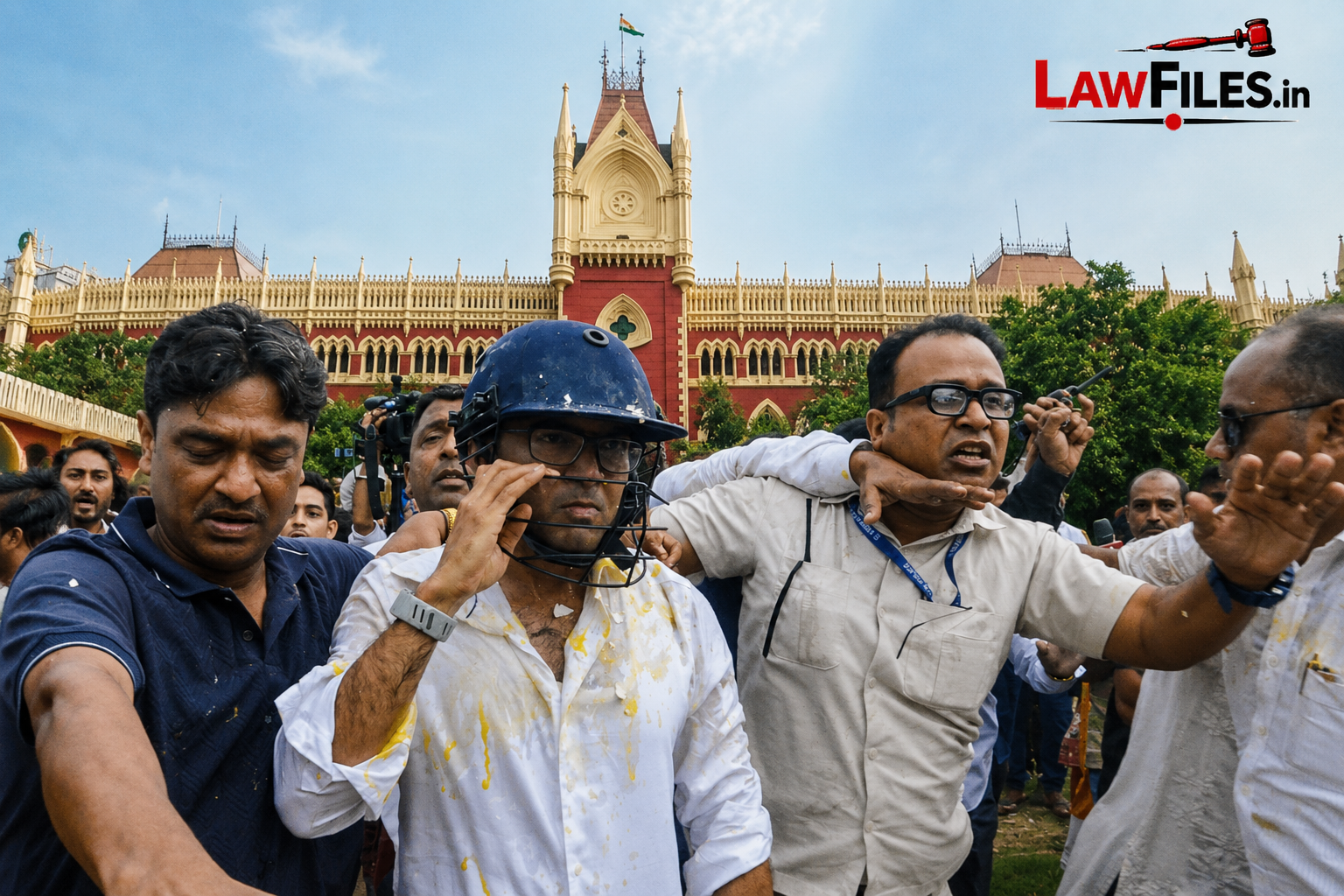
    The recent Public Interest Litigation (PIL) filed by the All India Trinamool Congress (AITC) before the Calcutta High Court alleging targeted attacks, egg-pelting incidents, and acts of public humiliation against its Members of Parliament, Members of Legislative Assembly, and party workers has brought into focus a significant constitutional question: where does political protest end and unlawful intimidation begin? While the immediate controversy concerns a series of incidents involving political leaders in West Bengal, the litigation ultimately raises broader issues relating to democratic participation, political freedoms, public order, and the constitutional obligations of the State to protect individuals irrespective of their political affiliation.

    The matter was mentioned before a Division Bench headed by Acting Chief Justice Tapabrata Chakraborty, where Senior Advocate Sirsanya Bandopadhyay sought urgent listing of the petition. Taking note of the submissions, the Court agreed to hear the matter on priority. According to the petition, the party alleges a series of violent incidents targeting its elected representatives and workers, including alleged egg-pelting, stone-throwing, physical assaults, and acts of public humiliation. The plea specifically refers to incidents involving prominent Trinamool leaders such as Derek O’Brien, Kalyan Banerjee, Abhishek Banerjee, Kunal Ghosh, and Madan Mitra, among others.

    The PIL portrays these incidents not as isolated acts of political dissent but as part of a larger pattern of coordinated violence directed against individuals associated with the party. According to the petition, such actions have allegedly created an atmosphere of fear and insecurity for political workers and elected representatives. The plea contends that these incidents infringe constitutional guarantees under Part III of the Constitution, including the freedoms of speech, association, movement, and participation in democratic activities.

    What makes the litigation particularly significant is the constitutional framework within which the controversy must be examined. Indian democracy is built upon the principle that political disagreement is legitimate, protected, and often necessary. Peaceful criticism, public demonstrations, and political opposition are integral components of democratic discourse. However, constitutional protection for dissent does not extend to acts involving violence, intimidation, or physical attacks. The Supreme Court has repeatedly emphasized that while political expression is protected under Article 19, such freedom cannot be exercised through unlawful means that threaten public order or the safety of individuals.

    The petition therefore presents a delicate legal question. Courts must determine whether the incidents complained of represent isolated criminal acts to be addressed through ordinary law enforcement mechanisms or whether they disclose a broader breakdown of constitutional protections warranting judicial intervention. This distinction is crucial because constitutional courts have traditionally exercised caution before entering matters that are primarily political in nature. At the same time, where allegations suggest systematic failure of law and order or denial of fundamental rights, judicial review becomes both permissible and necessary.

    The controversy also emerges against the backdrop of heightened political tensions in West Bengal following recent electoral developments and factional disputes within the state’s political landscape. Several media reports have documented instances of egg-pelting and public protests directed against political leaders from different parties. Supporters of the petition argue that such incidents represent an alarming normalization of political hostility, while critics contend that courts must be careful not to convert every political confrontation into a constitutional dispute.

    A particularly noteworthy aspect of the PIL is its reliance on the concept of constitutional governance rather than merely criminal liability. The petition argues that elected representatives are entitled to discharge their public functions without fear of violence or coercion. This argument draws support from the broader constitutional principle that democratic institutions cannot function effectively where political participation is inhibited through intimidation. In this sense, the litigation transcends partisan concerns and touches upon the structural integrity of democratic processes themselves.

    From a public law perspective, the case may require the Court to examine the positive obligations of the State under Article 21. Constitutional jurisprudence has evolved to recognize that the right to life and personal liberty is not merely a protection against direct state action but may also impose affirmative duties upon the State to maintain public order and safeguard individuals from foreseeable harm. If the allegations in the petition are substantiated, questions may arise regarding whether adequate preventive and protective measures were undertaken by the authorities.

    At the same time, courts must remain mindful of the risk of judicial overreach in politically charged disputes. The Supreme Court has consistently held that constitutional remedies should not become substitutes for ordinary criminal processes. Allegations of assault, unlawful restraint, and violence ordinarily fall within the domain of investigation and prosecution by law enforcement agencies. Consequently, the Calcutta High Court’s challenge will be to balance constitutional concerns with the institutional limits of judicial intervention.

    The matter also raises important questions regarding the role of PILs in contemporary political disputes. Public Interest Litigation emerged as a mechanism for protecting marginalized groups and addressing systemic governance failures. Over time, however, political actors have increasingly invoked PIL jurisdiction to challenge administrative actions, electoral processes, and law-and-order issues. The present case may therefore contribute to the evolving jurisprudence concerning the permissible scope of PILs in politically sensitive matters.

    From a democratic theory perspective, the litigation highlights a troubling reality confronting modern political systems. Across jurisdictions, political polarization has increasingly manifested through symbolic acts of hostility, public confrontation, and personalized attacks against political opponents. While some may dismiss incidents such as egg-pelting as forms of protest, the legal system must evaluate whether such actions undermine democratic dialogue by replacing debate with intimidation. Constitutional democracies depend upon the ability of political actors to engage in public life without fear of violence, regardless of ideological differences.

    For legal practitioners, the proceedings offer an important study in the interaction between constitutional rights, public order jurisprudence, and judicial review of governance failures. The case may also provide guidance regarding the evidentiary threshold required for courts to intervene in matters involving alleged political violence.

    For law students and scholars, the litigation illustrates the continuing relevance of constitutional principles in regulating political conduct. It demonstrates how disputes that appear political on the surface often raise deeper questions concerning fundamental rights, state responsibility, and the functioning of democratic institutions.

    Ultimately, the significance of the Trinamool Congress’s petition extends beyond the fortunes of a particular political party. The core issue before the Court is whether democratic participation can remain meaningful if political actors are subjected to recurring acts of intimidation and public violence. Whatever the eventual outcome, the proceedings are likely to contribute to the evolving constitutional discourse on political freedom, public order, and the rule of law in a democratic society. The Calcutta High Court’s response may therefore serve as an important benchmark for determining how Indian constitutional law balances robust political dissent with the need to protect democratic participation from coercive disruption.

    Politics Public Order and Constitutional Protection: Trinamool Congress Moves Calcutta High Court Over Alleged Attacks on Party Leaders
    Share. WhatsApp Facebook Twitter Pinterest Email
    Anvita Dwivedi

    Related Posts

    Delhi High Court Upholds Rajpal Yadav’s Conviction in Cheque Bounce Cases; Ruling Reaffirms Sanctity of Commercial Transactions and the Deterrent Purpose of the Negotiable Instruments Act

    July 11, 2026

    Delayed Payment by Auction Purchaser Under the SARFAESI Act: Supreme Court Reinforces Mandatory Compliance With Auction Timelines; A Landmark Shift in India’s Banking Recovery Jurisprudence

    July 11, 2026

    Anil Ambani Withdraws Bombay High Court Plea Against Bank of Baroda’s Fraud Classification; Case Highlights Evolving Judicial Standards Governing RBI Fraud Tagging Framework

    July 11, 2026
    Add A Comment
    Leave A Reply Cancel Reply

    Demo
    Top Posts

    Digital Forensics Fail to convince Supreme Court: Bail Denied to Gagan Khanna in BNS Assault Case

    June 15, 2026241 Views

    Wrongful Claim Rejection Amounts to Deficiency in Service: Delhi Consumer Commission Holds Star Health Liable

    March 16, 202672 Views

    Bombay High Court Quashes POCSO Case, Directs Accused to Fund MacBook for Victim’s Education

    February 28, 202658 Views

    Supreme Court Quashes FIR Over ‘Improved’ Second Complaint: A Reminder That Criminal Law Cannot Be Built on Shifting Narratives

    June 4, 202654 Views
    Don't Miss

    Delhi High Court Upholds Rajpal Yadav’s Conviction in Cheque Bounce Cases; Ruling Reaffirms Sanctity of Commercial Transactions and the Deterrent Purpose of the Negotiable Instruments Act

    By Anvita DwivediJuly 11, 2026

    In a significant reaffirmation of India’s cheque dishonour jurisprudence, the Delhi High Court has upheld…

    Delayed Payment by Auction Purchaser Under the SARFAESI Act: Supreme Court Reinforces Mandatory Compliance With Auction Timelines; A Landmark Shift in India’s Banking Recovery Jurisprudence

    July 11, 2026

    Anil Ambani Withdraws Bombay High Court Plea Against Bank of Baroda’s Fraud Classification; Case Highlights Evolving Judicial Standards Governing RBI Fraud Tagging Framework

    July 11, 2026

    Supreme Court Examines Challenge to Navy Recruitment Rules for Group ‘B’ Non-Gazetted Officers; Notice to Centre Puts Promotional Equality and Service Jurisprudence Under Judicial Scrutiny

    July 11, 2026
    Stay In Touch
    • Facebook
    • Twitter

    Subscribe to Updates

    Get the latest creative news from SmartMag about art & design.

    Top Posts

    Digital Forensics Fail to convince Supreme Court: Bail Denied to Gagan Khanna in BNS Assault Case

    June 15, 2026241 Views

    Wrongful Claim Rejection Amounts to Deficiency in Service: Delhi Consumer Commission Holds Star Health Liable

    March 16, 202672 Views

    Bombay High Court Quashes POCSO Case, Directs Accused to Fund MacBook for Victim’s Education

    February 28, 202658 Views
    Don't Miss

    Delhi High Court Upholds Rajpal Yadav’s Conviction in Cheque Bounce Cases; Ruling Reaffirms Sanctity of Commercial Transactions and the Deterrent Purpose of the Negotiable Instruments Act

    By Anvita DwivediJuly 11, 2026

    In a significant reaffirmation of India’s cheque dishonour jurisprudence, the Delhi High Court has upheld…

    Delayed Payment by Auction Purchaser Under the SARFAESI Act: Supreme Court Reinforces Mandatory Compliance With Auction Timelines; A Landmark Shift in India’s Banking Recovery Jurisprudence

    July 11, 2026

    Anil Ambani Withdraws Bombay High Court Plea Against Bank of Baroda’s Fraud Classification; Case Highlights Evolving Judicial Standards Governing RBI Fraud Tagging Framework

    July 11, 2026

    Supreme Court Examines Challenge to Navy Recruitment Rules for Group ‘B’ Non-Gazetted Officers; Notice to Centre Puts Promotional Equality and Service Jurisprudence Under Judicial Scrutiny

    July 11, 2026
    Stay In Touch
    • Facebook
    • YouTube
    • TikTok
    • Instagram
    Top Trending
    About Us
    About Us

    LawFiles.in is a comprehensive legal news platform delivering real-time updates from the Supreme Court, High Courts, Tribunals, Corporate and Tax law, Regulators, Politics, Crime, Consumer cases, and Global Affairs.

    Email Us: lawfilesoffical@gmail.com
    Contact: +91 8800026066

    Contact Us:
    India International Centre
    40, Max Mueller Marg
    Lodhi Estate, New Delhi-110003

    Facebook X (Twitter)
    Our Picks

    Delhi High Court Upholds Rajpal Yadav’s Conviction in Cheque Bounce Cases; Ruling Reaffirms Sanctity of Commercial Transactions and the Deterrent Purpose of the Negotiable Instruments Act

    July 11, 2026

    Delayed Payment by Auction Purchaser Under the SARFAESI Act: Supreme Court Reinforces Mandatory Compliance With Auction Timelines; A Landmark Shift in India’s Banking Recovery Jurisprudence

    July 11, 2026

    Anil Ambani Withdraws Bombay High Court Plea Against Bank of Baroda’s Fraud Classification; Case Highlights Evolving Judicial Standards Governing RBI Fraud Tagging Framework

    July 11, 2026

    Supreme Court Examines Challenge to Navy Recruitment Rules for Group ‘B’ Non-Gazetted Officers; Notice to Centre Puts Promotional Equality and Service Jurisprudence Under Judicial Scrutiny

    July 11, 2026

    SCBA Condemns Abusive Conduct by Litigant in Supreme Court; Seeks Regulatory Framework for Circulation of Courtroom Videos Amid Growing Debate on Open Justice and Digital Accountability

    July 11, 2026
    Most Popular

    Madhya Pradesh High Court Examines Plea to Extend NRI Quota to Stray Vacancy Round in Medical Admissions

    February 26, 20260 Views

    Supreme Court Rules Limitation Period Under CrPC Starts When Offender’s Identity Is Known, Not From First Complaint

    February 27, 20260 Views

    Maharashtra State Consumer Commission Slams HP Employees’ Co-operative Credit Society for Enforcing Undisclosed Restriction, Orders Refund with Interest and Compensation

    March 2, 20260 Views

    NCDRC Dismisses Consumer Complaint Filed Nearly a Decade After Possession, Holds Claim Barred by Limitation

    March 2, 20260 Views

    Supreme Court CJI Uses T20 Cricket Analogy to Stress Importance of Specialization in Legal Practice

    March 2, 20260 Views
    © 2026 LawFiles. Owned by Varta24 Media.
    • Articles
    • Careers
    • Corporate
    • Global Affairs
    • Law Firms & Lawyers
    • PILS
    • Regulatory

    Type above and press Enter to search. Press Esc to cancel.