

Close Menu
LawFilesLawFiles

    Subscribe to Updates

    Get the latest creative news from FooBar about art, design and business.

    What's Hot

    Delhi High Court Upholds Rajpal Yadav’s Conviction in Cheque Bounce Cases; Ruling Reaffirms Sanctity of Commercial Transactions and the Deterrent Purpose of the Negotiable Instruments Act

    July 11, 2026

    Delayed Payment by Auction Purchaser Under the SARFAESI Act: Supreme Court Reinforces Mandatory Compliance With Auction Timelines; A Landmark Shift in India’s Banking Recovery Jurisprudence

    July 11, 2026

    Anil Ambani Withdraws Bombay High Court Plea Against Bank of Baroda’s Fraud Classification; Case Highlights Evolving Judicial Standards Governing RBI Fraud Tagging Framework

    July 11, 2026
    Facebook X (Twitter) Instagram Threads
    Saturday, July 11
    LawFilesLawFiles
    Facebook X (Twitter)
    • Home
      • Who We Are
      • Our Mission
      • Advisory board
      • Contact US
    • Supreme Court
    • High Courts
      • Gujarat High Court
      • Jharkhand High Court
      • Rajasthan High Court
      • Karnataka High Court
      • Andhra Pradesh High Court
      • Allahabad High Court
      • Himachal Pradesh High Court
      • Chhattisgarh High Court
      • Jammu & Kashmir and Ladakh High Court
      • Kerala High Court
      • Punjab and Haryana High Court
      • Patna High Court
      • Madhya Pradesh High Court
      • Madras High Court
      • Bombay High Court
      • Orissa High Court
      • Calcutta High Court
      • Meghalaya High Court
      • Delhi High Court
      • Manipur High Court
      • Gauhati High Court
    • Corporate
    • Taxation Laws
      • Income Tax
      • GST
      • Customs & Excise
    • Global Affairs
    • Articles
      • Sitting Judge’s’ Views
      • Senior Advocate
      • Policy Analysis
      • Tax Expert
    • PILS
      • Free/Affordable Legal Aid
      • PIL Cell
      • Law student Volunteer Cell (research & Drafting)
      • NGO & Legal services Authority Tie-ups
      • Online Legal Formats
      • Online Legal Help Form
    Subscribe Premium
    LawFilesLawFiles
    Home»Articles»Senior Advocate»‘PMLA Has Become an Instrument of State Power’: Dushyant Dave Raises Concerns Over Civil Liberties, Judicial Independence and Constitutional Accountability
    Senior Advocate

    ‘PMLA Has Become an Instrument of State Power’: Dushyant Dave Raises Concerns Over Civil Liberties, Judicial Independence and Constitutional Accountability

    Anvita DwivediBy Anvita DwivediJuly 9, 2026No Comments7 Mins Read
    WhatsApp Facebook Twitter Copy Link
    Share
    Facebook Twitter Pinterest Copy Link WhatsApp

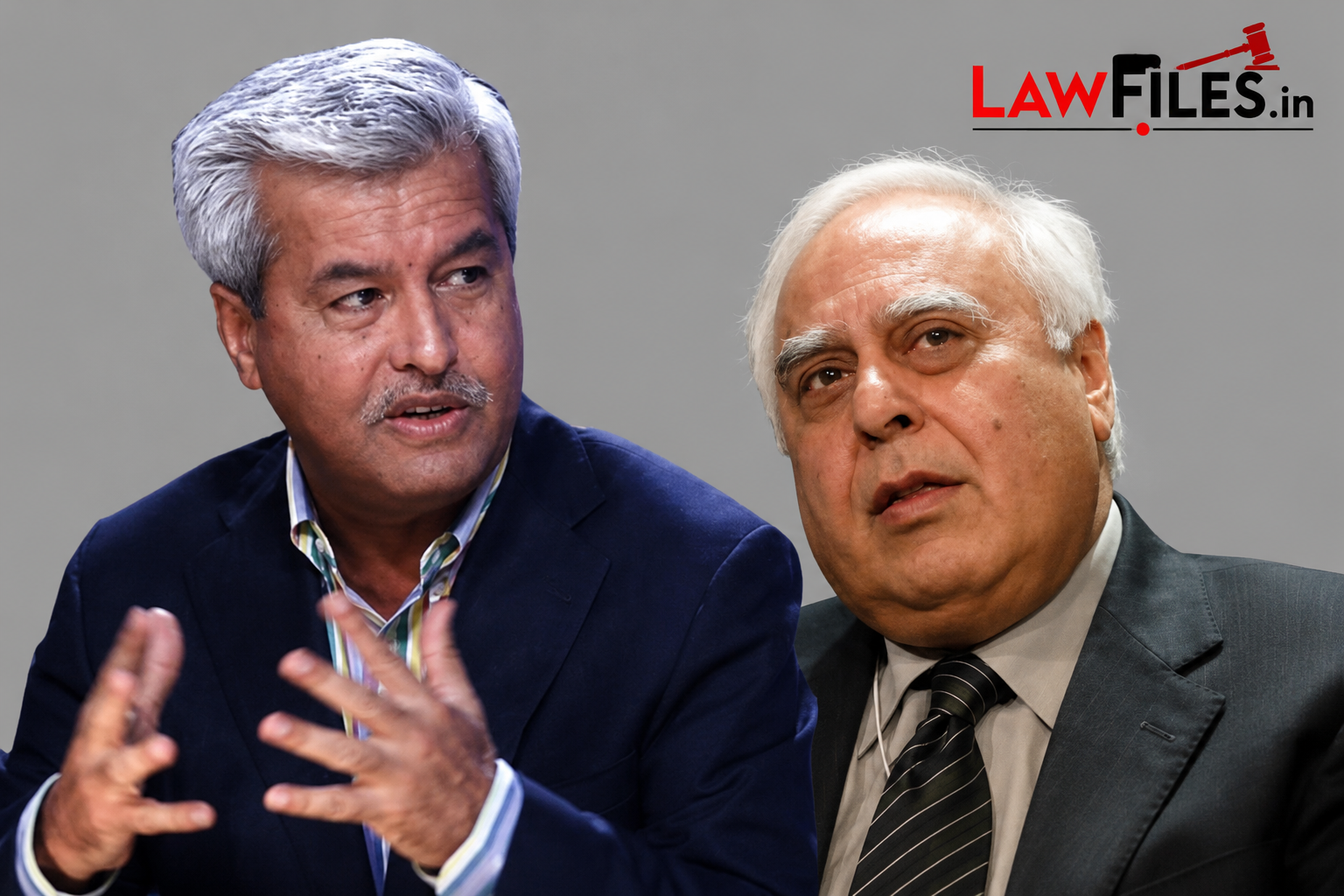
    A recent public conversation between Senior Advocates Kapil Sibal and Dushyant Dave has reignited an important constitutional debate concerning the expanding powers of investigative agencies, the functioning of the judiciary, judicial appointments and the protection of civil liberties under the Indian Constitution. During the interview, former Supreme Court Bar Association President Dushyant Dave described the operation of the Prevention of Money Laundering Act, 2002 (PMLA) as amounting to “open State terrorism” and expressed concern that constitutional courts have increasingly failed to adequately protect individual rights against executive excesses. The remarks, delivered in the course of an extensive discussion on the state of India’s justice delivery system, represent the personal opinions of the speakers and do not constitute judicial findings. Nevertheless, they raise several significant constitutional questions that continue to occupy the attention of courts, legal scholars and the Bar.

    Speaking with Kapil Sibal, Dave criticised the breadth of powers exercised by the Enforcement Directorate under the PMLA and argued that prolonged investigations, arrests and stringent bail provisions have fundamentally altered the balance between the State’s interest in combating economic crime and the constitutional guarantee of personal liberty. According to Dave, the judiciary has increasingly assumed the role of a passive observer while individual rights guaranteed under the Constitution are allegedly compromised. Referring to the functioning of constitutional courts, he remarked that judges have often remained “mute spectators” in the face of alleged violations of civil liberties. These remarks were made as part of a broader critique of contemporary constitutional governance and judicial accountability.

    The observations assume legal significance because they revisit one of the most contested legislations in modern Indian constitutional law. The Prevention of Money Laundering Act was enacted to combat laundering of proceeds generated through scheduled offences and to fulfil India’s international obligations under anti-money laundering conventions. Over the years, however, several provisions of the statute particularly those relating to arrest, attachment of property, reversal of the burden of proof and the stringent twin conditions governing bail under Section 45—have repeatedly come under constitutional scrutiny before the Supreme Court. Supporters of the legislation argue that extraordinary economic offences require equally robust investigative powers, while critics contend that the procedural framework substantially departs from ordinary criminal law safeguards and disproportionately restricts personal liberty.

    The constitutional debate surrounding the PMLA reached its most significant milestone in Vijay Madanlal Choudhary v. Union of India (2022), where a three-judge Bench of the Supreme Court upheld the constitutional validity of most provisions of the Act, including the Enforcement Directorate’s investigative powers and the twin conditions for bail. The judgment recognised money laundering as a serious threat to the financial integrity of the nation and concluded that Parliament was competent to prescribe a special procedural framework for such offences. However, the decision also generated extensive academic and professional debate, with several legal scholars questioning whether the judgment sufficiently balanced the constitutional guarantees under Articles 14, 20, 21 and 22 against the State’s interest in combating organised financial crime. Review petitions and subsequent constitutional developments have ensured that discussion surrounding the legislation remains far from settled.

    During the interview, Dave also expressed disappointment over what he described as the judiciary’s inconsistent approach in matters involving electoral accountability. Referring to the Supreme Court’s landmark judgment striking down the Electoral Bonds Scheme as unconstitutional, he observed that while the Court delivered an important verdict safeguarding transparency in political funding, it allegedly did not subsequently pursue allegations relating to individual transactions with the same institutional urgency. Dave specifically referred to arguments advanced by Advocate Prashant Bhushan concerning alleged instances of quid pro quo after the Electoral Bonds judgment and questioned whether greater judicial scrutiny ought to have followed. These comments reflect his personal assessment of post-judgment institutional responses rather than any judicial determination on the underlying allegations.

    The interview also turned towards the functioning of the Collegium system and judicial appointments. Dave criticised what he described as a decline in institutional standards, attributing many contemporary challenges facing the judiciary to deficiencies in appointments, increasing executive influence and the continued operation of the “Master of the Roster” system. According to him, institutional introspection regarding delays, judicial vacancies and declining public confidence has remained inadequate over the past two decades. These observations complement similar concerns recently expressed by both Dave and Kapil Sibal regarding the long-term functioning of the Collegium mechanism and the need for structural judicial reforms.

    One of the more institutionally significant aspects of the discussion concerned the constitutional role of government law officers. Dave contrasted the functioning of earlier generations of Advocate Generals with the present system, arguing that law officers are constitutional functionaries expected to assist courts objectively rather than defend every governmental action irrespective of its legality. He suggested that the constitutional responsibility of public law officers extends beyond representing executive policy and includes a duty to uphold constitutional values and assist courts in arriving at legally correct conclusions. The observation reflects a long-standing principle of constitutional practice that government counsel occupy a position distinct from private litigants because they represent the public interest as much as the executive.

    From a constitutional perspective, the interview revives the continuing tension between national security, economic regulation and individual liberty. The Supreme Court has consistently recognised that legislatures may enact special procedures for serious economic offences involving money laundering, terrorism financing and organised crime. Simultaneously, constitutional courts have repeatedly emphasised that even special statutes remain subject to the discipline of Articles 14 and 21. This dual constitutional commitment requires courts to preserve effective investigation while ensuring that procedural safeguards protecting individual liberty are not rendered illusory. The concerns articulated by Dave therefore resonate with an ongoing constitutional dialogue rather than presenting questions that have already been conclusively resolved.

    The remarks also raise broader institutional questions concerning public confidence in the justice delivery system. Judicial legitimacy depends not merely upon the correctness of individual decisions but also upon sustained public trust in the fairness, independence and impartiality of constitutional institutions. Criticism from senior members of the Bar has historically played an important role in stimulating debate on judicial reforms, appointment processes, case management and institutional accountability. At the same time, constitutional discourse equally recognises that criticism of judicial institutions must remain responsible, evidence-based and directed towards strengthening rather than undermining public confidence in the rule of law.

    It is equally important to recognise that the issues raised during the interview continue to attract differing legal opinions. The Union Government has consistently defended the PMLA as an indispensable legislative tool against transnational financial crime, corruption and proceeds of crime, while the Supreme Court has upheld most of its provisions after detailed constitutional examination. Likewise, questions concerning judicial appointments, executive participation and institutional reforms remain matters of ongoing public and constitutional debate rather than settled legal consensus.

    Viewed in its entirety, the conversation between Kapil Sibal and Dushyant Dave is less a commentary on individual cases than a wider reflection on the evolving relationship between constitutional liberties, investigative power and judicial oversight in contemporary India. Whether one agrees with the criticisms advanced or not, the interview underscores enduring constitutional questions concerning the limits of State power, the independence of the judiciary and the role of constitutional courts in protecting individual rights. As India’s constitutional jurisprudence continues to evolve, these debates are likely to remain central to discussions on democratic governance, institutional accountability and the future trajectory of the rule of law.

    'PMLA Has Become an Instrument of State Power': Dushyant Dave Raises Concerns Over Civil Liberties Judicial Independence and Constitutional Accountability
    Share. WhatsApp Facebook Twitter Pinterest Email
    Anvita Dwivedi

    Related Posts

    Delhi High Court Upholds Rajpal Yadav’s Conviction in Cheque Bounce Cases; Ruling Reaffirms Sanctity of Commercial Transactions and the Deterrent Purpose of the Negotiable Instruments Act

    July 11, 2026

    Delayed Payment by Auction Purchaser Under the SARFAESI Act: Supreme Court Reinforces Mandatory Compliance With Auction Timelines; A Landmark Shift in India’s Banking Recovery Jurisprudence

    July 11, 2026

    Anil Ambani Withdraws Bombay High Court Plea Against Bank of Baroda’s Fraud Classification; Case Highlights Evolving Judicial Standards Governing RBI Fraud Tagging Framework

    July 11, 2026
    Add A Comment
    Leave A Reply Cancel Reply

    Demo
    Top Posts

    Digital Forensics Fail to convince Supreme Court: Bail Denied to Gagan Khanna in BNS Assault Case

    June 15, 2026241 Views

    Wrongful Claim Rejection Amounts to Deficiency in Service: Delhi Consumer Commission Holds Star Health Liable

    March 16, 202672 Views

    Bombay High Court Quashes POCSO Case, Directs Accused to Fund MacBook for Victim’s Education

    February 28, 202658 Views

    Supreme Court Quashes FIR Over ‘Improved’ Second Complaint: A Reminder That Criminal Law Cannot Be Built on Shifting Narratives

    June 4, 202654 Views
    Don't Miss

    Delhi High Court Upholds Rajpal Yadav’s Conviction in Cheque Bounce Cases; Ruling Reaffirms Sanctity of Commercial Transactions and the Deterrent Purpose of the Negotiable Instruments Act

    By Anvita DwivediJuly 11, 2026

    In a significant reaffirmation of India’s cheque dishonour jurisprudence, the Delhi High Court has upheld…

    Delayed Payment by Auction Purchaser Under the SARFAESI Act: Supreme Court Reinforces Mandatory Compliance With Auction Timelines; A Landmark Shift in India’s Banking Recovery Jurisprudence

    July 11, 2026

    Anil Ambani Withdraws Bombay High Court Plea Against Bank of Baroda’s Fraud Classification; Case Highlights Evolving Judicial Standards Governing RBI Fraud Tagging Framework

    July 11, 2026

    Supreme Court Examines Challenge to Navy Recruitment Rules for Group ‘B’ Non-Gazetted Officers; Notice to Centre Puts Promotional Equality and Service Jurisprudence Under Judicial Scrutiny

    July 11, 2026
    Stay In Touch
    • Facebook
    • Twitter

    Subscribe to Updates

    Get the latest creative news from SmartMag about art & design.

    Top Posts

    Digital Forensics Fail to convince Supreme Court: Bail Denied to Gagan Khanna in BNS Assault Case

    June 15, 2026241 Views

    Wrongful Claim Rejection Amounts to Deficiency in Service: Delhi Consumer Commission Holds Star Health Liable

    March 16, 202672 Views

    Bombay High Court Quashes POCSO Case, Directs Accused to Fund MacBook for Victim’s Education

    February 28, 202658 Views
    Don't Miss

    Delhi High Court Upholds Rajpal Yadav’s Conviction in Cheque Bounce Cases; Ruling Reaffirms Sanctity of Commercial Transactions and the Deterrent Purpose of the Negotiable Instruments Act

    By Anvita DwivediJuly 11, 2026

    In a significant reaffirmation of India’s cheque dishonour jurisprudence, the Delhi High Court has upheld…

    Delayed Payment by Auction Purchaser Under the SARFAESI Act: Supreme Court Reinforces Mandatory Compliance With Auction Timelines; A Landmark Shift in India’s Banking Recovery Jurisprudence

    July 11, 2026

    Anil Ambani Withdraws Bombay High Court Plea Against Bank of Baroda’s Fraud Classification; Case Highlights Evolving Judicial Standards Governing RBI Fraud Tagging Framework

    July 11, 2026

    Supreme Court Examines Challenge to Navy Recruitment Rules for Group ‘B’ Non-Gazetted Officers; Notice to Centre Puts Promotional Equality and Service Jurisprudence Under Judicial Scrutiny

    July 11, 2026
    Stay In Touch
    • Facebook
    • YouTube
    • TikTok
    • Instagram
    Top Trending
    About Us
    About Us

    LawFiles.in is a comprehensive legal news platform delivering real-time updates from the Supreme Court, High Courts, Tribunals, Corporate and Tax law, Regulators, Politics, Crime, Consumer cases, and Global Affairs.

    Email Us: lawfilesoffical@gmail.com
    Contact: +91 8800026066

    Contact Us:
    India International Centre
    40, Max Mueller Marg
    Lodhi Estate, New Delhi-110003

    Facebook X (Twitter)
    Our Picks

    Delhi High Court Upholds Rajpal Yadav’s Conviction in Cheque Bounce Cases; Ruling Reaffirms Sanctity of Commercial Transactions and the Deterrent Purpose of the Negotiable Instruments Act

    July 11, 2026

    Delayed Payment by Auction Purchaser Under the SARFAESI Act: Supreme Court Reinforces Mandatory Compliance With Auction Timelines; A Landmark Shift in India’s Banking Recovery Jurisprudence

    July 11, 2026

    Anil Ambani Withdraws Bombay High Court Plea Against Bank of Baroda’s Fraud Classification; Case Highlights Evolving Judicial Standards Governing RBI Fraud Tagging Framework

    July 11, 2026

    Supreme Court Examines Challenge to Navy Recruitment Rules for Group ‘B’ Non-Gazetted Officers; Notice to Centre Puts Promotional Equality and Service Jurisprudence Under Judicial Scrutiny

    July 11, 2026

    SCBA Condemns Abusive Conduct by Litigant in Supreme Court; Seeks Regulatory Framework for Circulation of Courtroom Videos Amid Growing Debate on Open Justice and Digital Accountability

    July 11, 2026
    Most Popular

    Madhya Pradesh High Court Examines Plea to Extend NRI Quota to Stray Vacancy Round in Medical Admissions

    February 26, 20260 Views

    Supreme Court Rules Limitation Period Under CrPC Starts When Offender’s Identity Is Known, Not From First Complaint

    February 27, 20260 Views

    Maharashtra State Consumer Commission Slams HP Employees’ Co-operative Credit Society for Enforcing Undisclosed Restriction, Orders Refund with Interest and Compensation

    March 2, 20260 Views

    NCDRC Dismisses Consumer Complaint Filed Nearly a Decade After Possession, Holds Claim Barred by Limitation

    March 2, 20260 Views

    Supreme Court CJI Uses T20 Cricket Analogy to Stress Importance of Specialization in Legal Practice

    March 2, 20260 Views
    © 2026 LawFiles. Owned by Varta24 Media.
    • Articles
    • Careers
    • Corporate
    • Global Affairs
    • Law Firms & Lawyers
    • PILS
    • Regulatory

    Type above and press Enter to search. Press Esc to cancel.