


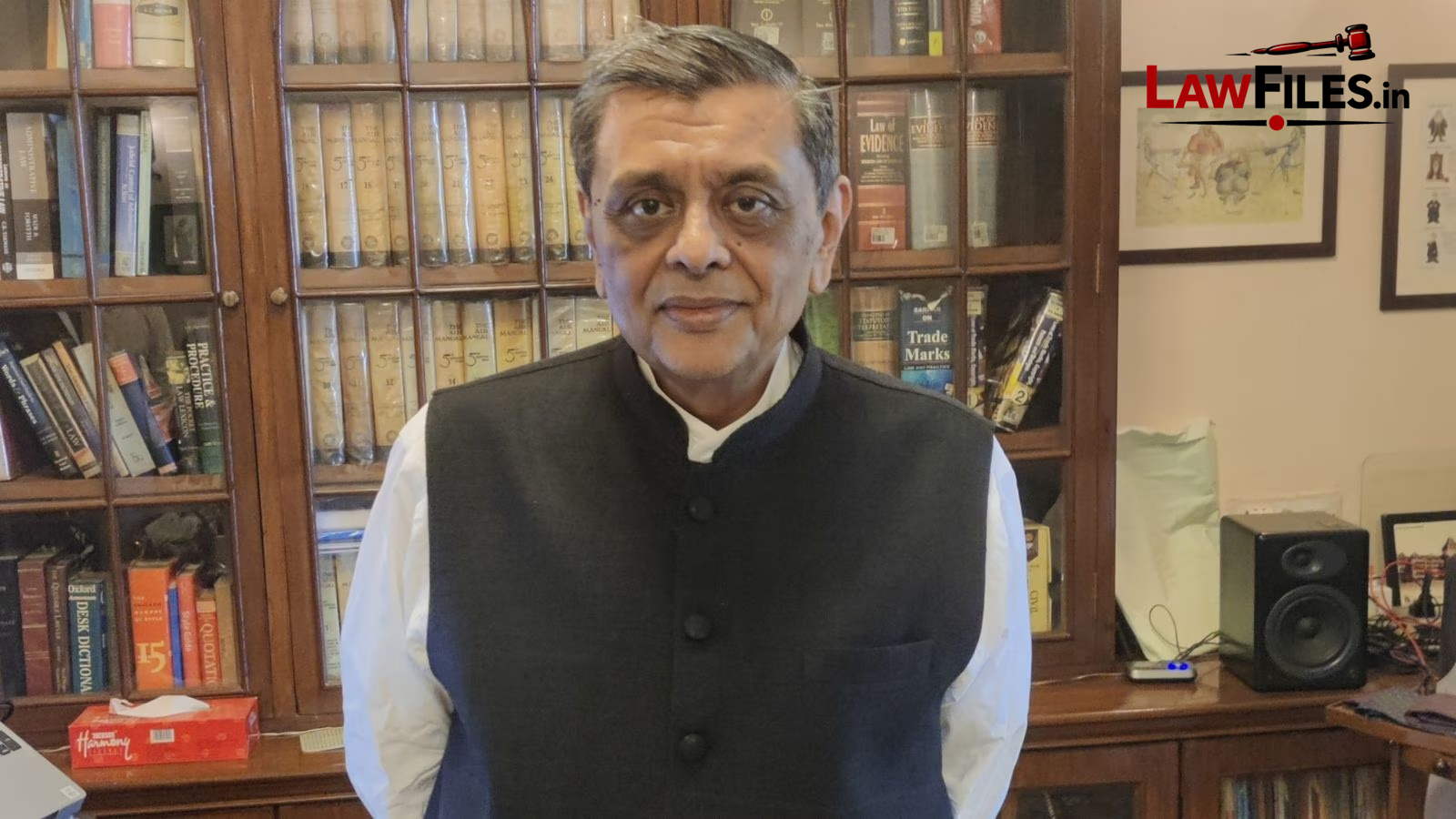
Justice Gautam S. Patel, a highly respected retired judge of the Bombay High Court, retirement has turned into a cross-border nightmare. For nearly ten months, Justice Patel and his family have been the targets of a terrifying, calculated campaign of extortion, stalking, and physical violence playing out across India and the United Kingdom. Due to a landmark legal verdict he delivered just days before his retirement in April 2024, settling a bitter, decade-long succession battle within the million-strong Dawoodi Bohra community.
In 2014 the death of Syedna Mohammed Burhanuddin, the 52nd spiritual leader (Dai al-Mutlaq) of the Dawoodi Bohras. A fierce battle for control broke out between the late leader’s son, Syedna Mufaddal Saifuddin, and his uncle, Khuzaima Qutbuddin (later succeeded by his cousin, Taher Fakhruddin). The opposing faction claimed that they held the true divine right to lead, a concept known as nass.
After nine years of dense legal arguments, dense evidence, and deep community fracturing, Justice Patel delivered his final judgment on April 23, 2024. He dismissed the challenger’s suit, stating that in a secular court of law, claims must be backed by hard, credible legal proof rather than purely faith-based assertions. He officially recognized Syedna Mufaddal Saifuddin as the rightful 53rd spiritual leader.
While the losing faction took the legitimate legal route by appealing the verdict to a division bench of the High Court, a shadow group decided to take the law into their own hands.
The cross-border execution of this intimidation campaign reveals a level of sophistication, specifically designed to exploit geopolitical boundaries and stretch the resources of law enforcement agencies across two continents. By striking simultaneously in Mumbai and London, the perpetrators ensured that the family felt entirely trapped, leaving them with no safety.
The nightmare began in August 2025 with a synchronized opening move. In Mumbai, Justice Patel’s wife, Malashri, opened an anonymous, undated letter at their residence. The text laid out a terrifying premise a powerful, unnamed guild of community members had pooled resources to hire a “dangerous international syndicate” tasked with reversing the judgment by force. At that exact same moment, thousands of miles away in a quiet suburb of London, their daughter, Aditi Patel, received a nearly identical letter at her home. This letter added an even more personal, violating detail the writers openly claimed responsibility for a break-in that had occurred at her UK property just weeks earlier, effectively proving that the family was under constant, active surveillance.
By the spring of 2026, the psychological warfare violently escalated into physical bloodshed. On the morning of April 22, 2026, the syndicate chose a moment of maximum vulnerability a routine school run in London. As Aditi Patel was walking, an unidentified masked man ambushed her from behind on a public street. Without warning, he launched a vicious physical assault, fracturing her nose and leaving her bloodied and traumatized before escaping. This was no longer just an empty threat mailed from afar it was a brutal demonstration and the ruthless intent to permanently harm Justice Patel’s children.
The terror peaked just days ago, on June 5, 2026, when a third package arrived for Aditi. Shifting tactics to obscure their digital and physical footprint, the senders routed this letter through Europe, bearing a German postal stamp but utilizing a fake London return address under the sinister pseudonym “Die Soon Enterprises.” The message inside stripped away any remaining ambiguity, declaring: “You were given ample warning. The gang has been paid. The next step involves cremation of you and your family.”
To ensure the psychological payload hit home, the killers attached a physical SD memory card to the letter, implying it contained a custom video warning. Recognizing the severe risk of cyber-malware designed to compromise their phones or home security networks, the family refrained from plugging the chip into any device. It was immediately handed over to the UK counter-terrorism police, serving as a critical piece of evidence in an unprecedented international hunt for a group trying to rewrite a constitutional court verdict through sheer terror. They are not asking for money. Instead, they are ordering Justice Patel to record a YouTube video publicly retracting his 2024 judgment.
The letters demand that he look into the camera and state that he was “coerced” or acted out of “cowardice” when ruling in favor of the current Syedna. The attackers have tried to frame around community grievances, claiming the judge’s verdict allows the leading faction to enforce controversial traditions like Female Genital Mutilation (FGM) an issue that is actually being independently litigated before a Constitution Bench of the Supreme Court of India.
Justice Patel has made it clear how legally absurd this demand is. A constitutional court judgment cannot be undone by a retired judge making a social media video. He noted that the demands are purely an instrument of coercion, designed to humiliate a judge and manufacture fake evidence of judicial corruption to somehow derail the legitimate appeal currently pending in court. Meanwhile, representatives for the challenging Qutbi Bohra faction have strongly condemned the violence, stating that these rogue acts are designed to malign their name and disrupt their legal appeal.
This terrifying deal strikes at the very heart of the judicial system. If judges cannot rule without fearing for the lives of their children, the entire rule of law collapses. The Indian judiciary has faced similar moments of crisis before and has repeatedly drawn a hard line against the intimidation of its officers.
In this landmark case, the Supreme Court of India emphasized that judges must be allowed to perform their duties fearlessly, without systemic or external bullying. The apex court noted:
“The judge’s robe is a protection for the public, not for the judge. If judges are subjected to constant fear, intimidation, or malicious attacks for the orders they pass, they cannot remain independent. An independent judiciary is impossible if those who sit on the bench are made to fear personal or professional ruin for doing their duty.”
When a high-profile attorney attempted to bully a judge in open court to force a favorable order, the Supreme Court took suo motu contempt action and laid down a strict rule regarding the intimidation of judicial officers:
“To maintain the rule of law, judges must be free from anxiety, threat, or any form of pressure. Any attempt to browbeat, intimidate, or threaten a judge to alter a judicial outcome is not just an offense against the individual; it is an attack on the majesty of justice itself and threatens to tear down the entire legal fabric of the country.”
Because the crimes span two countries, a complex international investigation is underway. In London, the Hertfordshire Constabulary, alongside its dedicated counter-terrorism unit, is treating the physical assault on Aditi Patel and the subsequent “cremation” letters as a highly severe, active case. In Mumbai, local police previously registered a non-cognizable complaint following the initial letters to the judge’s wife.
Justice Patel has officially escalated the matter to the highest offices in the land. He has formally briefed Chief Justice of India Surya Kant, the Acting Chief Justice of the Bombay High Court, and the Indian High Commission in London to ensure his family is protected and that international intelligence agencies coordinate to find the handlers behind this syndicate.
Reflecting on the terrifying precedent this sets, Justice Patel shared a sobering thought that should worry every citizen: “I have approached the authorities, and no one has rebuffed me… But then this would be a systemic failure. A judge is expected to work without fear or favour, but who will want to be a judge if they and their family members face such threats?”
