


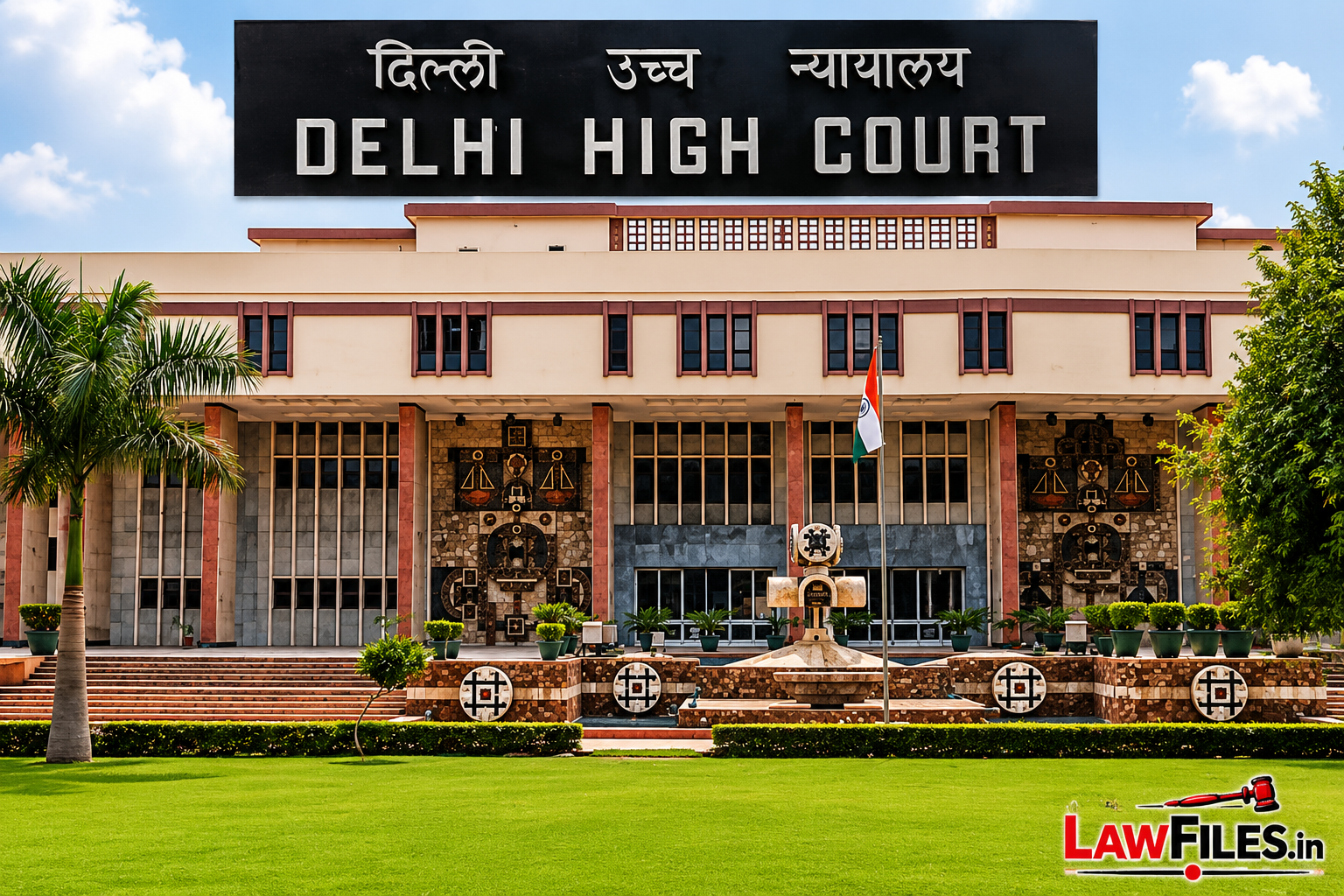
The Delhi High Court has stepped into an increasingly contentious debate surrounding the Central Board of Secondary Education’s (CBSE) On-Screen Marking (OSM) system after issuing notice to the Union Government and CBSE on a petition seeking an independent inquiry into alleged irregularities in the evaluation of Class XII answer sheets. The proceedings have brought into focus a larger question confronting educational institutions across the country: how should transparency and accountability be maintained when critical academic decisions are increasingly driven by technology?
The matter reached the High Court through a petition filed by the National Students’ Union of India (NSUI), which has challenged the functioning of the recently introduced OSM evaluation mechanism. The petition alleges that the digital assessment process resulted in discrepancies affecting student performance and seeks a fresh verification exercise along with an independent investigation into the evaluation methodology. According to the petitioners, the issue is not confined to isolated mistakes but concerns the overall reliability and transparency of a system that directly influences the academic future of thousands of students.
During the hearing, the Delhi High Court considered the concerns raised regarding the evaluation process and sought responses from both CBSE and the Union Government. The issuance of notice does not imply acceptance of the allegations; however, it indicates that the Court found the issues raised substantial enough to warrant examination by the concerned authorities. The matter has been listed for further consideration after responses are filed.
The controversy centres on CBSE’s On-Screen Marking system, a technology-driven mechanism introduced to modernise answer-sheet evaluation. Under this process, answer scripts are digitised and assessed electronically rather than through traditional physical evaluation methods. Educational authorities have often defended digital evaluation systems on the grounds of efficiency, standardisation, reduced logistical burdens, and improved monitoring. The shift towards technology-based assessment is part of a broader effort to modernise examination administration in one of the world’s largest school education systems.
CBSE has strongly opposed the demand for an independent inquiry. According to reports placed before the Court, the Board argued that educational processes should not be subjected to political considerations and maintained that the evaluation framework was designed to ensure fairness and consistency. The Board reportedly contended that attempts to politicise examination systems could undermine public confidence in educational institutions and create unnecessary anxiety among students.
The dispute arrives against the backdrop of widespread public discussion surrounding the implementation of the OSM system. Since the declaration of results, social media platforms, student groups, and educational commentators have debated instances where students allegedly claimed that their evaluated marks did not correspond with expectations or previous academic performance. While individual grievances are common after every major examination cycle, the present litigation seeks to determine whether the concerns reveal systemic shortcomings requiring institutional intervention.
What makes the case particularly significant is that it extends beyond the immediate question of marks and revaluation. At its core lies the issue of algorithmic and technological accountability in public administration. Across sectors ranging from education and healthcare to taxation and governance, digital systems are increasingly being relied upon to make decisions affecting citizens’ rights and opportunities. As a consequence, courts are increasingly being called upon to examine not merely administrative decisions but the technological processes through which those decisions are made.
The High Court’s intervention reflects a broader constitutional concern regarding procedural fairness. Educational evaluation is not merely an academic exercise; it determines access to higher education, scholarships, professional opportunities, and career pathways. Consequently, students are entitled to expect that the process through which their performance is assessed remains transparent, reliable, and capable of independent verification. Any perception of opacity can undermine confidence in the integrity of the examination system itself.
From a legal perspective, the proceedings raise important questions about the scope of judicial review in academic matters. Indian courts have traditionally exercised restraint in interfering with educational policy decisions, recognising the expertise of specialised bodies such as examination boards and universities. At the same time, courts have consistently held that where allegations of arbitrariness, procedural unfairness, or systemic irregularities arise, judicial scrutiny becomes both permissible and necessary.
The case may therefore require the Court to balance two competing considerations. On one hand lies the autonomy of educational institutions to design and administer evaluation systems. On the other lies the constitutional obligation to ensure fairness, transparency, and accountability in processes that affect the rights and futures of students. Striking that balance will likely become central to the adjudication of the dispute.
The controversy also reflects a larger challenge confronting education policymakers worldwide. Technology is increasingly viewed as a solution to scale, consistency, and administrative efficiency. However, technological systems often create new questions relating to transparency, auditability, error correction, and institutional accountability. The legitimacy of digital governance ultimately depends not only on efficiency but also on the ability of affected individuals to understand and challenge outcomes where necessary.
For law students and young professionals interested in education law, administrative law, and public policy, the proceedings offer a valuable case study. The litigation sits at the intersection of constitutional principles, technological governance, educational administration, and judicial review. It demonstrates how seemingly technical disputes concerning examination evaluation can evolve into broader debates about institutional accountability and the rights of students.
The matter is equally important for those studying the future of digital governance. As public institutions increasingly adopt automated and technology-driven systems, courts may be required to develop new principles governing transparency, explainability, and procedural safeguards. The CBSE OSM dispute may ultimately contribute to that emerging jurisprudence.
For now, the Delhi High Court has not expressed any view on the merits of the allegations. The issuance of notice merely initiates the process through which the Court will examine the competing claims. Nevertheless, the proceedings have already succeeded in highlighting a crucial issue: public confidence in educational institutions depends not only on the outcomes they produce but also on the transparency of the processes through which those outcomes are reached.
As the litigation progresses, the case is likely to be closely watched by students, educators, policymakers, and legal observers alike. The eventual outcome may not only determine the future of the OSM controversy but could also shape broader standards of accountability for technology-driven decision-making within India’s education system.
