

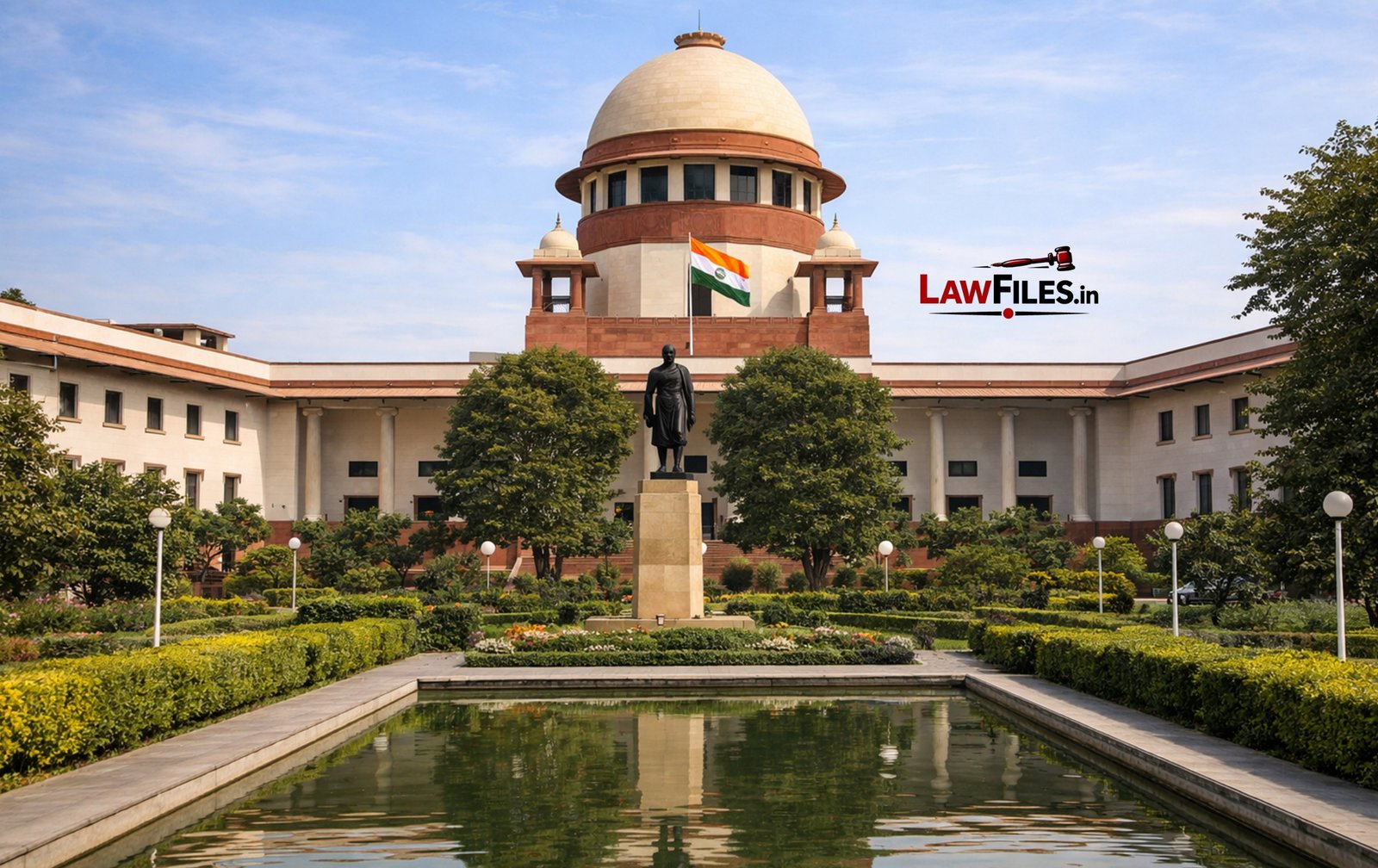
In a significant consolidation of its evolving jurisprudence on hate speech, the Supreme Court of India has closed a batch of long-pending petitions concerning alleged instances of communal and inflammatory speech spanning political rallies, media broadcasts, religious congregations, and digital discourse. The decision, delivered in Ashwini Kumar Upadhyaya v. Union of India and connected matters, reflects a marked judicial reluctance to expand supervisory jurisdiction in an area the Court now considers sufficiently governed by existing statutory frameworks.
The batch of cases covered a wide spectrum of controversies that had, over the years, attracted national attention ranging from the “goli maaro” speeches during the anti-CAA protests, to allegations of Islamophobic narratives such as “Corona Jihad,” to media programming like the “UPSC Jihad” broadcast by Sudarshan News, as well as speeches delivered at the Haridwar “Dharam Sansad” events and remarks attributed to political figures including Nitesh Rane. By disposing of these matters together, the Court effectively brought closure to multiple strands of litigation that had sought judicial intervention in regulating hate speech across platforms.
At the core of the judgment lies a doctrinal assertion: there exists no “legal vacuum” in India’s hate speech regime. The Court declined to issue a continuing mandamus or frame additional guidelines, emphasising that the existing criminal law architecture comprising provisions under the Indian Penal Code/BNSS and procedural safeguards under the Code of Criminal Procedure already provides a “comprehensive and layered mechanism” to address such offences. This position aligns with the Court’s recent broader stance that the regulation of hate speech is primarily a legislative function, not one that warrants judicial law-making.
In examining specific cases, the Court upheld findings that certain controversial speeches did not meet the threshold of a cognisable offence. For instance, in relation to the 2020 campaign speeches by political leaders, the Court endorsed the view that the remarks, while provocative, were not directed against identifiable communities in a manner sufficient to trigger criminal liability or public disorder. This indicates a continued judicial adherence to the “incitement plus proximity” test, wherein mere offensive or hyperbolic speech does not automatically translate into punishable hate speech unless it demonstrably incites violence or disorder.
Equally significant is the Court’s approach to institutional accountability. In petitions concerning the Dharam Sansad events, where calls for violence were alleged, the Court refused to constitute a Special Investigation Team, observing that the grievance lay not in the absence of legal provisions but in deficiencies in enforcement. The judgment underscores that remedies already exist within the legal system such as approaching the police, invoking Section 156(3) CrPC before a Magistrate, or filing private complaints under Section 200 CrPC thereby reinforcing a decentralised enforcement model.
A notable clarification emerging from the ruling is that prior sanction is not required for a Magistrate to order registration of an FIR under Section 156(3) CrPC. This clarification strengthens procedural access for complainants, ensuring that allegations of hate speech are not stifled at the threshold due to technical barriers. At the same time, the Court balanced this by refusing to entertain petitions where the petitioners had not first exhausted statutory remedies, signalling a preference for procedural discipline over direct constitutional intervention.
The Court also dismissed challenges relating to media narratives around the Tablighi Jamaat congregation during the COVID-19 pandemic, where allegations of communal vilification were raised. It held that the issues had either been adequately addressed by lower courts or did not warrant further adjudication at the apex level. Similarly, petitions targeting the “UPSC Jihad” programme earlier restrained by interim judicial orders were disposed of, indicating that the Court does not intend to maintain prolonged oversight over such matters once statutory remedies are available.
From a constitutional standpoint, the judgment reflects a recalibration of the balance between freedom of speech under Article 19(1)(a) and restrictions imposed in the interest of public order under Article 19(2). Indian hate speech law has historically oscillated between expansive protection of expression and the need to curb communal incitement. The present decision signals a consolidation of the Court’s view that existing legal thresholds particularly those requiring intent and likelihood of public disorder remain adequate.
Critically analysed, the ruling reveals a broader institutional philosophy: the Supreme Court is consciously retreating from the role of a centralised monitor of hate speech across the country. This is consistent with its earlier observations that it cannot supervise every instance of alleged hate speech nationwide and that such grievances must ordinarily be addressed through local legal mechanisms. The Court appears to be drawing a line between constitutional adjudication and administrative enforcement, resisting the transformation of PILs into tools for continuous judicial governance.
However, this approach is not without its tensions. While the Court emphasises sufficiency of law, it simultaneously acknowledges enforcement deficits an admission that raises concerns about the practical efficacy of existing remedies. By declining to issue structural directions, the Court places the burden of reform squarely on the executive and investigative machinery, which has historically been criticised for inconsistency in handling hate speech complaints.
In conclusion, the Supreme Court’s decision to close the hate speech batch marks a decisive shift from activist oversight to institutional restraint. It affirms that the challenge lies not in the absence of legal norms but in their uneven application. The judgment thus reframes the discourse: from demanding new legal frameworks to ensuring faithful enforcement of existing ones. Whether this recalibrated approach will effectively address the complex realities of hate speech in a deeply plural society remains an open and pressing constitutional question.
