


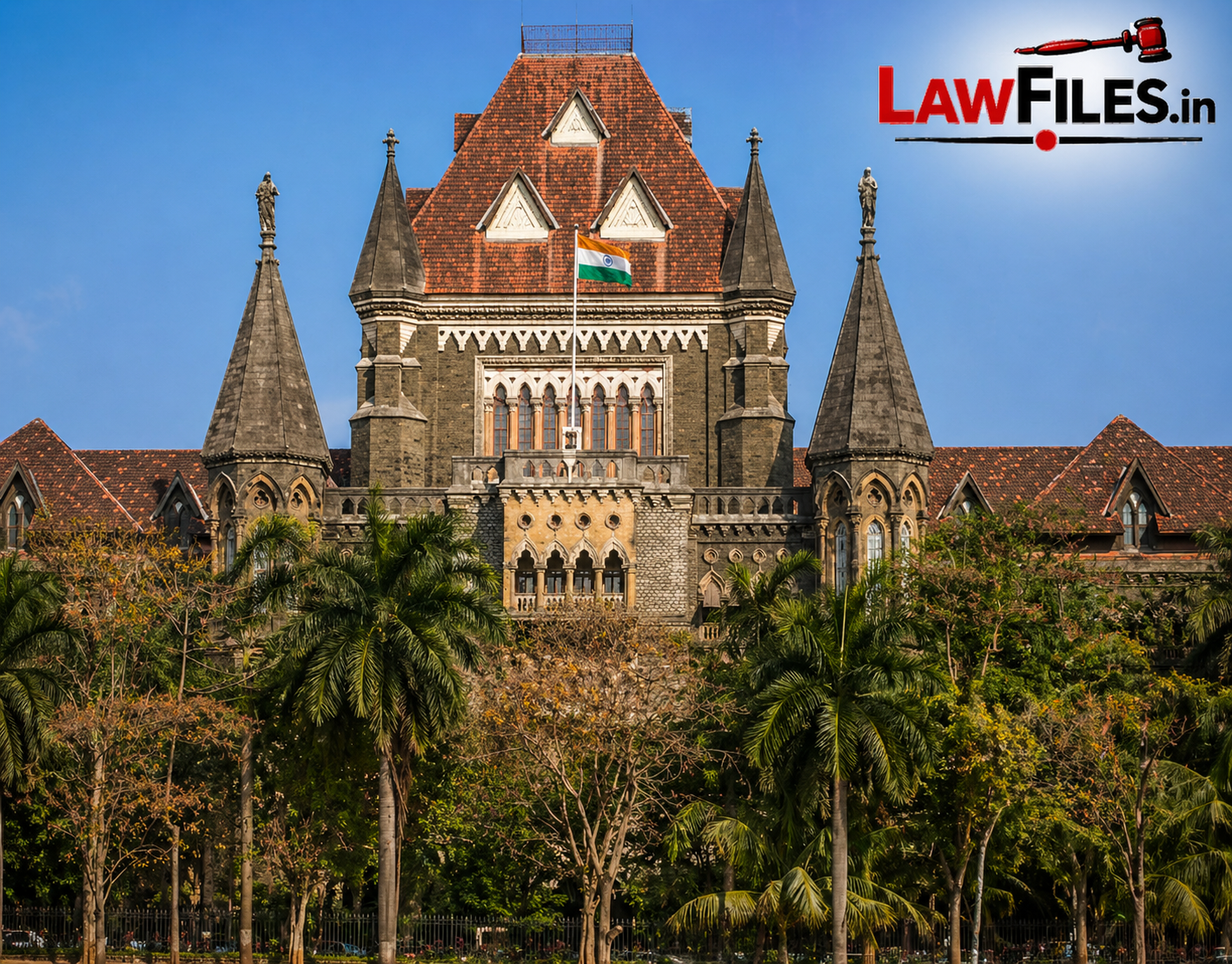
A significant constitutional question concerning minority reservations has resurfaced before the Bombay High Court, where the State of Maharashtra has taken a firm stand that the 5% Muslim reservation introduced in 2014 was never “scrapped” in law, but had in fact lapsed the very same year. This position, articulated through an affidavit in response to a writ petition, reframes the legal controversy from one of executive withdrawal to one of statutory non-existence.
At the centre of the dispute lies a 2026 Government Resolution (GR) challenged by a petitioner who alleges that the State arbitrarily abolished a constitutionally valid reservation benefiting certain Muslim communities. The petitioner characterises the move as discriminatory and violative of fundamental rights. However, the State’s response fundamentally contests this premise, arguing that no enforceable right survives because the 2014 ordinance itself ceased to exist upon lapse and was never converted into legislation.
The State has clarified that the original ordinance promulgated in July 2014 introduced a 5% quota for approximately 50 identified Muslim sub-groups under a Special Backward Category. Yet, in December 2014, following a change in government, the ordinance lapsed due to non-enactment into a statute, rendering all enabling government resolutions and administrative circulars legally ineffective. This lapse, the State argues, extinguished any legal continuity of the quota, thereby negating the petitioner’s claim that a subsisting benefit has been withdrawn.
This position is doctrinally significant. Under Indian constitutional practice, an ordinance being a temporary legislative instrument under Article 213 must be ratified by the legislature within a stipulated period. Failure to do so results in automatic cessation. The State’s argument therefore rests on a formalist interpretation: that rights flowing from a lapsed ordinance cannot crystallise into enforceable entitlements. In effect, the controversy shifts from “withdrawal of reservation” to “absence of legal foundation.”
However, the issue is not devoid of complexity. Historical judicial developments complicate the narrative. In 2014, while examining challenges to the quota, the High Court had struck down the Maratha reservation but allowed the Muslim quota in educational institutions at an interim stage, recognising prima facie material indicating backwardness among specified communities. This partial judicial endorsement lends weight to the petitioner’s argument that the quota was not per se unconstitutional, even if procedurally short-lived.
The State, nevertheless, has emphasised a critical constitutional limitation that reservation cannot be granted solely on religious identity. It maintains that the original framework was not religion-based in a strict sense, as it targeted specific backward sub-groups, yet underscores that no present legal regime exists to sustain such classification. This distinction becomes crucial in light of Articles 15 and 16, which prohibit discrimination on religious grounds while permitting affirmative action for socially and educationally backward classes.
Another key aspect of the State’s defence is its assertion that the 2026 GR merely revokes “redundant” administrative instruments circulars and resolutions that had already lost efficacy with the lapse of the ordinance. Thus, the GR is portrayed not as a substantive policy decision, but as a formal administrative clean-up. If accepted, this interpretation would significantly narrow the scope of judicial review, as courts are generally reluctant to intervene where no substantive right is demonstrably infringed.
Yet, from a constitutional perspective, the case raises deeper normative concerns. The petitioner’s grievance is not merely technical but structural questioning whether the State can, through inaction (failure to legislate), effectively nullify a policy addressing socio-economic backwardness. This brings into focus the tension between legislative discretion and the State’s obligation to promote substantive equality under Article 14 and the broader equality code.
Moreover, the dispute highlights the persistent ambiguity surrounding religion-linked affirmative action in India. While courts have repeatedly held that reservation cannot be religion-specific, they have also accepted that communities identified through religion may qualify as backward classes based on empirical data. The 2014 framework attempted to navigate this fine line, but its legislative fragility ultimately undermined its longevity.
In analytical terms, the proceedings before the Bombay High Court may turn less on ideological questions of minority rights and more on the jurisprudence of legislative lapse and enforceability. If the Court accepts the State’s argument, it would reinforce a strict doctrinal position: that rights contingent on temporary executive legislation cannot survive its expiration. Conversely, a more expansive reading could open the door to examining whether the State’s subsequent actions or omissions carry constitutional consequences.
Ultimately, the case underscores a recurring feature of Indian reservation law: its dependence on procedural robustness as much as substantive justification. The fate of the Muslim quota in Maharashtra illustrates how even a policy with judicially acknowledged empirical backing can dissolve in the absence of legislative continuity. As the High Court adjudicates the matter, its ruling may have broader implications—not only for minority reservations, but for the stability and durability of affirmative action frameworks within India’s constitutional scheme.
