


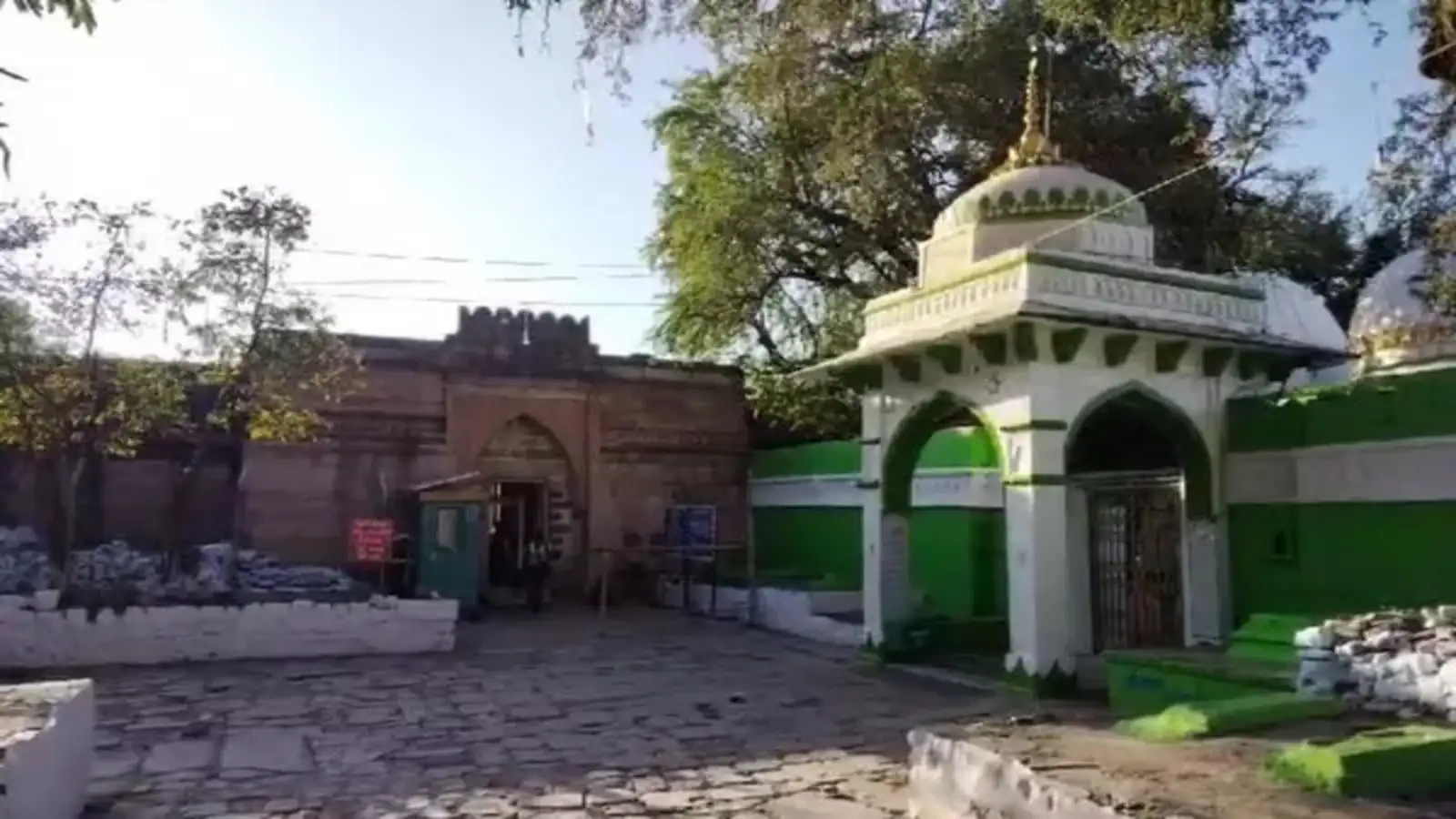
In a judgment likely to shape the future discourse on contested religious sites in India, the Madhya Pradesh High Court has ruled that the Bhojshala complex in Dhar is fundamentally a temple dedicated to Goddess Saraswati, while also observing that members of the Muslim community may seek alternative land for construction of a mosque. The verdict has immediately assumed national significance because it touches upon deeply sensitive questions involving history, archaeology, faith, constitutional secularism, and competing civilizational claims.
The decision was delivered after prolonged hearings concerning the Bhojshala Kamal Maula complex, a site that has remained at the centre of religious and historical contestation for decades. The dispute revolved around whether the structure was originally a Hindu temple later converted into a mosque or whether it possessed an independent Islamic identity through centuries of continuous usage. The High Court examined archaeological material, historical records, architectural features, inscriptions, and findings from a detailed survey conducted by the Archaeological Survey of India (ASI) before arriving at its conclusion.
For years, the Bhojshala complex functioned under an unusual arrangement permitting Hindus to offer prayers on Tuesdays and Muslims to conduct namaz on Fridays. Although this formula was intended to maintain communal balance, tensions repeatedly surfaced, particularly when major Hindu and Muslim religious observances coincided on the same day. Over time, the arrangement itself became symbolic of India’s larger struggle to manage overlapping religious histories within a constitutional framework committed both to secularism and freedom of religion.
The Court’s ruling followed an extensive ASI survey ordered earlier by the High Court itself. The scientific investigation reportedly involved excavation, mapping, architectural analysis, and examination of structural remains inside the complex. According to arguments presented during the proceedings, the survey indicated the presence of temple-style pillars, carvings, inscriptions, and remnants associated with pre-Islamic architecture dating back to the Paramara dynasty. Hindu petitioners argued that these findings demonstrated the existence of a Saraswati temple established during the reign of King Bhoja, from whom the site allegedly derives its historical and cultural significance.
Muslim parties opposing the petition maintained that the Kamal Maula Mosque had existed at the site for centuries and argued that long-standing usage and historical continuity could not be disregarded merely through archaeological reinterpretation. They also questioned portions of the ASI findings and contended that historical transformations of religious spaces across centuries cannot automatically invalidate present-day rights and practices.
The verdict is likely to invite comparison with the Ayodhya judgment because both disputes involved judicial assessment of archaeology, history, and religious belief in determining the legal character of contested sites. However, unlike Ayodhya, the Bhojshala matter evolved around a monument that had continued under a shared-access arrangement rather than complete exclusive possession by one side. This distinction makes the present ruling particularly significant because it effectively alters a long-standing administrative compromise that attempted to preserve dual usage.
From a constitutional perspective, the judgment raises difficult questions concerning the judiciary’s role in adjudicating historical religious disputes. Indian courts are increasingly being called upon not merely to resolve contemporary legal controversies but also to interpret centuries-old historical narratives through evidence produced by archaeology, colonial records, and competing religious traditions. Such adjudication places enormous institutional responsibility upon courts because legal outcomes inevitably influence social memory, identity politics, and communal relations.
The ruling also revives national discussion surrounding the Places of Worship (Special Provisions) Act, 1991, which was enacted to preserve the religious character of places of worship as they existed on August 15, 1947. Although the Bhojshala litigation occupies a somewhat distinct legal position owing to ongoing historical disputes and ASI control over the monument, the case nonetheless enters broader constitutional debates concerning whether historical religious transformations can or should be judicially revisited.
Critically examined, the judgment reflects a growing trend in Indian constitutional litigation where archaeology is increasingly treated as determinative legal evidence in matters involving faith and sacred geography. Scientific surveys and excavation reports now occupy central positions in courtroom arguments concerning religious identity of monuments. However, archaeology itself is not always politically neutral or historically conclusive. Interpretation of material remains often varies among historians and experts, making judicial reliance upon archaeological findings both powerful and controversial.
The dispute additionally highlights the tension between constitutional secularism and historical restitution. One school of thought argues that courts must acknowledge and rectify historical destruction or transformation of religious structures where credible evidence exists. Another view warns that reopening centuries-old disputes risks destabilising constitutional commitments to communal peace and equal citizenship in a plural democracy. The Bhojshala verdict inevitably intensifies this ideological and constitutional debate.
The High Court’s observation permitting the Muslim community to seek alternative land for mosque construction appears intended to soften communal repercussions while balancing competing sensitivities. Such judicial balancing reflects an emerging pattern visible in sensitive religious disputes, where courts attempt to combine legal finality with accommodative remedies aimed at preserving social stability.
The ruling also carries substantial political implications. Religious site litigations in India rarely remain confined to legal reasoning; they often become intertwined with electoral narratives, identity mobilisation, and broader ideological debates concerning cultural heritage and civilisational memory. Consequently, the Bhojshala verdict is likely to influence not only future litigation but also political discourse surrounding temple restoration movements and historical claims over disputed religious spaces.
At a deeper level, the case demonstrates the continuing difficulty of managing layered histories within a constitutional democracy. India’s historical landscape contains countless sites shaped by conquest, coexistence, adaptation, and transformation over centuries. Courts today are increasingly required to decide how modern constitutional law should engage with those layered and often painful histories. The Bhojshala litigation represents one such moment where law, religion, archaeology, and politics converge in unusually complex ways.
The judgment further exposes the limitations of administrative compromises in deeply symbolic disputes. The earlier arrangement permitting prayers by both communities on different days may have preserved temporary peace, but it failed to produce lasting resolution because each side continued asserting exclusive historical ownership over the site. The High Court’s verdict therefore attempts to replace negotiated coexistence with judicial finality, though whether such finality ultimately produces durable social peace remains uncertain.
Importantly, the verdict is expected to face further legal scrutiny and may eventually travel to the Supreme Court, especially given the larger constitutional questions it raises concerning religious freedom, historical evidence, and protection of disputed places of worship. The matter is therefore unlikely to conclude merely with the High Court’s ruling.
Ultimately, the Madhya Pradesh High Court’s Bhojshala decision represents far more than adjudication of a property or worship dispute. It reflects the expanding role of constitutional courts in interpreting India’s contested historical consciousness. Whether viewed as restoration of a civilisational claim or as a legally contentious reinterpretation of shared heritage, the judgment has once again placed difficult questions of history, faith, and constitutional identity at the centre of India’s democratic and judicial discourse.
