


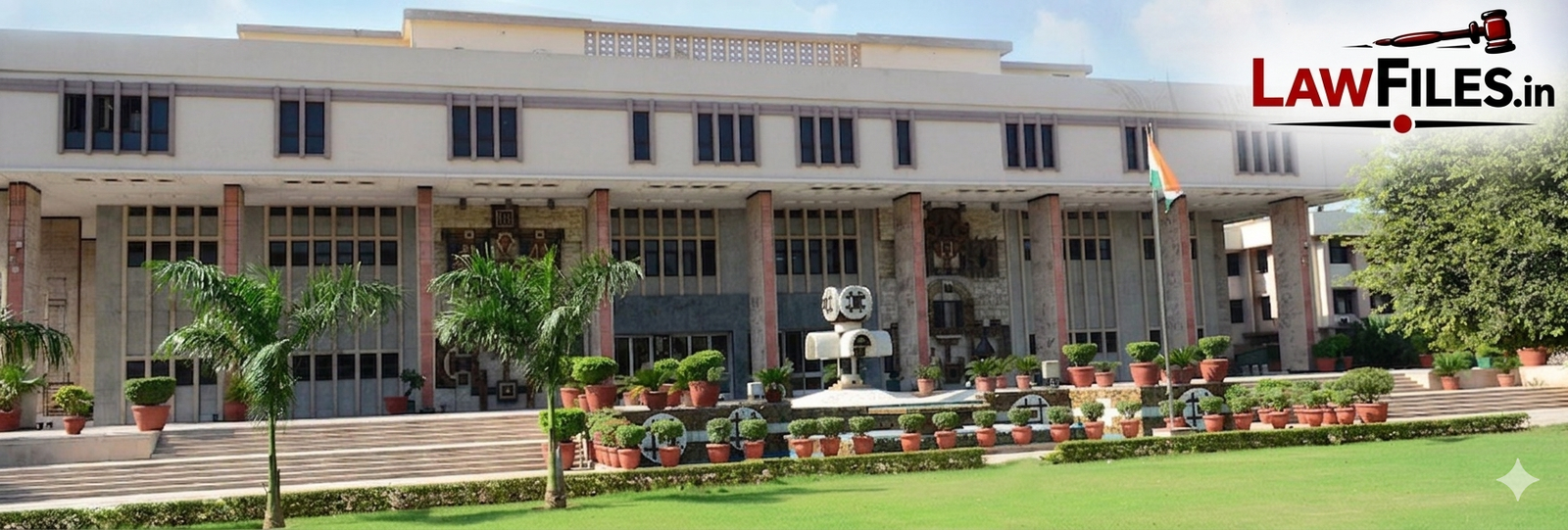
In a development that raises serious questions about the sanctity of court proceedings in the digital age, the Delhi High Court has taken cognisance of a Public Interest Litigation seeking contempt action against Arvind Kejriwal and others for allegedly recording and circulating videos of an in-camera judicial proceeding. The case has triggered a broader legal debate on the limits of transparency, the legality of recording court proceedings, and the potential misuse of digital platforms in high-profile litigation.
The PIL, filed by an advocate, alleges that videos of proceedings before Justice Swarana Kanta Sharma particularly relating to the recusal plea in the Delhi excise policy case were recorded without authorisation and subsequently circulated on social media. The plea contends that such acts undermine the dignity of the court and amount to interference with the administration of justice, thereby attracting contempt jurisdiction.
Taking note of the seriousness of the allegations, the High Court directed the immediate takedown of social media posts containing such videos and issued notice on the contempt plea. The Court’s intervention reflects an institutional concern that unauthorised dissemination of courtroom proceedings can distort public perception, particularly in politically sensitive matters.
At the heart of the controversy lies the legal status of recording and sharing court proceedings. While Indian courts have, in recent years, moved toward greater transparency including live-streaming of constitutional matters this transparency is strictly regulated and subject to judicial control. Unauthorized recording or selective dissemination of proceedings falls outside this framework and may violate both procedural rules and contempt law principles.
The PIL raises an important doctrinal issue: whether such acts constitute criminal contempt under the Contempt of Courts Act, 1971. Criminal contempt includes acts that scandalise or lower the authority of the court, or interfere with judicial proceedings. The petitioner has argued that selective circulation of courtroom clips especially in politically charged contexts can mislead the public and erode confidence in the judiciary.
From a constitutional perspective, the issue sits at the intersection of freedom of speech under Article 19(1)(a) and the need to preserve the authority and impartiality of courts. While free speech protects dissemination of information, it is subject to reasonable restrictions, including contempt of court. The present case highlights the delicate balance between these competing constitutional values in an era where digital content can be rapidly amplified.
The matter also reflects a growing trend where judicial proceedings are increasingly drawn into the realm of political communication. The circulation of court videos, particularly in ongoing cases, risks transforming judicial processes into tools of public narrative-building. The Court’s response suggests a clear attempt to draw boundaries ensuring that while courts remain transparent, they are not subjected to parallel trials in the court of public opinion.
Analytically, the case underscores a broader institutional concern: the digitisation of legal processes without corresponding safeguards can create vulnerabilities. Unlike official live-streaming, which is structured and contextual, unauthorised recordings can be edited, framed, and disseminated in ways that distort judicial reasoning. This raises questions not only about legality but also about the ethics of engaging with judicial processes in a digital environment.
The High Court’s direction for takedown and issuance of notice also signals that courts are willing to act swiftly to protect their institutional integrity. By treating the matter seriously at a preliminary stage, the Court has reinforced that contempt jurisdiction remains a vital tool to prevent erosion of judicial authority.
Importantly, the case also reflects a tension between transparency and control in judicial functioning. While there is increasing demand for open courts and public access to proceedings, this openness must operate within a regulated framework. The present controversy demonstrates that unregulated transparency can, paradoxically, undermine the very fairness and credibility it seeks to promote.
In conclusion, the Delhi High Court’s engagement with the contempt plea marks a critical moment in the evolving relationship between courts and digital media. As judicial proceedings become more visible, the need to protect their integrity becomes equally pressing. The case will likely shape future jurisprudence on how far litigants and third parties can engage with courtroom content and where the line must be drawn to preserve the authority of the judicial process.
