

Close Menu
LawFilesLawFiles

    Subscribe to Updates

    Get the latest creative news from FooBar about art, design and business.

    What's Hot

    Supreme Court Suggests Reconsidering Colonial-Era Rule Under Section 306 of Succession Act: Should Civil Liability Die With the Wrongdoer?

    May 20, 2026

    Massive Expansion for Madras High Court: Supreme Court Collegium Recommends 19 New Judges Amid Growing Judicial Backlog

    May 20, 2026

    Supreme Court Clarifies Limits of Reassessment Under Income Tax Act: ‘Reason to Believe’ Cannot Become a Tool for Endless Tax Scrutiny

    May 18, 2026
    Facebook X (Twitter) Instagram Threads
    Wednesday, May 20
    LawFilesLawFiles
    Facebook X (Twitter)
    • Home
      • Who We Are
      • Our Mission
      • Advisory board
      • Contact US
    • Supreme Court
    • High Courts
      • Gujarat High Court
      • Jharkhand High Court
      • Rajasthan High Court
      • Karnataka High Court
      • Andhra Pradesh High Court
      • Allahabad High Court
      • Himachal Pradesh High Court
      • Chhattisgarh High Court
      • Jammu & Kashmir and Ladakh High Court
      • Kerala High Court
      • Punjab and Haryana High Court
      • Patna High Court
      • Madhya Pradesh High Court
      • Madras High Court
      • Bombay High Court
      • Orissa High Court
      • Calcutta High Court
      • Meghalaya High Court
      • Delhi High Court
      • Manipur High Court
      • Gauhati High Court
    • Corporate
    • Taxation Laws
      • Income Tax
      • GST
      • Customs & Excise
    • Global Affairs
    • Articles
      • Sitting Judge’s’ Views
      • Senior Advocate
      • Policy Analysis
      • Tax Expert
    • PILS
      • Free/Affordable Legal Aid
      • PIL Cell
      • Law student Volunteer Cell (research & Drafting)
      • NGO & Legal services Authority Tie-ups
      • Online Legal Formats
      • Online Legal Help Form
    Subscribe Premium
    LawFilesLawFiles
    Home»High Courts»Forensic Truth and Constitutional Accountability: Supreme Court Tightens Scrutiny in Manipur Audio Tape Controversy
    High Courts

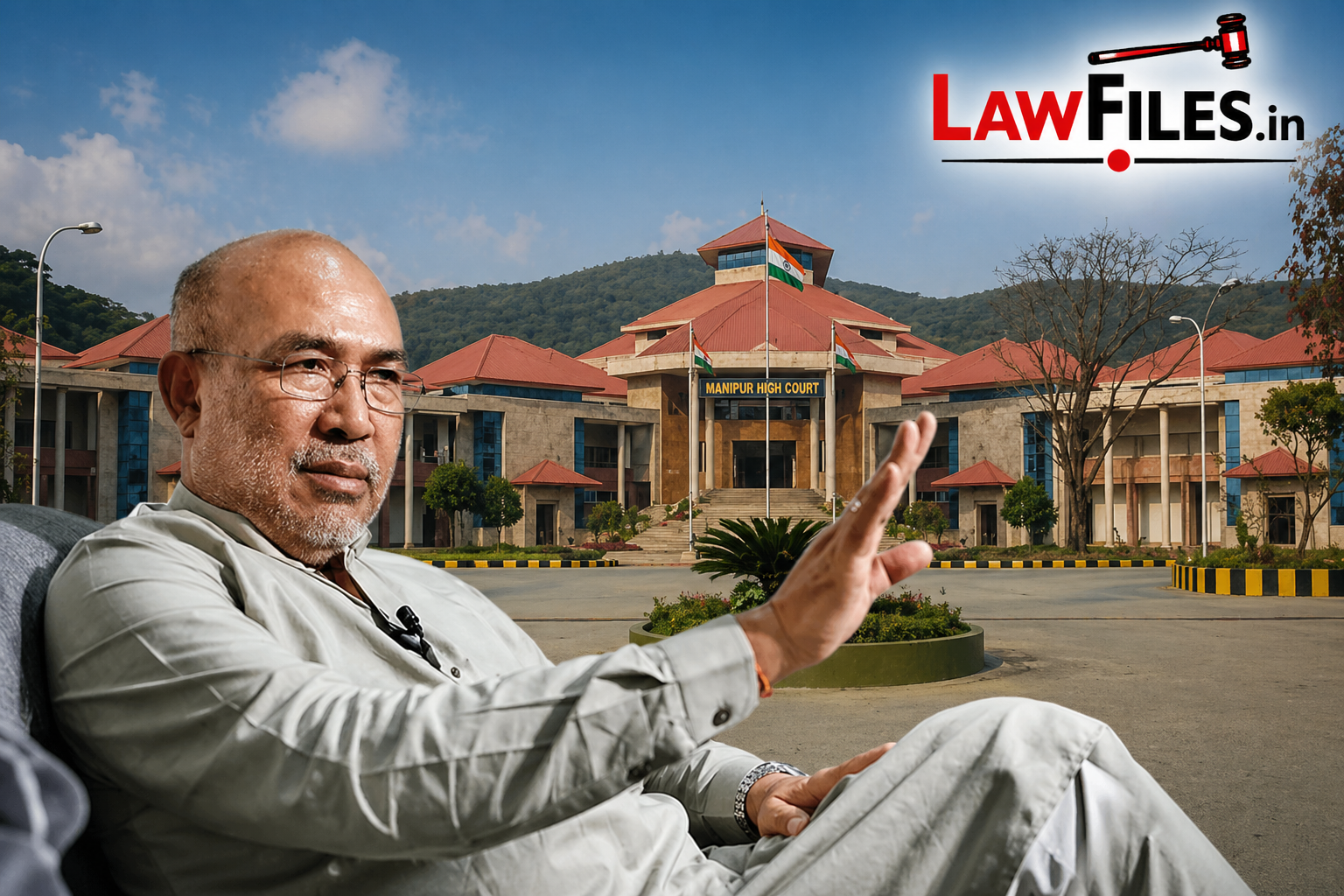
    Forensic Truth and Constitutional Accountability: Supreme Court Tightens Scrutiny in Manipur Audio Tape Controversy

    Anvita DwivediBy Anvita DwivediApril 30, 2026No Comments4 Mins Read
    WhatsApp Facebook Twitter Copy Link
    Share
    Facebook Twitter Pinterest Copy Link WhatsApp

    The Supreme Court’s latest direction in the ongoing Manipur violence litigation seeking a “first-generation” copy of an alleged audio recording implicating former Chief Minister N. Biren Singh marks a decisive shift toward evidentiary rigor in one of the most politically sensitive cases arising from the ethnic conflict in the State. The order, requiring the whistleblower to furnish original audio material for forensic examination, underscores the Court’s insistence on authenticity before any legal or constitutional conclusions are drawn.

    At the core of the controversy lies an audio recording that allegedly captures conversations suggesting the involvement of political leadership in the 2023 ethnic violence between Meitei and Kuki-Zo communities. The whistleblower has now agreed to submit the original recordings, while the Court has also directed the State to provide admitted voice samples for comparison indicating a move toward a controlled, scientific verification process. This procedural insistence reflects a broader judicial concern: that allegations of such gravity must rest on unimpeachable evidentiary foundations.

    The case has been marked by persistent forensic uncertainty. Earlier reports submitted by government laboratories were found inconclusive, with indications of possible tampering rendering the audio unsuitable for definitive voice matching. The Court’s dissatisfaction with these findings had already prompted calls for fresh forensic analysis, revealing a pattern of judicial skepticism toward incomplete or unreliable expert evidence. This latest direction, therefore, is not an isolated step but part of an evolving judicial effort to secure credible proof in a politically charged environment.

    From a constitutional standpoint, the proceedings engage fundamental questions of accountability and due process. The allegations if substantiated could potentially implicate state actors in orchestrating or enabling large-scale violence, thereby raising issues under Articles 14 and 21 of the Constitution. Yet, the Court has consciously refrained from drawing premature inferences, instead privileging procedural integrity over immediate adjudication. This approach reflects a core judicial principle: that constitutional accountability must be anchored in verifiable fact, not speculative assertion.

    The controversy surrounding the “Manipur tapes” itself is emblematic of the challenges posed by digital evidence in contemporary litigation. While private forensic assessments had earlier claimed a high probability of voice identification, the State questioned their credibility, emphasising the need for examination by accredited government laboratories. This divergence highlights a growing tension in Indian evidence law between privately generated expert reports and institutional forensic mechanisms, particularly in cases with high political stakes.

    Equally significant is the Court’s broader institutional posture. Over the course of the proceedings, it has repeatedly emphasised the need for a complete and unfragmented evidentiary record, even questioning why only partial audio clips were previously subjected to forensic scrutiny. This insistence on completeness reflects an awareness that selective evidence can distort both judicial reasoning and public perception.

    Analytically, the Court’s direction signals a shift from reactive adjudication to proactive evidentiary control. By demanding a “first-generation” recording essentially the original, unaltered source the Court seeks to eliminate layers of manipulation that often plague digital evidence. In doing so, it aligns with global best practices in forensic science, where chain of custody and data integrity are central to evidentiary reliability.

    At a deeper level, the case illustrates the complex intersection of law, technology, and politics. The alleged recordings do not merely concern individual culpability; they engage with broader narratives of state responsibility during the Manipur conflict, which has already drawn scrutiny from human rights bodies and judicial forums alike. The Court’s cautious yet firm approach suggests an awareness of the far-reaching implications of its eventual findings not only for criminal liability but for the constitutional legitimacy of state action.

    Critically, the proceedings also reaffirm the judiciary’s role as a neutral arbiter in politically volatile disputes. By focusing on forensic verification rather than rhetorical claims, the Court distances itself from partisan narratives, reinforcing its institutional credibility. At the same time, its persistent engagement with the matter signals that allegations of grave constitutional violations will not be allowed to dissipate in procedural ambiguity.

    In conclusion, the Supreme Court’s latest order represents more than a technical directive, it is a reaffirmation of evidentiary discipline in the pursuit of constitutional truth. As the forensic process unfolds, the case is poised to become a defining moment in India’s jurisprudence on digital evidence, state accountability, and the judicial management of politically sensitive litigation.


    Forensic Truth and Constitutional Accountability: Supreme Court Tightens Scrutiny in Manipur Audio Tape Controversy
    Share. WhatsApp Facebook Twitter Pinterest Email
    Anvita Dwivedi

    Related Posts

    Supreme Court Suggests Reconsidering Colonial-Era Rule Under Section 306 of Succession Act: Should Civil Liability Die With the Wrongdoer?

    May 20, 2026

    Massive Expansion for Madras High Court: Supreme Court Collegium Recommends 19 New Judges Amid Growing Judicial Backlog

    May 20, 2026

    Supreme Court Clarifies Limits of Reassessment Under Income Tax Act: ‘Reason to Believe’ Cannot Become a Tool for Endless Tax Scrutiny

    May 18, 2026
    Add A Comment
    Leave A Reply Cancel Reply

    Demo
    Top Posts

    Wrongful Claim Rejection Amounts to Deficiency in Service: Delhi Consumer Commission Holds Star Health Liable

    March 16, 202667 Views

    Bombay High Court Quashes POCSO Case, Directs Accused to Fund MacBook for Victim’s Education

    February 28, 202650 Views

    Siyahat Meri Syahi Se: A Journey That Transforms Travel into Thought and Entrepreneurship

    March 18, 202641 Views

    Supreme Court Notice on Muslim Personal Law: Reopening the Constitutional Debate on Gender Equality and Faith

    April 16, 202624 Views
    Don't Miss

    Supreme Court Suggests Reconsidering Colonial-Era Rule Under Section 306 of Succession Act: Should Civil Liability Die With the Wrongdoer?

    By Anvita DwivediMay 20, 2026

    In a legally significant and intellectually consequential observation, the Supreme Court has recommended that the…

    Massive Expansion for Madras High Court: Supreme Court Collegium Recommends 19 New Judges Amid Growing Judicial Backlog

    May 20, 2026

    Supreme Court Clarifies Limits of Reassessment Under Income Tax Act: ‘Reason to Believe’ Cannot Become a Tool for Endless Tax Scrutiny

    May 18, 2026

    Supreme Court Says Tenant’s Defence Cannot Be Struck Off Without Determining Whether Rent Default Was Wilful

    May 18, 2026
    Stay In Touch
    • Facebook
    • Twitter

    Subscribe to Updates

    Get the latest creative news from SmartMag about art & design.

    Top Posts

    Wrongful Claim Rejection Amounts to Deficiency in Service: Delhi Consumer Commission Holds Star Health Liable

    March 16, 202667 Views

    Bombay High Court Quashes POCSO Case, Directs Accused to Fund MacBook for Victim’s Education

    February 28, 202650 Views

    Siyahat Meri Syahi Se: A Journey That Transforms Travel into Thought and Entrepreneurship

    March 18, 202641 Views
    Don't Miss

    Supreme Court Suggests Reconsidering Colonial-Era Rule Under Section 306 of Succession Act: Should Civil Liability Die With the Wrongdoer?

    By Anvita DwivediMay 20, 2026

    In a legally significant and intellectually consequential observation, the Supreme Court has recommended that the…

    Massive Expansion for Madras High Court: Supreme Court Collegium Recommends 19 New Judges Amid Growing Judicial Backlog

    May 20, 2026

    Supreme Court Clarifies Limits of Reassessment Under Income Tax Act: ‘Reason to Believe’ Cannot Become a Tool for Endless Tax Scrutiny

    May 18, 2026

    Supreme Court Says Tenant’s Defence Cannot Be Struck Off Without Determining Whether Rent Default Was Wilful

    May 18, 2026
    Stay In Touch
    • Facebook
    • YouTube
    • TikTok
    • Instagram
    Top Trending
    About Us
    About Us

    LawFiles.in is a comprehensive legal news platform delivering real-time updates from the Supreme Court, High Courts, Tribunals, Corporate and Tax law, Regulators, Politics, Crime, Consumer cases, and Global Affairs.

    Email Us: lawfilesoffical@gmail.com
    Contact: +91 8800026066

    Contact Us:
    India International Centre
    40, Max Mueller Marg
    Lodhi Estate, New Delhi-110003

    Facebook X (Twitter)
    Our Picks

    Supreme Court Suggests Reconsidering Colonial-Era Rule Under Section 306 of Succession Act: Should Civil Liability Die With the Wrongdoer?

    May 20, 2026

    Massive Expansion for Madras High Court: Supreme Court Collegium Recommends 19 New Judges Amid Growing Judicial Backlog

    May 20, 2026

    Supreme Court Clarifies Limits of Reassessment Under Income Tax Act: ‘Reason to Believe’ Cannot Become a Tool for Endless Tax Scrutiny

    May 18, 2026

    Supreme Court Says Tenant’s Defence Cannot Be Struck Off Without Determining Whether Rent Default Was Wilful

    May 18, 2026

    Bartering the Girl Child: The Rajasthan High Court’s Decisive Strike Against ‘Atta-Satta’ Marriages

    May 18, 2026
    Most Popular

    ED Can Arrest Even If FIRs Are Added to ECIR Later: Punjab & Haryana High Court

    January 30, 20260 Views

    Non-Disclosure Of QCBS Criteria In Tender Alone Not Enough To Allege Malafides: Gauhati High Court

    January 31, 20260 Views

    January 2026 Monthly Digest: Important Rulings of the Jammu & Kashmir and Ladakh High Court

    February 2, 20260 Views

    Custodial Death and State Liability : A Critical Analysis of the Allahabad High Court’s ₹10 Lakh Compensation Judgment

    February 22, 20260 Views

    SC Reopens Debate on 3-Year Practice Rule for Judicial Service

    February 22, 20260 Views
    © 2026 LawFiles. Owned by Varta24 Media.
    • Articles
    • Careers
    • Corporate
    • Global Affairs
    • Law Firms & Lawyers
    • PILS
    • Regulatory

    Type above and press Enter to search. Press Esc to cancel.