


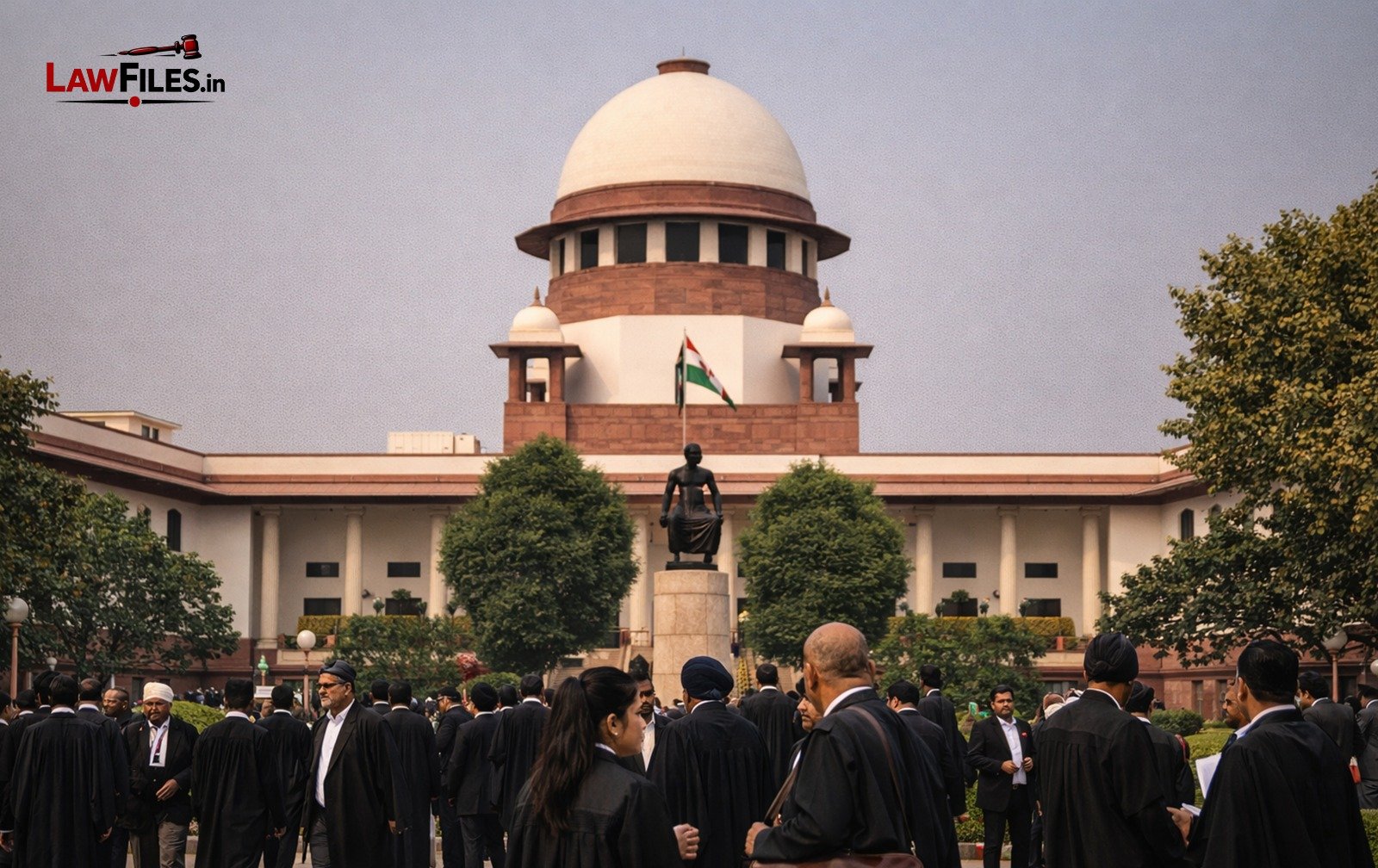
In a significant ruling that reshapes the contours of medical negligence litigation, the Supreme Court of India has held that legal heirs of a deceased doctor can be impleaded in proceedings under the Consumer Protection Act. At the same time, the Court introduced a crucial limitation such liability is confined strictly to the extent of the estate inherited from the deceased, and does not extend to the personal assets of the heirs. The decision clarifies an important gap in law, particularly in cases where prolonged litigation outlives the medical practitioner against whom negligence is alleged.
The judgment resolves a long-standing legal question as to whether a cause of action in medical negligence survives the death of the doctor. The Court answered this in the affirmative, holding that consumer complaints do not abate merely due to the death of the alleged wrongdoer. Drawing from principles underlying Section 306 of the Indian Succession Act, the Court reiterated that pecuniary claims especially those involving compensation survive against the estate of the deceased. This doctrinal clarification ensures that legal accountability is not defeated by the mere passage of time or the death of a party.
A critical distinction drawn by the Court is between personal liability and representative liability. Legal heirs, the Court emphasised, are not to be treated as wrongdoers themselves but only as representatives of the estate. Their liability is therefore limited to what they have inherited and cannot extend to their personal wealth. This approach preserves fairness in adjudication, preventing unjust enrichment of heirs while simultaneously ensuring that they are not burdened with liabilities beyond their legal inheritance.
The ruling also reinforces the broad framework of consumer protection law, under which medical services fall within the ambit of “services.” By allowing substitution of legal heirs, the Court ensures continuity of proceedings, particularly in cases that are delayed due to systemic factors rather than litigant conduct. In many medical negligence disputes, proceedings extend over years or even decades, and the judgment prevents such delays from extinguishing valid claims.
An analytically important aspect of the ruling is the implicit two-stage approach it adopts. First, the court must determine whether medical negligence is established on merits. Only thereafter does the question of recovery arise, which is limited to the estate of the deceased. This structure ensures that liability is not presumed merely because heirs are impleaded, but is grounded in substantive proof.
From a critical perspective, the ruling advances a victim-centric approach to justice by ensuring that claims do not lapse due to the death of the doctor. At the same time, it recognises the practical limitation that recovery may be constrained where the estate is insufficient. While this may result in partial compensation in certain cases, the Court appears to have struck a balance between ensuring accountability and avoiding undue hardship to individuals who were not directly responsible for the alleged negligence.
The decision also harmonises consumer law with procedural principles governing substitution of parties. By affirming that the “right to sue survives,” it aligns with established civil procedure norms and ensures that procedural technicalities do not defeat substantive justice. This is particularly relevant in a legal system where delays are often structural rather than exceptional.
In broader terms, the ruling is likely to have implications for medical professionals, hospitals, and insurers. It reinforces the importance of indemnity planning and risk management, as liability may extend beyond the lifetime of the practitioner through the estate. For patients and their families, the judgment offers assurance that the pursuit of justice will not be rendered futile by circumstances beyond their control.
Ultimately, the decision reflects a careful balancing of competing legal principles. It affirms that liability, especially in cases involving compensation, does not extinguish with death, but at the same time cannot be extended beyond the legal limits of inheritance. In doing so, the Court strengthens the framework of accountability within consumer law while preserving the foundational principle that personal liability cannot be imposed where there is no personal wrongdoing.
