


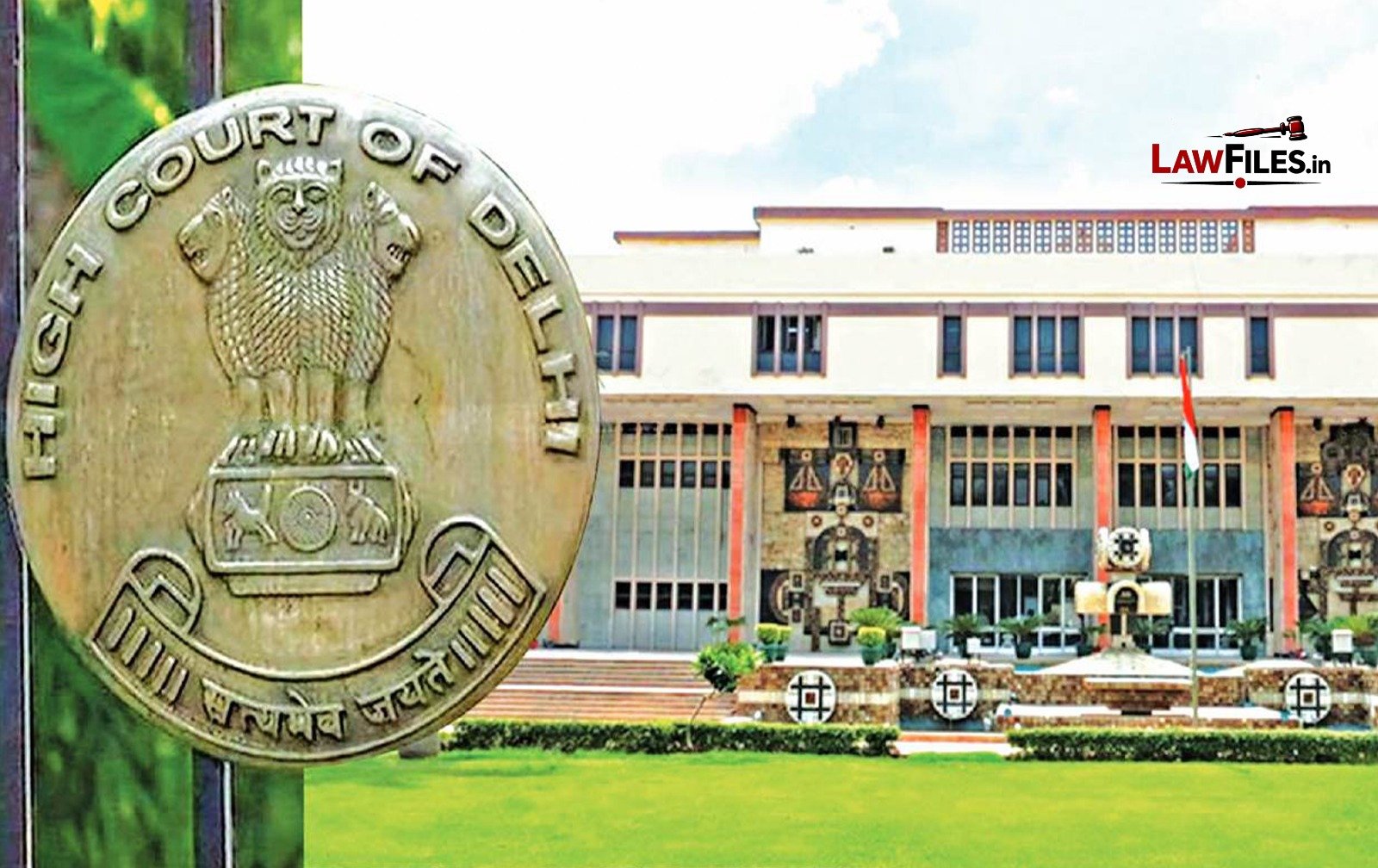
The constitutional mechanism governing presidential nominations to the Upper House of Parliament has once again withstood judicial scrutiny. The Delhi High Court recently dismissed a Public Interest Litigation (PIL) that sought to challenge the appointment of BJP veteran and educationist C. Sadanandan Master to the Rajya Sabha. Characterizing the petition as entirely “devoid of merits,” the bench reinforced the executive privilege in the President of India under Article 80 of the Constitution. In July 2025, President Droupadi Murmu nominated four eminent personalities to fill long-standing vacancies in the Rajya Sabha under Article 80(1)(a).
The elite cohort featured former Foreign Secretary Harsh Vardhan Shringla, eminent senior criminal prosecutor Ujjwal Nikam, respected historian Dr. Meenakshi Jain, and C. Sadanandan Master a prominent schoolteacher, social worker, and political activist from Kannur, Kerala.
The legal challenge emerged almost immediately after the announcement. A petitioner approached the High Court arguing that Sadanandan Master’s deep-seated alignment with a political party compromised the constitutional intent behind nominated seats.
The petition alleged that the nomination was politically motivated and violated the structural ethos of the Upper House, which was historically designed to infuse non-partisan intellectual expertise into legislative debates.
The division bench of the Delhi High Court approached the challenge by analyzing the foundational text of the Constitution rather than focusing solely on the political arguments raised by the petitioner. At the heart of the legal dispute was Article 80(3), which states that individuals nominated to the Rajya Sabha by the President must possess “special knowledge or practical experience in respect of such matters as the following, namely: literature, science, art and social service.”
The petitioner sought a literal, strict interpretation, arguing that because the field of politics or specific partisan activism is not explicitly listed, any individual with a distinct political portfolio falls outside these four categories.
However, the bench rejected this narrow viewpoint. The court clarified that the language used by the framers of the Constitution was intended to be expansive rather than restrictive. By interpreting the categories as illustrative examples of public excellence rather than an exhaustive checklist, the court ruled that the executive branch maintains the flexible authority needed to recognize a wide variety of human ventures.
To anchor its decision in established law, the High Court leaned heavily on the landmark 2012 case, Ram Gopal Singh Sisodia vs. Union of India. In that case, a similar Public Interest Litigation (PIL) had challenged the presidential nomination of cricket icon Sachin Tendulkar, arguing that “sports” was not included among the four explicit fields listed in Article 80(3).
In the Tendulkar ruling, the judiciary established that the phrase “such matters as the following” serves to guide the executive rather than tightly restrict it. The court notes that specialized categories like sports, law, education, journalism, and economics naturally interlock with the concepts of “art” and “social service.”
By applying this exact legal precedent to the case of C. Sadanandan Master, the bench re-emphasized that a lifetime dedicated to grass roots education, community leadership, and social resilience neatly fits within the constitutional definition of “social service,” regardless of any political party affiliation.
Dismissing the plea at the admission stage itself, the judges delivered a precise rationale on the bounds of judicial review regarding executive nominations:
“The field of ‘social service’ under Article 80 of the Constitution is broad and fluid. Decades of grass-roots educational work, community upliftment, and public engagement cannot be negated or disqualified simply because an individual holds a formal political alignment.”
Beyond merely defining the categories of Article 80, the division bench focused on the constitutional separation of powers. The judges emphasized that the power to nominate members to the Rajya Sabha is a sovereign prerogative specifically granted to the President of India, acting on the advice of the Council of Ministers.
The court further observed that political participation is an extension of public service rather than a bar to it. In their final orders, the judges noted:
“This petition is entirely devoid of merits and fails to establish any constitutional or statutory infraction. The judiciary cannot substitute its own opinion for the wisdom and constitutional prerogative of the President of India in nominating distinguished citizens to Parliament.”
The court ruled that unless a petitioner can demonstrate a clear, indisputable violation of a statutory bar or a direct breach of eligibility rules, the judiciary must not second guess the executive’s choices. By dismissing the PIL at the admission stage as “devoid of merits,” the bench sent a clear signal: the court will not serve as a forum for political debates disguised as constitutional challenges, thereby protecting the President’s discretionary powers from unnecessary legal interference.
To understand the intense political backdrop of Sadanandan Master’s history case, which often sees him referred to as a “living martyr” in political circles. In January 1994, he was the victim of a brutal attack in Mattannur, Kannur a district long plagued by intense inter-party conflicts. During the assault, suspected Left-wing political rivals hacked off both of his legs below the knees.
Despite undergoing bilateral amputations, Sadanandan Master continued his profession as a schoolteacher and rose through the organizational ranks to become a state vice-president for the BJP in Kerala.
Decades later, the legal battles surrounding that fateful night culminated in a major milestone when the Kerala High Court permanently upheld the convictions and sentences handed out to the perpetrators of the assault.
Since surviving the legal hurdle in the Delhi High Court, Sadanandan Master has evolved into a highly visible and active legislator in the Rajya Sabha. His presence has shifting the dynamics of parliamentary debates surrounding political violence.
In February 2026, there was a highly emotional and unforgettable moment inside the Rajya Sabha (the Upper House of India’s Parliament).
Politicians were having a heated argument about law and order and political violence in South India. When it was Sadanandan Master’s turn to speak, politicians from the opposition parties started shouting and interrupting him.
Instead of shouting back, he did something completely unexpected. Right there at his desk, he unstrapped his artificial legs and placed them directly onto the desk in front of everyone. He did this to show his critics the real, painful truth of political violence since both of his legs had been cut off in a brutal political attack years ago.
This powerful move completely shocked the room, and the shouting suddenly stopped. The next day, newspapers and news channels across the country wrote heavily about it, discussing the deep human cost of political hatred.
Some critics had doubted whether Sadanandan Master was capable of handling the heavy workload of a lawmaker. However, he proved them wrong when his party chose him for a very important role: formally presenting and leading the official “Motion of Thanks” speech after the President’s address to Parliament.
On top of that, he has become fully involved in the everyday work of making laws. He is an active member of important parliamentary groups, including the major committee that looks after Education, Women, Children, Youth, and Sports. This shows he is now a completely active, mainstream member of Parliament.
Ultimately, the Delhi High Court’s ruling has done more than just clear a single politician’s path to Parliament. By labeling the challenge “devoid of merits,” the judiciary has re-anchored the principle that a lifetime of social resilience and public service is a valid qualification for the Rajya Sabha, irrespective of the political banner under which that service was rendered.
