


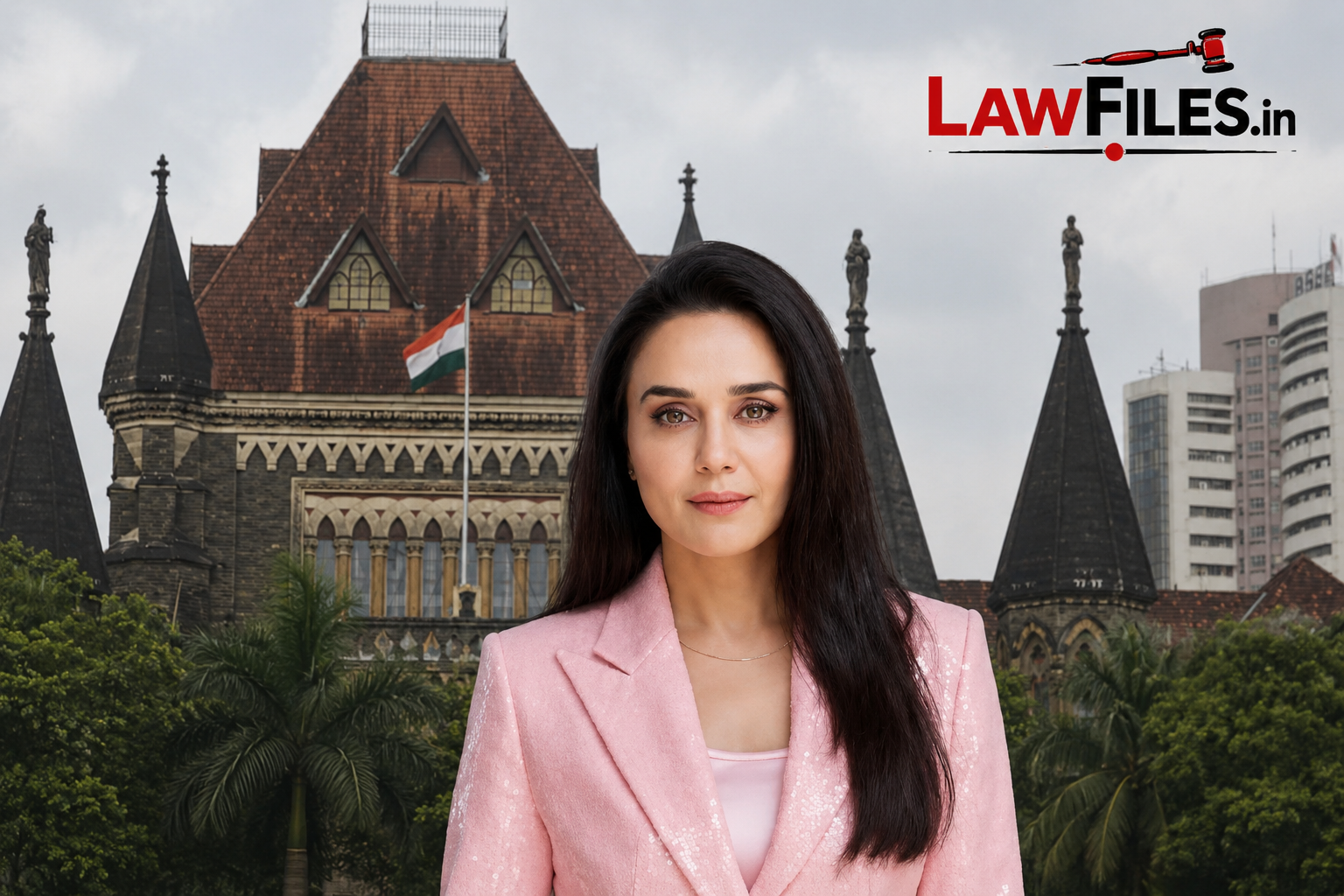
The rapid rise of generative artificial intelligence has fundamentally altered the relationship between technology, identity, and law. While artificial intelligence has unlocked unprecedented opportunities for innovation and content creation, it has simultaneously created serious challenges concerning unauthorized digital impersonation, deepfakes, and the commercial exploitation of an individual’s identity. Against this backdrop, actor Preity Zinta’s recent legal action before the Bombay High Court marks a potentially significant development in the evolution of Indian personality rights jurisprudence. By securing permission to institute a suit against Google LLC, Meta, and several other entities over alleged AI-generated deepfakes, manipulated images, chatbot personas, and unauthorized digital content, Zinta has brought to the forefront one of the most pressing legal questions of the digital age: who owns a person’s digital identity in an era of artificial intelligence?
The Bombay High Court, exercising its original civil jurisdiction, granted leave under Clause XII of the Letters Patent, thereby permitting Zinta to institute substantive proceedings despite portions of the alleged cause of action arising beyond the territorial jurisdiction of the Court. The order, passed by Justice Abhay Ahuja, clears the procedural hurdle necessary for the filing of a comprehensive civil suit seeking injunctions, damages, and protection of personality rights. While the Court has not yet adjudicated upon the merits of the allegations, the permission granted is significant because it acknowledges that claims involving AI-generated misuse of celebrity identity warrant judicial scrutiny within India’s evolving intellectual property and privacy framework.
According to reports, Zinta has alleged that various digital platforms and online entities enabled or facilitated the creation and dissemination of AI-generated content depicting her likeness without authorization. The alleged material includes deepfake videos, manipulated images, memes, and chatbot personas capable of simulating aspects of her personality and public identity. The suit contends that such activities infringe her personality rights, violate copyright interests, damage her commercial goodwill, and mislead the public regarding her association with content she neither created nor endorsed.
The dispute arrives at a critical moment in Indian law. Unlike jurisdictions such as California, which recognize statutory rights of publicity, India does not possess a comprehensive legislative framework governing personality rights. Instead, courts have gradually developed protections through constitutional principles, intellectual property doctrines, and common law remedies. Landmark decisions involving celebrities such as Amitabh Bachchan, Anil Kapoor, and Rajinikanth have recognized that an individual’s name, voice, likeness, image, and persona possess commercial value deserving legal protection. Courts have increasingly accepted that unauthorized commercial exploitation of these attributes may constitute infringement of personality rights even in the absence of a dedicated statute.
The emergence of artificial intelligence, however, has introduced complexities that traditional legal doctrines were never designed to address. Historically, unauthorized use of celebrity images required human intervention through advertising campaigns, merchandising, or publication. Deepfake technology has fundamentally changed this equation. AI systems can now generate highly realistic videos, synthetic voices, photographs, and interactive chatbot personas that closely imitate real individuals. The result is a new category of harm in which a person’s identity itself becomes a replicable digital asset capable of being manipulated, monetized, and distributed on a global scale within seconds.
The legal concerns raised by deepfakes extend far beyond celebrity reputation management. Scholars and technology commentators have increasingly warned that deepfake technology poses risks to privacy, democratic discourse, consumer trust, and personal autonomy. The unauthorized creation of synthetic content can distort public perception, facilitate misinformation, and create false associations between individuals and statements they never made. In the context of public figures, such misuse can undermine years of carefully cultivated professional goodwill and brand value. The Preity Zinta litigation therefore raises broader questions concerning the legal limits of AI-generated expression and the responsibilities of digital intermediaries in preventing misuse of identity.
A particularly interesting dimension of the case is the inclusion of major technology companies and platform operators among the proposed defendants. This raises difficult questions regarding intermediary liability in the age of generative AI. Traditionally, online platforms have relied upon safe harbour protections that shield intermediaries from liability for third-party content subject to compliance with statutory obligations. However, the increasing integration of AI tools into platform ecosystems has complicated this legal landscape. Courts may eventually be required to determine whether technology companies merely host content or whether their AI-enabled infrastructure contributes to the creation, amplification, or monetization of unlawful digital impersonation.
The dispute also highlights the growing convergence of personality rights, copyright law, privacy rights, and data governance. While personality rights protect the commercial value associated with an individual’s identity, copyright law addresses ownership of creative works, and privacy law safeguards personal autonomy and informational control. AI-generated deepfakes frequently blur these boundaries. A synthetic image may simultaneously involve unauthorized use of likeness, replication of copyrighted material, invasion of privacy, and reputational harm. Consequently, courts are increasingly confronted with multi-dimensional claims that do not fit neatly within traditional legal categories.
International developments demonstrate that these concerns are not unique to India. Across the United States, European Union, and several Asian jurisdictions, lawmakers and courts are grappling with the challenge of regulating AI-generated representations. Legislatures have begun exploring specialized deepfake laws, mandatory disclosure requirements for synthetic media, and enhanced protections for digital identity. The absence of comprehensive legislation in India means that constitutional courts will likely continue to play a central role in shaping the contours of AI-related personality rights through judicial interpretation.
From a policy perspective, the litigation exposes the urgent need for a coherent regulatory framework addressing synthetic media and AI-generated impersonation. While innovation must remain protected, the law must also ensure that technological advancement does not come at the cost of individual autonomy and identity. The challenge for regulators lies in balancing freedom of expression, technological development, and the protection of legitimate proprietary interests in one’s persona. Overregulation may stifle innovation, while inadequate protection risks transforming human identity into a freely exploitable digital commodity.
For legal practitioners, the case represents a valuable study in the future of technology law. Questions relating to deepfakes, digital likeness, AI-generated content, intermediary liability, and personality rights are likely to become increasingly prominent areas of litigation. Lawyers operating in intellectual property, media law, technology regulation, and privacy law will need to develop expertise at the intersection of these disciplines. The dispute also illustrates the growing importance of proactive rights management strategies for public figures and content creators operating in AI-driven environments.
For law students and young professionals, the proceedings serve as a reminder that some of the most consequential legal questions of the coming decade will emerge from technological disruption rather than traditional legal categories. The law’s response to artificial intelligence will shape not only commercial relationships but also fundamental questions concerning identity, authenticity, and individual autonomy in the digital age.
Ultimately, the significance of Preity Zinta’s legal action extends far beyond a celebrity dispute. It represents one of the earliest high-profile attempts to test the limits of Indian personality rights against the realities of generative artificial intelligence. As courts increasingly confront disputes involving AI-generated representations, the principles emerging from such litigation may determine how Indian law protects digital identity in the years ahead. The case therefore stands at the intersection of technology, constitutional values, intellectual property, and human dignity an intersection that is rapidly becoming one of the most important frontiers of contemporary legal development.
