


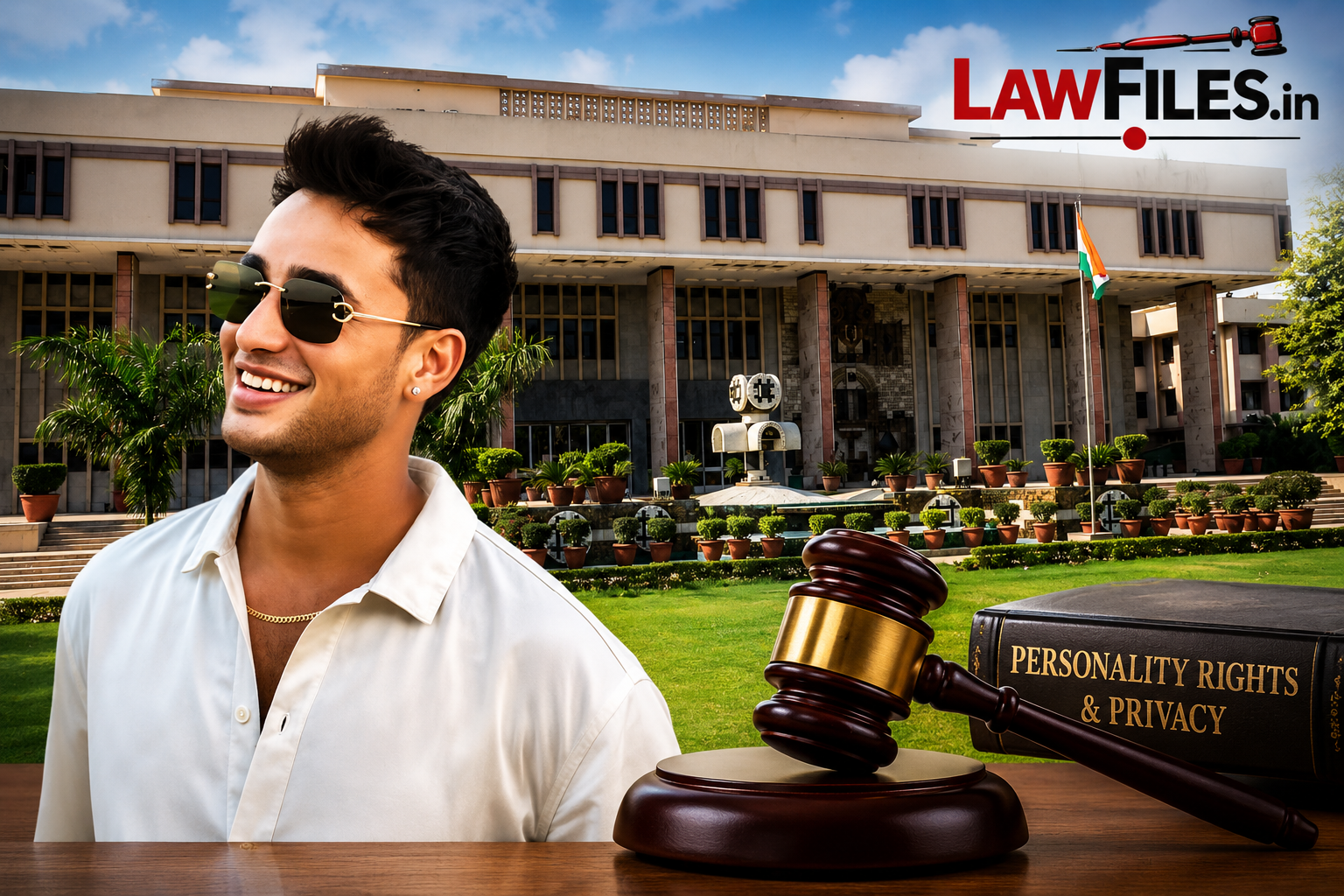
In yet another significant development in India’s rapidly evolving jurisprudence on personality rights and digital identity, Indian cricketer Abhishek Sharma has approached the Delhi High Court seeking protection against the alleged unauthorised commercial exploitation of his name, image, likeness and other identifying attributes across digital platforms. The matter came up before Justice Jyoti Singh, who, while expressing willingness to examine the grievance, declined to grant immediate relief owing to deficiencies in the material placed before the Court. Instead, the Bench directed the plaintiff to file an additional affidavit placing on record screenshots corresponding to the impugned URLs and the tabulated details contained in the plaint, observing that any interim injunction must necessarily be founded upon properly correlated documentary evidence. The matter has now been listed for further hearing. The proceedings once again underscore the Delhi High Court’s growing role in shaping India’s personality rights jurisprudence at a time when artificial intelligence, deepfakes and digital impersonation increasingly threaten the commercial and reputational interests of public figures.
During the hearing, counsel appearing for the social media intermediary Meta drew the Court’s attention to several URLs forming the subject matter of the suit. After examining the material, Justice Jyoti Singh observed that there existed discrepancies between the links produced during the hearing and the corresponding entries contained in the annexures accompanying the plaint. The Court clarified that it was not declining relief on merits but emphasised that judicial orders directing takedown of online content must be based upon precise identification of the allegedly infringing material. Without accurate matching between the impugned content and the pleadings, the Court observed, any sweeping injunction would be legally unsustainable. Consequently, the plaintiff was granted liberty to place the necessary material on record through an additional affidavit before the Court considers interim protection.
The proceedings are legally significant because they concern the protection of “personality rights” a judicially recognised branch of the broader right to privacy and publicity. Although India does not possess a standalone statute governing personality rights, constitutional courts have, over the past two decades, progressively recognised that celebrities, sportspersons, artists and other public personalities possess an enforceable proprietary and reputational interest in preventing unauthorised commercial exploitation of their identity. The right extends beyond mere protection against defamation and encompasses control over the commercial use of one’s name, image, voice, signature, likeness and other distinctive attributes capable of identifying an individual. Such rights derive their constitutional foundation from Article 21’s guarantee of privacy and dignity, while also intersecting with principles of intellectual property, passing off and unfair commercial exploitation.
The Delhi High Court has emerged as the principal judicial forum shaping this branch of Indian law. Beginning with landmark decisions involving internationally renowned personalities such as D.M. Entertainment Pvt. Ltd. v. Baby Gift House, and later expanding through a series of decisions concerning leading actors, sportspersons and public figures, the Court has consistently recognised that unauthorised use of a celebrity’s persona for commercial gain amounts to a violation of legally protectable rights. In recent years, the scope of protection has expanded considerably to include misuse through artificial intelligence, digitally manipulated videos, deepfakes, impersonation accounts and deceptive online advertisements.
Justice Jyoti Singh herself has presided over several matters concerning digital misuse of public personalities. Coordinate Benches of the Delhi High Court have similarly granted protection to personalities including Shashi Tharoor, Pawan Kalyan, Allu Arjun, Mohanlal, Aman Gupta, Jubin Nautiyal, Sunil Gavaskar, Kajol, R. Madhavan, NTR Jr., Raj Shamani, Sudhir Chaudhary, Karan Johar, Abhishek Bachchan, Aishwarya Rai Bachchan, Sri Sri Ravi Shankar and Nagarjuna, among others. These decisions collectively reflect a discernible judicial trend recognising that technological developments have substantially increased the vulnerability of public figures to digital identity theft, misleading endorsements and AI-generated misinformation.
The present litigation assumes additional importance because it arrives at a time when courts worldwide are grappling with the legal consequences of generative artificial intelligence. Modern AI systems are capable of creating highly realistic photographs, videos, voice clones and endorsements that may falsely suggest the involvement or approval of well-known personalities. Such technologies raise novel legal questions extending beyond conventional trademark infringement or copyright law. The injury often lies not merely in economic loss but in the erosion of an individual’s autonomy over the commercial and reputational use of their identity. Indian courts have increasingly recognised that personality rights provide an appropriate legal framework to address these emerging challenges, particularly where AI-generated content falsely attributes statements, endorsements or conduct to identifiable individuals.
From a constitutional perspective, personality rights occupy an important position at the intersection of privacy, dignity and freedom of expression. The Supreme Court’s landmark decision in Justice K.S. Puttaswamy v. Union of India firmly established privacy as a fundamental right under Article 21. Although the judgment primarily addressed informational privacy, its broader reasoning recognises an individual’s autonomy over personal identity and decisional control. Personality rights represent one manifestation of this autonomy by enabling individuals to regulate commercial exploitation of their identity. Simultaneously, courts have repeatedly cautioned that such rights cannot become instruments for suppressing legitimate journalism, criticism, parody, artistic expression or public interest reporting protected under Article 19(1)(a). Consequently, judicial adjudication in personality rights cases invariably involves balancing proprietary interests against constitutional guarantees of free speech.
The proceedings also illustrate the evidentiary challenges unique to digital litigation. Unlike traditional civil suits where the disputed material remains relatively static, online content frequently changes, disappears or migrates across multiple platforms within short periods. Courts therefore increasingly insist upon precise identification of URLs, archived screenshots, metadata and other technical evidence before directing intermediaries to remove digital content. Justice Jyoti Singh’s insistence that the impugned links correspond accurately with the annexures filed by the plaintiff reflects this emerging procedural discipline. Such precision is particularly necessary because judicial takedown orders often affect third-party rights and the functioning of digital intermediaries.
Another important legal dimension concerns the liability of online platforms. Under the Information Technology Act, 2000 and the Information Technology (Intermediary Guidelines and Digital Media Ethics Code) Rules, intermediaries generally enjoy limited immunity for third-party content, subject to compliance with statutory due diligence obligations and lawful judicial directions. Personality rights litigation therefore frequently requires courts to strike a balance between protecting individual identity and preserving the intermediary framework governing digital platforms. Rather than imposing blanket liability upon intermediaries, courts have increasingly preferred targeted takedown directions relating to specifically identified content, thereby avoiding excessive restrictions upon lawful online expression.
The present proceedings also reflect the gradual evolution of personality rights from their traditional commercial origins towards broader protection of digital identity. Historically, such actions primarily involved unauthorised advertisements, merchandising or false endorsements. Contemporary disputes increasingly concern AI-generated videos, synthetic media, manipulated interviews, fraudulent investment promotions, fake social media profiles and deceptive online content designed to exploit the credibility associated with public personalities. As technological sophistication grows, courts are correspondingly expanding legal protections to ensure that personality rights remain effective in the digital environment.
Ultimately, the Delhi High Court has not yet adjudicated upon the merits of Abhishek Sharma’s claims. Its present order is procedural in nature, requiring the plaintiff to cure evidentiary deficiencies before the Court considers interim protection. Nevertheless, the proceedings assume wider legal significance because they contribute to an expanding body of jurisprudence addressing digital identity, privacy and personality rights in the age of artificial intelligence. The eventual decision may further clarify the evidentiary standards required for obtaining injunctive relief against online misuse of personality attributes while reinforcing the principle that technological innovation cannot be permitted to undermine individual dignity, commercial autonomy or the constitutional right to control one’s own identity.
