

Close Menu
LawFilesLawFiles

    Subscribe to Updates

    Get the latest creative news from FooBar about art, design and business.

    What's Hot

    Supreme Court Suggests Reconsidering Colonial-Era Rule Under Section 306 of Succession Act: Should Civil Liability Die With the Wrongdoer?

    May 20, 2026

    Massive Expansion for Madras High Court: Supreme Court Collegium Recommends 19 New Judges Amid Growing Judicial Backlog

    May 20, 2026

    Supreme Court Clarifies Limits of Reassessment Under Income Tax Act: ‘Reason to Believe’ Cannot Become a Tool for Endless Tax Scrutiny

    May 18, 2026
    Facebook X (Twitter) Instagram Threads
    Wednesday, May 20
    LawFilesLawFiles
    Facebook X (Twitter)
    • Home
      • Who We Are
      • Our Mission
      • Advisory board
      • Contact US
    • Supreme Court
    • High Courts
      • Gujarat High Court
      • Jharkhand High Court
      • Rajasthan High Court
      • Karnataka High Court
      • Andhra Pradesh High Court
      • Allahabad High Court
      • Himachal Pradesh High Court
      • Chhattisgarh High Court
      • Jammu & Kashmir and Ladakh High Court
      • Kerala High Court
      • Punjab and Haryana High Court
      • Patna High Court
      • Madhya Pradesh High Court
      • Madras High Court
      • Bombay High Court
      • Orissa High Court
      • Calcutta High Court
      • Meghalaya High Court
      • Delhi High Court
      • Manipur High Court
      • Gauhati High Court
    • Corporate
    • Taxation Laws
      • Income Tax
      • GST
      • Customs & Excise
    • Global Affairs
    • Articles
      • Sitting Judge’s’ Views
      • Senior Advocate
      • Policy Analysis
      • Tax Expert
    • PILS
      • Free/Affordable Legal Aid
      • PIL Cell
      • Law student Volunteer Cell (research & Drafting)
      • NGO & Legal services Authority Tie-ups
      • Online Legal Formats
      • Online Legal Help Form
    Subscribe Premium
    LawFilesLawFiles
    Home»Corporate»“Corporate Veil Not Absolute: Supreme Court Allows Inclusion of Group Assets in CIRP”
    Corporate

    “Corporate Veil Not Absolute: Supreme Court Allows Inclusion of Group Assets in CIRP”

    Anvita DwivediBy Anvita DwivediMay 5, 2026No Comments4 Mins Read
    WhatsApp Facebook Twitter Copy Link
    Share
    Facebook Twitter Pinterest Copy Link WhatsApp

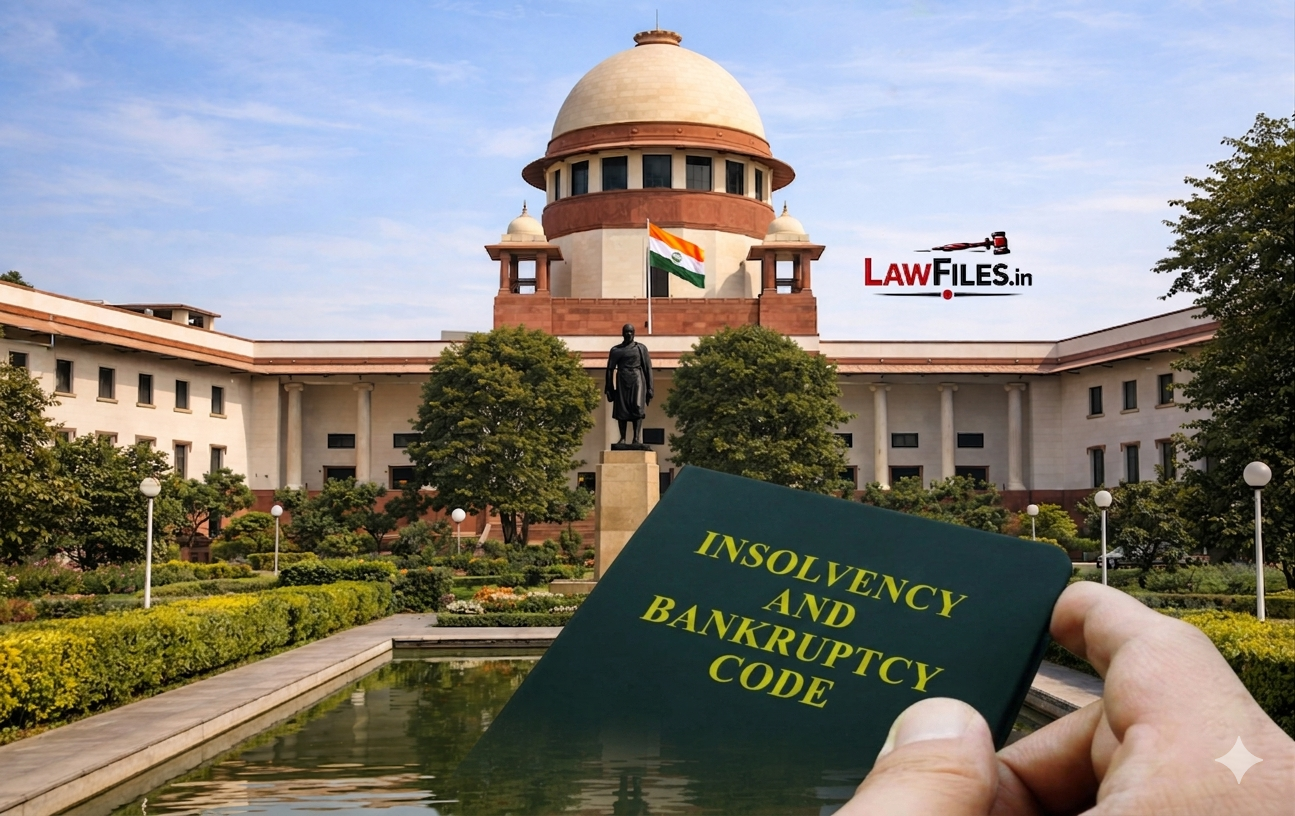
    In a significant development in India’s insolvency jurisprudence, the Supreme Court of India has held that the doctrine of lifting the corporate veil may be invoked to include the assets of subsidiary or group companies in the Corporate Insolvency Resolution Process (CIRP) of a holding company. The ruling marks a notable shift from a rigid adherence to corporate separateness toward a more substance-oriented approach, particularly in cases where multiple entities operate as an integrated economic unit.

    The case arose from insolvency proceedings involving a real estate company whose projects had stalled, leaving homebuyers in a precarious position. The National Company Law Appellate Tribunal (NCLAT) had earlier taken a strict view, refusing to treat the assets of subsidiary companies as part of the holding company’s insolvency estate. This effectively limited the pool of assets available for resolution, thereby undermining the prospects of completing the projects and protecting stakeholder interests.

    Setting aside the NCLAT’s decision, the Supreme Court adopted a more pragmatic approach. It held that where associated or group companies are “inextricably connected” and function as part of a single economic enterprise, the corporate veil may be lifted to ensure a meaningful and effective resolution. The Court emphasised that the doctrine is not confined to cases of fraud alone but can be invoked where adherence to strict corporate separateness would defeat the objectives of insolvency law.

    At a doctrinal level, the ruling reflects an evolution in the application of the corporate veil principle. Traditionally, Indian courts have treated the lifting of the corporate veil as an exceptional remedy, primarily reserved for cases involving fraud, sham transactions, or abuse of the corporate form. However, the present judgment expands this understanding by recognizing that economic reality and functional integration may justify disregarding formal corporate boundaries, especially in insolvency contexts where stakeholder recovery is paramount.

    The Court’s reasoning is deeply rooted in the objectives of the Insolvency and Bankruptcy Code, 2016 (IBC), which prioritizes value maximization and timely resolution. By allowing the inclusion of assets of interconnected entities, the Court seeks to prevent fragmentation of assets and ensure that the resolution process reflects the true financial structure of the enterprise. This is particularly relevant in the real estate sector, where projects are often structured across multiple special purpose vehicles, creating artificial distinctions that complicate insolvency proceedings.

    From a policy perspective, the judgment represents a clear tilt toward substantive justice over formal corporate structure. The Court recognized that rigid adherence to the doctrine of separate legal personality may, in certain cases, facilitate evasion of liability or frustrate the legitimate expectations of stakeholders such as homebuyers. By permitting veil lifting in such scenarios, the Court has strengthened the ability of insolvency forums to address complex corporate arrangements.

    At the same time, the ruling does not dilute the foundational principle of corporate separateness. The Court was careful to indicate that veil lifting is not to be applied mechanically but must be based on a clear finding that the entities are so interconnected that they effectively operate as a single concern. This ensures that the doctrine remains an exception rather than the rule, preserving predictability in corporate law.

    Critically analysed, the judgment has far-reaching implications. For creditors and homebuyers, it enhances the scope of recovery by expanding the asset base available in insolvency proceedings. For corporate groups, however, it introduces a layer of uncertainty, as the protective shield of separate legal identity may no longer be absolute in complex group structures. This may necessitate greater transparency in corporate structuring and more robust compliance mechanisms.

    The decision also aligns with emerging global trends in insolvency law, where courts increasingly recognise the concept of group insolvency and the need to address economic realities rather than formal legal distinctions. By moving in this direction, the Supreme Court has brought Indian insolvency jurisprudence closer to international best practices.

    In conclusion, the ruling marks a decisive moment in the evolution of the doctrine of corporate veil in India. By allowing the inclusion of group company assets in the CIRP of a holding company, the Supreme Court has reaffirmed that insolvency law must operate in a manner that reflects economic substance and protects stakeholder interests. The judgment thus signals a shift toward a more holistic and pragmatic approach, while retaining necessary safeguards against indiscriminate application of the doctrine.

    “Corporate Veil Not Absolute: Supreme Court Allows Inclusion of Group Assets in CIRP”
    Share. WhatsApp Facebook Twitter Pinterest Email
    Anvita Dwivedi

    Related Posts

    Supreme Court Suggests Reconsidering Colonial-Era Rule Under Section 306 of Succession Act: Should Civil Liability Die With the Wrongdoer?

    May 20, 2026

    Massive Expansion for Madras High Court: Supreme Court Collegium Recommends 19 New Judges Amid Growing Judicial Backlog

    May 20, 2026

    Supreme Court Clarifies Limits of Reassessment Under Income Tax Act: ‘Reason to Believe’ Cannot Become a Tool for Endless Tax Scrutiny

    May 18, 2026
    Add A Comment
    Leave A Reply Cancel Reply

    Demo
    Top Posts

    Wrongful Claim Rejection Amounts to Deficiency in Service: Delhi Consumer Commission Holds Star Health Liable

    March 16, 202667 Views

    Bombay High Court Quashes POCSO Case, Directs Accused to Fund MacBook for Victim’s Education

    February 28, 202650 Views

    Siyahat Meri Syahi Se: A Journey That Transforms Travel into Thought and Entrepreneurship

    March 18, 202641 Views

    Supreme Court Notice on Muslim Personal Law: Reopening the Constitutional Debate on Gender Equality and Faith

    April 16, 202624 Views
    Don't Miss

    Supreme Court Suggests Reconsidering Colonial-Era Rule Under Section 306 of Succession Act: Should Civil Liability Die With the Wrongdoer?

    By Anvita DwivediMay 20, 2026

    In a legally significant and intellectually consequential observation, the Supreme Court has recommended that the…

    Massive Expansion for Madras High Court: Supreme Court Collegium Recommends 19 New Judges Amid Growing Judicial Backlog

    May 20, 2026

    Supreme Court Clarifies Limits of Reassessment Under Income Tax Act: ‘Reason to Believe’ Cannot Become a Tool for Endless Tax Scrutiny

    May 18, 2026

    Supreme Court Says Tenant’s Defence Cannot Be Struck Off Without Determining Whether Rent Default Was Wilful

    May 18, 2026
    Stay In Touch
    • Facebook
    • Twitter

    Subscribe to Updates

    Get the latest creative news from SmartMag about art & design.

    Top Posts

    Wrongful Claim Rejection Amounts to Deficiency in Service: Delhi Consumer Commission Holds Star Health Liable

    March 16, 202667 Views

    Bombay High Court Quashes POCSO Case, Directs Accused to Fund MacBook for Victim’s Education

    February 28, 202650 Views

    Siyahat Meri Syahi Se: A Journey That Transforms Travel into Thought and Entrepreneurship

    March 18, 202641 Views
    Don't Miss

    Supreme Court Suggests Reconsidering Colonial-Era Rule Under Section 306 of Succession Act: Should Civil Liability Die With the Wrongdoer?

    By Anvita DwivediMay 20, 2026

    In a legally significant and intellectually consequential observation, the Supreme Court has recommended that the…

    Massive Expansion for Madras High Court: Supreme Court Collegium Recommends 19 New Judges Amid Growing Judicial Backlog

    May 20, 2026

    Supreme Court Clarifies Limits of Reassessment Under Income Tax Act: ‘Reason to Believe’ Cannot Become a Tool for Endless Tax Scrutiny

    May 18, 2026

    Supreme Court Says Tenant’s Defence Cannot Be Struck Off Without Determining Whether Rent Default Was Wilful

    May 18, 2026
    Stay In Touch
    • Facebook
    • YouTube
    • TikTok
    • Instagram
    Top Trending
    About Us
    About Us

    LawFiles.in is a comprehensive legal news platform delivering real-time updates from the Supreme Court, High Courts, Tribunals, Corporate and Tax law, Regulators, Politics, Crime, Consumer cases, and Global Affairs.

    Email Us: lawfilesoffical@gmail.com
    Contact: +91 8800026066

    Contact Us:
    India International Centre
    40, Max Mueller Marg
    Lodhi Estate, New Delhi-110003

    Facebook X (Twitter)
    Our Picks

    Supreme Court Suggests Reconsidering Colonial-Era Rule Under Section 306 of Succession Act: Should Civil Liability Die With the Wrongdoer?

    May 20, 2026

    Massive Expansion for Madras High Court: Supreme Court Collegium Recommends 19 New Judges Amid Growing Judicial Backlog

    May 20, 2026

    Supreme Court Clarifies Limits of Reassessment Under Income Tax Act: ‘Reason to Believe’ Cannot Become a Tool for Endless Tax Scrutiny

    May 18, 2026

    Supreme Court Says Tenant’s Defence Cannot Be Struck Off Without Determining Whether Rent Default Was Wilful

    May 18, 2026

    Bartering the Girl Child: The Rajasthan High Court’s Decisive Strike Against ‘Atta-Satta’ Marriages

    May 18, 2026
    Most Popular

    ED Can Arrest Even If FIRs Are Added to ECIR Later: Punjab & Haryana High Court

    January 30, 20260 Views

    Non-Disclosure Of QCBS Criteria In Tender Alone Not Enough To Allege Malafides: Gauhati High Court

    January 31, 20260 Views

    January 2026 Monthly Digest: Important Rulings of the Jammu & Kashmir and Ladakh High Court

    February 2, 20260 Views

    Custodial Death and State Liability : A Critical Analysis of the Allahabad High Court’s ₹10 Lakh Compensation Judgment

    February 22, 20260 Views

    SC Reopens Debate on 3-Year Practice Rule for Judicial Service

    February 22, 20260 Views
    © 2026 LawFiles. Owned by Varta24 Media.
    • Articles
    • Careers
    • Corporate
    • Global Affairs
    • Law Firms & Lawyers
    • PILS
    • Regulatory

    Type above and press Enter to search. Press Esc to cancel.