


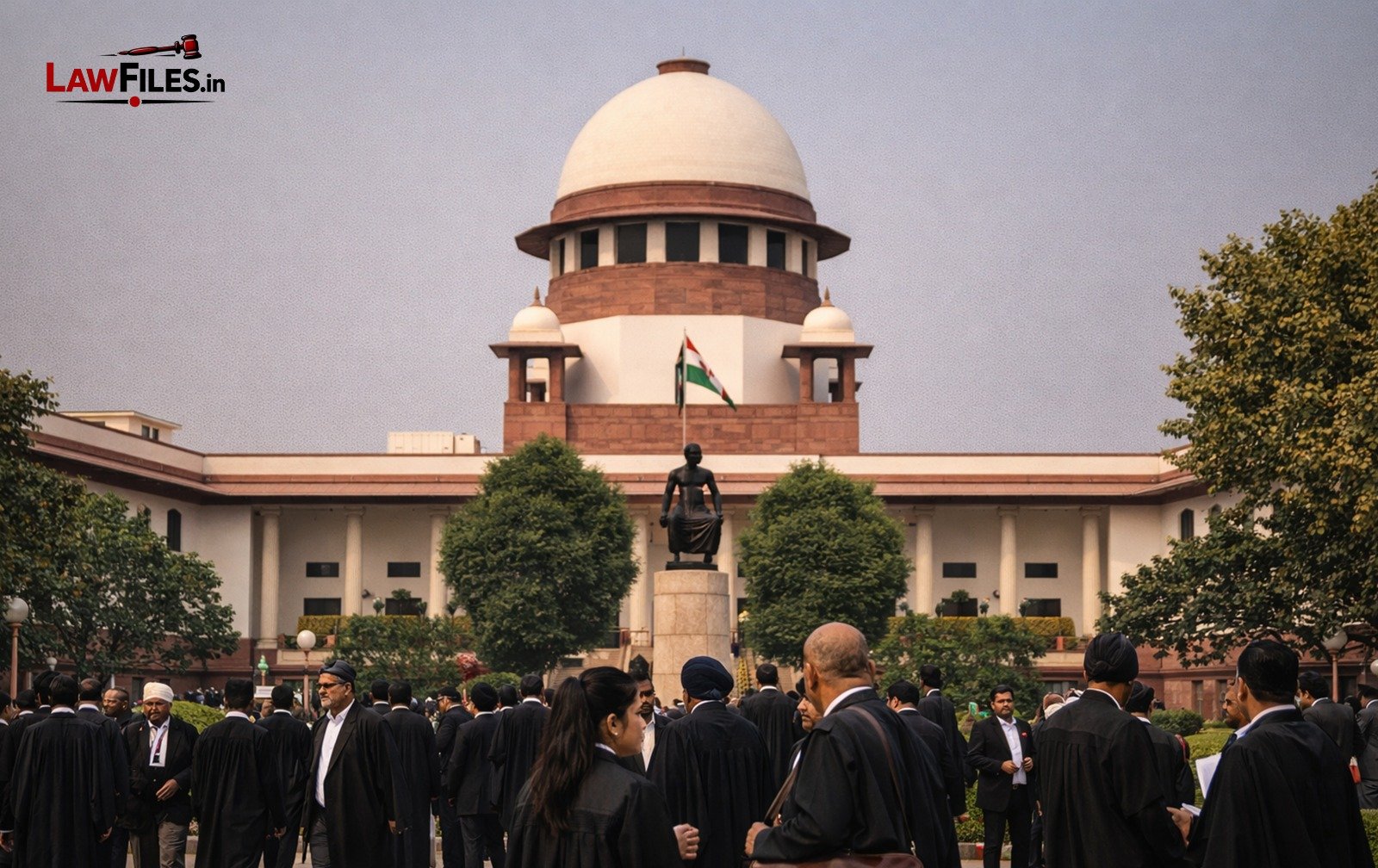
In a significant clarification that strengthens creditor rights under insolvency law, the Supreme Court of India has held that liabilities arising out of corporate guarantees qualify as “financial debt” under the Insolvency and Bankruptcy Code, 2016 (IBC). The ruling resolves interpretative inconsistencies and reinforces the commercial reality that guarantees are not merely ancillary obligations but substantive financial commitments within the insolvency framework.
The decision came in the backdrop of disputes where lenders particularly consortium banks were denied recognition as financial creditors on the ground that their claims arose from corporate guarantees rather than direct lending transactions. Overturning such restrictive interpretations adopted by the National Company Law Tribunal (NCLT) and the National Company Law Appellate Tribunal (NCLAT), the Supreme Court categorically held that guarantee obligations are intrinsically linked to financial debt and must be treated accordingly.
At the doctrinal level, the Court relied on the statutory definition under Section 5(8) of the IBC, which defines “financial debt” as a debt disbursed against the consideration for the time value of money. While a guarantor may not directly receive funds, the Court recognised that the guarantee facilitates such disbursement to the principal borrower, thereby satisfying the underlying economic rationale of financial debt.
The judgment also draws from settled principles of contract law, particularly the doctrine of co-extensive liability of guarantors. Under Section 128 of the Indian Contract Act, a guarantor’s liability is co-extensive with that of the principal debtor. By importing this principle into the IBC framework, the Court reaffirmed that a creditor’s right to proceed against a guarantor is not secondary or contingent it is parallel and enforceable in its own right.
Analytically, the ruling aligns with the Court’s recent jurisprudence permitting simultaneous insolvency proceedings against both the principal debtor and the corporate guarantor. This approach rejects the earlier “one debt, one insolvency” logic and instead recognises that multiple entities can be liable for the same financial obligation without violating principles of insolvency law.
The implications of the judgment are far-reaching. By recognising corporate guarantees as financial debt, the Court ensures that creditors holding such guarantees are entitled to participate in the Committee of Creditors (CoC), influence resolution plans, and initiate insolvency proceedings under Section 7 of the IBC. This restores commercial confidence, particularly in consortium lending structures where guarantees play a central role in risk mitigation.
At the same time, the ruling addresses a structural concern within insolvency jurisprudence: the tendency of adjudicatory bodies to adopt overly technical interpretations that undermine commercial substance. By emphasising the economic function of guarantees rather than their formal structure, the Court has reaffirmed that insolvency law must be guided by substance over form.
However, the judgment also raises important questions. Expanding the scope of financial debt to include corporate guarantees could potentially increase the exposure of group companies and guarantor entities to insolvency proceedings. This may lead to multi-layered insolvency scenarios, where interconnected entities within corporate groups are simultaneously drawn into CIRP, raising issues of coordination, asset valuation, and resolution strategy.
From a policy perspective, the ruling strengthens the creditor-centric design of the IBC while also reinforcing the principle that insolvency law is not merely a recovery mechanism but a structured process for resolution of financial distress. By recognising guarantees as financial debt, the Court ensures that all stakeholders who bear financial risk are adequately represented in the resolution process.
In conclusion, the Supreme Court’s ruling marks a decisive step in consolidating insolvency jurisprudence in India. By holding that corporate guarantees constitute financial debt, the Court has eliminated ambiguity, reinforced creditor rights, and aligned legal interpretation with commercial reality. The judgment underscores a broader judicial philosophy that insolvency law must operate with economic clarity, contractual fidelity, and institutional consistency, rather than narrow technical constraints.
