

Close Menu
LawFilesLawFiles

    Subscribe to Updates

    Get the latest creative news from FooBar about art, design and business.

    What's Hot

    Delimitation Row in Lok Sabha: Did the Opposition Block the Government or Deny Women Their Political Future?

    April 18, 2026

    Bombay High Court Seeks Centre’s Response on SSPE Inclusion in Rare Diseases Policy: A Constitutional Moment for the Right to Health

    April 18, 2026

    Permissive Arbitration Clauses Not Binding: Supreme Court Reaffirms Doctrine of Clear Consent

    April 18, 2026
    Facebook X (Twitter) Instagram Threads
    Sunday, April 19
    LawFilesLawFiles
    Facebook X (Twitter)
    • Home
      • Who We Are
      • Our Mission
      • Advisory board
      • Contact US
    • Supreme Court
    • High Courts
      • Gujarat High Court
      • Jharkhand High Court
      • Rajasthan High Court
      • Karnataka High Court
      • Andhra Pradesh High Court
      • Allahabad High Court
      • Himachal Pradesh High Court
      • Chhattisgarh High Court
      • Jammu & Kashmir and Ladakh High Court
      • Kerala High Court
      • Punjab and Haryana High Court
      • Patna High Court
      • Madhya Pradesh High Court
      • Madras High Court
      • Bombay High Court
      • Orissa High Court
      • Calcutta High Court
      • Meghalaya High Court
      • Delhi High Court
      • Manipur High Court
      • Gauhati High Court
    • Corporate
    • Taxation Laws
      • Income Tax
      • GST
      • Customs & Excise
    • Global Affairs
    • Articles
      • Former Judge’s’ Views
      • Senior Advocate
      • Policy Analysis
      • Tax Expert
    • PILS
      • Free/Affordable Legal Aid
      • PIL Cell
      • Law student Volunteer Cell (research & Drafting)
      • NGO & Legal services Authority Tie-ups
      • Online Legal Formats
      • Online Legal Help Form
    Subscribe Premium
    LawFilesLawFiles
    Home»Articles»Former Judge's’ Views»Constitution Demands Structural Transformation, Not Formal Equality: A Constitutional Re-reading of Justice B.R. Gavai’s Lecture
    Former Judge's’ Views

    Constitution Demands Structural Transformation, Not Formal Equality: A Constitutional Re-reading of Justice B.R. Gavai’s Lecture

    Anvita DwivediBy Anvita DwivediApril 18, 2026No Comments4 Mins Read
    WhatsApp Facebook Twitter Copy Link
    Share
    Facebook Twitter Pinterest Copy Link WhatsApp

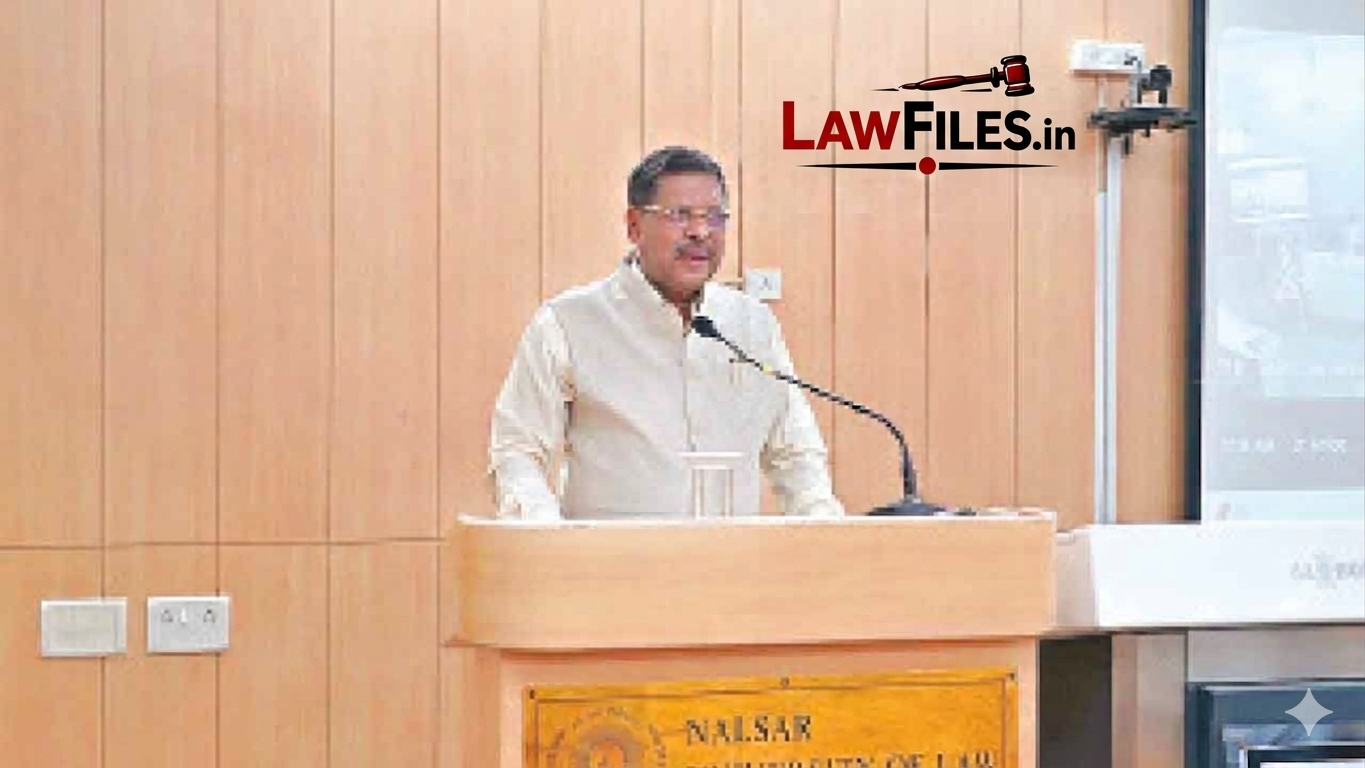
    In a significant constitutional articulation, former Chief Justice of India B. R. Gavai has reaffirmed that the Indian Constitution does not merely promise equality in form, but mandates the dismantling of entrenched structures that perpetuate inequality. Delivered at the Ambedkar Memorial Lecture at NALSAR University of Law, his address foregrounds a deeper, transformative understanding of constitutionalism one that aligns law with social realities rather than abstract guarantees.

    Justice Gavai’s central thesis rests on the distinction between formal equality and substantive equality. While the former ensures equal treatment in law, the latter demands corrective mechanisms to address historical and systemic disadvantages. He emphasised that the Constitution “does not envision equality as a mere formal assurance,” but rather calls for active dismantling of structural barriers embedded in society.

    This position is doctrinally consistent with evolving constitutional jurisprudence under Article 14 and Article 21, where courts have increasingly recognised that neutrality in law may, in effect, perpetuate inequality when starting conditions are unequal. The lecture thus reaffirms a long-standing but often diluted constitutional commitment that equality requires intervention, not indifference.

    Moving beyond abstract theorisation, Justice Gavai grounded his argument in lived realities. He identified structural discrimination as manifesting through layered disadvantages in access to healthcare, education, employment, and institutional mechanisms. These are not episodic inequities but systemic outcomes that persist across generations.

    Illustratively, he referred to deeply troubling instances such as women labourers in agrarian economies undergoing hysterectomies due to exploitative labour structures highlighting how the human body itself becomes a site where

    Such observations expand the constitutional discourse from courtroom adjudication to socio-economic critique, reinforcing that inequality is not incidental but structurally produced. A particularly compelling dimension of the lecture is its critique of development paradigms. Justice Gavai cautioned that development often extracts an “invisible cost” disproportionately borne by marginalised communities like Adivasis, farmers, and women.

    This critique resonates with emerging constitutional environmentalism, where the judiciary has read principles of sustainable development into the right to life under Article 21 of the Constitution of India. Development, therefore, cannot be constitutionally justified if it reproduces inequality or shifts burdens onto vulnerable populations.

    Justice Gavai’s articulation subtly challenges the traditional growth-centric model, urging a recalibration where distributional justice becomes central to policy design.

    The lecture draws deeply from the philosophy of B. R. Ambedkar, particularly his warning against the contradiction between political equality and socio-economic inequality. Justice Gavai reiterated that constitutional morality demands confronting entrenched hierarchies rather than merely acknowledging them.

    This invocation is not rhetorical it situates the Constitution as a transformative document aimed at restructuring society. Affirmative action, redistributive policies, and judicial expansion of rights are not exceptions but integral to this constitutional design. A critical extension of Justice Gavai’s argument lies in its implications for governance. He calls for policy frameworks that recognise unequal starting points and actively reduce vulnerability. This includes rethinking climate policy, disaster response, and institutional accessibility areas where “formally neutral” frameworks often fail the marginalised.

    Importantly, he also extends responsibility beyond the State to include corporations and institutions, signalling an evolving understanding of constitutional accountability in a globalised economy.


    Justice Gavai’s lecture is not merely a normative appeal but a doctrinal restatement of the Constitution’s transformative ethos. It underscores three critical propositions:

    1. Equality is inherently substantive– requiring structural correction, not procedural neutrality.
    2. Development must be constitutionally conditioned-its legitimacy depends on equitable distribution of benefits and burdens.
    3. Institutions must internalise constitutional morality-actively dismantling hierarchies rather than passively administering law.

    In essence, the lecture revives the radical promise of the Indian Constitution: that law is not a passive arbiter of existing inequalities but an instrument to dismantle them. At a time when governance models increasingly prioritise efficiency over equity, Justice Gavai’s articulation serves as a reminder that constitutional fidelity lies not in preserving structures, but in transforming them.


    A Constitutional Re-reading of Justice B.R. Gavai’s Lecture Constitution Demands Structural Transformation Not Formal Equality
    Share. WhatsApp Facebook Twitter Pinterest Email
    Anvita Dwivedi

    Related Posts

    Delimitation Row in Lok Sabha: Did the Opposition Block the Government or Deny Women Their Political Future?

    April 18, 2026

    Lok Sabha Rejects Constitution (131st Amendment) Bill, 2026: Delimitation Debate Triggers Constitutional and Federal Flashpoint

    April 18, 2026

    “Draft Petitions Personally, Don’t Outsource to AI”: CJI Surya Kant’s Caution to New Advocates-on-Record Signals Ethical Turn in Legal Practice

    April 18, 2026
    Add A Comment
    Leave A Reply Cancel Reply

    Demo
    Top Posts

    Wrongful Claim Rejection Amounts to Deficiency in Service: Delhi Consumer Commission Holds Star Health Liable

    March 16, 202655 Views

    Bombay High Court Quashes POCSO Case, Directs Accused to Fund MacBook for Victim’s Education

    February 28, 202648 Views

    Siyahat Meri Syahi Se: A Journey That Transforms Travel into Thought and Entrepreneurship

    March 18, 202636 Views

    Supreme Court Notice on Muslim Personal Law: Reopening the Constitutional Debate on Gender Equality and Faith

    April 16, 202624 Views
    Don't Miss

    Delimitation Row in Lok Sabha: Did the Opposition Block the Government or Deny Women Their Political Future?

    By Anvita DwivediApril 18, 2026

    The rejection of the Constitution (131st Amendment) Bill, 2026 must be understood not merely as…

    Bombay High Court Seeks Centre’s Response on SSPE Inclusion in Rare Diseases Policy: A Constitutional Moment for the Right to Health

    April 18, 2026

    Permissive Arbitration Clauses Not Binding: Supreme Court Reaffirms Doctrine of Clear Consent

    April 18, 2026

    Lok Sabha Rejects Constitution (131st Amendment) Bill, 2026: Delimitation Debate Triggers Constitutional and Federal Flashpoint

    April 18, 2026
    Stay In Touch
    • Facebook
    • Twitter

    Subscribe to Updates

    Get the latest creative news from SmartMag about art & design.

    Top Posts

    Wrongful Claim Rejection Amounts to Deficiency in Service: Delhi Consumer Commission Holds Star Health Liable

    March 16, 202655 Views

    Bombay High Court Quashes POCSO Case, Directs Accused to Fund MacBook for Victim’s Education

    February 28, 202648 Views

    Siyahat Meri Syahi Se: A Journey That Transforms Travel into Thought and Entrepreneurship

    March 18, 202636 Views
    Don't Miss

    Delimitation Row in Lok Sabha: Did the Opposition Block the Government or Deny Women Their Political Future?

    By Anvita DwivediApril 18, 2026

    The rejection of the Constitution (131st Amendment) Bill, 2026 must be understood not merely as…

    Bombay High Court Seeks Centre’s Response on SSPE Inclusion in Rare Diseases Policy: A Constitutional Moment for the Right to Health

    April 18, 2026

    Permissive Arbitration Clauses Not Binding: Supreme Court Reaffirms Doctrine of Clear Consent

    April 18, 2026

    Lok Sabha Rejects Constitution (131st Amendment) Bill, 2026: Delimitation Debate Triggers Constitutional and Federal Flashpoint

    April 18, 2026
    Stay In Touch
    • Facebook
    • YouTube
    • TikTok
    • Instagram
    Top Trending
    About Us
    About Us

    LawFiles.in is a comprehensive legal news platform delivering real-time updates from the Supreme Court, High Courts, Tribunals, Corporate and Tax law, Regulators, Politics, Crime, Consumer cases, and Global Affairs.

    Email Us: lawfilesoffical@gmail.com
    Contact: +91 8800026066

    Contact Us:
    India International Centre
    40, Max Mueller Marg
    Lodhi Estate, New Delhi-110003

    Facebook X (Twitter)
    Our Picks

    Delimitation Row in Lok Sabha: Did the Opposition Block the Government or Deny Women Their Political Future?

    April 18, 2026

    Bombay High Court Seeks Centre’s Response on SSPE Inclusion in Rare Diseases Policy: A Constitutional Moment for the Right to Health

    April 18, 2026

    Permissive Arbitration Clauses Not Binding: Supreme Court Reaffirms Doctrine of Clear Consent

    April 18, 2026

    Lok Sabha Rejects Constitution (131st Amendment) Bill, 2026: Delimitation Debate Triggers Constitutional and Federal Flashpoint

    April 18, 2026

    “Draft Petitions Personally, Don’t Outsource to AI”: CJI Surya Kant’s Caution to New Advocates-on-Record Signals Ethical Turn in Legal Practice

    April 18, 2026
    Most Popular

    ED Can Arrest Even If FIRs Are Added to ECIR Later: Punjab & Haryana High Court

    January 30, 20260 Views

    Non-Disclosure Of QCBS Criteria In Tender Alone Not Enough To Allege Malafides: Gauhati High Court

    January 31, 20260 Views

    January 2026 Monthly Digest: Important Rulings of the Jammu & Kashmir and Ladakh High Court

    February 2, 20260 Views

    Custodial Death and State Liability : A Critical Analysis of the Allahabad High Court’s ₹10 Lakh Compensation Judgment

    February 22, 20260 Views

    SC Reopens Debate on 3-Year Practice Rule for Judicial Service

    February 22, 20260 Views
    © 2026 LawFiles. Owned by Varta24 Media.
    • Articles
    • Careers
    • Corporate
    • Global Affairs
    • Law Firms & Lawyers
    • PILS
    • Regulatory

    Type above and press Enter to search. Press Esc to cancel.