


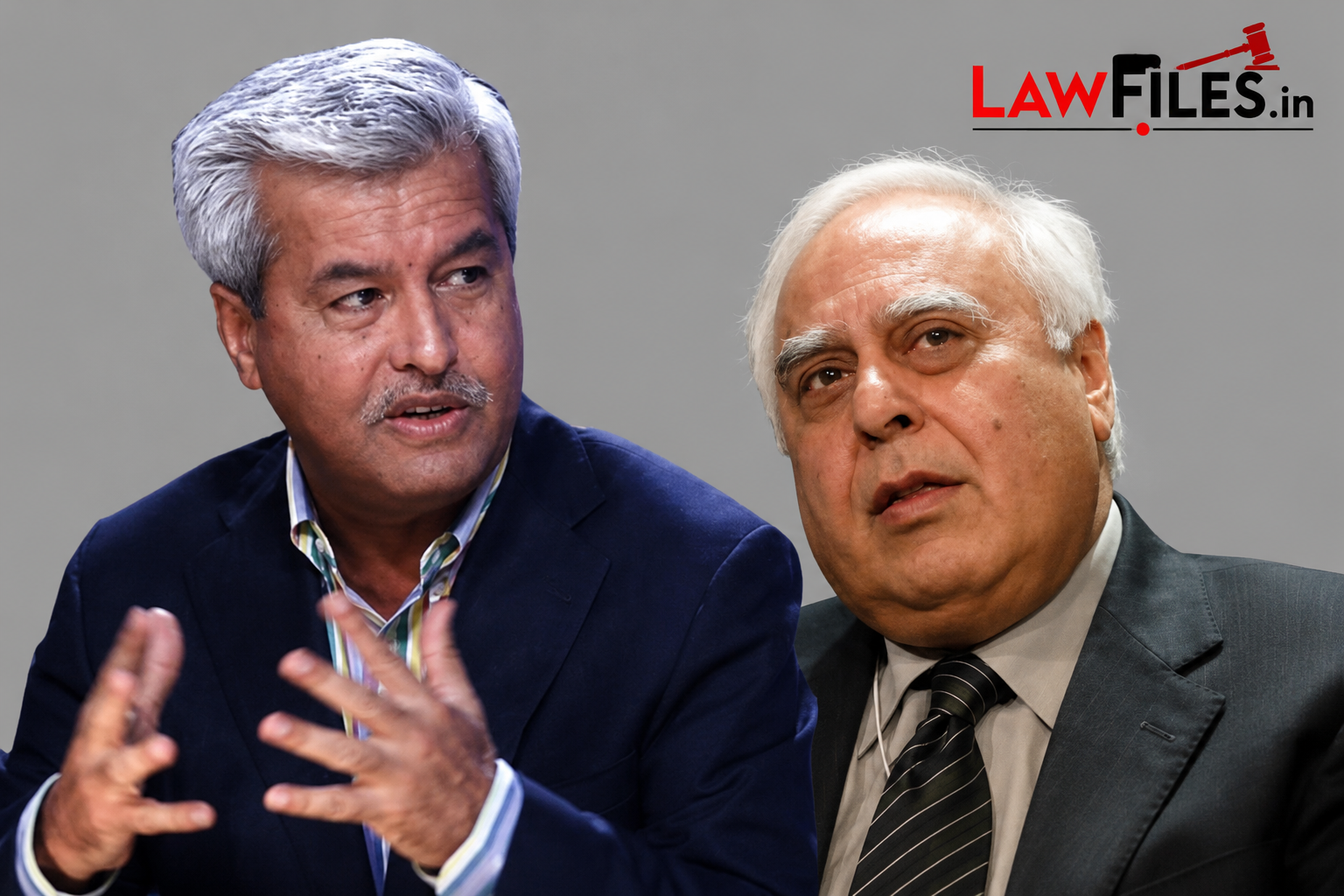
The long-standing constitutional debate surrounding India’s Collegium system for appointment of judges has once again returned to the forefront following a candid discussion between Senior Advocates Kapil Sibal and Dushyant Dave, in which both senior members of the Bar expressed serious concerns regarding the functioning of the existing mechanism governing appointments to the higher judiciary. Speaking during an interview on the programme Dil Se with Kapil Sibal, the two legal stalwarts questioned whether the Collegium, which was judicially evolved to safeguard the independence of the judiciary from executive interference, has gradually drifted away from the very constitutional objectives that justified its creation. Their remarks have once again revived one of the most significant constitutional conversations in contemporary India whether judicial independence can truly be preserved without simultaneously ensuring transparency, accountability and merit in judicial appointments.
Dushyant Dave, former President of the Supreme Court Bar Association and a senior advocate who recently stepped away from active legal practice, described the present Collegium system as having “turned out to be a disaster.” According to Dave, while the executive did make controversial appointments before the 1990s, those instances were comparatively limited and the appointment process at that time involved meaningful institutional consultation. In his view, the judicially created Collegium mechanism, introduced after the landmark Supreme Court Advocates-on-Record Association v. Union of India (popularly known as the Second Judges Case), has not produced the standards of judicial excellence that its architects envisioned. He argued that over the past three decades, concerns regarding competence, judicial philosophy and institutional leadership have increasingly surfaced within the higher judiciary.
Kapil Sibal, one of India’s most distinguished constitutional lawyers and himself a counsel in the Second Judges Case, made a striking observation by stating that he regretted appearing in the litigation that ultimately institutionalised the Collegium system. Explaining his remark, Sibal clarified that the original objective behind supporting judicial primacy in appointments was to insulate the judiciary from executive influence. However, he suggested that the eventual outcome had produced consequences different from those originally anticipated. According to Sibal, the appointment process has increasingly become susceptible to subjectivity, negotiations and institutional compromises, resulting in a dilution of merit rather than its enhancement.
The discussion assumes significance because the Collegium system itself is not a product of any constitutional amendment or parliamentary enactment. Rather, it evolved through judicial interpretation in the trilogy of constitutional decisions commonly referred to as the First, Second and Third Judges Cases. While the Constitution originally envisaged judicial appointments by the President after consultation with constitutional authorities, the Second Judges Case in 1993 shifted primacy in appointments from the executive to the judiciary by recognising the Collegium as the principal recommending body. This framework was further refined through the Presidential Reference of 1998, where the Supreme Court expanded the Collegium to include the Chief Justice of India and the four senior-most judges of the Court for appointments to the Supreme Court. The objective underlying this judicial innovation was to preserve the independence of the judiciary one of the essential features of the Constitution recognised under the basic structure doctrine.
During the interview, Dave argued that while the Collegium was intended to eliminate executive interference, it has itself become increasingly vulnerable to subjectivity and institutional bargaining. He expressed concern that many deserving members of the Bar and the subordinate judiciary have been overlooked for elevation, while individuals with comparatively lesser merit have secured appointments to constitutional courts. According to him, the resulting decline has affected not only judicial competence but also public confidence in the higher judiciary. Sibal echoed similar concerns, observing that members of the Collegium often possess first-hand familiarity only with judges from their respective High Courts, a circumstance that may inadvertently encourage reciprocal accommodation rather than an objective nationwide assessment of merit. Both lawyers suggested that such dynamics risk transforming appointments into exercises of institutional compromise instead of constitutional selection based on excellence.
Another significant aspect of the discussion concerned the relationship between the executive and the judiciary. Dave alleged that in recent years the executive has exercised increasing influence over judicial appointments and transfers despite the formal existence of the Collegium system. Referring to instances involving judges whose judicial decisions allegedly became controversial, he claimed that independent judges have sometimes faced adverse administrative consequences, including transfers or stalled elevations. Both Dave and Sibal referred to the experiences of former judges such as Justice Jayant Patel, Justice Akil Kureshi and Justice S. Muralidhar while expressing concerns regarding the broader institutional climate surrounding judicial independence. These observations reflect the personal opinions expressed by the speakers during the interview and do not constitute judicial findings on those matters.
From a constitutional perspective, the debate revisits one of the most contested institutional questions in Indian public law. Judicial independence constitutes a recognised component of the Constitution’s basic structure and is therefore insulated from legislative or executive measures that substantially impair it. At the same time, constitutional accountability demands that appointments to constitutional courts remain transparent, objective and based upon demonstrable merit. The central challenge has always been balancing these two constitutional imperatives. Excessive executive control over appointments raises legitimate concerns regarding judicial independence, whereas an entirely insulated appointment process may invite criticism concerning opacity, institutional self-selection and limited public accountability.
This tension became particularly evident during the constitutional challenge to the National Judicial Appointments Commission (NJAC). Parliament sought to replace the Collegium through the 99th Constitutional Amendment and the NJAC Act, introducing a commission comprising representatives from the judiciary, executive and eminent persons. In 2015, however, a Constitution Bench of the Supreme Court struck down both the constitutional amendment and the statute, holding that the proposed framework violated the basic structure by compromising judicial independence. Importantly, while restoring the Collegium, the Court itself acknowledged shortcomings within the existing system and invited suggestions for improving transparency, eligibility standards, establishment of a permanent secretariat and objective evaluation mechanisms. Many of those reform proposals continue to remain under discussion.
The concerns articulated by Sibal and Dave also resonate with broader academic debates surrounding institutional design. Comparative constitutional systems employ a wide variety of judicial appointment models. Some democracies entrust appointments primarily to elected governments subject to legislative confirmation, while others utilise independent judicial commissions or mixed constitutional bodies. Each model attempts to reconcile competing constitutional objectives—judicial independence, democratic accountability, institutional transparency and merit-based selection. India’s Collegium remains distinctive because it places primary responsibility for appointments within the judiciary itself, a model that has attracted both praise for protecting judicial autonomy and criticism for perceived opacity and absence of formal selection criteria.
The discussion also highlights another enduring concern—the absence of codified standards governing assessment of judicial merit. Neither the Constitution nor the Memorandum of Procedure exhaustively defines objective parameters for evaluating candidates. While factors such as integrity, competence, judicial temperament, diversity and professional ability are routinely considered, the process largely operates through confidential institutional consultation. Critics argue that greater transparency would strengthen public confidence without undermining judicial independence. Conversely, supporters caution that excessive openness may expose prospective candidates to political lobbying, media campaigns or reputational harm, thereby weakening judicial autonomy.
It is equally important to recognise that the interview reflects opinions expressed by two eminent members of the legal profession rather than findings recorded by any constitutional court or statutory body. Nevertheless, the significance of those views lies in their contribution to an ongoing constitutional conversation that has engaged judges, governments, parliamentarians, scholars and the legal fraternity for decades. Questions concerning executive influence, judicial accountability, diversity within the higher judiciary, regional representation, elevation from the Bar versus the subordinate judiciary, and objective standards of merit remain central to the continuing evolution of India’s constitutional institutions.
Ultimately, the conversation between Kapil Sibal and Dushyant Dave serves as a reminder that the debate over judicial appointments is not merely about selecting judges it concerns the institutional architecture through which constitutional democracy itself is safeguarded. The legitimacy of constitutional adjudication depends not only upon the independence of judges but equally upon public confidence that appointments are made through a process perceived as fair, transparent and merit-oriented. Whether future reforms emerge through judicial initiative, executive consultation or legislative consensus, the constitutional challenge remains unchanged: to preserve judicial independence without sacrificing accountability, and to protect institutional autonomy while ensuring that the nation’s highest courts continue to be staffed by individuals of the highest integrity, competence and constitutional commitment.
