


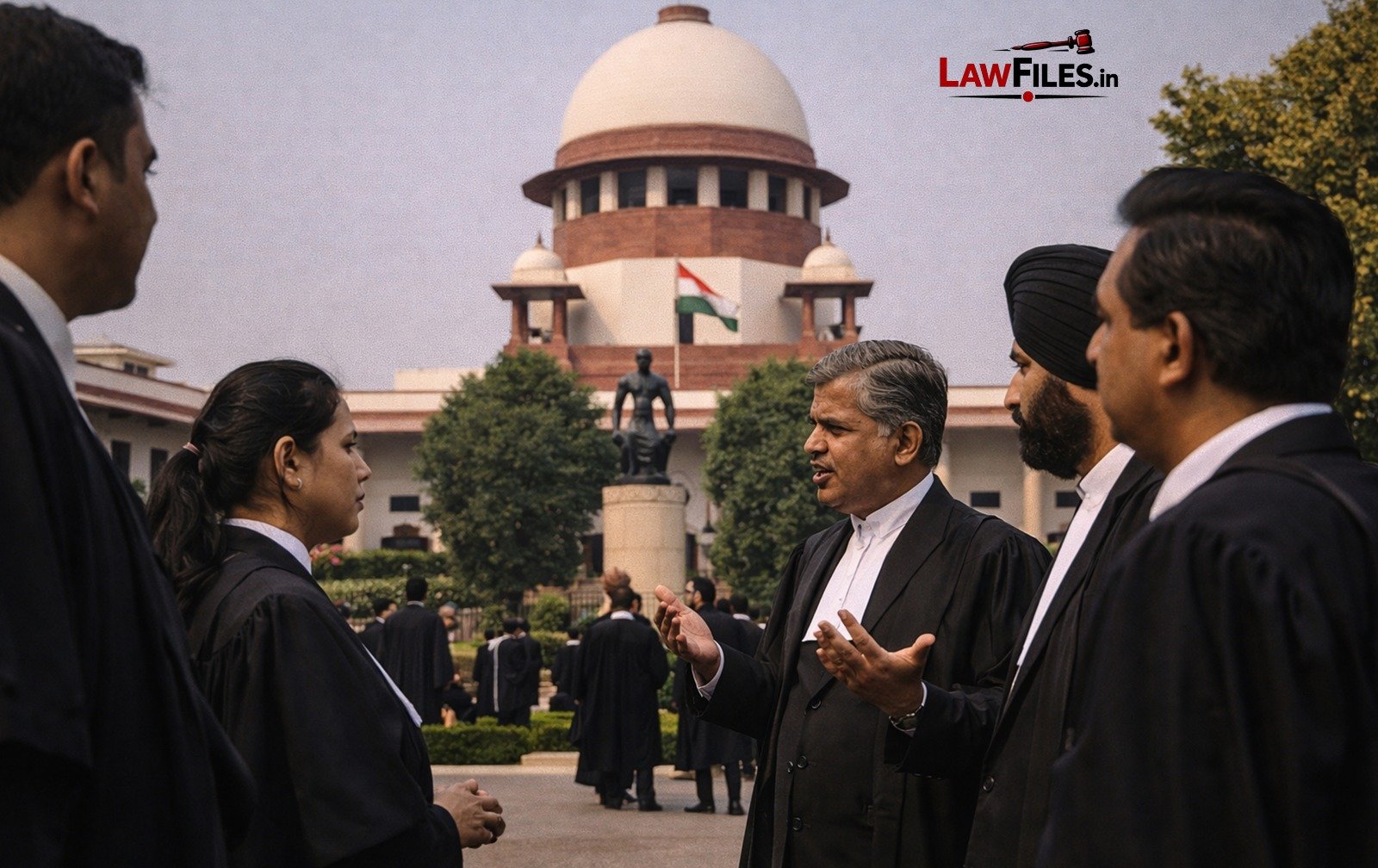
The Supreme Court’s recent observation that it cannot compel advocates to appear only through virtual mode and can merely “appeal” to the Bar has once again exposed the uneasy relationship between judicial modernisation, professional autonomy and the enduring culture of physical courtroom advocacy in India’s legal system. The remarks came amid concerns arising from the ongoing fuel crisis linked to escalating tensions in West Asia, which had prompted suggestions that lawyers be encouraged to attend hearings virtually to minimise disruption and logistical difficulties.
The Court’s response may appear procedural at first glance, yet it raises far deeper institutional questions concerning the future of legal practice in post-pandemic India. More than four years after the COVID-19 crisis fundamentally transformed judicial functioning through widespread adoption of video conferencing and hybrid hearings, Indian courts continue to grapple with a difficult constitutional and professional dilemma: whether technology should remain merely an optional facilitative tool or evolve into a structural feature of courtroom adjudication itself.
The issue arose during proceedings before the Supreme Court when concerns were expressed regarding the impact of rising fuel shortages and transportation disruptions caused by geopolitical instability in West Asia. Suggestions were reportedly made that lawyers be directed to participate virtually wherever possible in order to reduce physical movement and logistical burden. However, the Bench firmly clarified that while the Court could encourage and request members of the Bar to adopt virtual participation, it lacked the authority to compel advocates to appear exclusively through video conferencing.
The observation is constitutionally significant because it touches upon the delicate institutional balance between judicial control over courtroom procedure and the professional autonomy of advocates. Indian courts possess broad powers to regulate practice and procedure within their jurisdiction under constitutional provisions and statutory frameworks. Yet the Court’s remarks indicate judicial recognition that the advocate’s role within adversarial litigation cannot be reduced purely to administrative convenience.
This distinction becomes especially important in the Indian legal context, where physical courtroom presence remains deeply intertwined with professional culture, advocacy strategy and even career progression. For many lawyers, particularly younger practitioners, courtroom appearances are not merely procedural formalities but essential spaces of visibility, networking, mentorship and professional development. Virtual hearings, while efficient in many respects, often flatten these traditional dimensions of legal practice.
The controversy also reflects a broader post-pandemic institutional debate unfolding across Indian courts. During the COVID-19 pandemic, the judiciary underwent one of the most rapid technological transitions in its history. Courts that had long resisted large-scale digital integration suddenly shifted to virtual functioning almost overnight. Video conferencing emerged not merely as a temporary emergency mechanism but as a transformative experiment in judicial accessibility.
The Supreme Court itself repeatedly acknowledged the constitutional value of hybrid hearings. In a landmark 2023 judgment, the apex court directed all High Courts to ensure that lawyers and litigants are not denied access to video conferencing or hybrid hearing facilities. The Court observed that technology is no longer optional in modern judicial systems and emphasised that digital access forms an essential component of access to justice.
Importantly, the Court in that judgment criticised arbitrary restrictions imposed by some High Courts on hybrid hearings, including age-based eligibility criteria and discretionary denial of virtual access. The Bench held that technological participation cannot become a privilege reserved for senior advocates or exceptional circumstances alone. Instead, hybrid systems were recognised as instruments capable of democratising access to courts for lawyers and litigants located outside metropolitan centres.
Yet despite this strong judicial endorsement of hybrid infrastructure, the present remarks reveal the Court’s simultaneous reluctance to transform virtual appearance into a mandatory professional obligation. This tension illustrates the judiciary’s attempt to balance technological efficiency with the institutional traditions of adversarial advocacy.
The legal profession itself remains sharply divided on the issue. Senior advocates and metropolitan practitioners often support hybrid systems for their flexibility and efficiency, particularly in procedural or short-duration matters. At the same time, many members of the Bar especially younger lawyers and trial practitioners argue that excessive dependence on virtual hearings risks weakening the oral and interactive character of courtroom litigation.
Critics of fully virtual systems frequently point to the intangible dimensions of physical courtrooms that technology struggles to replicate. Courtroom advocacy involves not only legal argumentation but also spontaneous judicial engagement, assessment of courtroom mood, observation of opposing counsel and subtle interpersonal dynamics that shape litigation outcomes. Many lawyers argue that virtual hearings reduce advocacy to transactional exchanges detached from the performative and human aspects of adjudication.
The Supreme Court’s recent remarks therefore reflect a deeper institutional caution against allowing administrative convenience to entirely replace traditional courtroom functioning. The Bench appears conscious that while courts possess authority to regulate procedure, compelling exclusive virtual appearance may fundamentally alter the professional ecology of litigation in ways requiring broader consensus rather than unilateral judicial direction.
Another important dimension concerns the autonomy of the Bar itself. Indian legal tradition has historically treated advocates not merely as service providers but as integral officers of the court possessing independent professional status. By observing that the Court can only “appeal” to the Bar, the Bench implicitly reaffirmed the cooperative rather than coercive relationship between the Bench and the legal profession.
This approach also aligns with earlier Supreme Court jurisprudence emphasising the independence and dignity of legal practice. While courts possess supervisory authority over courtroom conduct and procedure, advocates retain professional discretion regarding how best to discharge duties toward clients within lawful procedural frameworks.
At the same time, the present situation highlights how external crises increasingly influence judicial administration. The fuel concerns arising from geopolitical instability demonstrate that modern court systems are no longer insulated from global economic and political disruptions. Courts today must navigate challenges ranging from pandemics and environmental emergencies to transportation disruptions and cybersecurity concerns. Hybrid infrastructure therefore increasingly functions not merely as a convenience but as institutional resilience architecture capable of maintaining continuity during crises.
The remarks also reopen broader questions regarding accessibility and inequality within India’s legal profession. Hybrid hearings were initially celebrated because they significantly reduced travel costs, logistical barriers and geographical disadvantages faced by lawyers practising outside Delhi and other major legal centres. Many advocates from smaller towns gained unprecedented access to constitutional courts through video conferencing technology.
However, concerns simultaneously emerged that virtual systems disproportionately benefited established senior lawyers while marginalising junior advocates who rely heavily upon physical presence, corridor interactions and direct courtroom observation to build professional relationships. The debate over mandatory virtual participation therefore also reflects underlying anxieties regarding generational and structural inequalities within the profession itself.
Interestingly, the Supreme Court’s refusal to compel virtual hearings does not amount to rejection of technological reform. Rather, it signals preference for gradual institutional adaptation based on persuasion and professional consensus instead of compulsory procedural transformation. This reflects the judiciary’s broader post-pandemic approach preserving hybrid infrastructure while resisting complete displacement of physical courts.
The issue additionally intersects with constitutional ideas of open justice. Physical courtrooms historically symbolise transparency, public accountability and participatory adjudication. While virtual hearings expand accessibility in some respects, critics argue that excessive digitisation may inadvertently weaken the public and civic character of judicial spaces by transforming proceedings into fragmented digital interactions.
The Supreme Court’s remarks therefore encapsulate a larger transitional moment within Indian legal culture. The judiciary clearly recognises that technology has permanently altered the future of adjudication and access to justice. Yet it also appears equally aware that courts are not merely dispute resolution platforms but constitutional institutions shaped by human interaction, professional traditions and public visibility.
Ultimately, the controversy reveals that the future of Indian courts is unlikely to be entirely virtual or entirely traditional. Instead, the legal system appears to be evolving toward a negotiated hybrid model where technology supplements but does not entirely replace physical advocacy.
The Supreme Court’s statement that it can only “appeal to the Bar” is therefore more than a procedural clarification. It is an acknowledgment that meaningful judicial modernisation cannot occur solely through administrative orders. In a profession built upon institutional tradition and adversarial participation, technological transformation must emerge through cooperation between the Bench and the Bar rather than compulsion alone
