


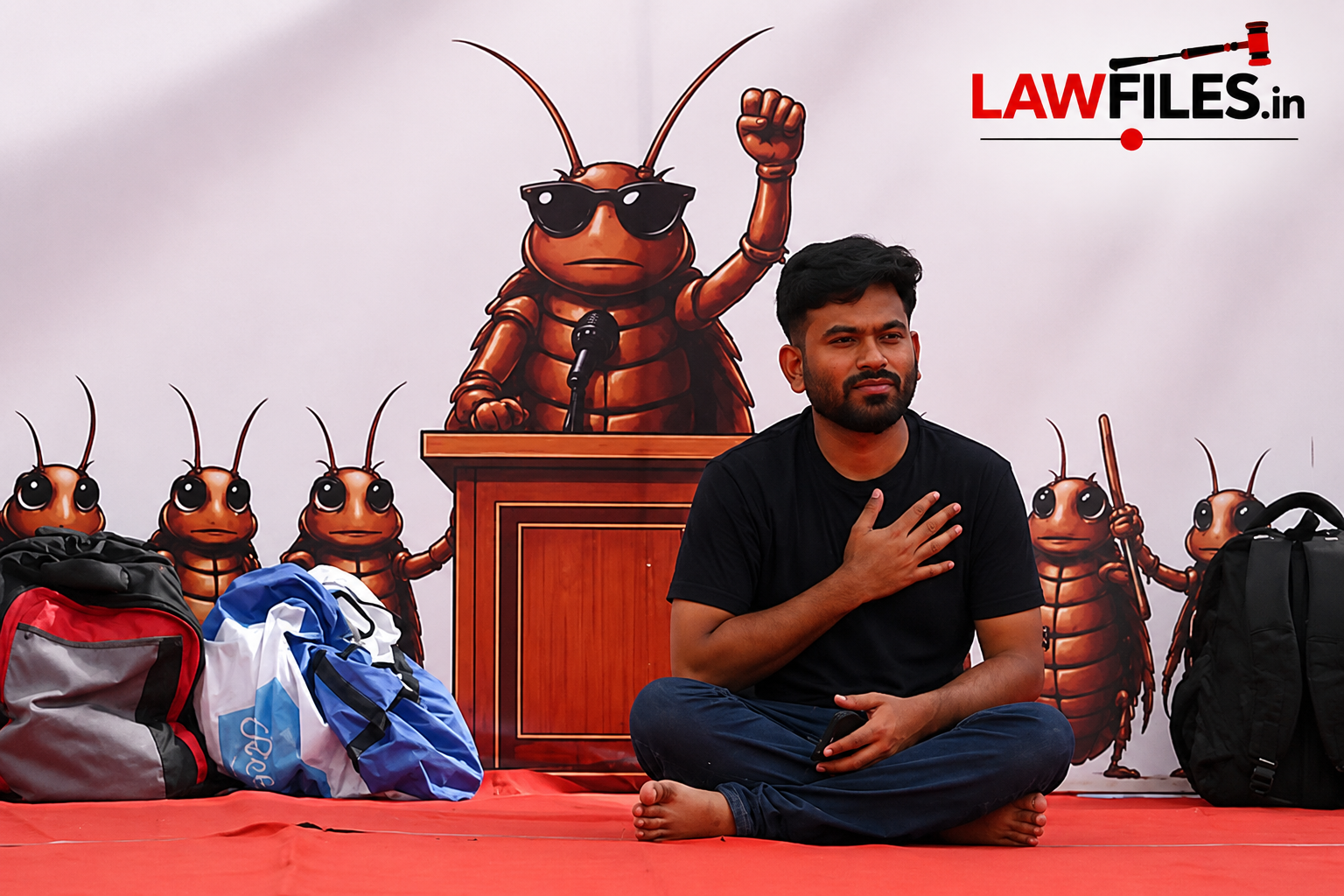
In an important ruling at the intersection of constitutional free speech and digital governance, the Delhi High Court has directed the restoration of the X (formerly Twitter) account of the “Cockroach Janata Party” (CJP), holding that the primary reason advanced by the Union Government for blocking the account had ceased to exist. Justice Swarana Kanta Sharma allowed the petition filed by CJP founder Abhijit Dipke after recording the submission of the Solicitor General of India that the Centre no longer opposed restoration of the account, as the concern which had prompted the blocking order namely, the possibility of confusion among students and parents during the NEET examination was no longer relevant following the conclusion of the examination process. The order, though passed in the specific factual circumstances of the case, raises significant constitutional questions concerning proportionality, temporal validity of executive restrictions and the continuing judicial scrutiny of online content regulation.
The controversy arose after the X account of the Cockroach Janata Party was blocked in India in May 2026. The satirical online collective had rapidly gained public attention through social media campaigns relating to examination reforms, alleged irregularities in competitive examinations and broader issues affecting students and unemployed youth. Within a short period, the account had attracted substantial public engagement, making the blocking order the subject of considerable legal and public debate. Aggrieved by the restriction imposed upon its digital platform, founder Abhijit Dipke approached the Delhi High Court challenging the legality of the action and seeking restoration of the account.
During the hearing, Solicitor General Tushar Mehta, appearing for the Union Government, informed the Court that the principal concern behind blocking the account was to prevent possible confusion among students and parents during the conduct of the National Eligibility-cum-Entrance Test (NEET). According to the Government, the account’s online activities during the sensitive examination period could potentially contribute to disruption or uncertainty among examination candidates. However, it was submitted that since the examination had already concluded, the apprehended situation no longer survived. Recording this statement, Justice Sharma observed that the basis upon which the account had been blocked had ceased to exist and consequently directed restoration of the X account.
Although brief in its operative reasoning, the order carries considerable constitutional significance because it implicitly recognises an important principle governing executive restrictions upon speech: restrictions justified by temporary public interest considerations cannot ordinarily survive after the underlying circumstances disappear. In constitutional jurisprudence, administrative measures restricting fundamental freedoms must continue to bear a rational nexus with the objective sought to be achieved. Once the factual foundation supporting such restrictions no longer exists, continued interference with constitutional rights may become legally unsustainable. The High Court’s approach reflects this doctrine of continuing proportionality rather than treating executive restrictions as indefinite measures immune from judicial review.
The proceedings also engage Article 19(1)(a) of the Constitution, which guarantees freedom of speech and expression. Digital platforms today constitute one of the principal mediums through which individuals, political organisations, satirical collectives and civil society groups participate in democratic discourse. While Article 19(2) authorises reasonable restrictions in the interests of public order, sovereignty, security of the State and other constitutionally recognised grounds, the Supreme Court has consistently held that such restrictions must satisfy the tests of legality, necessity and proportionality. The Delhi High Court’s order reinforces the proposition that executive restrictions upon online expression remain subject to continuing constitutional scrutiny and cannot operate beyond the circumstances that originally justified their imposition.
The litigation also highlights the expanding role of constitutional courts in reviewing governmental regulation of digital intermediaries. Blocking of online accounts, websites and digital platforms generally occurs within the statutory framework of the Information Technology Act, 2000 and the Information Technology (Procedure and Safeguards for Blocking for Access of Information by Public) Rules, 2009. These provisions empower the Central Government to direct intermediaries to block access to online information under specified circumstances affecting sovereignty, public order and other protected interests. However, judicial review remains available to ensure that such powers are exercised within constitutional limits and in accordance with principles of administrative fairness.
From an administrative law perspective, the case illustrates the doctrine that executive decisions are not static but remain open to reconsideration when factual circumstances materially change. The Government itself informed the Court that the purpose underlying the blocking order had already been fulfilled because the NEET examination was over. Rather than defending indefinite continuation of the restriction, the Union accepted that the original justification had become academic. The Court’s decision to record this position and order restoration demonstrates a pragmatic exercise of judicial review, resolving the dispute without entering into wider constitutional questions concerning the original blocking order.
The order also reflects the judiciary’s growing engagement with disputes involving online political expression. Social media has transformed contemporary democratic participation by enabling new forms of political mobilisation, satire, advocacy and public criticism. Simultaneously, governments increasingly rely upon statutory powers to regulate online content where concerns relating to misinformation, public order or examination integrity arise. Constitutional courts are therefore frequently required to balance competing public interests protecting freedom of expression while preserving the integrity of public institutions and sensitive governmental processes.
Another noteworthy aspect concerns the limited scope of the Court’s determination. The High Court did not pronounce upon whether the original blocking order was lawful at the time it was issued. Nor did it lay down any broad constitutional principles governing future blocking orders under the Information Technology Act. The Court’s reasoning remained closely tied to the factual concession made by the Union Government that the apprehended risk associated with the NEET examination no longer survived. Consequently, the judgment should be understood primarily as an application of constitutional proportionality to evolving factual circumstances rather than a comprehensive reconsideration of the statutory blocking framework.
The proceedings nevertheless resonate with the Supreme Court’s broader jurisprudence concerning restrictions upon internet-based expression. Decisions such as Anuradha Bhasin v. Union of India have repeatedly emphasised that limitations affecting digital communication cannot remain indefinite and must satisfy standards of necessity and periodic review. Although the present case concerns restoration of a social media account rather than internet shutdowns, the underlying constitutional philosophy remains similar: executive restrictions upon digital rights require continuing justification and remain amenable to judicial oversight where circumstances materially change.
From the standpoint of digital governance, the decision also underscores the importance of responsive executive action. Rather than insisting upon continuation of a restriction whose stated objective had expired, the Government informed the Court that it had no objection to restoration. Such an approach reflects an important feature of administrative legality the willingness of public authorities to reassess earlier decisions in light of changed circumstances instead of defending them mechanically. Judicial review, in this context, operates not merely as an instrument of correction but also as a catalyst for administrative accountability.
Ultimately, the Delhi High Court’s order extends beyond restoration of a single social media account. It reaffirms a broader constitutional principle that restrictions upon digital expression must remain proportionate, context-specific and continuously justified by legitimate public purposes. As India’s constitutional jurisprudence on digital rights continues to evolve, the decision serves as another reminder that executive powers regulating online platforms are subject to the discipline of constitutional review and that temporary restrictions cannot acquire permanent character merely through the passage of time. In an era where digital platforms have become central to democratic participation, judicial oversight of executive action remains an indispensable safeguard for preserving the delicate balance between freedom of expression, administrative necessity and the rule of law.
