


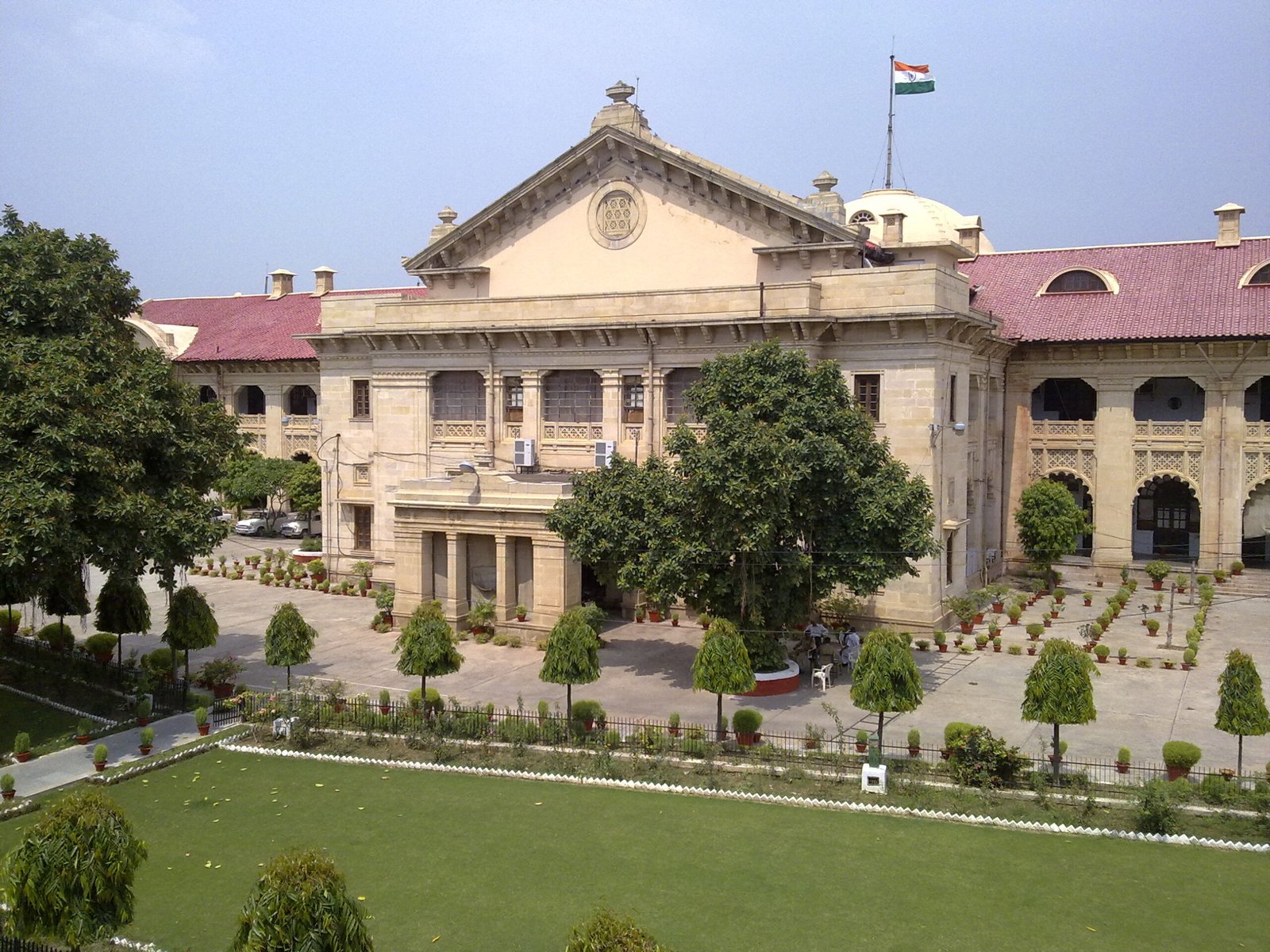
In a significant ruling reinforcing the welfare-oriented character of maintenance jurisprudence in India, the Allahabad High Court has held that a wife’s educational qualification or mere capacity to earn cannot by itself disentitle her from seeking maintenance under Section 125 of the Code of Criminal Procedure. The judgment underscores an increasingly important judicial principle that maintenance law is not designed to punish women for being educated or professionally capable, but to prevent economic abandonment and ensure dignified subsistence within marriage-related disputes.
The ruling was delivered by Justice Arun Kumar Singh Deshwal while hearing a criminal revision petition filed by a husband challenging maintenance awarded to his wife and minor child by the Family Court. The husband contended that since the wife was well educated and capable of maintaining herself, she was not entitled to claim maintenance under Section 125 CrPC. Rejecting this argument, the High Court clarified that “mere qualification or capacity to earn” does not establish that the wife is actually earning sufficient income for her sustenance.
The Court observed that Section 125 CrPC is fundamentally a social justice provision enacted to prevent destitution and vagrancy. Consequently, the provision must receive a liberal and purposive interpretation rather than a narrow technical construction rooted in assumptions about employability or educational status. The Bench reiterated that unless it is affirmatively demonstrated that the wife possesses an independent and sufficient source of income adequate for maintaining the same standard of living, maintenance cannot be denied merely because she is qualified or potentially employable.
The decision arrives at a time when Indian courts are increasingly confronted with changing socio-economic realities within matrimonial disputes. As women’s educational participation and workforce presence continue to expand, husbands frequently argue in maintenance litigation that educated spouses should not remain financially dependent. However, courts have repeatedly distinguished between “capacity to earn” and “actual economic independence.” The Allahabad High Court’s ruling reinforces this distinction by recognising that educational qualifications do not automatically translate into secure employment, stable income, or financial autonomy.
This doctrinal distinction is particularly significant in the Indian social context, where women often face structural barriers in accessing sustained employment despite possessing educational credentials. Marriage-related relocation, childcare responsibilities, career interruptions, social expectations, and unequal domestic burdens frequently diminish women’s practical earning opportunities even when they are professionally qualified. The Court’s reasoning therefore reflects an awareness that formal qualification alone cannot be treated as conclusive evidence of economic self-sufficiency.
Importantly, the High Court relied upon settled Supreme Court jurisprudence concerning maintenance law. The Supreme Court has repeatedly characterised Section 125 CrPC as a measure of social welfare intended to protect women and children from financial neglect. In Chaturbhuj v. Sita Bai, the apex court held that the phrase “unable to maintain herself” does not mean that the wife must be completely destitute before seeking maintenance; rather, the provision seeks to ensure that she can live with basic dignity comparable to the marital standard of life.
The Allahabad High Court’s judgment also resonates with the Supreme Court’s landmark ruling in Rajnesh v. Neha, where detailed guidelines were framed to streamline maintenance adjudication and ensure realistic financial disclosure by parties. In that case, the Supreme Court stressed that maintenance must be determined not merely by survival-level calculations but by considering the social status and lifestyle enjoyed during the marriage. (sci.gov.in)
The present ruling is therefore part of a broader judicial trend aimed at humanising maintenance jurisprudence and resisting overly formalistic approaches. Earlier, some courts had occasionally adopted restrictive interpretations suggesting that employable or professionally qualified women should not seek maintenance. However, more recent jurisprudence increasingly recognises that economic dependency within marriage cannot be assessed through simplistic assumptions regarding educational attainment alone.
Critically analysed, the judgment also exposes the continuing gendered tensions underlying maintenance litigation in India. Maintenance claims are frequently framed in public discourse as instruments of unfair dependency or misuse. Yet courts have consistently reminded litigants that maintenance law is rooted not in charity but in the legal and moral obligations arising from marriage itself. The obligation to maintain a spouse reflects constitutional commitments to dignity, equality, and social justice rather than patriarchal notions of benevolence.
At another level, the case reflects the judiciary’s attempt to adapt family law principles to changing social realities without abandoning the protective foundations of maintenance jurisprudence. Modern matrimonial disputes increasingly involve dual-income households, professionally qualified spouses, and evolving gender roles. However, economic vulnerability within marriage remains highly gendered in practice. Women continue to bear disproportionate responsibility for unpaid domestic labour and childcare, often at the cost of professional advancement. The Court’s reasoning implicitly acknowledges these structural inequalities.
The judgment also raises broader questions regarding the meaning of “economic independence” in matrimonial law. Financial independence cannot be measured merely through theoretical employability. Courts increasingly examine whether the spouse actually possesses stable income, professional continuity, and sufficient financial resources to maintain herself in a manner consistent with her social circumstances. This approach reflects a more realistic understanding of labour market inequality and domestic economic dependence.
Another important aspect of the ruling lies in its reaffirmation of the summary and welfare-oriented nature of proceedings under Section 125 CrPC. Maintenance proceedings are not intended to become exhaustive civil trials into hypothetical earning potential. Instead, the focus remains on preventing immediate hardship and ensuring subsistence. By rejecting speculative arguments regarding future employability, the Court preserved the remedial character of maintenance jurisdiction.
From a constitutional perspective, the decision aligns with the judiciary’s broader emphasis on substantive equality under Articles 14 and 15. Formal equality arguments—that educated women should automatically support themselves often overlook substantive disparities in access to employment, income stability, and caregiving burdens. The High Court’s reasoning therefore reflects a substantive equality approach that examines actual economic realities rather than abstract assumptions of capability.
At the same time, the ruling does not imply that maintenance is unconditional or permanent irrespective of circumstances. Courts continue to examine actual earnings, financial disclosures, professional status, and changes in economic conditions while determining maintenance amounts. The judgment merely clarifies that educational qualification alone cannot become a legal bar to claiming maintenance.
Ultimately, the Allahabad High Court’s decision serves as an important reaffirmation of the protective philosophy underlying Indian maintenance law. By holding that educational attainment and earning capacity cannot automatically defeat a maintenance claim, the Court has reinforced a crucial principle: matrimonial law must respond to lived economic realities rather than abstract assumptions about employability. In doing so, the judgment strengthens the social justice character of Section 125 CrPC and reasserts the constitutional commitment to dignity and financial security within family law adjudication.
