


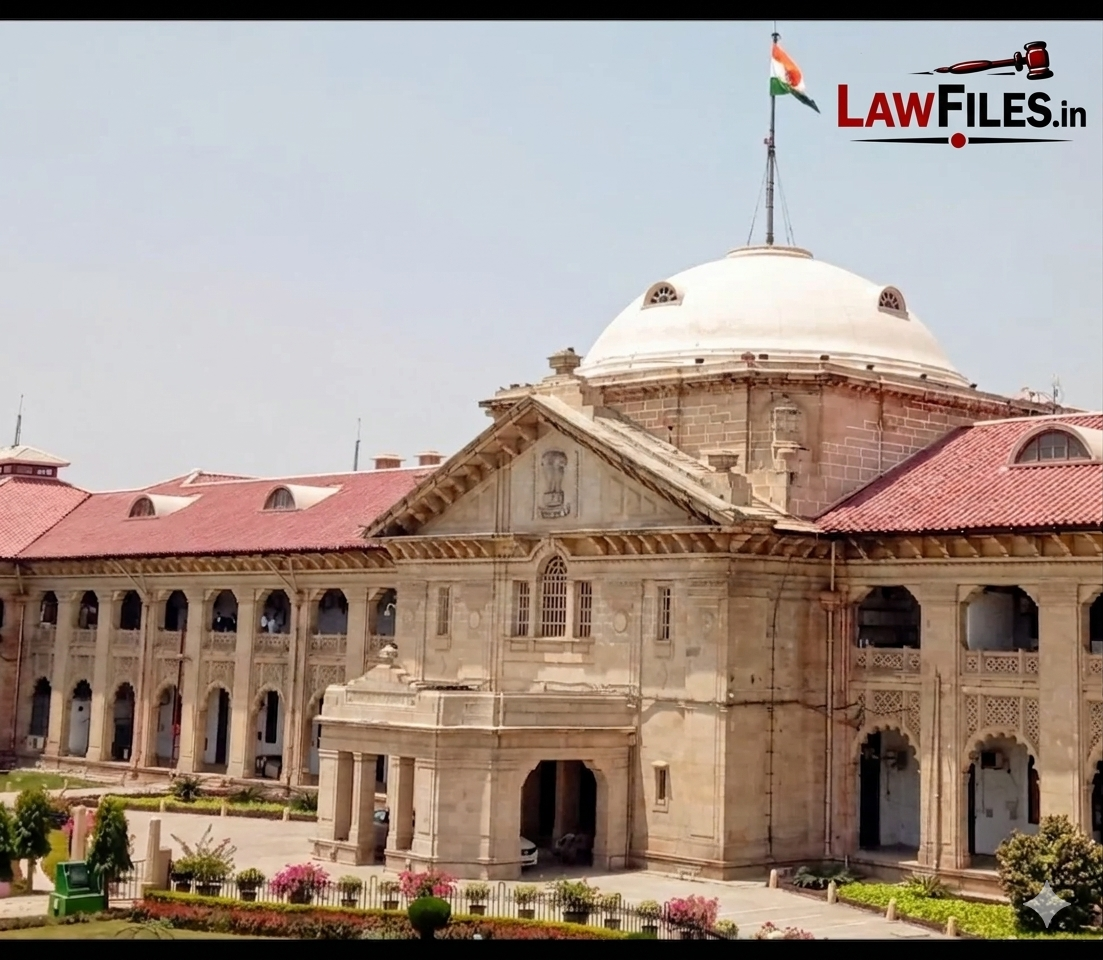
In a significant judgment reaffirming the constitutional philosophy underlying reservation in local self-government institutions, the Allahabad High Court has held that electors residing in a constituency reserved for a particular category cannot assert a legal or constitutional right to vote for a candidate belonging to the general category. Rejecting a challenge founded upon the alleged deprivation of voter choice, the Court observed that reservation of electoral constituencies is itself a constitutionally recognised mechanism designed to secure adequate political representation for historically disadvantaged communities. Consequently, the inability of voters to elect a general category candidate in a reserved constituency cannot be construed as an infringement of any enforceable legal right. The ruling provides important judicial clarity on the distinction between the statutory right to vote and the constitutional policy of affirmative political representation embedded within India’s democratic framework.
The dispute arose from an election challenge concerning a local body constituency that had been notified as reserved under the applicable reservation roster. The petitioner questioned the reservation of the constituency, contending that voters belonging to the general category were effectively denied the opportunity to vote for a candidate of their own choice because only candidates from the reserved category were eligible to contest. It was argued that such restriction diluted the democratic principle of free electoral choice and impaired the voter’s right to participate meaningfully in the electoral process.
Opposing the petition, the State authorities defended the reservation by placing reliance upon the constitutional framework governing political reservations in Panchayats and Municipalities. It was submitted that the Constitution itself authorises reservation of seats for Scheduled Castes, Scheduled Tribes and, where legislatively provided, Other Backward Classes and women, with the objective of ensuring effective participation of historically underrepresented sections in democratic governance. The respondents argued that once a constituency is lawfully reserved in accordance with statutory provisions and the notified roster, no individual voter can insist that candidates from categories excluded by the reservation policy must also be permitted to contest.
After hearing the parties, the Allahabad High Court dismissed the challenge and upheld the reservation framework. The Court observed that the right to vote in India is not an unrestricted or absolute right but a statutory right regulated by election laws enacted by Parliament and the State Legislatures. The constitutional guarantee lies in ensuring that every eligible elector is permitted to cast a vote in accordance with the law governing the election. It does not extend to conferring an individual right to demand that candidates from every social category be made available in every constituency irrespective of constitutionally sanctioned reservation policies.
A central feature of the judgment is its recognition that reservation in electoral constituencies represents an essential component of India’s constitutional commitment to substantive equality. Articles 243D and 243T of the Constitution expressly mandate reservation of seats in Panchayats and Municipalities for Scheduled Castes and Scheduled Tribes in proportion to their population, while also providing for reservation of not less than one-third of seats for women. Several States have additionally introduced reservations for Other Backward Classes through legislation, subject to constitutional limitations laid down by the Supreme Court. The High Court observed that these constitutional provisions are intended to secure meaningful political participation rather than merely symbolic representation.
The Court’s reasoning also reflects the settled constitutional distinction between the right to vote and the right to contest elections. Indian constitutional jurisprudence has consistently held that neither voting nor contesting elections constitutes an unrestricted fundamental right. Instead, both are statutory rights created and regulated by election laws. In decisions such as Jyoti Basu v. Debi Ghosal and subsequent rulings, the Supreme Court has repeatedly emphasised that electoral rights exist only within the framework prescribed by statute and are subject to the qualifications, disqualifications and procedural requirements enacted by the legislature. The High Court’s decision builds upon this established jurisprudence by clarifying that reservation of constituencies represents one such lawful statutory and constitutional limitation.
The ruling also addresses a broader constitutional concern regarding the nature of representative democracy. Reservation in elected bodies is often viewed solely from the perspective of candidate eligibility. However, the Court’s observations recognise that the constitutional objective extends beyond determining who may contest an election. The larger purpose is to ensure that communities historically excluded from political decision-making receive an effective opportunity to participate in governance through elected representation. Allowing every voter to insist upon unrestricted candidate eligibility irrespective of reservation would fundamentally undermine this constitutional objective.
From the perspective of constitutional equality, the judgment reiterates that affirmative action does not operate merely within public employment and educational institutions but also forms an integral part of India’s democratic architecture. Political reservations seek to correct historical patterns of exclusion by ensuring that representative institutions reflect the diversity of Indian society. The Constitution therefore consciously balances the principle of universal adult franchise with targeted mechanisms promoting inclusive political participation.
The decision also carries implications for electoral litigation. Challenges to reservation of constituencies frequently arise after publication of reservation rosters, particularly in local body elections where rotation of reserved seats affects candidate eligibility. The High Court’s judgment indicates that courts are unlikely to interfere merely because reservation limits the categories of candidates available to voters. Judicial review would instead focus upon whether the reservation itself has been implemented in accordance with constitutional provisions, statutory requirements and the prescribed rotation policy, rather than upon subjective preferences of individual electors.
Another noteworthy aspect of the ruling concerns the democratic concept of voter choice. The Court implicitly distinguished between political preference and legal entitlement. Every voter undoubtedly retains the freedom to choose among eligible candidates contesting the election. However, that freedom does not translate into a constitutional right to insist upon participation of candidates rendered ineligible by a valid reservation policy. Democratic choice, the judgment suggests, operates within the legal framework established by the Constitution and election laws rather than outside it.
The judgment also resonates with the Supreme Court’s broader approach towards electoral reservations. In K. Krishna Murthy v. Union of India and later in Vikas Kishanrao Gawali v. State of Maharashtra, the apex court recognised the constitutional legitimacy of reservations in local self-government institutions while simultaneously prescribing safeguards against excessive or mechanically implemented reservations. Those decisions emphasised that political reservation serves the larger constitutional objective of deepening participatory democracy rather than diminishing electoral rights. The Allahabad High Court’s reasoning aligns with that constitutional philosophy by reaffirming that reservation is an instrument of democratic inclusion rather than exclusion.
From a jurisprudential standpoint, the ruling reinforces an important constitutional principle that democracy under the Indian Constitution is not founded solely upon majoritarian choice but also upon equitable representation. Universal adult franchise, political reservations, delimitation and electoral qualifications collectively constitute a carefully balanced constitutional framework designed to secure both representative government and social justice. Individual electoral preferences, however sincerely held, cannot override constitutional mechanisms specifically crafted to achieve inclusive governance.
Ultimately, the Allahabad High Court’s decision reaffirms that the constitutional validity of reserved constituencies cannot be questioned merely because voters belonging to the general category are unable to vote for general category candidates in such constituencies. The judgment underscores that electoral reservation is not an exception to democracy but one of its constitutionally sanctioned features, intended to strengthen representative institutions by ensuring broader participation of historically marginalised communities. In doing so, the Court has reaffirmed that the right to vote must be understood not in isolation but within the larger constitutional vision of equality, social justice and inclusive democratic representation that continues to define India’s electoral jurisprudence.
