


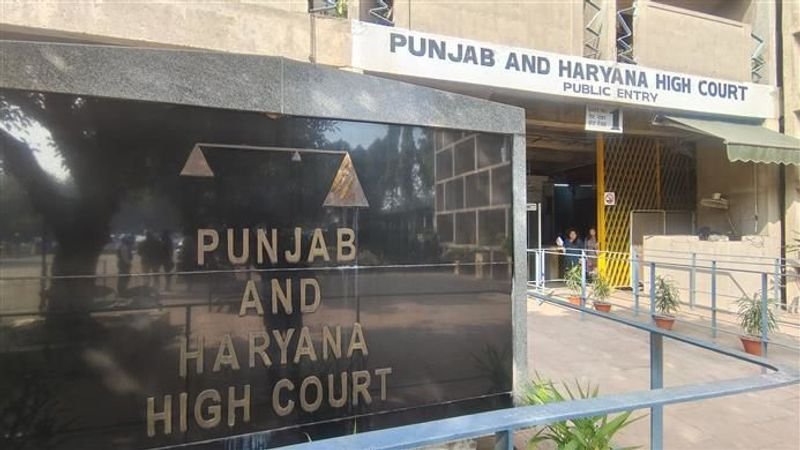
In a significant development highlighting the intersection of custodial rights, gender identity, and constitutional dignity, the Punjab & Haryana High Court has taken note of the absence of separate cells and facilities for transgender persons in jails and police lockups across Punjab, raising concerns over systemic gaps in protecting vulnerable communities within custodial settings.
The matter arose from a Public Interest Litigation seeking directions for creation of separate wards, lockups, and toilets for transgender persons in prisons and police stations, along with mechanisms for gender identification and dedicated protection systems. In response to earlier directions issued by the High Court, the State of Punjab filed an affidavit acknowledging that no separate lockups currently exist for transgender persons in police stations.
The State further informed the Court that field units have been directed to assess requirements and infrastructure needs, and based on such assessment, a proposal amounting to approximately ₹25.86 crore has been prepared for establishing gender-segregated facilities.
This admission effectively confirms a structural vacuum in custodial infrastructure for transgender individuals. The petition underscores that transgender persons recognized as a distinct gender category by the Supreme Court in National Legal Services Authority v. Union of India are entitled to full constitutional protection, including Article 14 – Equality before law, Article 15 – Protection against discrimination and Article 21 – Right to life with dignity
The absence of separate facilities, it is argued, exposes transgender persons in custody to heightened risks of harassment, violence, and indignity, thereby violating these guarantees. The High Court’s inquiry is not limited to infrastructure alone. It also extends to mechanisms for accurate identification of gender at the time of custody, creation of transgender protection cells at district and state levels and ensuring safe and non-discriminatory detention conditions.
Such concerns reflect an evolving judicial recognition that custodial environments must be inclusive and rights-compliant, particularly for marginalised communities. The issue is not isolated to Punjab. Judicial and policy discourse across India has repeatedly flagged the lack of dedicated facilities for transgender persons in prisons and police stations.
Courts have previously noted that housing transgender persons with male inmates can expose them to sexual violence and mental trauma, necessitating structural reforms. Further, advisory frameworks and judicial interventions have emphasised the need for separate cells, sanitation facilities, and privacy protections in custodial settings.
The present case, therefore, fits into a larger constitutional movement towards institutional recognition of transgender rights beyond formal legal identity. While the recognition of transgender identity has been firmly established in constitutional jurisprudence, the present proceedings highlight a crucial gap implementation at the ground level.
The High Court’s ongoing scrutiny signals that recognition of rights must translate into tangible institutional safeguards, custodial systems must evolve from binary frameworks to inclusive models. State inaction in such contexts may amount to constitutional non-compliance. The State’s proposal of ₹25.86 crore for establishing separate facilities indicates policy acknowledgment of the issue, yet also reflects that no immediate infrastructure exists implementation and remains prospective rather than operational
This raises questions about delay in compliance with existing constitutional mandates, especially in light of the passage of the Transgender Persons (Protection of Rights) Act, 2019. The case brings into sharp focus a fundamental principle that the Supreme Court has consistently held that prisoners do not shed their fundamental rights at the prison gate. Extending this logic, the High Court’s intervention emphasizes that transgender persons in custody are entitled to dignity, safety, and equality in treatment.
The proceedings before the Punjab & Haryana High Court represent a critical step in bridging the gap between formal recognition of transgender rights and their lived realities within State institutions. As the matter progresses, it may pave the way for nationwide standards on custodial treatment of transgender persons, reinforcing a vital constitutional message that dignity is not conditional it must be preserved, even behind prison walls.
