

Close Menu
LawFilesLawFiles

    Subscribe to Updates

    Get the latest creative news from FooBar about art, design and business.

    What's Hot

    Advocacy Is Not Influencing, It Is a Public Trust: Bar Council of India Draws Ethical Boundaries for Lawyers in the Age of Social Media

    July 18, 2026

    ‘No Passenger Is Second-Class in a Constitutional Democracy’: Supreme Court Urges Railways to Curb Overcrowding, Reconsider Terminology and Strengthen Passenger Safety

    July 18, 2026

    Electoral Exclusion Is Not Citizenship Determination: Supreme Court Reaffirms Constitutional Limits on Election Commission’s Powers in West Bengal SIR Proceedings

    July 17, 2026
    Facebook X (Twitter) Instagram Threads
    Saturday, July 18
    LawFilesLawFiles
    Facebook X (Twitter)
    • Home
      • Who We Are
      • Our Mission
      • Advisory board
      • Contact US
    • Supreme Court
    • High Courts
      • Gujarat High Court
      • Jharkhand High Court
      • Rajasthan High Court
      • Karnataka High Court
      • Andhra Pradesh High Court
      • Allahabad High Court
      • Himachal Pradesh High Court
      • Chhattisgarh High Court
      • Jammu & Kashmir and Ladakh High Court
      • Kerala High Court
      • Punjab and Haryana High Court
      • Patna High Court
      • Madhya Pradesh High Court
      • Madras High Court
      • Bombay High Court
      • Orissa High Court
      • Calcutta High Court
      • Meghalaya High Court
      • Delhi High Court
      • Manipur High Court
      • Gauhati High Court
    • Corporate
    • Taxation Laws
      • Income Tax
      • GST
      • Customs & Excise
    • Global Affairs
    • Articles
      • Sitting Judge’s’ Views
      • Senior Advocate
      • Policy Analysis
      • Tax Expert
    • PILS
      • Free/Affordable Legal Aid
      • PIL Cell
      • Law student Volunteer Cell (research & Drafting)
      • NGO & Legal services Authority Tie-ups
      • Online Legal Formats
      • Online Legal Help Form
    Subscribe Premium
    LawFilesLawFiles
    Home»High Courts»“Earning Mother Need Not Be Made Party, But Her Income Cannot Be Ignored”: Allahabad High Court Clarifies Law on Child Maintenance
    High Courts

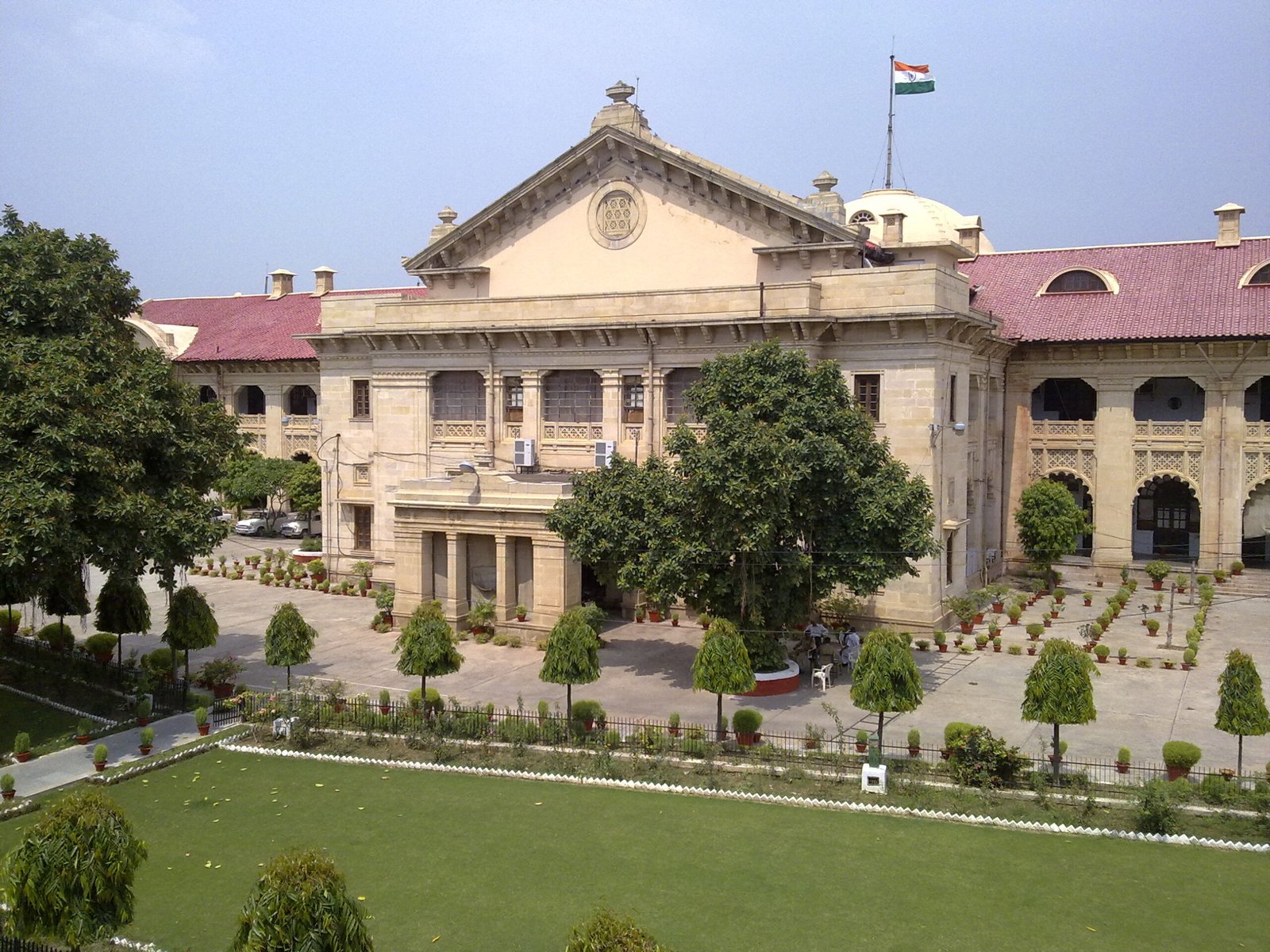
    “Earning Mother Need Not Be Made Party, But Her Income Cannot Be Ignored”: Allahabad High Court Clarifies Law on Child Maintenance

    Anvita DwivediBy Anvita DwivediApril 1, 2026No Comments4 Mins Read
    WhatsApp Facebook Twitter Copy Link
    Share
    Facebook Twitter Pinterest Copy Link WhatsApp

    In a significant ruling refining the contours of child maintenance jurisprudence, the Allahabad High Court has held that an earning mother need not be impleaded as a party in maintenance proceedings initiated by a child against the father, but the court must nonetheless consider the financial capacity of both parents while determining maintenance.

    The judgment, delivered by Justice Madan Pal Singh, strikes a nuanced balance between procedural autonomy of the claimant and the substantive principle of shared parental responsibility, marking an important development in family law under Section 144 of the Bharatiya Nagarik Suraksha Sanhita (BNSS) (earlier Section 125 CrPC).

    The case arose from a maintenance application filed on behalf of a minor child against her father. The father moved an application before the Family Court seeking to implead the child’s mother, arguing that he earns approximately ₹41,000 per month as a railway clerk. The mother, a police constable, earns around ₹55,000 per month. Therefore, maintenance liability should be shared and adjudicated jointly

    The Family Court rejected this plea, prompting the father to approach the High Court in revision.

    Upholding the Family Court’s decision, the High Court made a crucial procedural clarification; There is no requirement under criminal procedure to implead the mother in a child maintenance claim. The Court observed that the proceedings under Section 144 BNSS are summary in nature. There is no provision akin to Order I Rule 10 CPC allowing impleadment in such cases. The applicant (child) is the “dominus litis” meaning they have the right to choose against whom relief is sought

    Thus, the father cannot compel inclusion of the mother as a party merely to dilute his liability.The Court strongly reaffirmed that the father’s duty to maintain his minor child is both a legal and moral obligation. It held that the obligation cannot be deferred or avoided by shifting responsibility to the mother. The father cannot insist that maintenance proceedings be restructured to include the mother as a co-respondent

    In clear terms, the Court noted that the father cannot evade his statutory duty by insisting on impleadment of the mother. While rejecting impleadment, the Court introduced an important substantive safeguard i.e., the financial capacity of both parents must be considered while determining maintenance.

    The Court directed that the Family Court must assess income and financial status of both parents. Maintenance should be fixed in a “just and reasonable manner” and the decision must reflect the principle of shared parental responsibility and welfare of the child. This ensures that while procedural burden remains on the father, financial reality is not ignored. The ruling reinforces that the claimant (child) controls the structure of litigation, preventing procedural complications.

    Even though the father remains primarily liable, courts must account for both parents’ earning capacity.By rejecting impleadment, the Court avoids prolonged litigation and technical objections, ensuring speedy relief for the child. The High Court relied on the Supreme Court’s decision in Chandu Sridevi v. Chandu Sesha Rao (2023), which recognised that when both parents are earning, child maintenance is a shared responsibility. Courts must ensure the child receives best possible upbringing consistent with parental means

    This ruling extends that principle by embedding it into maintenance determination without complicating procedure.The judgment reflects broader constitutional values under Article 21-Right of the child to live with dignity and adequate support and Article 14– Fair and equitable distribution of parental obligations along with Child welfare principle– Paramount consideration in family law

    It also aligns with evolving judicial thinking that child maintenance is not a contest between parents, but a right of the child. Recent rulings by the Allahabad High Court and Supreme Court indicate a consistent approach that maintenance depends on actual financial capacity, not mere earning status. Courts are moving toward equitable burden-sharing. Technical objections are being discouraged in favour of substantive justice

    Fathers cannot delay proceedings by insisting on adding the mother as a party. Courts must consider combined parental income, ensuring realistic maintenance.

    The ruling prioritises welfare of the child over procedural formalities.

    The Allahabad High Court’s ruling marks a thoughtful evolution in child maintenance law that while procedural simplicity is preserved by not mandating impleadment, substantive fairness is ensured by considering both parents’ income. By harmonising the principles of dominant control of litigation, parental responsibility, and child welfare, the Court has reinforced a key legal message: Maintenance is not about shifting liability, it is about ensuring the child’s right to a dignified life through a fair and balanced assessment of parental capacity

    “Earning Mother Need Not Be Made Party But Her Income Cannot Be Ignored”: Allahabad High Court Clarifies Law on Child Maintenance
    Share. WhatsApp Facebook Twitter Pinterest Email
    Anvita Dwivedi

    Related Posts

    Advocacy Is Not Influencing, It Is a Public Trust: Bar Council of India Draws Ethical Boundaries for Lawyers in the Age of Social Media

    July 18, 2026

    ‘No Passenger Is Second-Class in a Constitutional Democracy’: Supreme Court Urges Railways to Curb Overcrowding, Reconsider Terminology and Strengthen Passenger Safety

    July 18, 2026

    Electoral Exclusion Is Not Citizenship Determination: Supreme Court Reaffirms Constitutional Limits on Election Commission’s Powers in West Bengal SIR Proceedings

    July 17, 2026
    Add A Comment
    Leave A Reply Cancel Reply

    Demo
    Top Posts

    Digital Forensics Fail to convince Supreme Court: Bail Denied to Gagan Khanna in BNS Assault Case

    June 15, 2026245 Views

    Wrongful Claim Rejection Amounts to Deficiency in Service: Delhi Consumer Commission Holds Star Health Liable

    March 16, 202673 Views

    Banking Negligence and Consumer Accountability: Supreme Court Reinforces Duty of Care in Cheque Handling

    April 16, 202668 Views

    Bombay High Court Quashes POCSO Case, Directs Accused to Fund MacBook for Victim’s Education

    February 28, 202662 Views
    Don't Miss

    Advocacy Is Not Influencing, It Is a Public Trust: Bar Council of India Draws Ethical Boundaries for Lawyers in the Age of Social Media

    By Anvita DwivediJuly 18, 2026

    In one of the most significant regulatory interventions concerning the legal profession in the digital…

    ‘No Passenger Is Second-Class in a Constitutional Democracy’: Supreme Court Urges Railways to Curb Overcrowding, Reconsider Terminology and Strengthen Passenger Safety

    July 18, 2026

    Electoral Exclusion Is Not Citizenship Determination: Supreme Court Reaffirms Constitutional Limits on Election Commission’s Powers in West Bengal SIR Proceedings

    July 17, 2026

    Witness Protection, Fair Trial and Investigative Neutrality: Supreme Court Records UP Police Report Clearing Ashish Mishra and Ajay Mishra in Separate Witness Intimidation Probe

    July 16, 2026
    Stay In Touch
    • Facebook
    • Twitter

    Subscribe to Updates

    Get the latest creative news from SmartMag about art & design.

    Top Posts

    Digital Forensics Fail to convince Supreme Court: Bail Denied to Gagan Khanna in BNS Assault Case

    June 15, 2026245 Views

    Wrongful Claim Rejection Amounts to Deficiency in Service: Delhi Consumer Commission Holds Star Health Liable

    March 16, 202673 Views

    Banking Negligence and Consumer Accountability: Supreme Court Reinforces Duty of Care in Cheque Handling

    April 16, 202668 Views
    Don't Miss

    Advocacy Is Not Influencing, It Is a Public Trust: Bar Council of India Draws Ethical Boundaries for Lawyers in the Age of Social Media

    By Anvita DwivediJuly 18, 2026

    In one of the most significant regulatory interventions concerning the legal profession in the digital…

    ‘No Passenger Is Second-Class in a Constitutional Democracy’: Supreme Court Urges Railways to Curb Overcrowding, Reconsider Terminology and Strengthen Passenger Safety

    July 18, 2026

    Electoral Exclusion Is Not Citizenship Determination: Supreme Court Reaffirms Constitutional Limits on Election Commission’s Powers in West Bengal SIR Proceedings

    July 17, 2026

    Witness Protection, Fair Trial and Investigative Neutrality: Supreme Court Records UP Police Report Clearing Ashish Mishra and Ajay Mishra in Separate Witness Intimidation Probe

    July 16, 2026
    Stay In Touch
    • Facebook
    • YouTube
    • TikTok
    • Instagram
    Top Trending
    About Us
    About Us

    LawFiles.in is a comprehensive legal news platform delivering real-time updates from the Supreme Court, High Courts, Tribunals, Corporate and Tax law, Regulators, Politics, Crime, Consumer cases, and Global Affairs.

    Email Us: lawfilesoffical@gmail.com
    Contact: +91 8800026066

    Contact Us:
    India International Centre
    40, Max Mueller Marg
    Lodhi Estate, New Delhi-110003

    Facebook X (Twitter)
    Our Picks

    Advocacy Is Not Influencing, It Is a Public Trust: Bar Council of India Draws Ethical Boundaries for Lawyers in the Age of Social Media

    July 18, 2026

    ‘No Passenger Is Second-Class in a Constitutional Democracy’: Supreme Court Urges Railways to Curb Overcrowding, Reconsider Terminology and Strengthen Passenger Safety

    July 18, 2026

    Electoral Exclusion Is Not Citizenship Determination: Supreme Court Reaffirms Constitutional Limits on Election Commission’s Powers in West Bengal SIR Proceedings

    July 17, 2026

    Witness Protection, Fair Trial and Investigative Neutrality: Supreme Court Records UP Police Report Clearing Ashish Mishra and Ajay Mishra in Separate Witness Intimidation Probe

    July 16, 2026

    Remission Is a Constitutional Process, Not an Automatic Right: Supreme Court Directs Odisha Government to Decide Dara Singh’s Premature Release Plea in Graham Staines Murder Case

    July 15, 2026
    Most Popular

    Supreme Court Rules Limitation Period Under CrPC Starts When Offender’s Identity Is Known, Not From First Complaint

    February 27, 20260 Views

    Maharashtra State Consumer Commission Slams HP Employees’ Co-operative Credit Society for Enforcing Undisclosed Restriction, Orders Refund with Interest and Compensation

    March 2, 20260 Views

    Repeated Vehicle Defects Amount to Deficiency in Service: Chandigarh Consumer Commission Awards ₹4 Lakh Compensation to Ford Owner

    March 9, 20260 Views

    Order VI Rule 17 Proviso Not Applicable to Pre-2002 Suits: Allahabad High Court Allows Amendment in 1997 Plaint

    March 9, 20260 Views

    India’s Tribunal Crisis: Supreme Court Questions Who Guards the Guardians

    March 10, 20260 Views
    © 2026 LawFiles. Owned by Varta24 Media.
    • Articles
    • Careers
    • Corporate
    • Global Affairs
    • Law Firms & Lawyers
    • PILS
    • Regulatory

    Type above and press Enter to search. Press Esc to cancel.