


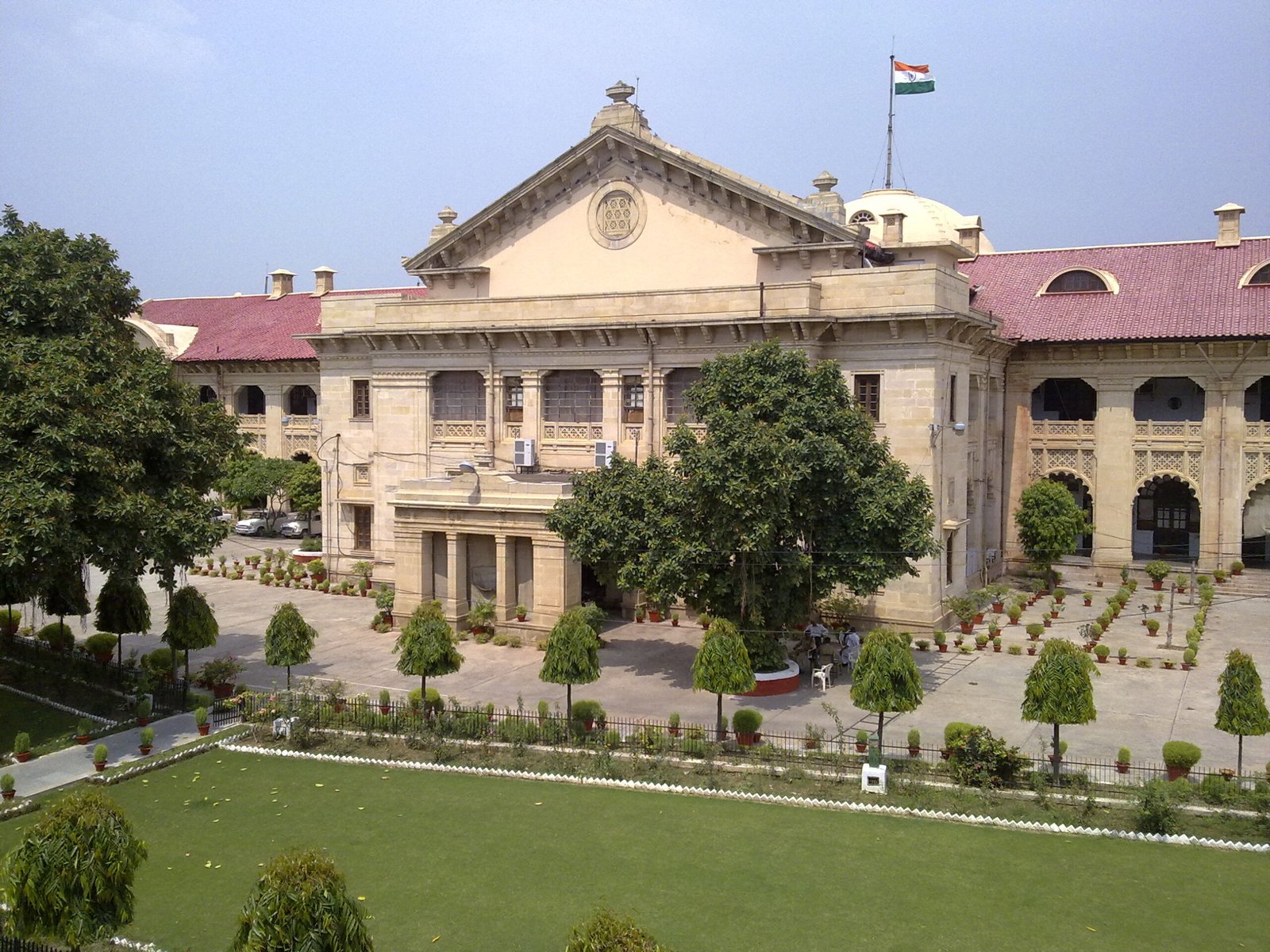
In a significant ruling refining the contours of child maintenance jurisprudence, the Allahabad High Court has held that an earning mother need not be impleaded as a party in maintenance proceedings initiated by a child against the father, but the court must nonetheless consider the financial capacity of both parents while determining maintenance.
The judgment, delivered by Justice Madan Pal Singh, strikes a nuanced balance between procedural autonomy of the claimant and the substantive principle of shared parental responsibility, marking an important development in family law under Section 144 of the Bharatiya Nagarik Suraksha Sanhita (BNSS) (earlier Section 125 CrPC).
The case arose from a maintenance application filed on behalf of a minor child against her father. The father moved an application before the Family Court seeking to implead the child’s mother, arguing that he earns approximately ₹41,000 per month as a railway clerk. The mother, a police constable, earns around ₹55,000 per month. Therefore, maintenance liability should be shared and adjudicated jointly
The Family Court rejected this plea, prompting the father to approach the High Court in revision.
Upholding the Family Court’s decision, the High Court made a crucial procedural clarification; There is no requirement under criminal procedure to implead the mother in a child maintenance claim. The Court observed that the proceedings under Section 144 BNSS are summary in nature. There is no provision akin to Order I Rule 10 CPC allowing impleadment in such cases. The applicant (child) is the “dominus litis” meaning they have the right to choose against whom relief is sought
Thus, the father cannot compel inclusion of the mother as a party merely to dilute his liability.The Court strongly reaffirmed that the father’s duty to maintain his minor child is both a legal and moral obligation. It held that the obligation cannot be deferred or avoided by shifting responsibility to the mother. The father cannot insist that maintenance proceedings be restructured to include the mother as a co-respondent
In clear terms, the Court noted that the father cannot evade his statutory duty by insisting on impleadment of the mother. While rejecting impleadment, the Court introduced an important substantive safeguard i.e., the financial capacity of both parents must be considered while determining maintenance.
The Court directed that the Family Court must assess income and financial status of both parents. Maintenance should be fixed in a “just and reasonable manner” and the decision must reflect the principle of shared parental responsibility and welfare of the child. This ensures that while procedural burden remains on the father, financial reality is not ignored. The ruling reinforces that the claimant (child) controls the structure of litigation, preventing procedural complications.
Even though the father remains primarily liable, courts must account for both parents’ earning capacity.By rejecting impleadment, the Court avoids prolonged litigation and technical objections, ensuring speedy relief for the child. The High Court relied on the Supreme Court’s decision in Chandu Sridevi v. Chandu Sesha Rao (2023), which recognised that when both parents are earning, child maintenance is a shared responsibility. Courts must ensure the child receives best possible upbringing consistent with parental means
This ruling extends that principle by embedding it into maintenance determination without complicating procedure.The judgment reflects broader constitutional values under Article 21-Right of the child to live with dignity and adequate support and Article 14– Fair and equitable distribution of parental obligations along with Child welfare principle– Paramount consideration in family law
It also aligns with evolving judicial thinking that child maintenance is not a contest between parents, but a right of the child. Recent rulings by the Allahabad High Court and Supreme Court indicate a consistent approach that maintenance depends on actual financial capacity, not mere earning status. Courts are moving toward equitable burden-sharing. Technical objections are being discouraged in favour of substantive justice
Fathers cannot delay proceedings by insisting on adding the mother as a party. Courts must consider combined parental income, ensuring realistic maintenance.
The ruling prioritises welfare of the child over procedural formalities.
The Allahabad High Court’s ruling marks a thoughtful evolution in child maintenance law that while procedural simplicity is preserved by not mandating impleadment, substantive fairness is ensured by considering both parents’ income. By harmonising the principles of dominant control of litigation, parental responsibility, and child welfare, the Court has reinforced a key legal message: Maintenance is not about shifting liability, it is about ensuring the child’s right to a dignified life through a fair and balanced assessment of parental capacity
