

Close Menu
LawFilesLawFiles

    Subscribe to Updates

    Get the latest creative news from FooBar about art, design and business.

    What's Hot

    Supreme Court Declines To Extend Pawan Khera’s Transit Anticipatory Bail: Reasserting Jurisdictional Discipline in Bail Law

    April 17, 2026

    Dowry Law and Victim Protection: Supreme Court Clarifies Immunity for Wife and Her Family

    April 17, 2026

    Women’s Reservation Law Notified: Reform Realised or Deferred Constitutional Promise?

    April 17, 2026
    Facebook X (Twitter) Instagram Threads
    Friday, April 17
    LawFilesLawFiles
    Facebook X (Twitter)
    • Home
      • Who We Are
      • Our Mission
      • Advisory board
      • Contact US
    • Supreme Court
    • High Courts
      • Gujarat High Court
      • Jharkhand High Court
      • Rajasthan High Court
      • Karnataka High Court
      • Andhra Pradesh High Court
      • Allahabad High Court
      • Himachal Pradesh High Court
      • Chhattisgarh High Court
      • Jammu & Kashmir and Ladakh High Court
      • Kerala High Court
      • Punjab and Haryana High Court
      • Patna High Court
      • Madhya Pradesh High Court
      • Madras High Court
      • Bombay High Court
      • Orissa High Court
      • Calcutta High Court
      • Meghalaya High Court
      • Delhi High Court
      • Manipur High Court
      • Gauhati High Court
    • Corporate
    • Taxation Laws
      • Income Tax
      • GST
      • Customs & Excise
    • Global Affairs
    • Articles
      • Former Judge’s’ Views
      • Senior Advocate
      • Policy Analysis
      • Tax Expert
    • PILS
      • Free/Affordable Legal Aid
      • PIL Cell
      • Law student Volunteer Cell (research & Drafting)
      • NGO & Legal services Authority Tie-ups
      • Online Legal Formats
      • Online Legal Help Form
    Subscribe Premium
    LawFilesLawFiles
    Home»Top News»“Uniform Civil Code Is the Answer”: Supreme Court on Plea Challenging Shariat Inheritance Law as Discriminatory Against Muslim Women
    Top News

    “Uniform Civil Code Is the Answer”: Supreme Court on Plea Challenging Shariat Inheritance Law as Discriminatory Against Muslim Women

    Anvita DwivediBy Anvita DwivediMarch 10, 2026No Comments4 Mins Read
    WhatsApp Facebook Twitter Copy Link
    Share
    Facebook Twitter Pinterest Copy Link WhatsApp

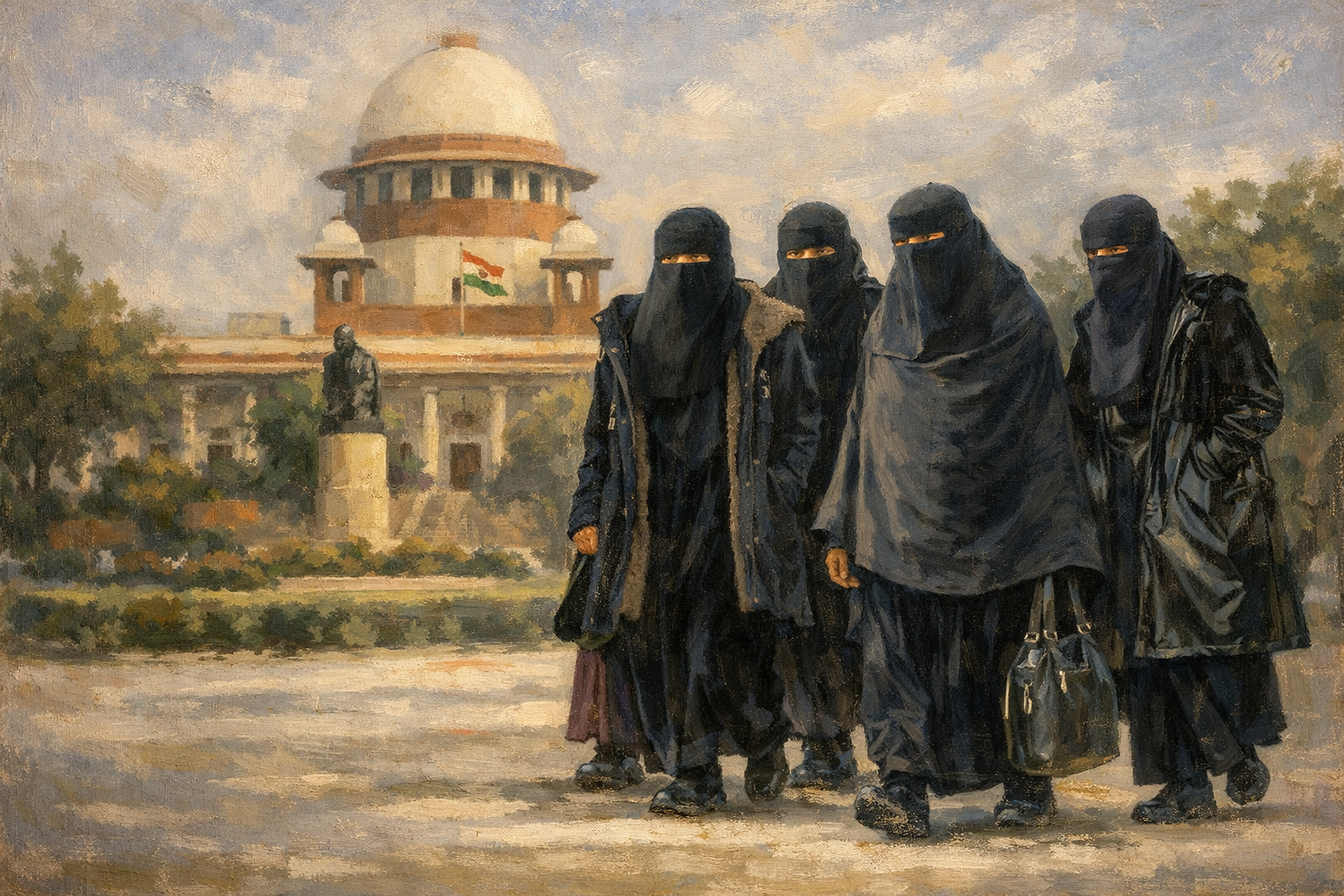
    In a significant hearing touching upon the intersection of personal laws, gender equality, and constitutional principles, the Supreme Court of India observed that the issue of alleged discrimination against Muslim women in inheritance under Shariat law raises serious concerns but may ultimately require legislative intervention through a Uniform Civil Code (UCC).

    The remarks came while a bench comprising Surya Kant, Joymalya Bagchi, and R. Mahadevan heard a writ petition challenging provisions of Muslim personal law governing inheritance as discriminatory against women.

    The petition before the Court challenges aspects of inheritance governed by the Muslim Personal Law (Shariat) Application Act, 1937, arguing that the current framework allows male heirs to receive a larger share of property than female heirs. The petitioners contended that such provisions violate constitutional guarantees of equality and non-discrimination.

    Appearing for the petitioners, senior advocate Prashant Bhushan argued that inheritance rights are civil rights rather than matters of essential religious practice. Therefore, he submitted, they should be subject to constitutional scrutiny. He further contended that after the landmark judgment striking down instant triple talaq, the legal system cannot allow a situation where Muslim women continue to receive unequal rights in matters of succession.

    The petition also suggested that if the provisions governing inheritance under the Shariat law were declared unconstitutional, the Indian Succession Act, 1925 could apply to regulate inheritance in such cases.

    While acknowledging the seriousness of the issue, the Supreme Court expressed caution about striking down existing provisions without an alternative legal framework in place.

    The bench questioned whether invalidating the Shariat inheritance framework could create a legal vacuum, leaving Muslim women without a clear statutory mechanism governing succession rights.

    Chief Justice Surya Kant warned that judicial intervention undertaken in haste could inadvertently deprive women of existing protections if no replacement framework is ready. The Court therefore indicated that any comprehensive reform in this area might be better addressed through legislative action.

    During the hearing, the bench repeatedly referred to the possibility of a Uniform Civil Code, a concept mentioned in Article 44 of the Constitution of India as a Directive Principle of State Policy.

    Justice Bagchi observed that while the petition raises a strong argument about discrimination, the task of reforming personal laws across communities may fall within the domain of Parliament. Echoing this sentiment, the Chief Justice remarked that “the answer is Uniform Civil Code.”

    The Court indicated that the legislature is better placed to craft a uniform legal framework that balances constitutional equality with the complexities of India’s plural legal traditions.

    The bench also referred to the long-standing precedent set in the State of Bombay v. Narasu Appa Mali, where the Bombay High Court held that personal laws may not be directly subject to constitutional scrutiny in the same manner as statutory law.

    At the same time, the petitioners argued that since the Shariat law operates through a statutory enactment the 1937 Act the Court has the authority to examine whether the legislation violates constitutional rights.

    This debate reflects a broader constitutional question: to what extent can courts intervene in religious personal laws when they appear to conflict with principles of equality and fundamental rights.

    The Court ultimately allowed the petitioners to amend their plea and suggest potential remedies that could be implemented if the challenged provisions were struck down. The matter was then adjourned for further hearing.

    The case adds a new dimension to India’s long-running debate over personal laws and gender equality. Previous landmark rulings such as the Mohd. Ahmed Khan v. Shah Bano Begum (1985) and Shayara Bano v. Union of India (2017) have demonstrated the judiciary’s role in addressing discriminatory practices within personal law frameworks.

    However, the present case highlights the limits of judicial intervention when reforms may require comprehensive legislative action. As the Court indicated, the broader question of equal inheritance rights across communities may ultimately depend on whether India moves toward implementing a Uniform Civil Code.

    Supreme Court on Plea Challenging Shariat Inheritance Law as Discriminatory Against Muslim Women Uniform Civil Code Is the Answer
    Share. WhatsApp Facebook Twitter Pinterest Email
    Anvita Dwivedi

    Related Posts

    Supreme Court Declines To Extend Pawan Khera’s Transit Anticipatory Bail: Reasserting Jurisdictional Discipline in Bail Law

    April 17, 2026

    Dowry Law and Victim Protection: Supreme Court Clarifies Immunity for Wife and Her Family

    April 17, 2026

    Women’s Reservation Law Notified: Reform Realised or Deferred Constitutional Promise?

    April 17, 2026
    Add A Comment
    Leave A Reply Cancel Reply

    Demo
    Top Posts

    Wrongful Claim Rejection Amounts to Deficiency in Service: Delhi Consumer Commission Holds Star Health Liable

    March 16, 202655 Views

    Bombay High Court Quashes POCSO Case, Directs Accused to Fund MacBook for Victim’s Education

    February 28, 202648 Views

    Siyahat Meri Syahi Se: A Journey That Transforms Travel into Thought and Entrepreneurship

    March 18, 202636 Views

    Welfare or Electoral Strategy? Supreme Court’s Sharp Take on Pre-Poll Cash Schemes

    February 20, 202624 Views
    Don't Miss

    Supreme Court Declines To Extend Pawan Khera’s Transit Anticipatory Bail: Reasserting Jurisdictional Discipline in Bail Law

    By Anvita DwivediApril 17, 2026

    In a fresh setback to Congress leader Pawan Khera, the Supreme Court has declined to…

    Dowry Law and Victim Protection: Supreme Court Clarifies Immunity for Wife and Her Family

    April 17, 2026

    Women’s Reservation Law Notified: Reform Realised or Deferred Constitutional Promise?

    April 17, 2026

    Supreme Court Notice on Muslim Personal Law: Reopening the Constitutional Debate on Gender Equality and Faith

    April 16, 2026
    Stay In Touch
    • Facebook
    • Twitter

    Subscribe to Updates

    Get the latest creative news from SmartMag about art & design.

    Top Posts

    Wrongful Claim Rejection Amounts to Deficiency in Service: Delhi Consumer Commission Holds Star Health Liable

    March 16, 202655 Views

    Bombay High Court Quashes POCSO Case, Directs Accused to Fund MacBook for Victim’s Education

    February 28, 202648 Views

    Siyahat Meri Syahi Se: A Journey That Transforms Travel into Thought and Entrepreneurship

    March 18, 202636 Views
    Don't Miss

    Supreme Court Declines To Extend Pawan Khera’s Transit Anticipatory Bail: Reasserting Jurisdictional Discipline in Bail Law

    By Anvita DwivediApril 17, 2026

    In a fresh setback to Congress leader Pawan Khera, the Supreme Court has declined to…

    Dowry Law and Victim Protection: Supreme Court Clarifies Immunity for Wife and Her Family

    April 17, 2026

    Women’s Reservation Law Notified: Reform Realised or Deferred Constitutional Promise?

    April 17, 2026

    Supreme Court Notice on Muslim Personal Law: Reopening the Constitutional Debate on Gender Equality and Faith

    April 16, 2026
    Stay In Touch
    • Facebook
    • YouTube
    • TikTok
    • Instagram
    Top Trending
    About Us
    About Us

    LawFiles.in is a comprehensive legal news platform delivering real-time updates from the Supreme Court, High Courts, Tribunals, Corporate and Tax law, Regulators, Politics, Crime, Consumer cases, and Global Affairs.

    Email Us: lawfilesoffical@gmail.com
    Contact: +91 8800026066

    Contact Us:
    India International Centre
    40, Max Mueller Marg
    Lodhi Estate, New Delhi-110003

    Facebook X (Twitter)
    Our Picks

    Supreme Court Declines To Extend Pawan Khera’s Transit Anticipatory Bail: Reasserting Jurisdictional Discipline in Bail Law

    April 17, 2026

    Dowry Law and Victim Protection: Supreme Court Clarifies Immunity for Wife and Her Family

    April 17, 2026

    Women’s Reservation Law Notified: Reform Realised or Deferred Constitutional Promise?

    April 17, 2026

    Supreme Court Notice on Muslim Personal Law: Reopening the Constitutional Debate on Gender Equality and Faith

    April 16, 2026

    Free Speech or Incitement? Calcutta High Court Plea Against Suvendu Adhikari Rekindles Debate on Political Speech Limits

    April 16, 2026
    Most Popular

    ED Can Arrest Even If FIRs Are Added to ECIR Later: Punjab & Haryana High Court

    January 30, 20260 Views

    Non-Disclosure Of QCBS Criteria In Tender Alone Not Enough To Allege Malafides: Gauhati High Court

    January 31, 20260 Views

    Anticipatory Bail For Proclaimed Offenders: Evolution Of Law

    January 31, 20260 Views

    January 2026 Monthly Digest: Important Rulings of the Jammu & Kashmir and Ladakh High Court

    February 2, 20260 Views

    Custodial Death and State Liability : A Critical Analysis of the Allahabad High Court’s ₹10 Lakh Compensation Judgment

    February 22, 20260 Views
    © 2026 LawFiles. Owned by Varta24 Media.
    • Articles
    • Careers
    • Corporate
    • Global Affairs
    • Law Firms & Lawyers
    • PILS
    • Regulatory

    Type above and press Enter to search. Press Esc to cancel.