


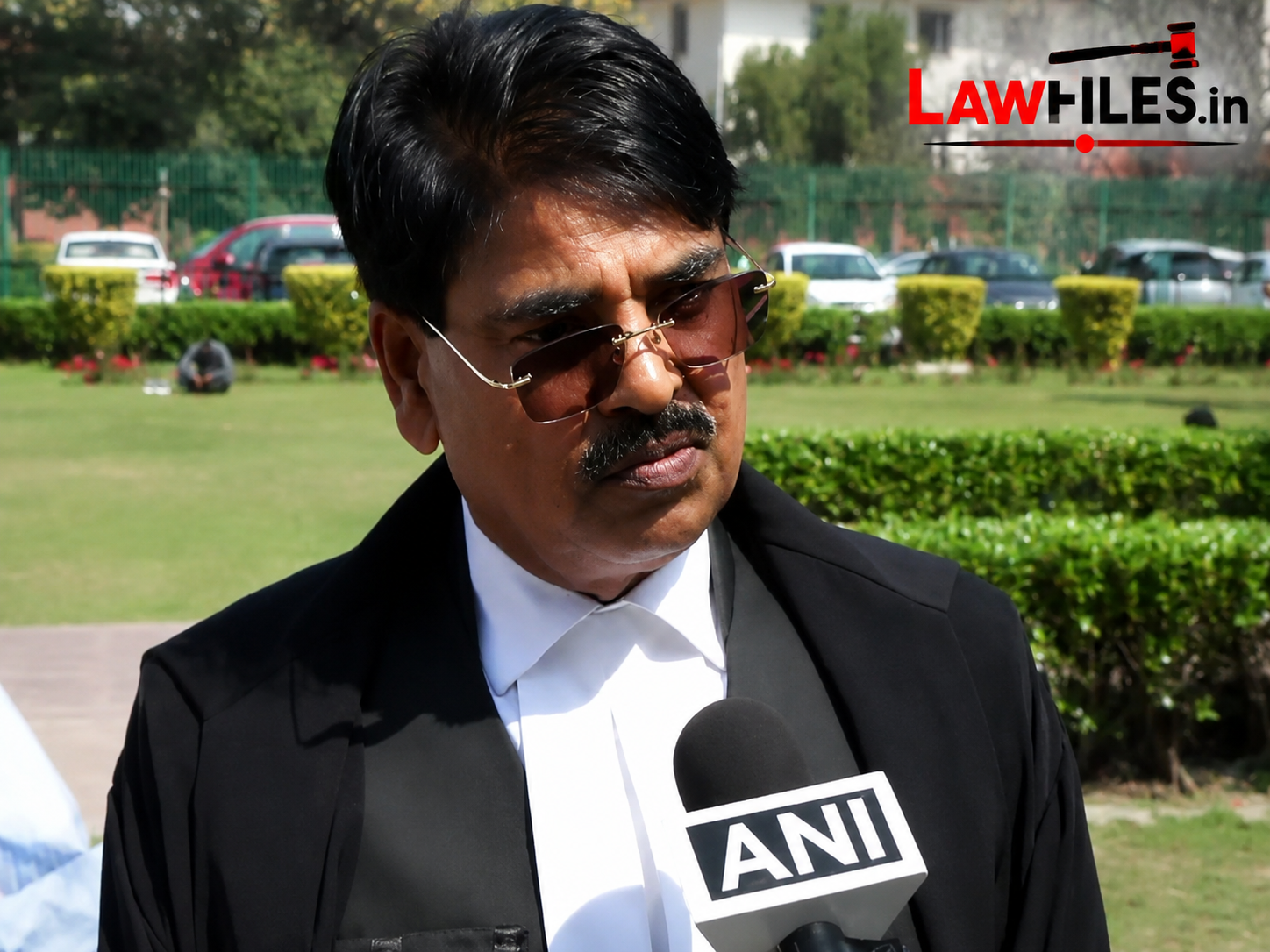
The Supreme Court has intervened to accelerate the constitution of a new Bar Council of India, holding that the most effective way of addressing questions surrounding the prolonged continuation of the present BCI leadership is to ensure that the representative bodies from which the BCI is constituted are themselves reconstituted without further delay. A Bench comprising Chief Justice of India Surya Kant, Justice Joymalya Bagchi and Justice V. Mohana, while hearing challenges concerning the continuation of Senior Advocate Manan Kumar Mishra as Chairman of the Bar Council of India, chose not to immediately enter into the larger controversy surrounding his tenure. Instead, the Court prescribed a concrete sequence of steps for completing the composition of the State Bar Councils, paving the way for the election of new members to the national regulatory body of the legal profession.
The proceedings assume significance because the Bar Council of India is not an ordinary professional association. It is a statutory body constituted under Section 4 of the Advocates Act, 1961, and exercises important regulatory functions concerning legal education, professional standards, discipline and the broader administration of the legal profession. The BCI is constituted through representatives elected by the State Bar Councils, with the Attorney General for India and Solicitor General of India forming part of the Council as ex-officio members. Consequently, the legitimacy of the BCI’s representative character is closely linked to the timely and lawful constitution of the State Bar Councils from which its elected membership emerges.
The Court’s approach in the present proceedings is therefore institutionally significant. Rather than allowing litigation concerning the tenure of the existing BCI Chairman to become a prolonged examination of competing allegations and administrative controversies, the Bench identified a more fundamental solution: complete the electoral process at the State level and thereafter allow the newly constituted State Bar Councils to participate in the process of reconstituting the BCI. The Court observed that once the composition of the State Bar Councils is finalised, the representatives necessary for the reconstitution of the BCI can be elected in accordance with the statutory framework.
The immediate directions are deliberately structured around short and definite timelines. The Chief Justices of the concerned High Courts have been requested to complete the co-option of two women members to the respective State Bar Councils within two weeks. Following completion of that exercise, the State Bar Councils have been directed to notify their final composition within one week. Thereafter, each State Bar Council is required to elect its Chairperson, Vice-Chairperson, other office-bearers and its representative to the Bar Council of India within two weeks of notification of its composition. The Supreme Court has indicated that once compliance reports are received, it will consider the question of reconstituting the BCI under Section 4 of the Advocates Act.
The significance of the direction lies not merely in its timetable but in the Court’s decision to treat the completion of the electoral architecture as the key to resolving the institutional controversy. The Supreme Court has already spent considerable judicial effort during the preceding year dealing with the delayed elections of State Bar Councils. In September 2025, it had expressed serious concern that elections in several States had not been held for extended periods and directed that elections across the country be completed within a defined period. Subsequently, in November 2025, the Court formulated a detailed phase-wise mechanism, requiring the elections of the remaining State Bar Councils to be completed by April 30, 2026.
That earlier intervention was itself prompted by the prolonged delay in elections, with the verification of law degrees of enrolled advocates being cited as one of the reasons for postponement. The Supreme Court had made it clear that verification of educational qualifications, though essential for maintaining the integrity of the electoral rolls, could not become an indefinite impediment to the democratic reconstitution of the Bar Councils. The Court compared the continuing verification process to an exercise which, while ideally completed before an election, cannot indefinitely prevent the election itself from taking place.
The present proceedings are therefore the next institutional stage of that judicial intervention. Once the State Bar Council elections have substantially taken place, the question now is how quickly the newly elected State bodies can become fully functional and proceed to elect the representatives who will constitute the next BCI. The Court has consequently attempted to close the gap between the completion of State-level elections and the constitution of the national-level regulatory body.
At the heart of the litigation, however, is a serious question concerning the tenure of the existing BCI leadership. The petitioners have challenged the continued tenure of Manan Kumar Mishra as Chairman and have questioned the legal basis of a notification issued in April 2025 which purportedly extended his tenure until April 2030. The petitioners contend that Rule 12(2) of the BCI Rules prescribes a two-year tenure for the Chairman and Vice-Chairman, or tenure until cessation of membership, whichever occurs earlier. Their argument is that an administrative notification cannot override the statutory or regulatory framework governing the tenure of elected office-bearers.
The Bench also examined this issue during the hearing. Justice Joymalya Bagchi questioned how a notification could extend the tenure if the governing Rule itself prescribed a shorter period. The judicial concern is rooted in a familiar principle of administrative law: an executive or administrative instrument cannot ordinarily override the parent statute or a validly framed statutory rule. Where a rule fixes the tenure of an office, an administrative notification must derive its authority from that framework rather than create a parallel source of power.
The petitioners have also questioned the manner in which the transitional provision contained in Section 4(3) of the Advocates Act has operated in practice. The provision permits members of the BCI to continue in office until their successors are elected. Such a provision is designed to prevent an institutional vacuum. Its underlying rationale is understandable: regulatory bodies cannot simply cease functioning because the election process is delayed. Yet the petitioners argue that a transitional safeguard intended to preserve continuity cannot be converted into an instrument for indefinite continuation of incumbents.
This presents an important question of statutory interpretation and institutional democracy. Continuity provisions are necessary in public and statutory institutions because an abrupt cessation of office can create administrative paralysis. At the same time, the temporary continuation contemplated by such provisions must remain connected to their purpose. If the absence of elections becomes the justification for perpetuating the same office-holders, the exception can effectively swallow the rule. The Supreme Court’s present approach appears to recognise this tension without prematurely deciding the ultimate validity of the challenged tenure notification.
The Court was also informed that the State Bar Council elections, which had earlier been delayed, have now taken place. This development materially changes the legal and institutional context. The Chief Justice observed that the earlier notification extending the BCI Chairman’s tenure may have become substantially less consequential in view of the subsequent completion of the State Bar Council elections. Once the new State Councils are constituted, the statutory mechanism for electing representatives to the BCI can be activated.
This reasoning reflects a degree of judicial restraint. The Court could have immediately entered into the validity of the Chairman’s extended tenure, the allegations concerning the BCI’s functioning and other issues raised by the petitioners. Instead, it preferred an institutional solution that could render some of those controversies academic. Such an approach is particularly significant where the challenged institution is itself on the verge of being democratically reconstituted. Judicial intervention is generally most useful when it restores the statutory process rather than replacing it.
The proceedings also brought into focus the role of the Attorney General and Solicitor General in the functioning of the BCI. The Court recorded an undertaking on behalf of the BCI that both constitutional law officers, who are ex-officio members of the BCI, would be actively associated with major policy decisions of the Council. The Bench clarified that their involvement was not being sought for routine or day-to-day administration but for decisions carrying significant policy implications.
The direction assumes importance because the Court was conscious of the difference between ordinary administrative continuity and substantive policy-making. Justice Bagchi observed that the present Chairman was effectively continuing in a pro tem capacity until the next BCI election. In such circumstances, the Court considered that the day-to-day functioning of the institution could continue, but major policy decisions should receive broader institutional participation through the involvement of the Attorney General and Solicitor General.
The expression “pro tem” is important in understanding the Court’s approach. A person continuing because the successor has not yet been elected occupies a fundamentally different institutional position from an office-bearer who has obtained a fresh electoral mandate. Transitional authority may be necessary to keep the institution functioning, but it does not carry an unlimited democratic mandate. The Court’s direction seeks to preserve administrative continuity while placing an institutional check on major policy decisions during the transitional period.
The petitioners also raised concerns relating to the BCI-PEARL FIRST Trust, which was created in 2020 and succeeded the earlier BCI Trust. Questions were raised concerning the composition and continuing tenure of trustees, particularly provisions under which individuals could allegedly continue as trustees even after ceasing to be members of the BCI. The petitioners questioned whether an elected statutory body could create a trust whose management effectively survives beyond the electoral tenure of the body or its representatives.
The Bench appeared particularly interested in the distinction between an office held by virtue of membership in a statutory body and an individual appointment that survives independently of that membership. Justice Bagchi questioned whether persons who were no longer members of the BCI could continue indefinitely as trustees of an entity created by the Council. The concern raises a broader issue of institutional accountability: assets and institutions created through an elected statutory body’s authority should ordinarily remain subject to an appropriate chain of democratic and legal accountability.
The petitioners sought further scrutiny of the financial affairs of the BCI and the Trust, including the transfer and management of assets over recent years. However, the Supreme Court did not immediately embark upon a comprehensive judicial investigation. The Chief Justice indicated that, with a newly elected BCI likely to emerge after the completion of the State-level process, the Court should be cautious about undertaking broad judicial intervention at a stage when the representative institution itself is about to be reconstituted.
That aspect of the hearing is perhaps as significant as the timelines themselves. Courts exercising constitutional jurisdiction possess wide powers, but the existence of such power does not necessarily require its immediate exercise in every institutional controversy. Where the statutory mechanism for democratic correction is available and capable of being activated within a short period, judicial restraint can itself strengthen institutional autonomy. The Court’s decision to prioritise reconstitution over prolonged judicial management reflects this principle.
At the same time, the Court’s intervention should not be understood as merely administrative scheduling. The repeated judicial directions concerning Bar Council elections reveal a deeper concern about democratic accountability within professional regulatory institutions. The Bar Councils are entrusted with regulating the legal profession, yet their own representative structures must remain subject to regular electoral renewal. A statutory body whose leadership continues for extended periods without effective electoral transition risks losing the representative legitimacy that forms part of the justification for professional self-regulation.
The Supreme Court’s earlier directions had already recognised this problem by requiring State Bar Council elections to be completed through a closely monitored, phased mechanism. High-Powered Election Committees and a central supervisory mechanism were created to ensure that the process did not remain trapped in procedural disputes. The Court also subsequently created specialised election tribunals to deal with disputes arising from the State Bar Council elections, reflecting an effort to separate election adjudication from the ordinary writ jurisdiction of multiple courts and thereby prevent electoral disputes from indefinitely obstructing institutional functioning.
The present order continues that institutional philosophy. Rather than permitting disputes at each stage to reopen the entire electoral process, the Court has attempted to establish a sequence in which electoral completion leads quickly to institutional constitution, which in turn leads to representation at the BCI level. The objective is not merely to conduct elections but to ensure that elections produce functioning representative institutions within a predictable timeframe.
There is also a constitutional dimension to the Court’s concern. Although the Bar Councils are professional regulatory bodies rather than constitutional institutions in the strict sense, their functions affect the administration of justice itself. The legal profession is an essential component of the justice-delivery system, and the bodies regulating that profession exercise powers that have consequences for advocates, litigants, legal education and the quality of representation before courts. Democratic legitimacy and institutional accountability within such bodies therefore cannot be dismissed as internal professional matters alone.
The controversy further demonstrates the dangers that can arise when transitional provisions are allowed to operate for prolonged periods. A provision designed to prevent a vacuum can become problematic if the circumstances that caused the vacuum are themselves allowed to continue indefinitely. The answer, however, is not necessarily to dismantle continuity provisions. The more principled approach is to ensure that such provisions are accompanied by a genuine and enforceable obligation to complete the electoral process within a reasonable period. The Supreme Court’s present directions appear to move precisely in that direction.
The Court has thus avoided, at least at this stage, converting the hearing into a referendum on the present BCI leadership. Instead, it has placed the emphasis on the emergence of a new elected institutional structure. The next decisive step will therefore be compliance with the prescribed timelines: completion of women’s co-option, notification of the final State Bar Council compositions, election of office-bearers and BCI representatives, followed by the reconstitution of the BCI itself.
The larger message emerging from the proceedings is that professional self-governance carries a corresponding obligation of democratic renewal. The autonomy of the Bar Councils is important, but autonomy cannot mean freedom from electoral accountability. Similarly, continuity of office may be necessary to preserve institutional functioning, but continuity cannot be treated as an alternative to elections. The Supreme Court’s intervention seeks to restore that balance by ensuring that temporary arrangements do not become permanent substitutes for representative governance.
The present proceedings therefore mark an important stage in the Court’s continuing effort to reform the electoral and institutional structure of the Bar Councils. The immediate controversy concerns the tenure of a particular BCI Chairman, but the underlying issue is much broader: who exercises regulatory authority over the legal profession, on what democratic mandate, and for how long? By prescribing a rapid sequence for completing the State Bar Council structures and facilitating the election of new BCI members, the Supreme Court has placed the answer back within the electoral framework contemplated by the Advocates Act. The ultimate measure of the Court’s intervention will now lie in whether these timelines translate into an actually reconstituted, representative and accountable Bar Council of India rather than another cycle of interim arrangements and delayed elections.
