


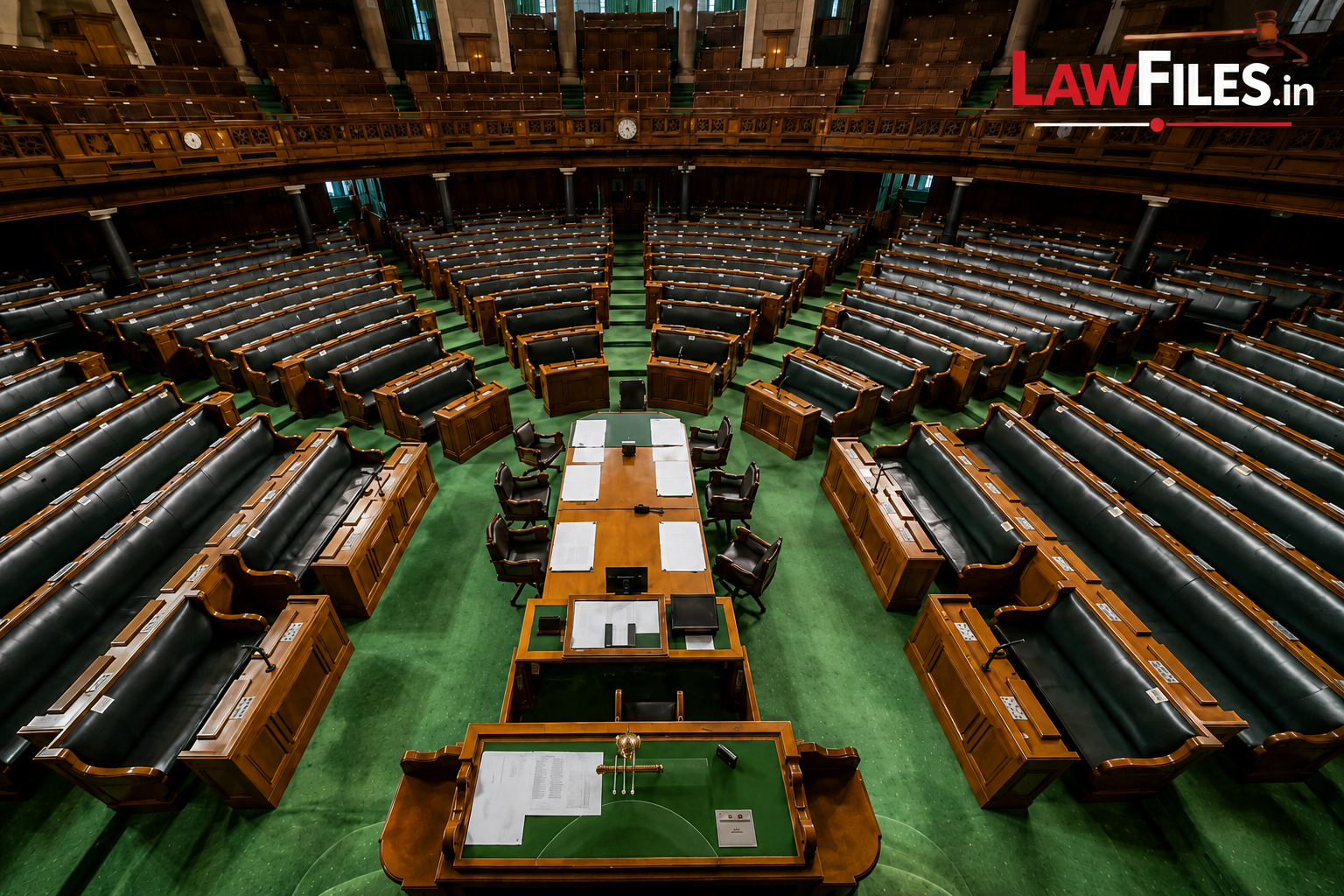
The Lok Sabha on Monday passed the Tribunals Reforms Bill, 2026, without a substantive debate, amid continued disruption in the House. The legislation proposes a significant restructuring of India’s tribunal framework and, at its centre, seeks to establish a National Tribunals Commission to oversee the appointment, administration and functioning of tribunals across the country. The Bill’s passage is therefore not an ordinary legislative development. Tribunals exercise adjudicatory powers in specialised areas of law and frequently decide disputes involving the Government itself. Their independence, therefore, is inseparable from the constitutional promise of fair and impartial adjudication. The fact that a legislation dealing with such institutions has passed the Lok Sabha without debate raises a separate and important question concerning the quality of parliamentary scrutiny accompanying structural judicial reform.
The Bill was passed amid sloganeering by Opposition members protesting alleged police action against students who had participated in demonstrations concerning a reported NEET paper leak. In the resulting disruption, the proposed tribunal legislation was taken up and passed without the detailed discussion that would ordinarily enable members to examine its provisions, question the Government’s institutional design and suggest amendments. The absence of debate does not, by itself, determine the constitutional validity of legislation. Parliament is competent to legislate within its constitutional field, and the validity of an enactment ultimately depends upon its conformity with the Constitution. Yet, from the standpoint of democratic governance, legislation that reorganises bodies exercising quasi-judicial functions deserves particularly careful deliberation because apparently technical provisions concerning appointments, tenure and administration can have direct consequences for judicial independence.
The significance of the Bill becomes clearer when viewed against the long and often unsettled history of India’s tribunal system. Tribunals were conceived as specialised adjudicatory bodies capable of resolving technical and subject-specific disputes more efficiently than ordinary courts. The constitutional framework for tribunals is principally found in Articles 323A and 323B, introduced through the Forty-Second Amendment. Over the decades, tribunals have come to operate across diverse areas including service law, taxation, company law, insolvency, competition, intellectual property, environment and securities. Their original attraction was straightforward: specialised adjudication was expected to reduce the burden on constitutional courts while providing litigants with a comparatively quicker and technically informed forum.
The experience, however, has been considerably more complicated. Tribunals have repeatedly faced vacancies, inadequate infrastructure, delays in appointments and questions concerning the extent of executive control over their administration. In several instances, the very institutions created to reduce judicial delay have themselves become sources of additional litigation. The Supreme Court has consequently been required to intervene repeatedly to protect the independence and effectiveness of tribunals.
This judicial history forms the immediate constitutional backdrop against which the 2026 legislation must be examined. In its 2025 judgment concerning the tribunal framework, the Supreme Court expressly emphasised the need for a National Tribunals Commission and directed the Union Government to establish such a body within four months. The Court described such a commission as an essential structural safeguard for ensuring independence, transparency and uniformity in the appointment, administration and functioning of tribunals.
The proposed legislation therefore appears to respond, at least in part, to a constitutional concern that has been repeatedly identified by the Supreme Court. The creation of a central institutional mechanism for tribunal administration has the potential to address one of the most persistent defects in the present system: the fact that tribunals have historically been administered through different ministries and departments, often resulting in fragmented standards of recruitment, infrastructure, staffing and financial management.
The proposal for a National Tribunals Commission is consequently capable of being viewed as a potentially significant institutional reform. Reports indicate that the proposed Commission is intended to have oversight over approximately 16 tribunals and their associated appellate bodies, with responsibilities extending to appointments, functioning, performance and administrative matters. The proposed structure reportedly contemplates a five-member Commission whose appointments would be made after consultation with the Chief Justice of India.
At first glance, centralising tribunal administration in an institution specifically designed for that purpose appears to address an important constitutional problem. If the same ministry that is a frequent litigant before a tribunal is also responsible for the tribunal’s administrative requirements, questions regarding institutional independence are inevitable. The existence of a separate commission could create greater distance between the executive and the adjudicatory institutions that review executive decisions.
But the real constitutional question is not simply whether there will be a National Tribunals Commission. It is how independent that Commission will actually be.
Institutional independence cannot be secured merely by creating a new statutory body and giving it an independent-sounding name. The composition of the Commission, the manner in which its members are selected, their tenure, removal safeguards, financial autonomy and the extent of executive influence over its functioning will ultimately determine whether the proposed architecture genuinely advances tribunal independence or merely relocates administrative control.
This question is particularly important because tribunals occupy an unusual position within the constitutional structure. They are not ordinary administrative departments, yet they are not courts in the traditional constitutional sense. They exercise adjudicatory power delegated through legislation and are expected to determine disputes independently. In many cases, the Government or one of its instrumentalities appears before the tribunal as a litigant. The adjudicator must therefore possess sufficient institutional independence to decide against the Government where the law requires it.
The Supreme Court’s decision in L. Chandra Kumar v. Union of India remains foundational in understanding this relationship. The Court recognised tribunals as specialised adjudicatory bodies but made clear that their decisions remain subject to judicial review by the High Courts under Articles 226 and 227. Tribunals therefore do not replace constitutional courts; they operate within a broader judicial architecture in which constitutional review remains an essential safeguard.
That principle has an important consequence for the present reform. Tribunal efficiency cannot be measured merely by how quickly cases are disposed of. The constitutional legitimacy of the system depends upon whether specialised adjudication is independent, impartial, accessible and ultimately subject to constitutional judicial review.
The Bill must therefore be assessed against two competing objectives which are sometimes incorrectly treated as interchangeable: administrative efficiency and adjudicatory independence. A centralised commission could certainly improve efficiency by standardising appointments, staffing, infrastructure and administrative procedures. But if efficiency is achieved by increasing executive control over adjudicators, the reform would merely exchange one institutional problem for another.
The Supreme Court’s repeated interventions in tribunal cases demonstrate why this distinction matters. The Court has previously objected to provisions concerning the appointment and tenure of tribunal members where the executive was given disproportionate influence. The constitutional concern has been that members should not feel dependent upon the Government whose decisions they may subsequently be called upon to scrutinise.
Tenure is particularly important in this regard. A tribunal member whose continuation in office is substantially dependent upon executive discretion may face an institutional conflict, even in the absence of any actual interference. Judicial independence is therefore concerned not merely with preventing demonstrable pressure but also with constructing a system in which the adjudicator is structurally insulated from such pressure.
The same reasoning applies to appointments. A selection process that is transparent, objective and insulated from arbitrary executive preferences can strengthen confidence in tribunals. Conversely, if appointment remains substantially dependent upon the executive, the creation of a National Tribunals Commission may not fully address the concern that prompted the reform in the first place.
The Bill also comes after years of rationalisation of the tribunal system. The Tribunals Reforms Act, 2021 had abolished several appellate bodies and transferred their functions to existing judicial forums. The earlier reform itself followed considerable litigation concerning the tribunal structure, including challenges to the manner in which appointments and service conditions were regulated. The present Bill therefore represents another stage in a longer attempt to determine what role tribunals should occupy within India’s justice-delivery system.
The experience of the 2021 framework is instructive. Parliament can rationalise tribunals, merge bodies and prescribe uniform conditions of service, but the structural question remains: who ultimately controls the institution exercising adjudicatory power? The Supreme Court has repeatedly indicated that tribunal reform cannot be reduced to administrative rationalisation. The constitutional quality of the reform depends upon the independence of the adjudicatory mechanism.
The proposed National Tribunals Commission could, in this respect, become one of the most important developments in tribunal jurisprudence if it is designed correctly. A single institutional framework could potentially ensure that vacancies are filled promptly, infrastructure requirements are addressed systematically, members receive uniform administrative support and tribunals are not left dependent upon individual ministries for basic functioning.
This is particularly relevant because the Government itself acknowledged in a 2025 parliamentary response that sixteen tribunals were operating under the existing framework and were administered by different ministries and departments. The fragmentation of administrative responsibility has long been one of the practical difficulties confronting the tribunal system.
There is, however, a larger institutional concern. Centralisation can cure fragmentation, but it can also concentrate power. If the National Tribunals Commission itself becomes heavily dependent upon the executive, the reform could create a single point of executive influence over a large portion of India’s specialised adjudicatory system. The constitutional design must therefore ensure that centralisation does not become synonymous with control.
The manner in which the legislation has passed the Lok Sabha makes this concern particularly relevant. A tribunal statute is not merely a piece of administrative legislation. It effectively determines the architecture within which thousands of disputes will be adjudicated. Provisions dealing with appointments, qualifications, tenure, removal and administrative supervision can affect the independence of decision-makers for years.
Parliamentary debate serves precisely this function. It allows members to interrogate the institutional assumptions underlying a Bill and to identify unintended consequences before the legislation becomes binding. A Bill can be technically sound and still benefit enormously from legislative scrutiny. The absence of debate therefore does not automatically invalidate the legislative exercise, but it deprives the public of an important opportunity to understand why the proposed institutional structure has been chosen and how it is expected to address the defects of the existing system.
This is particularly important because the Supreme Court itself has repeatedly insisted upon a National Tribunals Commission as a structural safeguard. Parliament is now legislating in an area where constitutional parameters have already been articulated by the Court. The legislative response therefore deserves especially careful examination to determine whether it genuinely implements those principles or merely satisfies them formally.
The constitutional conversation between Parliament and the judiciary is not inherently problematic. Parliament possesses the authority to establish tribunals and regulate their statutory framework, while the Supreme Court retains the authority to test that framework against the Constitution. This interaction is an ordinary feature of constitutional democracy. The difficulty arises only when legislative design fails to address constitutional concerns that have already been judicially identified.
The proposed reforms should also be judged against the fundamental purpose for which tribunals were created: access to specialised and efficient justice. If the new framework results in another cycle of restructuring without addressing vacancies, infrastructure and case-management problems, the reform will have limited practical value. A litigant appearing before a tribunal is ultimately concerned not with its administrative architecture but with whether the case is heard promptly by an impartial adjudicator and whether the resulting decision is capable of effective enforcement and judicial review.
The tribunal system also has a direct relationship with the workload of the High Courts and Supreme Court. Tribunals were partly intended to divert specialised disputes away from constitutional courts. But if tribunals remain dysfunctional, litigants are likely to approach High Courts through writ petitions, thereby defeating the objective of specialised adjudication. Effective tribunal reform can therefore contribute to reducing judicial pendency, but only if the tribunals themselves are adequately staffed and institutionally credible.
The present Bill consequently presents an opportunity to move beyond the cycle of tribunal creation, tribunal failure, judicial intervention and legislative restructuring. What India requires is a stable institutional framework capable of surviving changes in governments and administrative preferences. The National Tribunals Commission could provide such continuity if it is designed as an genuinely autonomous institution rather than another executive administrative department in a different form.
The next stage of the legislative process will therefore be crucial. The Rajya Sabha will have an opportunity to examine the Bill in greater detail, and the debate should ideally focus on the constitutional architecture rather than merely the administrative mechanics of tribunal reform. Questions concerning the Commission’s composition, appointment process, tenure, financial independence, accountability, relationship with the High Courts and safeguards against executive interference deserve detailed consideration.
Ultimately, the real test of the Tribunals Reforms Bill, 2026 will not be whether it creates a new commission or rationalises sixteen tribunals. The real test will be whether a citizen appearing before a tribunal can have institutional confidence in the person deciding the dispute. That confidence requires more than efficiency. It requires independence, transparent appointments, secure tenure, adequate resources, professional administration and meaningful judicial review.
The passage of the Bill without debate therefore creates an unusual constitutional paradox. The legislation seeks to strengthen the institutional foundations of specialised adjudication at precisely the moment when the legislative process itself has attracted criticism for the absence of deliberation. The Government may have a legitimate case for restructuring tribunals, and the proposed National Tribunals Commission may ultimately prove to be an important reform. But because tribunals exercise adjudicatory power, the process by which their institutional framework is created matters almost as much as the framework itself.
The larger constitutional lesson is clear: tribunal reform cannot be reduced to administrative convenience or numerical efficiency. These bodies exercise a form of judicial power, and their legitimacy depends upon their ability to function independently of the executive while remaining accountable to constitutional courts. The National Tribunals Commission could mark a decisive step towards achieving that objective—but only if Parliament, the executive and the judiciary ensure that the new structure places institutional independence, transparency and access to justice at the centre of reform. The passage of the Bill may therefore be the beginning of tribunal reform, rather than its conclusion.
